This page was translated automatically using artificial intelligence (DeepL). The German version is binding. More information about automatic translation
Wild bee health in relation to landscape and agriculture
How do landscape structures and apple orchard management practices affect the health of wild bees? Professor Röbbe Wünschiers and his PhD student Lisa Prudnikow, together with Professor Catrin Westphal from the University of Göttingen and the company Sachsenobst, are investigating this question using wild bees as a specific example. The research project is funded by the German Research Foundation (DFG). The intensification of agriculture is regarded as one of the main causes of the decline in biodiversity. Nesting and foraging resources, as well as habitats in agricultural landscapes, are being lost, thereby also endangering our native pollinators. A wide range of agri-environmental measures are designed to counteract this decline. For example, organic farming practices promote the abundance and diversity of arthropods, including pollinating bees. These provide important ecosystem services for wild and cultivated plants. However, the impact of organic farming on biodiversity depends, amongst other things, on the landscape context. The number of wild pollinators increases with the diversity of land-use types in agricultural landscapes, as more floral resources and nesting sites are provided. However, the underlying mechanisms explaining why, for example, bee populations benefit from organic farming or greater landscape diversity remain poorly understood. It is reasonable to assume that the health status of pollinators plays an important role.
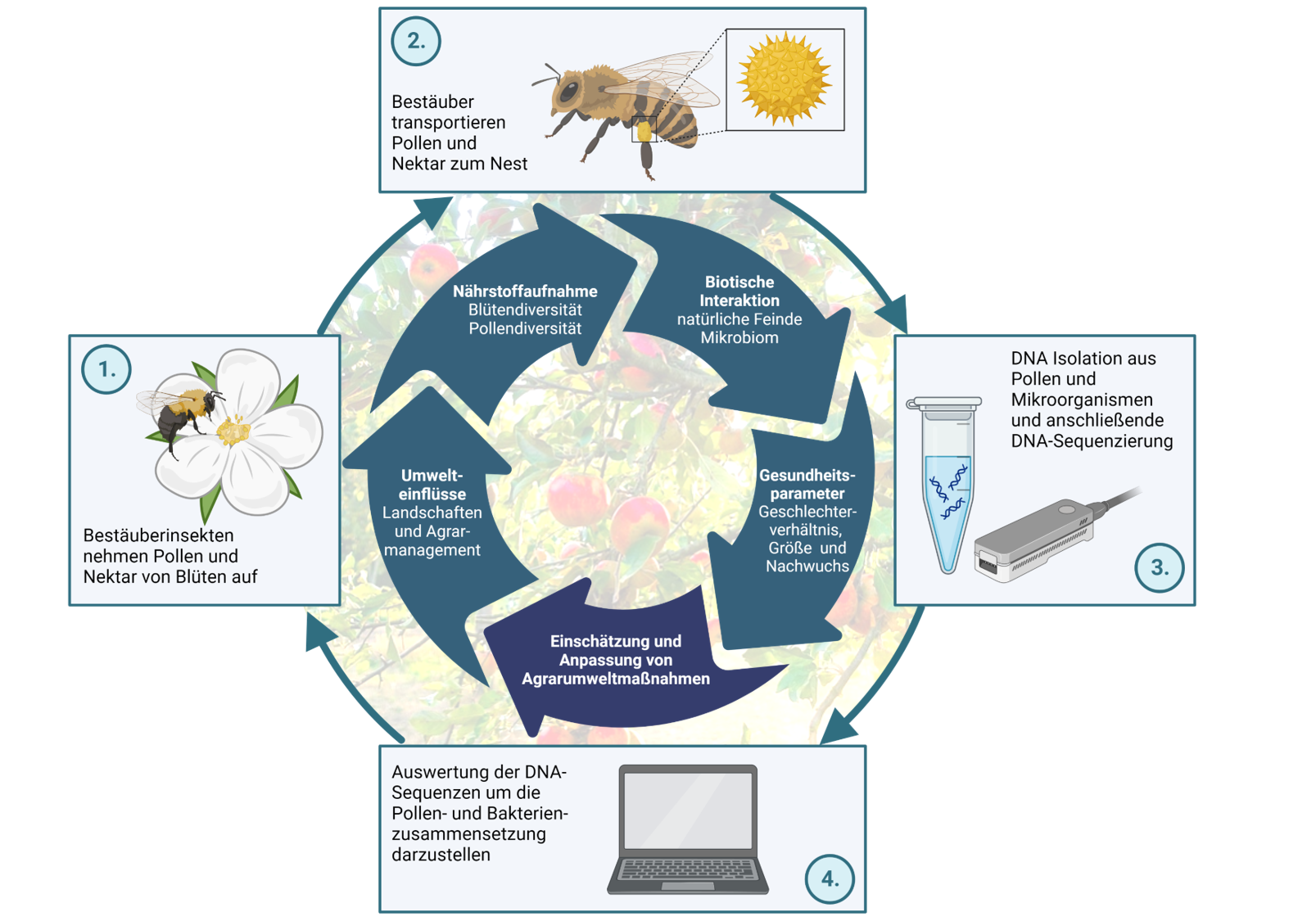
We regard health as the result of specific interactions between bees and their environment. Factors such as landscape diversity and farming practices affect pollinators and determine their nutrient intake as a result of variations in flower and pollen diversity. Our central hypothesis is that, depending on their dietary basis, pollinators are better or worse equipped to cope with stressors such as pathogens. By measuring selected health parameters, we aim to determine the fitness of the insects. Although bee health is generally receiving increasing attention, the direct and indirect effects of the landscape context, agricultural management practices and pollen diet on the health status of wild bees under field conditions have not yet been comprehensively investigated.
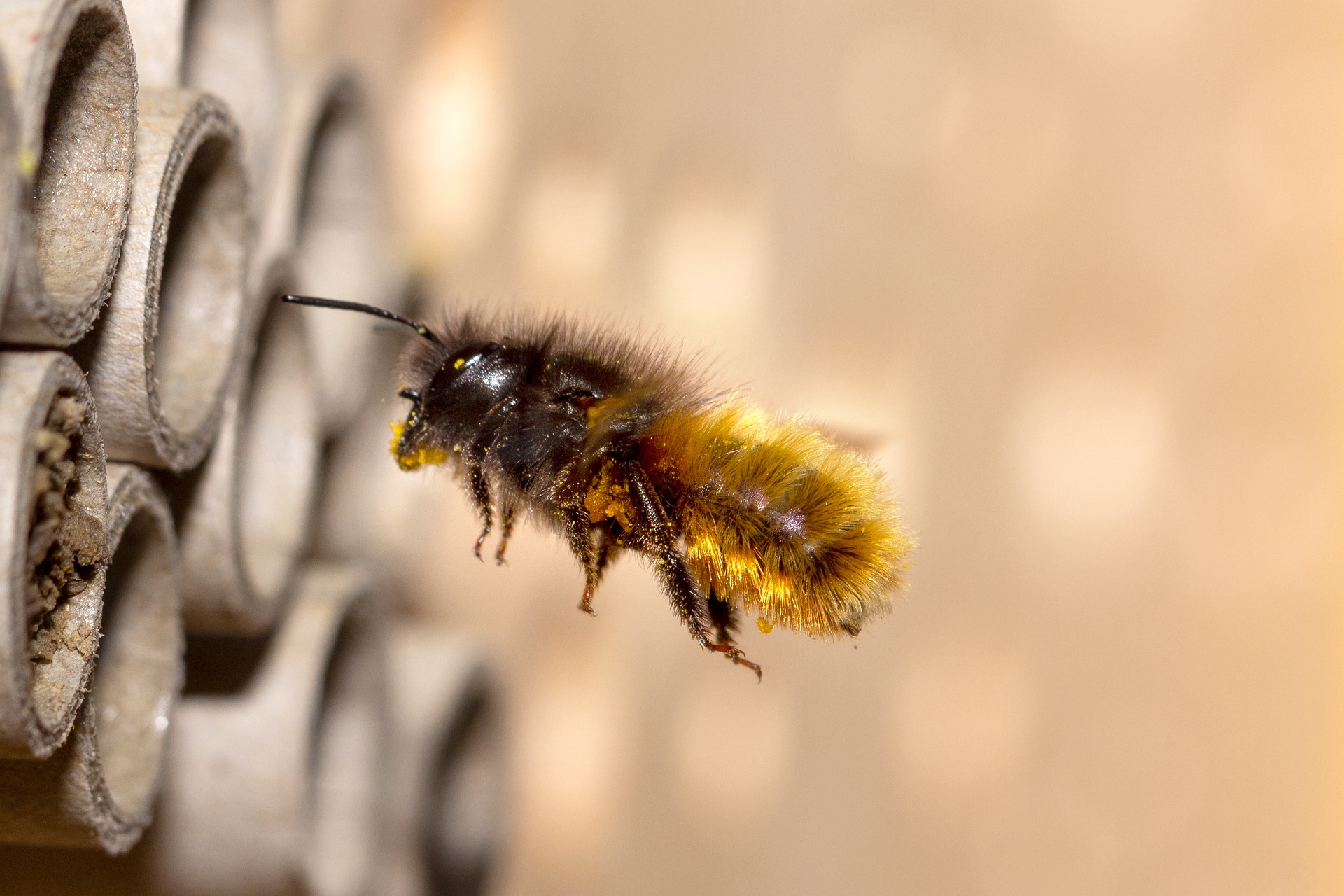
Our research aims to contribute to the understanding of the interplay between pollinator networks, genetic biodiversity and bee health in an anthropogenically shaped environment. Over the three-year project period, we will use genetic analyses to determine the health status of solitary mason bee species (Figure 1) in apple orchards in Central Saxony (Figure 2).
In addition, we will document the reproductive characteristics of mason bees found in both conventionally and organically managed apple orchards along a landscape diversity gradient. To this end, nesting aids will be installed, which are intended to be colonised naturally. The pollen brought in by the wild bees, as well as the microorganisms within the bee nest, will also be sampled. Using DNA sequencing methods established in Mittweida, we will determine the composition of the pollen and the microbiological samples. Once data from three generations of bees have been collected, these will be correlated with environmental parameters to determine the impact of agri-environmental measures.
Project duration: 10/23 – 09/26