This page was translated automatically using artificial intelligence (DeepL). The German version is binding. More information about automatic translation
Genetic breeding research on the sheep poodle
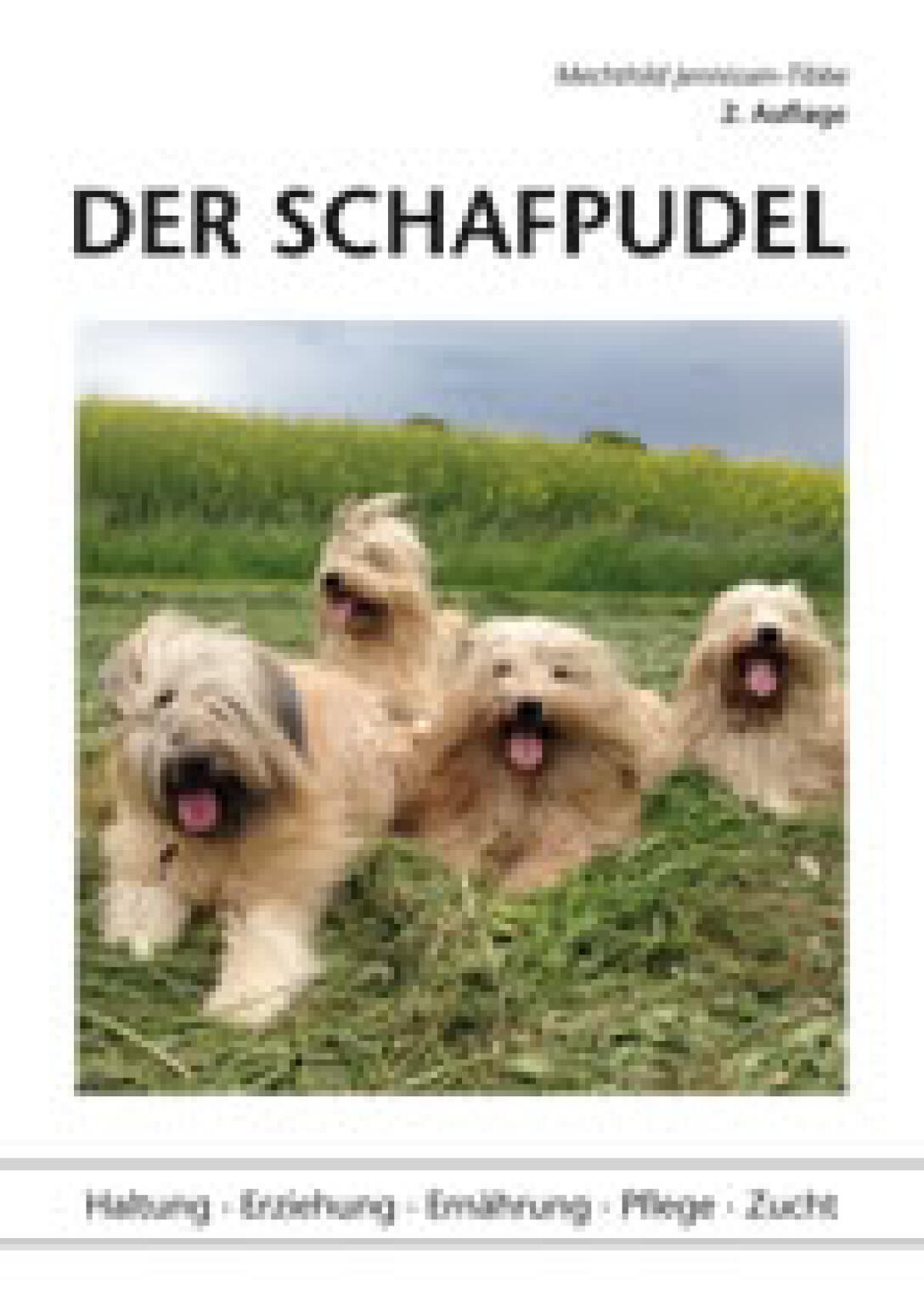
Ms Mechthild Jennissen-Tibbe (schafpudel.de) has been breeding Schafpudels since 2001 and is the author of the book shown opposite. Together with Ms Nina Borzner (schafpudel-ninaborzner.de), she is a partner in our research project aimed at identifying the genetic causes of breeding defects. The current focus is on the search for genetic markers for undescended testicles (cryptorchidism).

Professor Röbbe Wünschiers is a qualified geneticist at Mittweida University of Applied Sciences and conducts research in the field of genetic analysis. His book *Genetic Engineering – Reading, Writing and Editing Genes* provides a concise overview of the applications of genetic engineering. It is intended to serve as an introduction to a contemporary public debate on genetic engineering and its applications (see also: gene-genome-gesellschaft.de). Although our breeding research on the sheep poodle does not directly involve genetic engineering, we make the recommendation that the book be read as introductory reading to help understand our work (keyword: genetic diagnostics).
The project: Cryptorchidism in dogs
Cryptorchidism, or undescended testicles, affects up to 10 per cent of all puppies, depending on the breed. Small and purebred dogs are particularly at risk, including your beloved sheep poodles.
Citizen Science in Mittweida
No output without input – We are grateful that Sheep Poodle owners across Europe support our research. In 2019, we were nominated for the futureSAX Transfer Prize in recognition of the collaboration between our laboratory and the breeders led by Ms Jennissen-Tibbe.
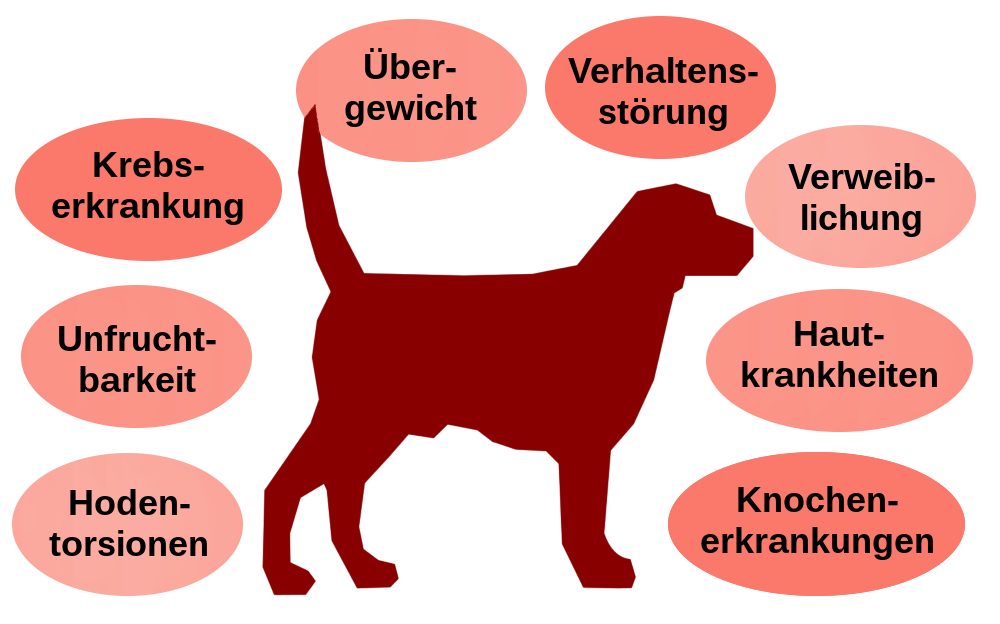
What is cryptorchidism?
During a dog’s development, the testicles form in the abdomen and then normally descend into the scrotum in the first few weeks after birth. The reason why the testicles do not remain inside the body is simple: temperature. A body temperature of 35–38°C would damage them. However, due to developmental faults, one or both testicles may remain in the abdomen, which can have serious consequences for the dog and its offspring.
Affected dogs are often infertile and have a 13.6-fold higher risk of developing cancer. They frequently suffer from other side effects such as hair loss, skin diseases, behavioural disorders and testicular torsion, which can cause severe abdominal pain. To reduce these risks and prevent the condition from being passed on, castration is carried out, although this can be very expensive.
Unfortunately, research into the disease – which could help your dog and many others – is relatively scarce. Although it is known that the condition is triggered by various internal (e.g. genes, hormones) and external factors (environment), there are hardly any specific details available, which makes treating the condition all the more difficult.
With your help, we want to change this.
Your contribution
With your help, we aim to develop a genetic test for cryptorchidism and other conditions.
Aims of the study
Using a blood sample from an animal, the aim is to determine whether there are any genetic abnormalities that significantly increase the risk of the disease.
However, developing such a genetic test requires a great deal of data – and this is where you come in.
What does this mean for you and your dog?
For our test, all we need is a blood sample from your dog, which a vet you trust can send to us.
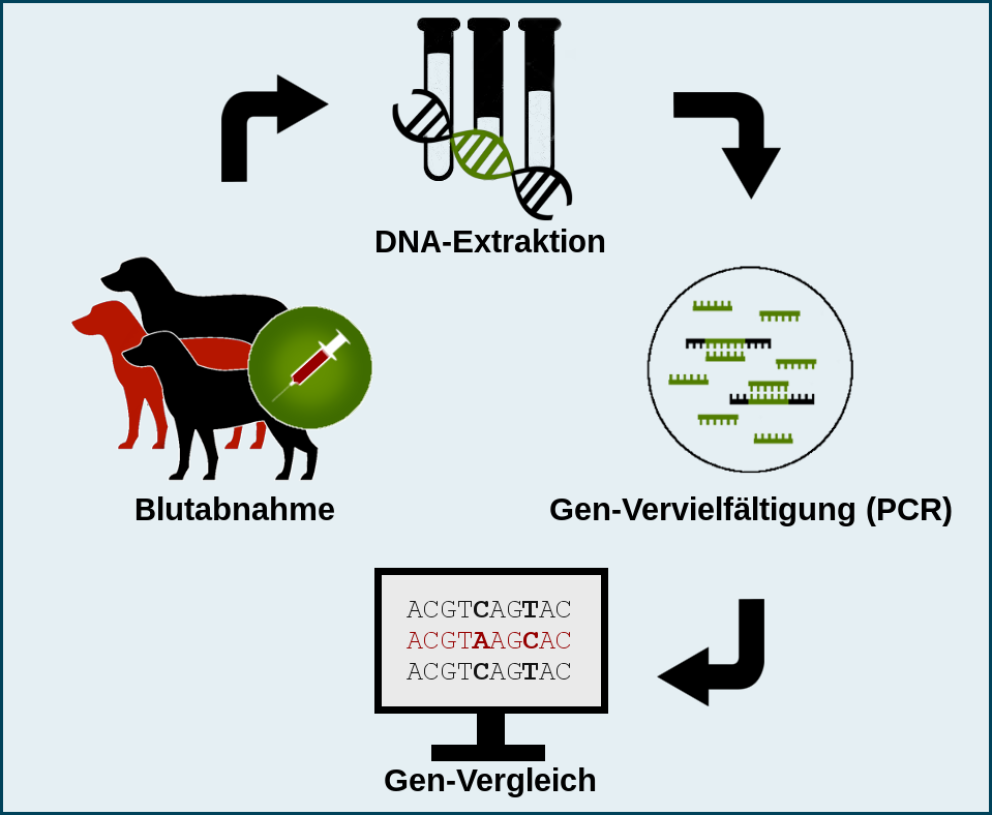
Our methods
We first extract your dog’s DNA from the blood samples. In order to investigate the effects of cryptorchidism, we have identified a number of promising genes (sections of DNA) through extensive preliminary work. Using a method called polymerase chain reaction (PCR), these genes are amplified and their structure is then analysed (DNA sequencing).
The genes from healthy and affected dogs are then compared to identify differences and, consequently, possible causes of the condition. A large number of different samples are required to carry out this analysis and draw concrete conclusions.
We are currently working on expanding the method to incorporate even more genetic information into the analysis. In this genome-wide association study, we are examining not only individual candidate genes but also informative loci distributed throughout the Poodle’s genome.
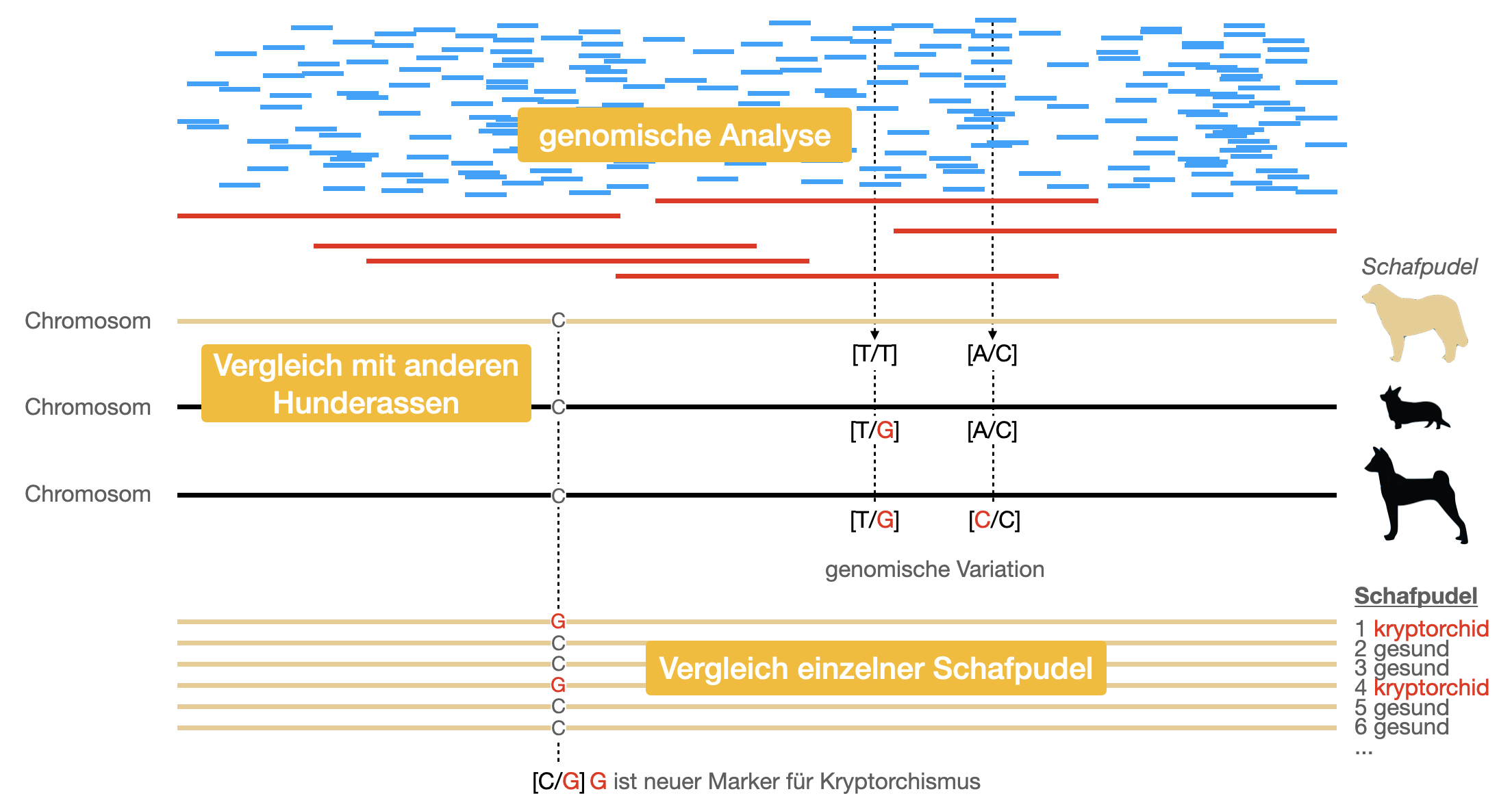
The genes of healthy and sick dogs are then compared to identify the differences and, consequently, possible causes of disease. This process requires a large number of different samples in order to draw concrete conclusions.
We are currently working on expanding the method to incorporate even more genetic information into the analysis. In this genome-wide association study, we are examining not only individual candidate genes but also informative loci distributed throughout the Poodle’s genome.
Partners
- Get to know our partners …
Sheep-Poodle Research in Mittweida
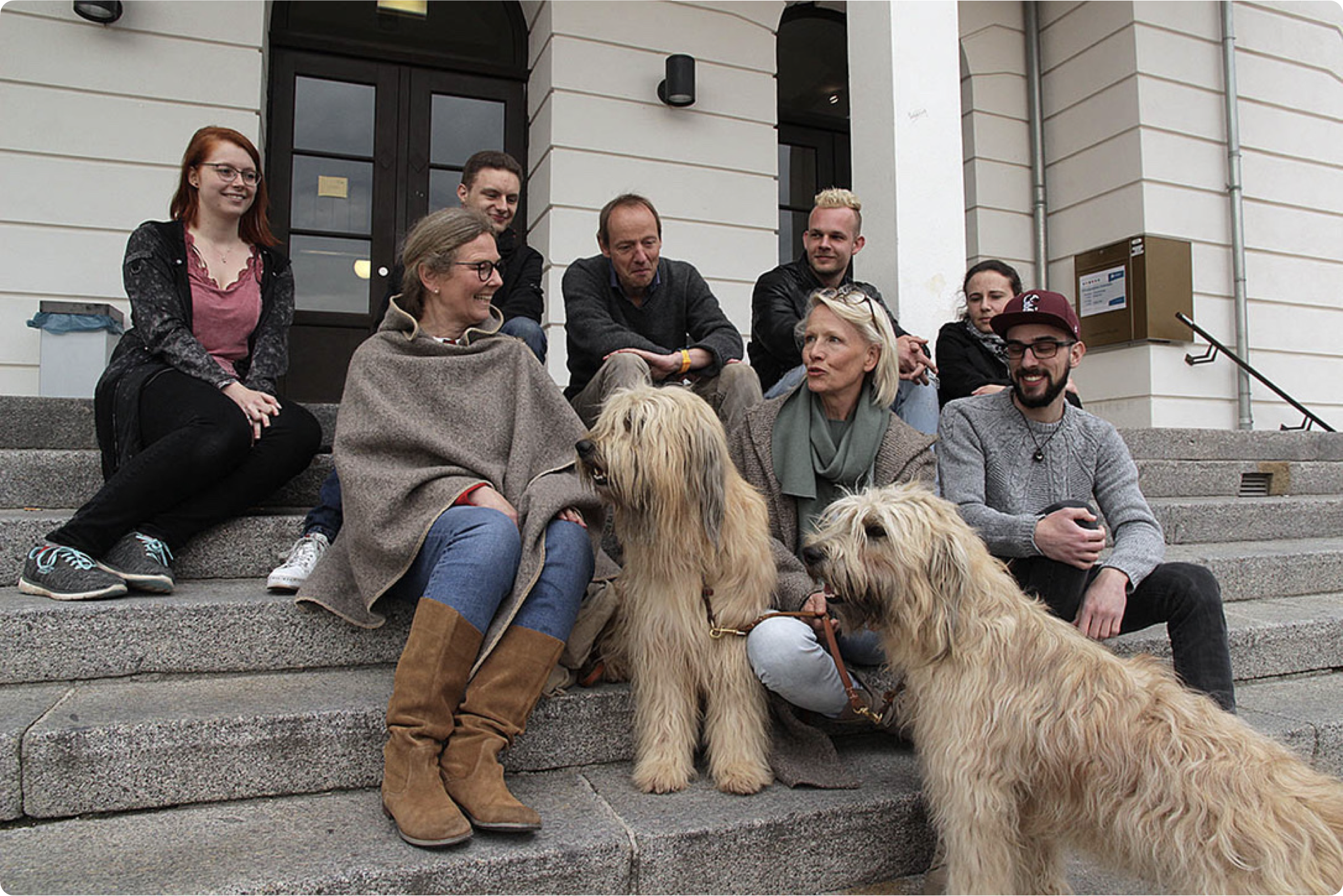
Who are we?
We are researchers at Mittweida University of Applied Sciences in Central Saxony. Our research group leader, Prof. Dr Röbbe Wünschiers, completed his habilitation in genetics at the University of Cologne and specialises in the analysis of genetic data. Nils Schön is currently the head of the Sheep-Poodle Project. After completing his Master’s thesis on the investigation of genetic variants that might be linked to cryptorchidism, he began his PhD in 2023. In this, he is continuing this work.
Dr Robert Leidenfrost was a PhD student in Professor Wünschiers’ group and was originally analysing DNA in bioaerosols. He supported the project with advice and practical assistance. He completed his PhD in January 2023 and has since been working at the Federal Institute for Occupational Medicine and Safety in Berlin. Ms Rebecca Prause studied for a Bachelor’s degree in Biotechnology, specialising in Molecular Diagnostics, in Mittweida, followed by a Master’s degree in Molecular Biology/Bioinformatics. She laid the foundations for this project in her Bachelor’s thesis. In her Master’s thesis, she validated the previously identified markers using numerous blood samples from sheep poodles from across Europe, alongside the associated breeding data from the Institute for Holistic Breeding of Sheep Poodles and PON in Oberseifersdorf, Saxony. Since graduating in 2019, she has been working at Dresden University of Technology. As part of his Master’s thesis, which he completed in 2022, Mr Tom Fritsche carried out analyses of the Sheep Poodle genome, thereby laying an important foundation for further research.
Dr Robert Leidenfrost was a PhD student in Professor Wünschiers’ group and was actually analysing DNA in bioaerosols. He supported the project with advice and practical assistance. He completed his PhD in January 2023 and has since been working at the Federal Institute for Occupational Medicine and Safety in Berlin. Ms Rebecca Prause studied for a Bachelor’s degree in Biotechnology, specialising in Molecular Diagnostics, at Mittweida University of Applied Sciences, followed by a Master’s degree in Molecular Biology/Bioinformatics. She laid the foundations for this project in her Bachelor’s thesis. In her Master’s thesis, she validated the previously identified markers using numerous blood samples from sheep poodles from across Europe, alongside the associated breeding data from the Institute for Holistic Breeding of Sheep Poodles and PON in Oberseifersdorf, Saxony. Since graduating in 2019, she has been working at Dresden University of Technology. As part of his Master’s thesis, which he completed in 2022, Mr Tom Fritsche carried out analyses of the Sheep Poodle genome, thereby laying an important foundation for further research.
Events
09/2025 Antonia Lippert has joined our team and is supporting the comprehensive genome analysis as part of her research module and Master’s thesis.
04/2025 An initial version of the data analysis pipeline has been completed.
02/2024 We have begun genotyping just under three hundred individuals. Data analysis is ongoing.
04/2023 Nils Schön is carrying out further genetic analyses as part of his PhD research, which began in 2023.
01/2023 Robert Leidenfrost has successfully completed his PhD on the molecular genetic analysis of bioaerosols. Robert has been involved in the Sheep-Poodle Project from the very beginning and remains an important collaborator. Congratulations!
11/2022 Tom Fritzsche has completed his Master’s thesis on hybrid genome assembly of the sheep-poodle genome.
07/2022 Chloé Aujoulat from the Université de Lyon in France has completed her Master’s thesis in our research group on the topic ‘Detection and Evaluation of Sequence Variations in the Sheep Poodle Genome’.
12/2021 Nils Schön has completed his Master’s thesis on ‘Genetic variant analysis of the German Sheep Poodle with a focus on cryptorchidism’.
01/2020 The Leipzig-based company GENEWIZ is supporting us with the sequencing of the sheep poodle genome.
10/2019 A radio interview with Heike Leschner from MDR and a way to support our research on the sheep poodle can be found here.
10/2019 An article in the Freie Presse can be found here.
07/2019 We were nominated for the 2019 Saxon Transfer Prize for our collaboration with the Institute for Holistic Breeding in Oberseifersdorf. An interview on this subject can be found here.
08/2019 Rebecca Prause has completed her Master’s thesis entitled ‘Nanopore sequencing of cryptorchidism-associated genes for the identification of genetic variants in German Sheep Poodles’.
08/2017 Rebecca Prause lays the foundations for the project with her Bachelor’s thesis on the identification of genetic variations as the cause of cryptorchidism in sheep-poodles.