
This page was translated automatically using artificial intelligence (DeepL). The German version is binding. More information about automatic translation
Ciao Varroa – Genome-wide genetic association studies in honey bees (Apis mellifera spp.) with a view to breeding for Varroa resistance
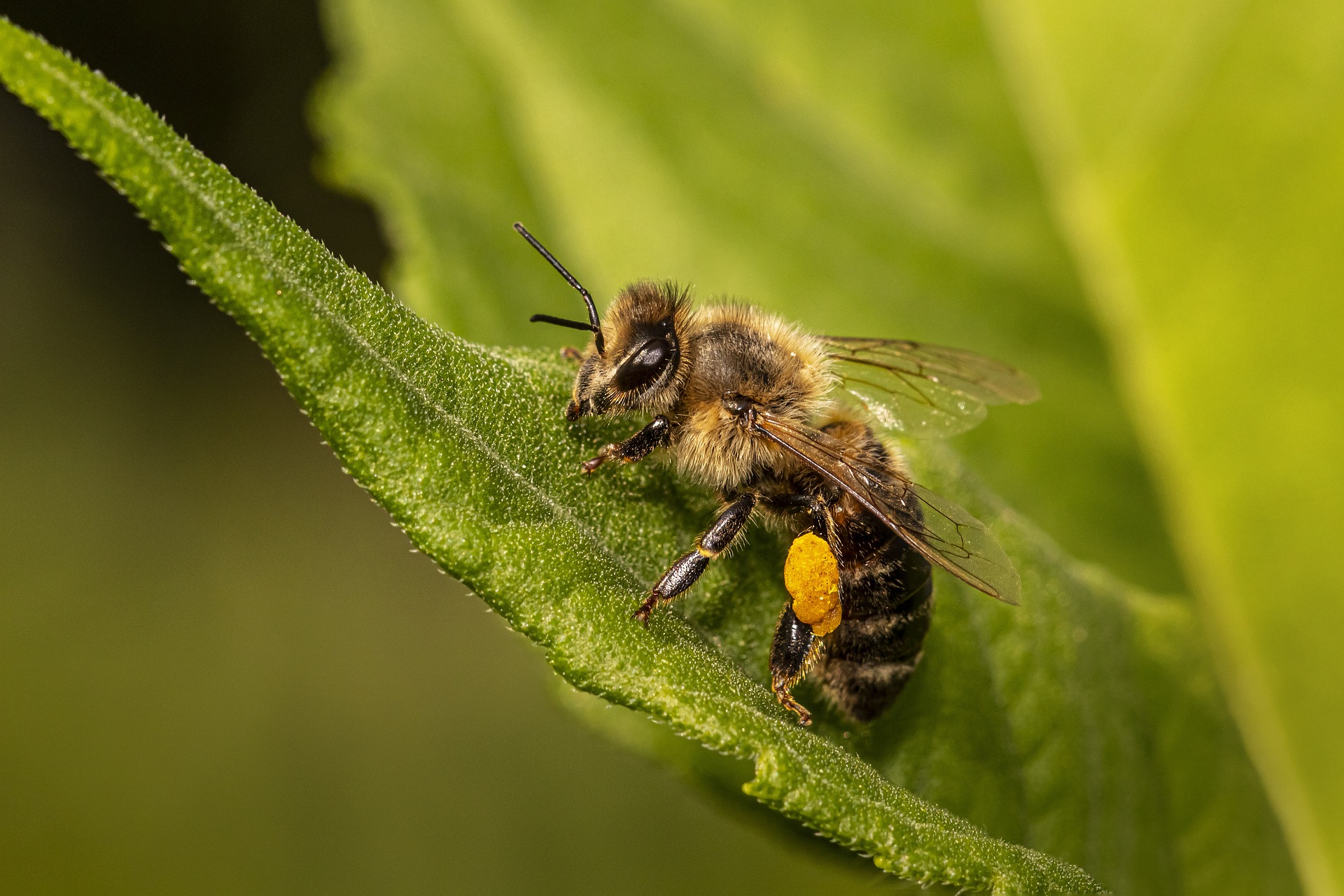
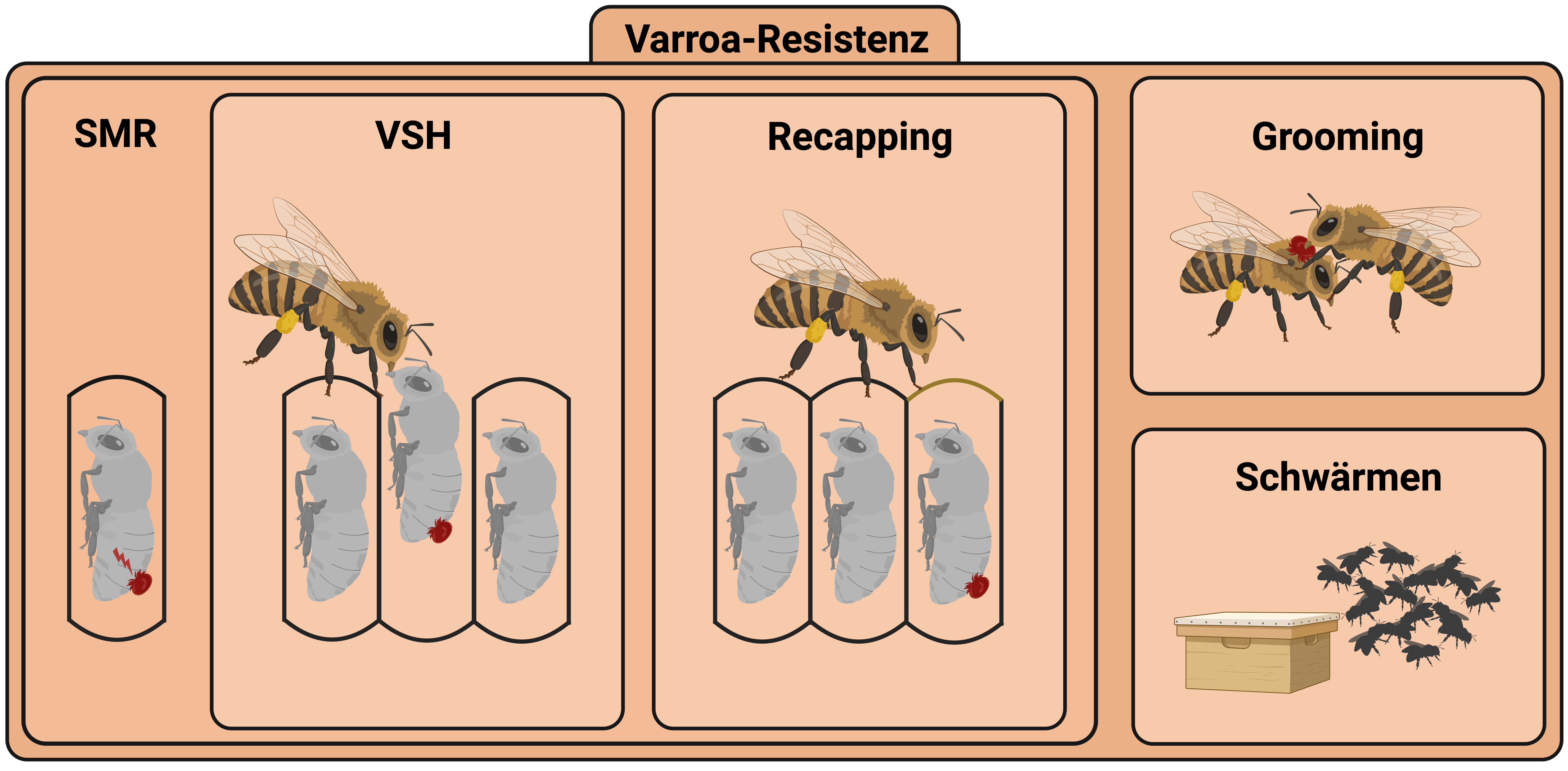
The western honey bee (Apis mellifera spp.) is one of the most important pollinators of our time, as it makes a significant contribution to the pollination of a wide variety of wild plants. In addition to its essential pollination services, it produces honey and wax, which are used in a wide range of applications in the food, cosmetics and pharmaceutical industries. For decades, in addition to habitat loss caused by urbanisation, intensive agriculture and the use of pesticides, it has also been threatened by the Varroa mite (Varroa destructor). The mite not only affects individual bees but also weakens the entire colony. Individual bees are harmed as the mite feeds on the haemolymph and fat bodies of the larvae, depending on its stage of development, thereby disrupting growth and normal development. In addition, the mite acts as a vector for pathogens such as the wing deformation virus or the acute bee paralysis virus. The mite therefore poses one of the greatest threats to the western honey bee. In contrast, the mite’s original host, the eastern honey bee (Apis cerana), copes well with the mite. Apis cerana manages to keep the mite population below the threshold for sustained damage. Fortunately, the western honey bee has now also developed defence mechanisms to control the mite. However, these are only found in isolated populations, which is why colonies still often have to be treated with chemical agents. This treatment, however, has a negative impact on the bees’ vitality. For this reason, there are breeding associations, such as the Saxony State Association for Varroa-Resistant Breeding (LSV), which aim to establish resistance traits across populations through selective breeding. The focus is particularly on the traits associated with suppressed mite reproduction (SMR). These include the deliberate opening and removal of infested brood cells – also known as Varroa-sensitive hygiene (VSH) – and the recapping of brood cells. These mechanisms disrupt the reproductive capacity of the Varroa mite, resulting in either no development or delayed development.
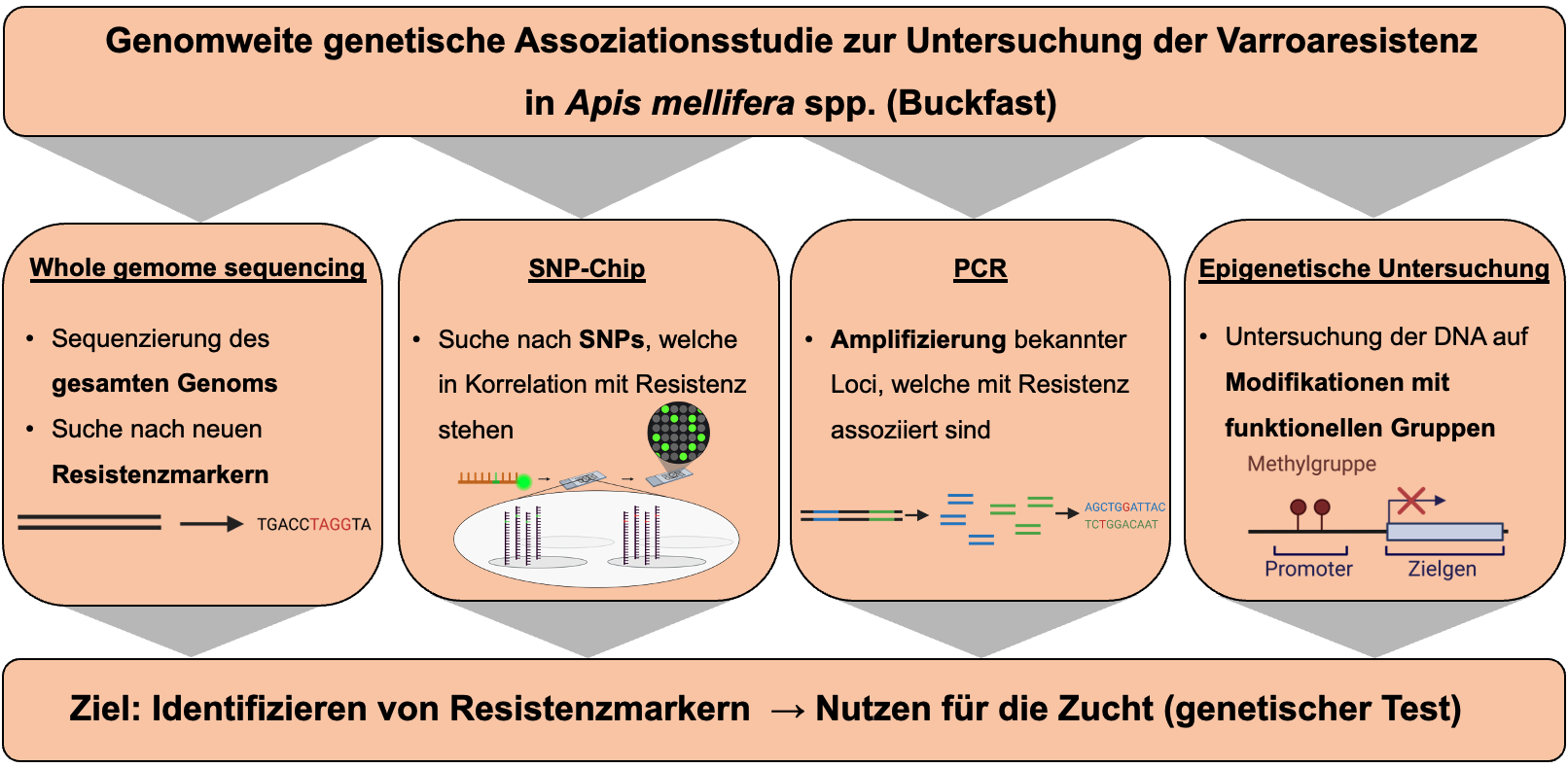
These mechanisms could, at least in part, be linked to various genetic markers. In this context, markers refer to different variations in the DNA. There are various types of markers, which may include structural variants, InDels and SNPs. These variations can have a positive (protective variants) or negative (risk variants) effect on resistance. The problem with the markers identified so far is that they rarely overlap across different studies. This suggests that it is important to identify population-specific resistance markers. The aim of Professor Röbbe Wünschiers, Professor Toralf Kirsten and their PhD student Tom Schmidt, in collaboration with the Saxony Regional Association for Varroa Resistance Breeding (Landesverband Sachsen für Varroa-Resistenzzucht e.V.), to detect resistance markers in the local Buckfast bee population, with a view to utilising these for further breeding. To this end, a genome-wide genetic association study is to be carried out, which will enable various colonies to be examined, in particular to identify SNPs. The data collected in this process may come from whole-genome sequencing of a colony or from an SNP chip, which is used to detect large numbers of known SNPs. Furthermore, a supplementary methylation analysis is planned, which is intended to elucidate potential environmental influences.
Once markers have been successfully detected, they are to be used for breeding. One possible application is the nymphal cuticle from the queen’s queen cell. With the knowledge of which markers confer resistance to the Varroa mite, DNA can be extracted from the nymphal cuticle and subsequently tested. In this way, potential queens with high Varroa resistance can be selected for breeding, thereby contributing to widespread resistance. The advantage of this approach is that the young queen can be reared without harm and is not restricted in any way (as is the case, for example, when sampling a wing).