This page was translated automatically using artificial intelligence (DeepL). The German version is binding. More information about automatic translation
Biohydrogen production using purple bacteria: Analysis and editing of the regulatory network using machine learning in Rhodobacter sphaeroides
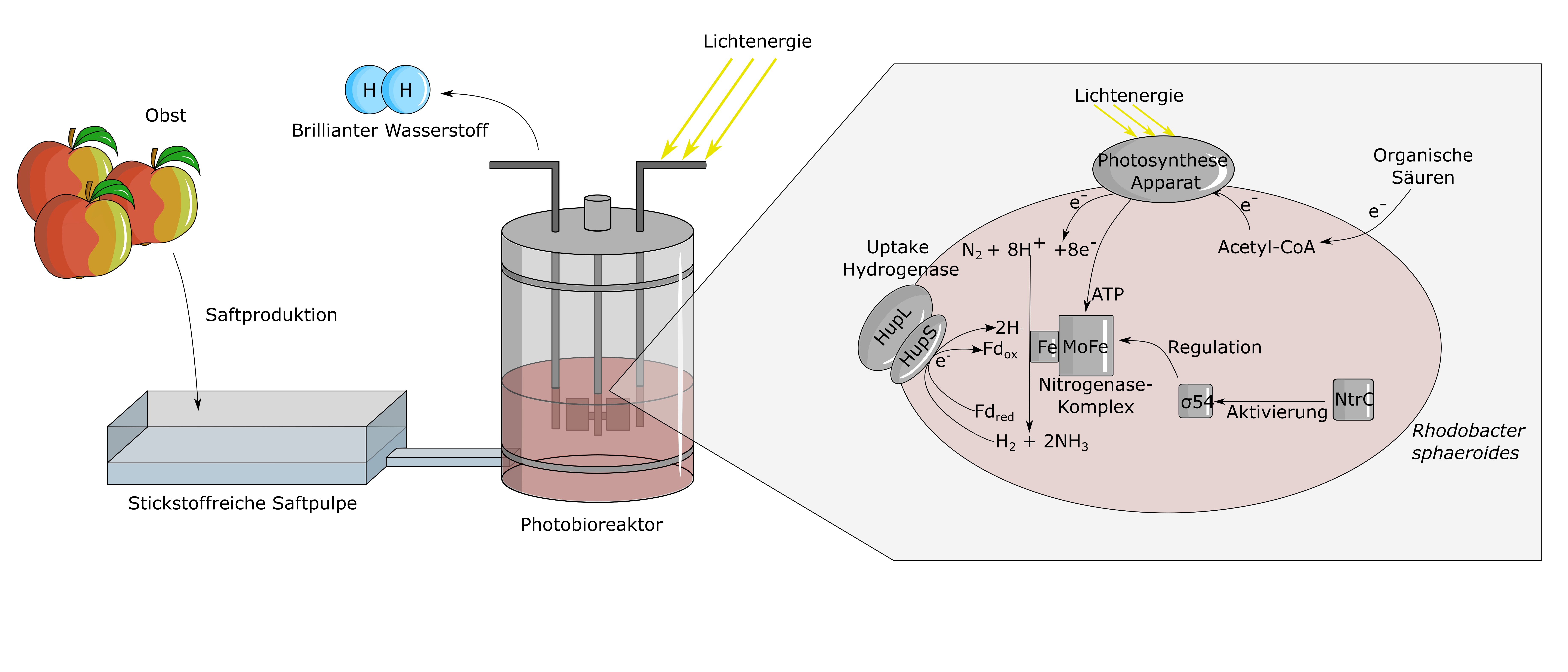
Due to ongoing climate change and the ever-increasing demand for sustainable energy sources, hydrogen is becoming increasingly important. At present, however, the majority of hydrogen in Europe is still produced from fossil raw materials. This leads to climate-damaging emissions and diverts these valuable raw materials away from other applications, such as the chemical industry. Possible techniques that do not rely on fossil raw materials include the electrolysis of water (green hydrogen) or the production of hydrogen by microorganisms (so-called ‘brilliant hydrogen’).
The purple bacterium Rhodobacter sphaeroides (also known as Cereibacter sphaeroides) has the ability to produce hydrogen under low-nitrogen conditions as a by-product of nitrogen fixation. The SubH2 strain exhibits a distinctive behaviour in this regard, as it also produces hydrogen under nitrogen-rich conditions, such as those found in organic nutrient substrates. This makes it a potential candidate for hydrogen production from nitrogen-rich substrates such as juice pulp, a waste product from fruit juice production.
Based on genome and transcriptome analyses, we are currently searching for mutations that lead to this altered behaviour. The findings obtained from this will then be tested experimentally and with a view to biotechnological application. In addition, a model of the regulatory network of Rhodobacter sphaeroides is to be developed. Using machine learning methods, this model will then be employed to predict further targets for increasing hydrogen production.
The project is a joint PhD programme between Mittweida University of Applied Sciences (Prof. Röbbe Wünschiers, Prof. Thomas Villmann and Anna Nauruschat) and Dresden University of Technology (Prof. Thorsten Mascher) and is funded by the European Social Fund.
Project duration: 1 August 2025 to 31 December 2028