This page was translated automatically using artificial intelligence (DeepL). The German version is binding. More information about automatic translation
Facts and figures
Sustainable real estate management
What makes the Sustainable real estate management module within the Master’s in Industrial Management so special is the consistent integration of property economics with practical technical expertise and modern energy management. Whilst other degree programmes often remain purely focused on Business Administration or traditional regulatory aspects, here at Mittweida we delve deep into the technical infrastructure and energy supply of buildings. In a flexible, interdisciplinary environment, you’ll learn alongside students from a range of different disciplines. You’ll develop the technological and environmental understanding needed to design the neighbourhoods of the future so that they are truly carbon-neutral, resource-efficient and, at the same time, economically viable.
An overview of the course content
The Industrial Management degree programme at Mittweida adapts flexibly to your prior knowledge and integrates business, technology and the environment without unnecessary repetition. In the first semester, you’ll build a solid foundation as a Business Engineer through the core programme and choose modules such as strategic management, performance management or energy management. The second semester takes you straight into a deep dive into the property sector: You’ll master property analysis and strategic facility management, and engage intensively with sustainability and quality in the context of buildings and neighbourhoods. In the third semester, you’ll deepen your specialisation with a research and development project carried out directly within a company, before writing your Master’s thesis in the fourth semester.
Basic profile: Elective module (4 out of 10):
- Business-to-Business Marketing
- Strategic Management
- Industrial and Logistics Management
- Performance Management
- Financial Management
- Energy Management
- Sustainability in Technology, the Environment and Society
- Energy Technologies
- Introduction to Materials Science
- Machine Learning and Big Data
Compulsory Elective Modules I and II (from the module pool)
Four specialisation modules:
- Property Analysis
- Specialised Strategic Facility Management
- Sustainability and Energy Management in the Property Sector
- Sustainable Quality in Buildings and Neighbourhoods
Compulsory-elective modules III and IV (from the module pool)
Reflection module
Research and Development Project
Compulsory Elective Module V (from the module pool)
Master's thesis



Industrial Management in Mittweida


In summary – Sustainable real estate management in Mittweida

Specialisation within the Master’s programme in Industrial Management

(120 Credits)







Once you’ve completed your Master’s degree, you’ll be the answer to the huge demand for skilled professionals driving sustainable change in the construction and property sectors. You’ll work as an asset manager or sustainability officer in large property groups, as a strategic facility manager, or as an energy consultant for complex building portfolios. Roles in the project development of sustainable neighbourhoods, in real estate controlling or at specialist management consultancies are also open to you.
Application and Admission
You must hold a first professional higher education qualification worth 180 ECTS credits (Bachelor’s degree) or a qualification from a state or state-recognised vocational academy in a field of engineering, natural sciences or economics. In addition, you must provide evidence of at least eight weeks’ work experience in economics or engineering, which may have formed part of your Bachelor’s degree.
Language skills:
If you did not obtain your university entrance qualification at a German-speaking institution, you must demonstrate German language proficiency at level C1 of the Common European Framework of Reference for Languages. Proof of this can be provided, for example, by taking the ‘German as a Foreign Language’ (TestDaF) test at the preparatory college of Mittweida University of Applied Sciences, achieving an average of TDN 3 in all four sections, or by presenting an equivalent certificate. The exception to this is the ‘Innovation and Business Expansion’ specialisation, which requires proficiency in English.
The application period for the winter semester begins on 15 April and ends on 15 July. To start your studies in the summer semester, you can apply from 15 October to 15 January. You can register at hs-mittweida.de/bewerben and select the Industrial Management degree programme. Once you have submitted all your documents, you can enrol. Once you have enrolled, your place at Mittweida is secured. For international applicants, the application deadline is 15 May, to allow sufficient time to apply for a visa.
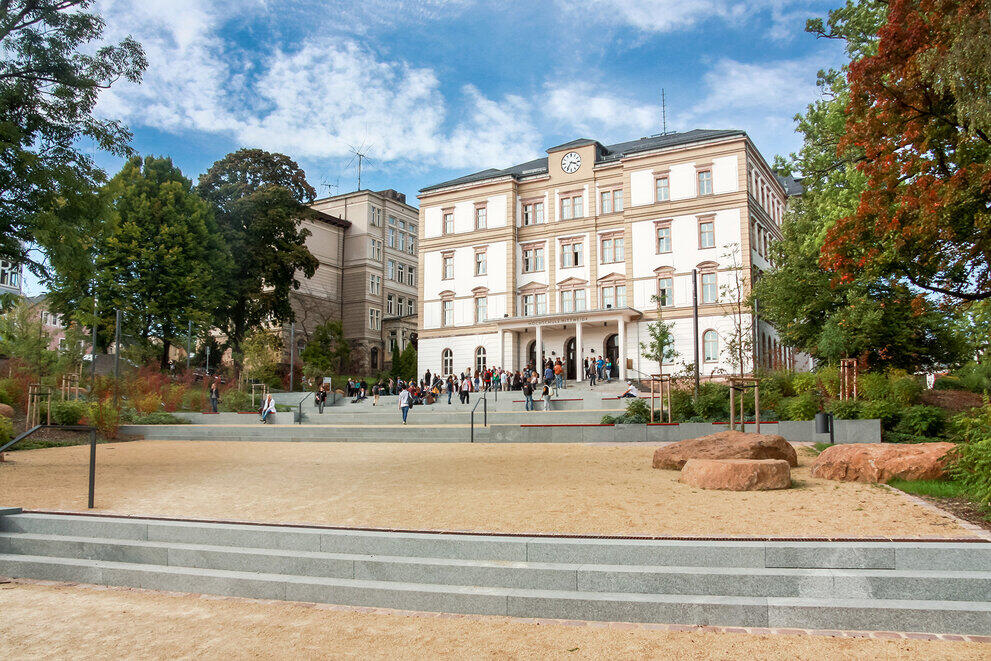
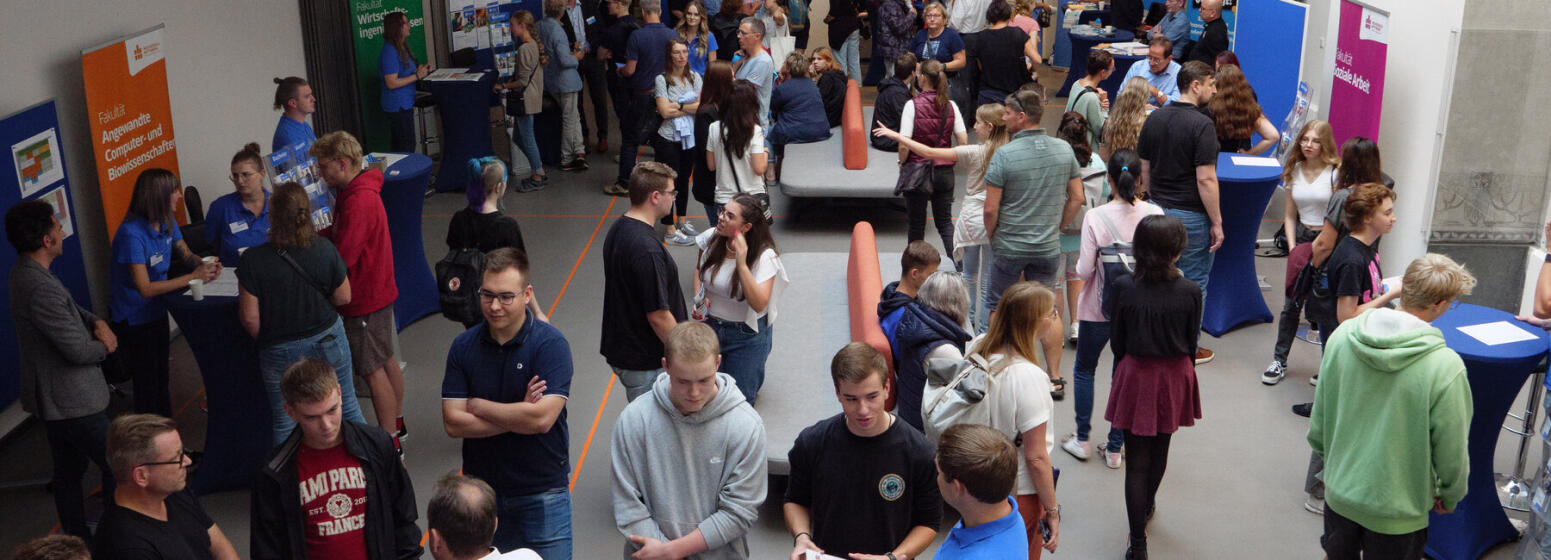
Excellent study conditions, modern facilities and affordable rent allow you to focus fully on your studies. Tutorials are on hand to help with academic queries, the SAXEED start-up network guides you through the process of developing your own business idea, and the Social Support Service offers assistance with specific life situations, such as childcare or caring for relatives. The campus also has plenty to offer: two music festivals a year, an active esports team and a vibrant student community. Discover just how diverse life in Mittweida is – at the Open Campus Day (Studieninformationstag) or the Night of Sciences (Night of Sciences).



Related degree programmes



Frequently Asked Questions
The Master’s programme is primarily aimed at graduates in the fields of Business Engineer, Business Administration (with a strong technical or logistical focus) or engineering (with additional training in business). A first academic degree is a formal requirement.
As the degree programme is very project-heavy and includes many practical seminars, living in Mittweida or the surrounding area makes student life much easier. Those who commute should organise their days on campus efficiently, as laboratory and project sessions require you to be present at set times.
There are no school-style holidays during your degree. Instead, there are lecture-free periods. During these, you can study, write assignments, undertake work placements – and treat yourself to a bit of a break now and then.
In the 2026/2027 winter term, in addition to public holidays, the following periods are lecture- and exam-free:
- 21 December to 3 January,
- from 22 February. Exception: The Faculty of Social Sciences begins its lecture-free period on 29 February.
In the 2027 summer term, with lectures starting on 22 March, the dates are:
- 25 March to 2 April,
- 7 May,
- 17 May,
- from 2 August. The Faculty of Social Sciences will also hold an examination week from 23 to 27 August.
You usually select your compulsory elective modules via the intranet at the start of each semester in order to tailor your Master’s programme to your individual interests (e.g. specialising further in logistics or technology management). Changes can only be made during the enrolment period.
If you want to master the interface between technology and business and manage complex production and logistics processes on a global scale, this Master’s programme is the right choice for you. It specifically prepares you for leadership roles in the industrial sector.
Whilst the Master’s in Business Administration focuses on traditional core economic functions such as finance, marketing and Strategic Business Management, the Master’s in Industrial Management – as a traditional industrial engineering programme – integrates these management topics in depth with technical systems, production planning and supply chains.