This page was translated automatically using artificial intelligence (DeepL). The German version is binding. More information about automatic translation
Facts and figures
Sustainable real estate management
The buildings sector accounts for a third of global CO₂ emissions. This is due not only to the burning of oil, gas and wood for heating, but also to building materials such as concrete, both during construction and demolition.
Climate protection means we need to build differently. It also involves financial savings when companies design and operate their buildings to be adaptable, rather than constantly demolishing and rebuilding them.
This requires an understanding of sustainable concepts, human needs, modern technologies, economic interrelationships and the entire life cycle of a building – from design to efficient operation. You’ll learn all of this whilst studying at Mittweida University of Applied Sciences.

An overview of the course content
By studying Sustainable real estate management, you’ll prepare yourself to design property projects that are future-proof and resource-efficient. In the first few semesters, you’ll acquire the fundamentals that modern property experts need: sustainable development, property law and basic economic knowledge. You’ll learn to understand building structures and building services engineering and to analyse them in a structured way. As your bachelor’s degree progresses, you’ll focus increasingly on project development as well as sustainable construction and operation.
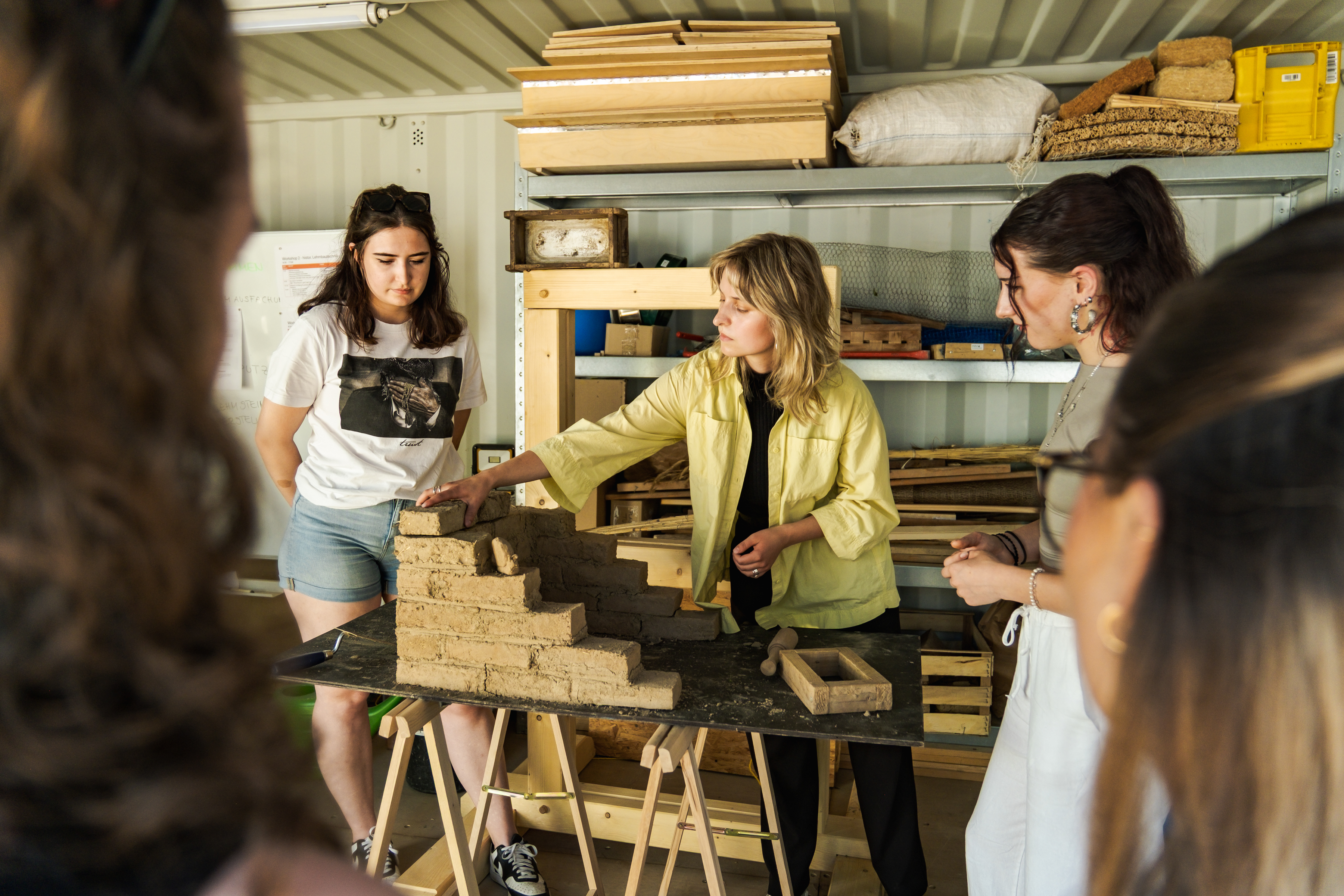
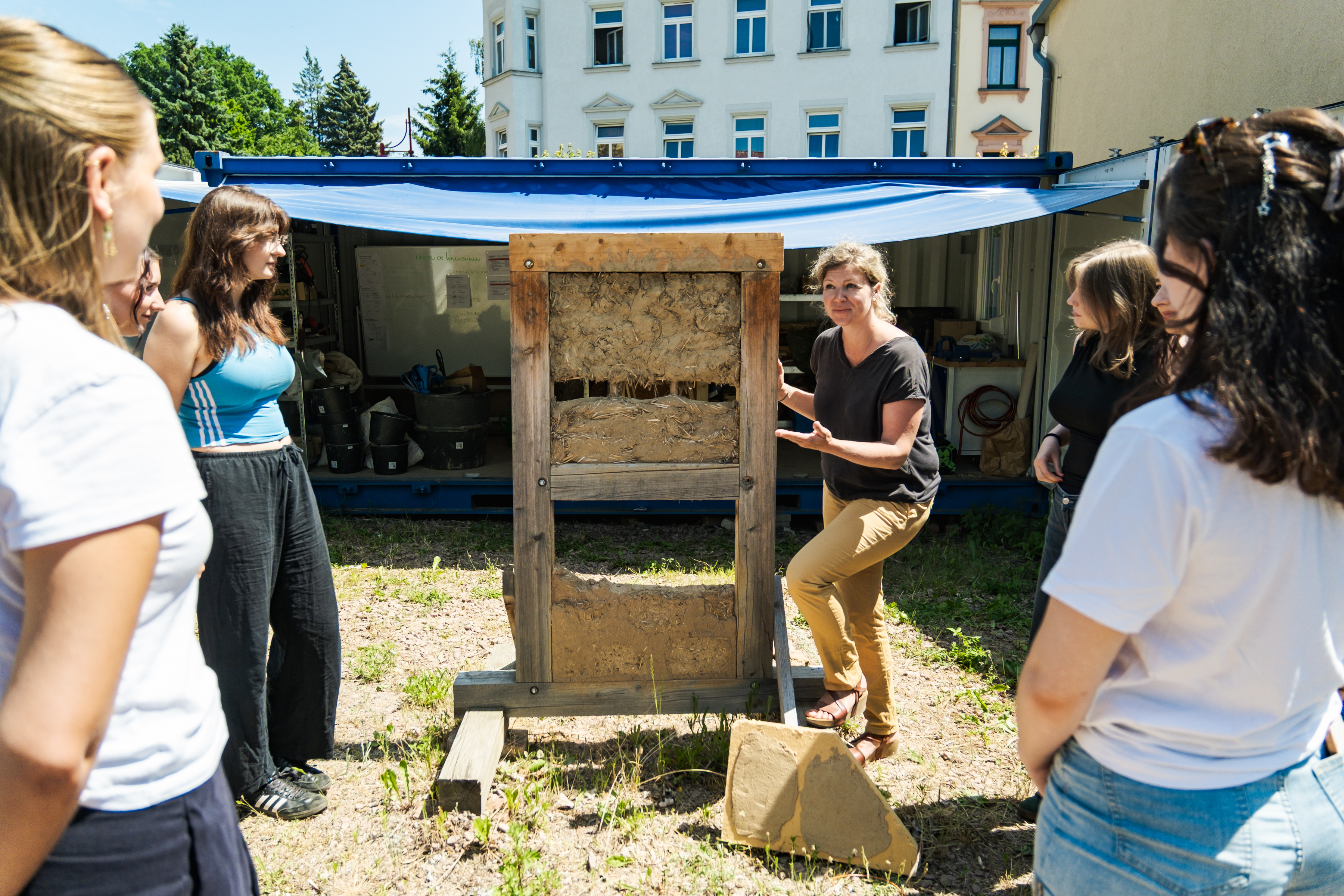
What really sets Sustainable real estate management apart is its clear practical focus. Each semester, you’ll work in student teams on realistic tasks. You’ll analyse and improve processes in facility management, carefully assess the value and benefits of properties, and design concepts for life-cycle optimisation. In doing so, you’ll learn to consider decisions from the perspectives of technology, economic efficiency and sustainability simultaneously.
Sustainable Development – Fundamentals
Property Law
Computer-Aided Design (CAD)
Business Management I
Mathematics
Transfer Project: ‘Real Estate Management’
Property Management – Fundamentals
Architecture/Building Construction
Business English
Business Management II
Mathematics – Probability and Statistics
Transfer Project: ‘Process Management’
Digitalisation – Fundamentals
Building Physics
Technical English
Facility Management
Building Services – Fundamentals
Transfer project ‘Property Due Diligence’
Property development
Construction Practice
General Studies (Studium Generale)
Computer-Aided Facility Management (CAFM)
Building Services – Resource Efficiency
Transfer Project ‘Strategic Property Management’
Sustainable Construction/Operation
Property Investment and Financing
Property Valuation
Digital property management
Project management
‘Life Cycle Optimisation’ Transfer Project
Practical module
: Independent scientific and practical work within a company
Duration: 12 weeks
Bachelor’s
thesis: Final, independent academic thesis
Duration: 12 weeks


Sustainable real estate management in Mittweida
In summary – Sustainable real estate management in Mittweida

Full-time Bachelor’s degree programme in Sustainable real estate management

(180 Credits)








Once you’ve completed your bachelor’s degree, a wide range of career paths will be open to you: as a project developer, facility management specialist, sustainability manager for buildings, technical property manager, consultant for digital property processes, building services or energy efficiency manager, or as an expert in sustainable construction and operations. Whether in the private sector, in public administration, in engineering and planning firms, or with property operators – the industry is looking for specialists who not only manage buildings but also make them fit for the future. And if you wish to continue your academic career, the advanced Master’s programme in Industrial Management offers you further opportunities for specialisation.
Application and Admission
Applicants must hold a general university entrance qualification, a university of applied sciences entrance qualification, a subject-specific university entrance qualification or an equivalent recognised qualification. Applicants who have completed vocational training and have at least three years’ professional experience may also be admitted following a consultation and a successful entrance examination.
Language skills:
Anyone who did not obtain their university entrance qualification at a German-speaking institution must demonstrate German language proficiency at level C1 of the Common European Framework of Reference for Languages. Proof of this can be provided, for example, by passing the ‘German as a Foreign Language’ (TestDaF) test at the Mittweida University Preparatory College with an average score of TDN 3 in all four sections, or by presenting an equivalent certificate.
The application period for the winter semester begins on 15 April and ends on 15 July. You can register online via the HSMW application portal. Once you have submitted all your documents, you can enrol. Once you have enrolled, your place at Mittweida is secured. For international applicants, the application deadline is 15 May, to allow sufficient time to apply for a visa.
We’ve got you covered! Excellent study conditions, modern facilities and affordable rent allow you to focus fully on your studies. Tutorials are on hand to help with academic queries, the SAXEED start-up network supports you on your journey to developing your own business idea, and the Social Support Service offers assistance with specific life situations, such as childcare or caring for relatives. The campus also has plenty to offer: two music festivals a year, an active esports team and a vibrant student community. Discover just how diverse life in Mittweida is – at the Open Day or the Night of Science.



Related degree programmes


Frequently Asked Questions
You don’t need to be an artist or an IT professional to start the degree programme, as the focus is on management and analysis rather than hand-drawn design. You’ll learn the necessary software tools for property planning and management from scratch as you progress through the programme. An interest in digital working methods and a willingness to familiarise yourself with new programmes are therefore entirely sufficient. However, for the course you will need a computer running a Microsoft operating system, as some of the programmes used are not available on macOS, or are only available to a limited extent. A high-performance device with a good graphics card, capable of running 3D software smoothly, is recommended but not essential.
The degree programme is a true cross-disciplinary programme in which, alongside content related to Business Administration, you will also acquire in-depth technical knowledge of building construction, building services engineering and energy-efficient refurbishment. This knowledge is essential to enable you, as a future manager, to communicate on an equal footing with architects and engineers and to make technical decisions that ensure a building’s sustainability.
Your career prospects are excellent, as the property sector is desperately seeking experts who can steer the ‘green transition’ of the building sector, driven by new climate protection laws and strict EU directives. Ultimately, you’ll be exactly the kind of specialist that companies need to successfully strike a balance between economic viability and climate protection.
Whilst traditional property management often focuses solely on short-term returns and administration, this degree programme examines the entire life cycle of a building from environmental, social and economic perspectives. So you will not only learn how to manage property, but above all how to make it future-proof and ensure its value is maintained through modern refurbishment concepts and sustainable strategies (ESG criteria).
There are no school-style holidays during your degree. Instead, there are lecture-free periods. During these, you can study, write assignments, undertake work placements – and treat yourself to a bit of a break now and then.
In the 2026/2027 winter term, in addition to public holidays, the following periods are lecture- and exam-free:
- 21 December to 3 January,
- from 22 February. Exception: The Faculty of Social Sciences begins its lecture-free period on 29 February.
In the 2027 summer term, with lectures starting on 22 March, the dates are:
- 25 March to 2 April,
- 7 May,
- 17 May,
- from 2 August. The Faculty of Social Sciences will also hold an examination week from 23 to 27 August.
In specialised project modules, you’ll have plenty of freedom to contribute your own ideas for innovative housing concepts or the redevelopment of urban neighbourhoods, and to assess their feasibility under expert guidance. This practical work allows you to set your own priorities whilst still studying and to delve into topics that personally inspire you.
Subjects such as building physics are certainly challenging, as they form the technical foundation for sustainable construction, but at Mittweida they are taught in a very practical and accessible way. The focus is less on abstract theory and more on ensuring that you understand how the laws of physics have a practical impact on a building’s energy efficiency and comfort.