This page was translated automatically using artificial intelligence (DeepL). The German version is binding. More information about automatic translation
Discovering new perspectives
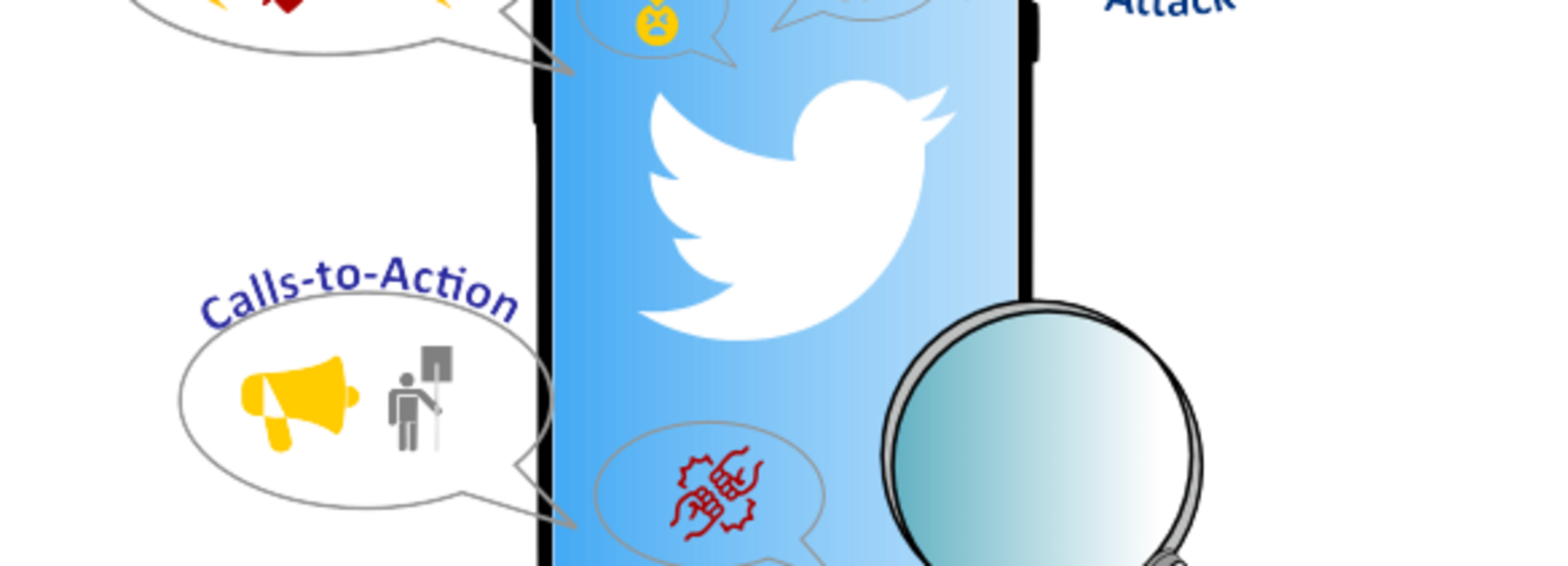
The ‘Communication Forensics’ research group, led by Professor Dr. rer. nat. Michael Spranger, is organising a competition (Shared Task) as part of the German competition series GermEval 2025 (link: https://konvens-2025.hs-hannover.de/program/) in the field of Natural Language Processing (NLP). The aim is to develop and test advanced NLP methods that enable the automatic analysis and classification of harmful and problematic statements on social media. The focus is on socially sensitive topics, such as calls to action involving risky behaviour, attacks on the free and democratic constitutional order, and problematic attitudes towards violence.
The Shared Task is divided into three sub-tasks, each covering different aspects:
1. Detection of calls to action.
This involves classifying social media posts and comments that contain explicit calls to action, such as demonstrations or even acts that may be relevant under criminal law. The challenge lies in automatically identifying these so-called calls to action.
2. Classification of attacks on the free and democratic constitutional order
This task involves distinguishing between neutral statements, legitimate criticism, hate speech and calls for the overthrow of the government. The diversity of the classes makes this sub-task particularly challenging and offers scope for innovative modelling approaches.
3. Detection of problematic attitudes towards violence
This task involves identifying content that trivialises, condones or even glorifies violence. The task requires a nuanced analysis to distinguish problematic content from neutral or harmless statements.
The project is based on a comprehensive dataset relating to an extremist movement, comprising more than 11,500 German posts and comments, which was compiled by students and staff at Mittweida University of Applied Sciences.
Research meets practice
The Shared Task enables the practical application of cutting-edge NLP technologies and offers insights into modern classification methods for problematic content. The findings are highly relevant both for academic research and for practical applications in the fields of digital moderation and forensics. The automatic identification of problematic content can, for example, support moderation processes on social media, assist law enforcement agencies in analysing mass communication data on social networks, or allay concerns regarding public safety.
Further information on the Shared Task, the dataset and the deadlines for participation can be found at the following link: https://www.codabench.org/competitions/4963
If you have any questions, please feel free to contact Professor Michael Spranger by email.
Text and image: ‘Communication Forensics’ research group