This page was translated automatically using artificial intelligence (DeepL). The German version is binding. More information about automatic translation
Everyone wants to be healthy. When they are ill, they expect medicine to help them with effective treatments. This can be achieved more effectively and quickly if medical research helps us to understand diseases, their causes and how to combat them ever better. To do this, research requires – anonymised – information and data from the treatment of patients. This cycle becomes more effective when the data and the insights derived from it are made available via a shared infrastructure to doctors in hospitals and their colleagues in private practice, to patients, and to researchers.
This is where the Saxon project ‘Medical Informatics Hub in Saxony’ (MiHUBx) comes in. As part of the Federal Government’s Medical Informatics Initiative (MII), partners from the fields of medicine and computer science have been working since 2021 to develop such a cross-sector, service-oriented infrastructure.
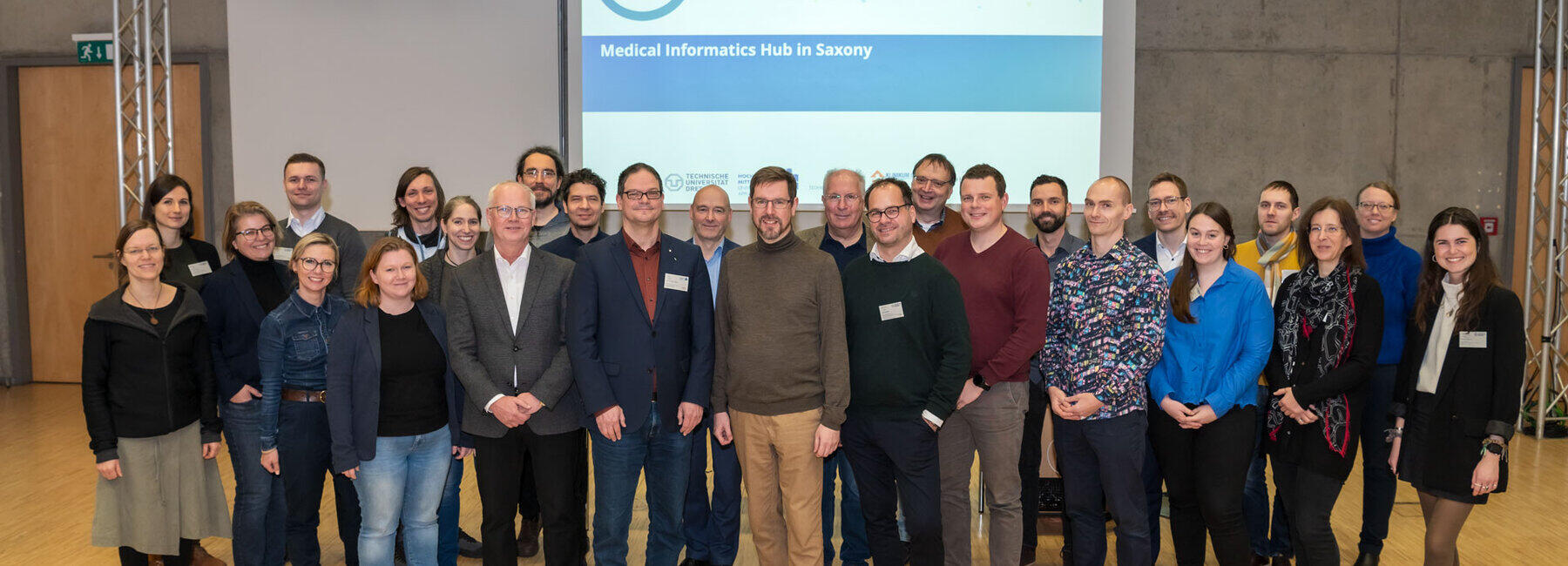
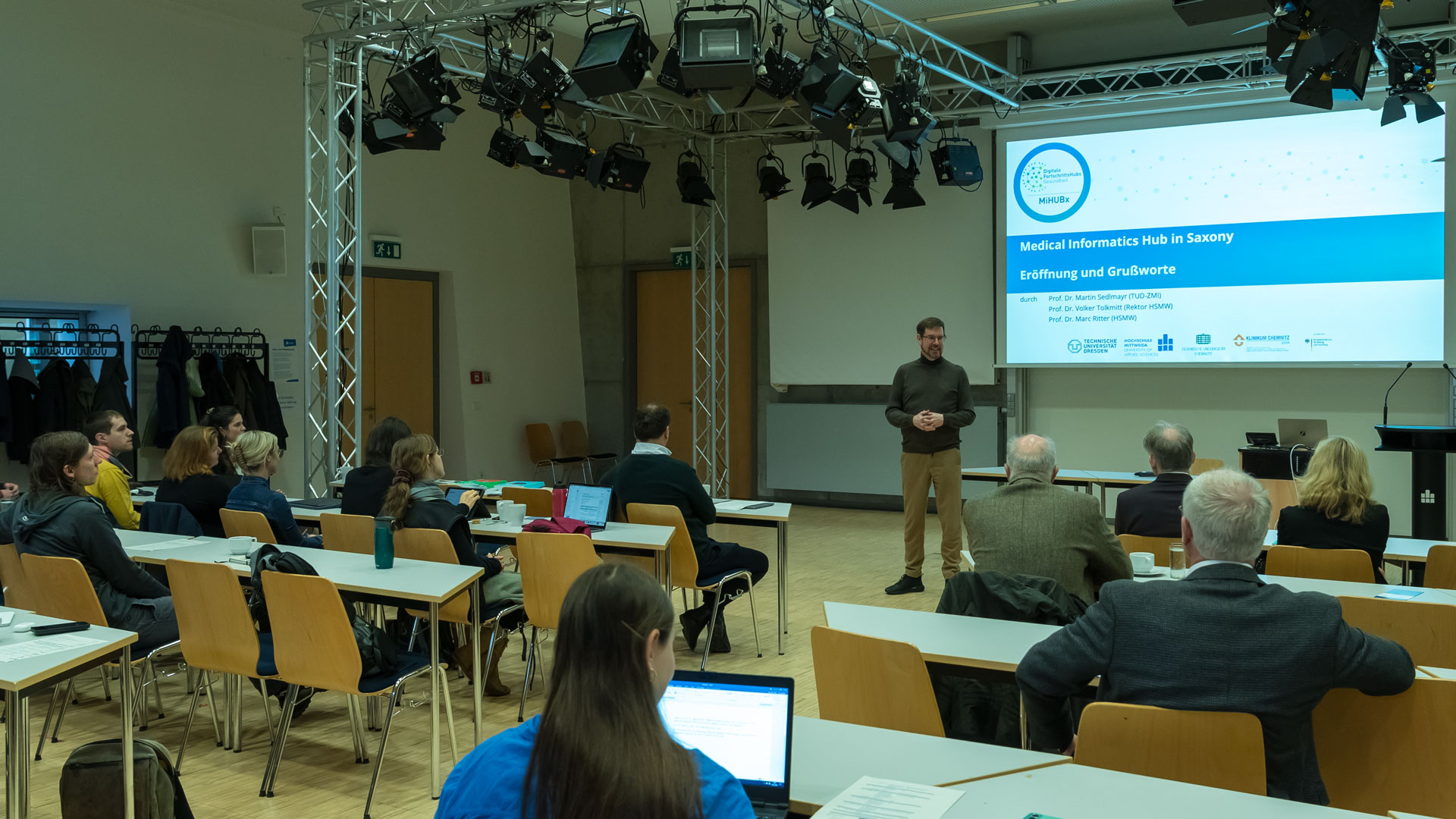
One of the partners is the Department of Media Informatics at Mittweida University of Applied Sciences. On 16 January, it hosted the MiHubX general meeting, attended by around thirty representatives from universities, clinics and hospitals, as well as practising doctors.
Data assets and data protection in medicine
The role of the Mittweida researchers, led by Professors Marc Ritter and Christian Roschke, in this project is to develop practical applications that can be used to analyse the vast and varied data. This involves the use of machine learning techniques as well as content and interaction design. The aim is to transform data that has previously been in silos into an integrated data repository for medicine, enabling insights to be gained into the occurrence, progression and treatment course of specific diseases, and to use these to inform decisions regarding individual patient care.
Ritter sees “outstanding prospects for cross-sectoral research”, but also emphasises: “The key to success in developing future AI-supported medical decision-making tools lies in carefully observing the strict data protection regulations governing the handling of patient data.” Benny Platte from the HSMW presented the implications of the new Health Data Use Act (GDNG) during the general meeting in a workshop that sparked lively discussion.
Ophthalmology meets diabetology
The MiHUBx project partners are testing their developments in so-called use cases across three areas of application: computer-assisted therapeutic decision-making tools for diabetes-related eye conditions; digital forecasting of health crises such as severe heatwaves and pandemics; and personalised cancer medicine. Representatives from the partner organisations presented the current status of the use cases at the general meeting.
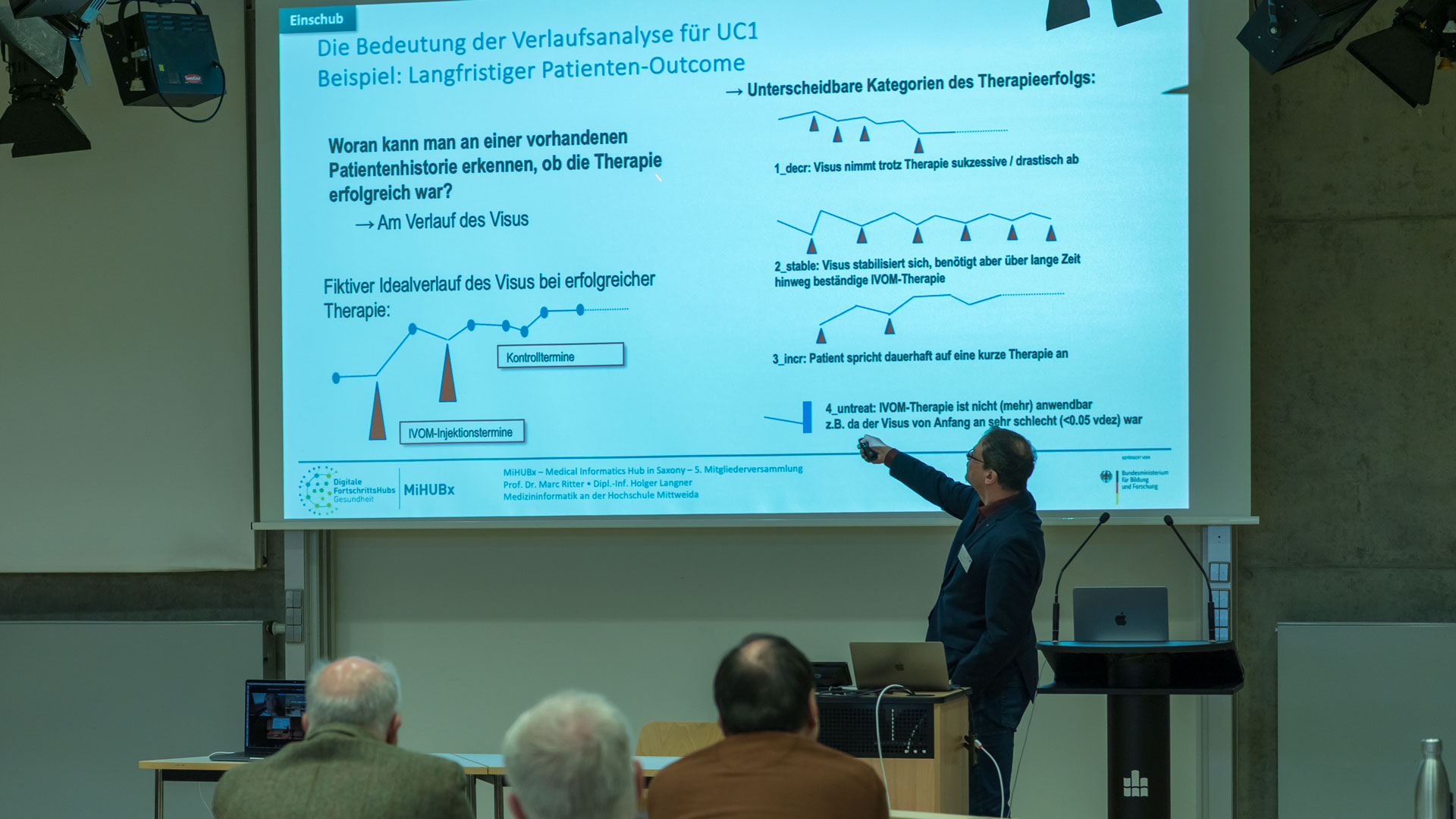
For Use Case 1, the working group led by Professor Danny Kowerko from Chemnitz University of Technology and Benny Platte from Mittweida University of Applied Sciences presented their findings. The researchers from Mittweida are tasked with applying and optimising methods for AI-based ophthalmological and diabetic analysis and treatment prediction, as well as for AI-based data exploration and visualisation. The aim is to develop and evaluate computer-assisted decision-making tools for doctors treating patients with eye diseases associated with diabetes. With the help of AI, data from both disease pathways are to be combined to enable more precise predictions that support the selection of suitable therapies and improve treatment options in the long term.
Among the most significant developments in the project over the past few months are: the establishment of the first non-university DIZ (Data Integration Centre) at Chemnitz University Hospital, which is linked to the Medical Informatics Initiative (MII). Furthermore, networking with professional associations such as the Technology and Methods Platform for Networked Medical Research (TMF e.V.), the German Hypertension League, the Saxon Association of General Practitioners (SHÄV) and the German Society for Telemedicine (DGTelemed) enables research questions to be addressed collaboratively. Finally, new interdisciplinary research partnerships enable the participatory utilisation of extensive data resources in collaboration with general practitioners in private practice.

Academic study meets practical experience
Professor Marc Ritter, who is also Dean of the Faculty Applied Computer Sciences and Biosciences at Mittweida University of Applied Sciences, took the opportunity to present Mittweida’s model for academic training in media informatics. The Bachelor’s degree programme in ‘Media Informatics and Interactive Entertainment’ includes a three-semester-long series of learning modules entitled ‘Integrating Science and Business’. In these modules, students work in groups to develop interactive software products.
What makes this unique is that the topics for these projects – just as in their future careers – are drawn from a broad spectrum of partners in academia and industry. In the past, this has led to the creation of prototypes for a virtually navigable eye and an Amsler grid test designed for use in a doctor’s waiting room for the early detection of retinal damage, complete with a questionnaire for a rapid medical history assessment via tablet PC. The development of user interfaces for an oncology patient portal is also being considered. Ritter is convinced that his students can provide valuable input regarding the usability and appeal of such a portal.
Internal and external stakeholders and lecturers guide students through the extensive tasks throughout the entire project process. In this way, they master the fundamental stages of interdisciplinary projects and learn from the outset how to address the requirements of their ‘clients’. The structured process includes regular consultations during which students present their progress and receive feedback – as well as joint final presentations at the end of each semester in front of lecturers, fellow students and external partners.
The ‘Science and Business’ module series is a fundamental component of the cross-degree programme teaching concept ‘Digital Skills and Products’ developed by Ritter and his fellow professors Christian Roschke and Matthias Vodel. Ritter was awarded the Saxon Teaching Prize for this work in 2021.
The Medical Information Hub in Saxony is funded by the Federal Ministry of Education and Research as part of the Federal Government’s Medical Informatics Initiative.