This page was translated automatically using artificial intelligence (DeepL). The German version is binding. More information about automatic translation
Symposia on this topic held across Germany filled seminar rooms. During those years, the main focus – alongside the detection and defence against airborne biological warfare agents – was primarily on investigating the contamination levels in exhaust air. For example, the question arose as to whether exhaust air from poultry farms posed a health risk in addition to causing a nuisance due to odours – a particularly relevant question in Saxony, with its tradition of poultry farming. Investigating this is one of the tasks of the State Operating Company for the Environment and Agriculture (BfUL) in Nossen and the Federal Institute for Occupational Safety and Health (BAUA) in Berlin. To determine the microbiological load, the exhaust air is filtered and the filters are then spread onto various selective culture media in the laboratory. Any bacteria that grow must have been present as pathogens in the exhaust air. Quantification is virtually impossible, and anything that does not grow under laboratory conditions cannot be detected.
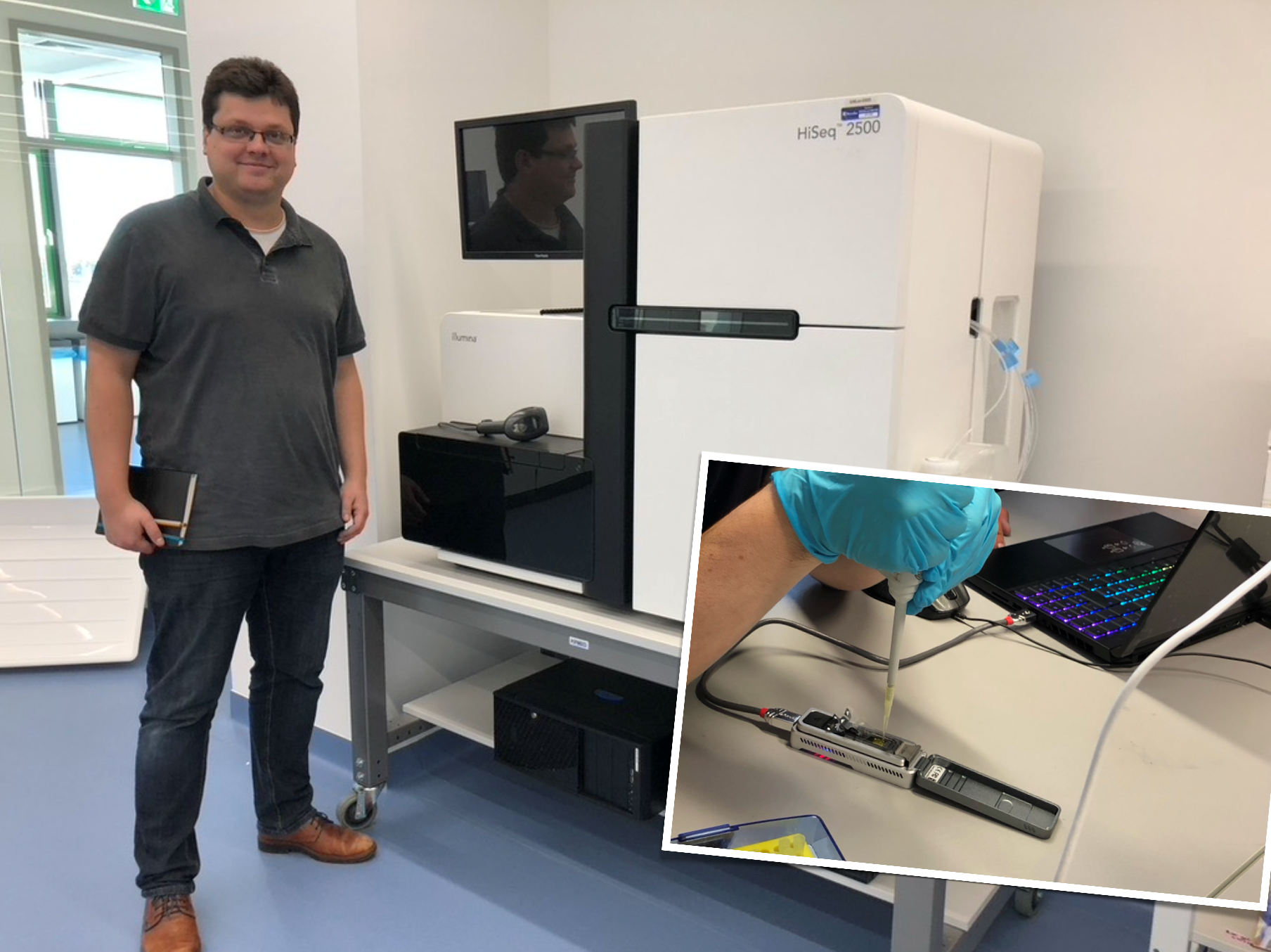
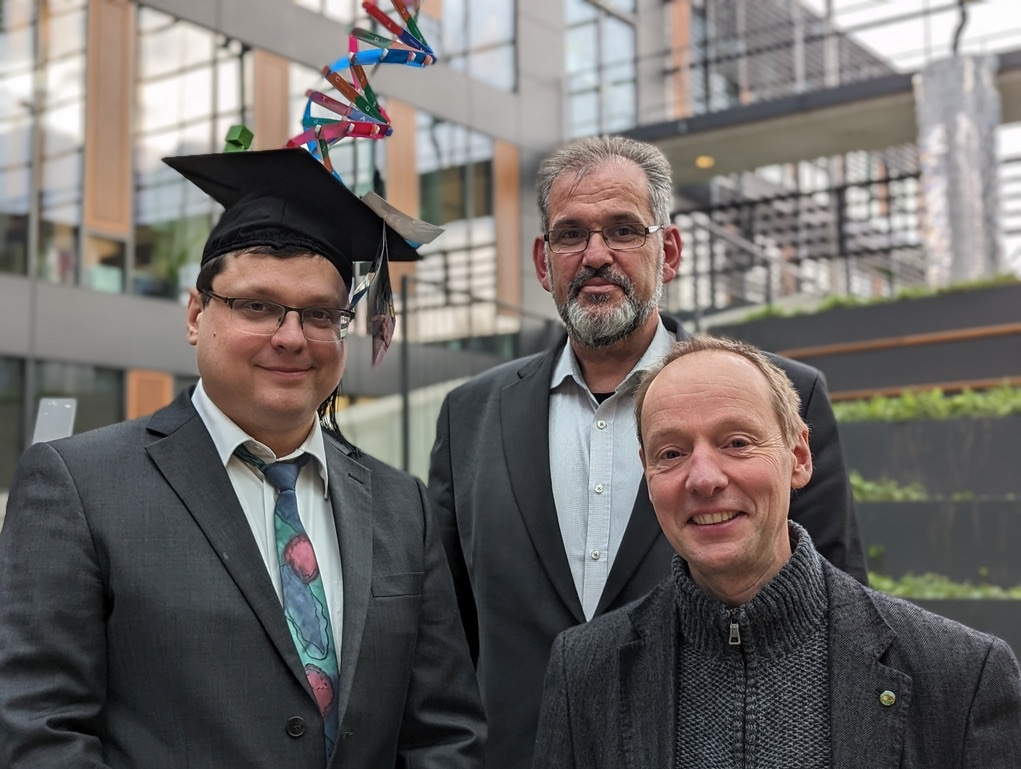
Given that Robert Leidenfrost had established modern DNA sequencing using nanopores whilst working on his Master’s thesis in Professor Wünschiers’ laboratory, it seemed obvious to put forward the following bold hypothesis: If the DNA of the microbes contained in the exhaust air could be sequenced (i.e. read), it would be possible to identify these microorganisms. Wow. When we proposed this to the BfUL and the BAUA, we were met with scepticism: Is the DNA sufficient? Is nanopore sequencing good enough? Is searching genetic databases for DNA sequences similar to the DNA from the filters fast enough? To make matters worse, we didn’t want to limit ourselves to small genetic markers, but rather analyse – and quantify – the entire DNA. But PD Dr Jäckel and Dr Pöther from the BAUA and Dr Mietke from the BfUL became curious, and we planned a feasibility study – Robert Leidenfrost’s PhD project. Fortunately, we were able to find a partner in the Sächsische Aufbaubank, which awarded Robert a doctoral scholarship. Professor Göttfert from TU Dresden supervised the doctoral programme, as Mittweida University of Applied Sciences does not have its own right to award doctorates.
In January 2018, Robert received four samples from the BAUA containing DNA from twelve bacteria unknown to us, each with a different mix. Now things were getting serious: would Robert’s pipeline of DNA sequencing, followed by classification and quantification, work? In August 2018, we presented our results to BAUA in Berlin – and they were quite astonished: one hundred per cent correct. This was promising and paved the way for the key scientific publication based on Robert’s work [1]. We had thus successfully countered the scepticism: yes, the DNA is sufficient; the quality of the sequences is sufficient; the search can be optimised; and the DNA composition is quantifiable. And, unlike the microbiological approach, unclassifiable DNA is at least recorded. Furthermore, our method can also detect viruses in bioaerosols.
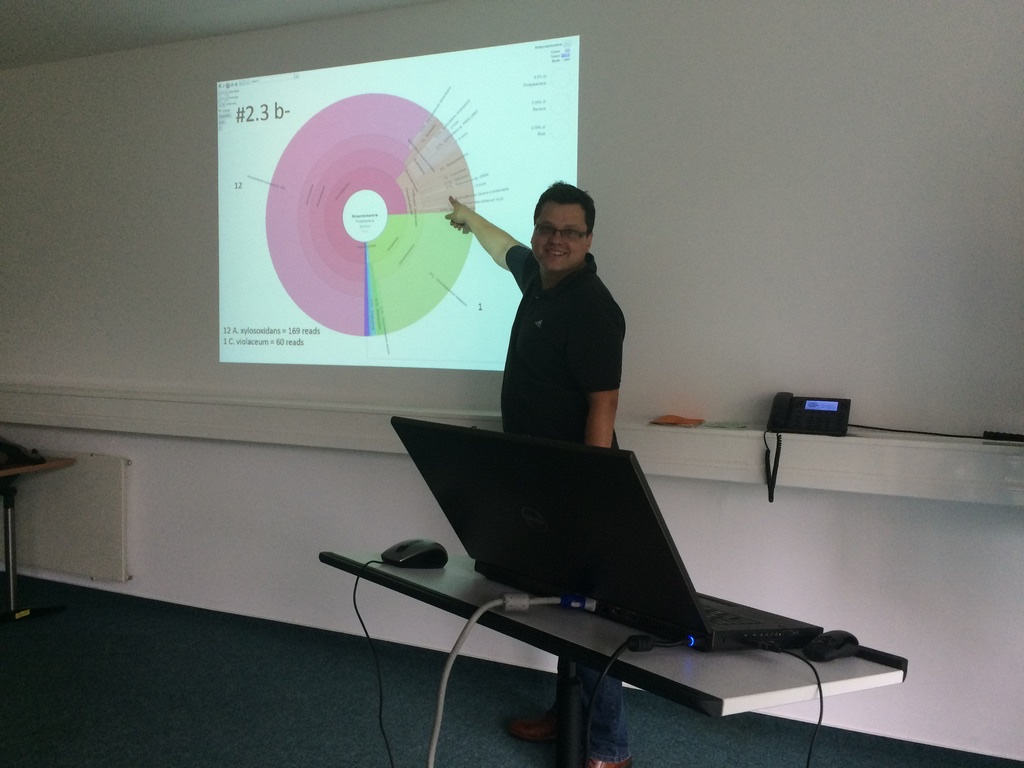
Although bioaerosols were the central focus of Robert Leidenfrost’s doctoral research, he also explored other topics in parallel, some of which were incorporated into his doctoral thesis [2–4].
[1] Leidenfrost, R. M., Pöther, D.-C., Jäckel, U., & Wünschiers, R. (2020). Benchmarking the MinION: Evaluating long reads for microbial profiling. Sci. Rep., 10(1), 1–10. https://doi.org/10.1038/s41598-020-61989-x
[2] Neubert, K., Zuchantke, E., Leidenfrost, R. M., Wuenschiers, R., Grützke, J., Malorny, B., Brendebach, H., Al Dahouk, S., Homeier, T., Hotzel, H., Reinert, K., Tomaso, H., & Busch, A. (2021). Testing assembly strategies of Francisella tularensis genomes to infer an evolutionary conservation analysis of genomic structures. BMC Genomics, 22(1). https://doi.org/10.1186/s12864-021-08115-x
[3] Leidenfrost, R. M., Wappler, N., & Wünschiers, R. (2020). Draft Genome Assembly of Rhodobacter sphaeroides 2.4.1 Substrain H2 from Nanopore Data. Microbiol Resour Announc, 9(29), 1. https://doi.org/10.1128/MRA.00414-20
[4] Leidenfrost, R. M., Bänsch, S., Prudnikow, L., Brenig, B., Westphal, C., & Wünschiers, R. (2020). Analysing the Dietary Diary of a Bumblebee. Front. Plant Sci., 11, 1572. doi.org/10.3389/fpls.2020.00287