This page was translated automatically using artificial intelligence (DeepL). The German version is binding. More information about automatic translation
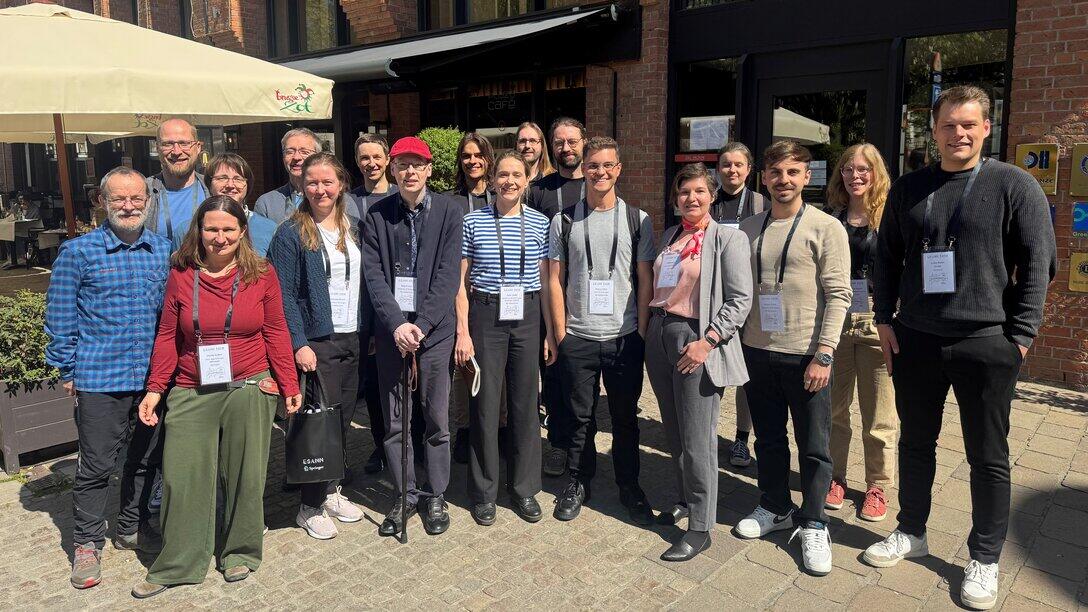
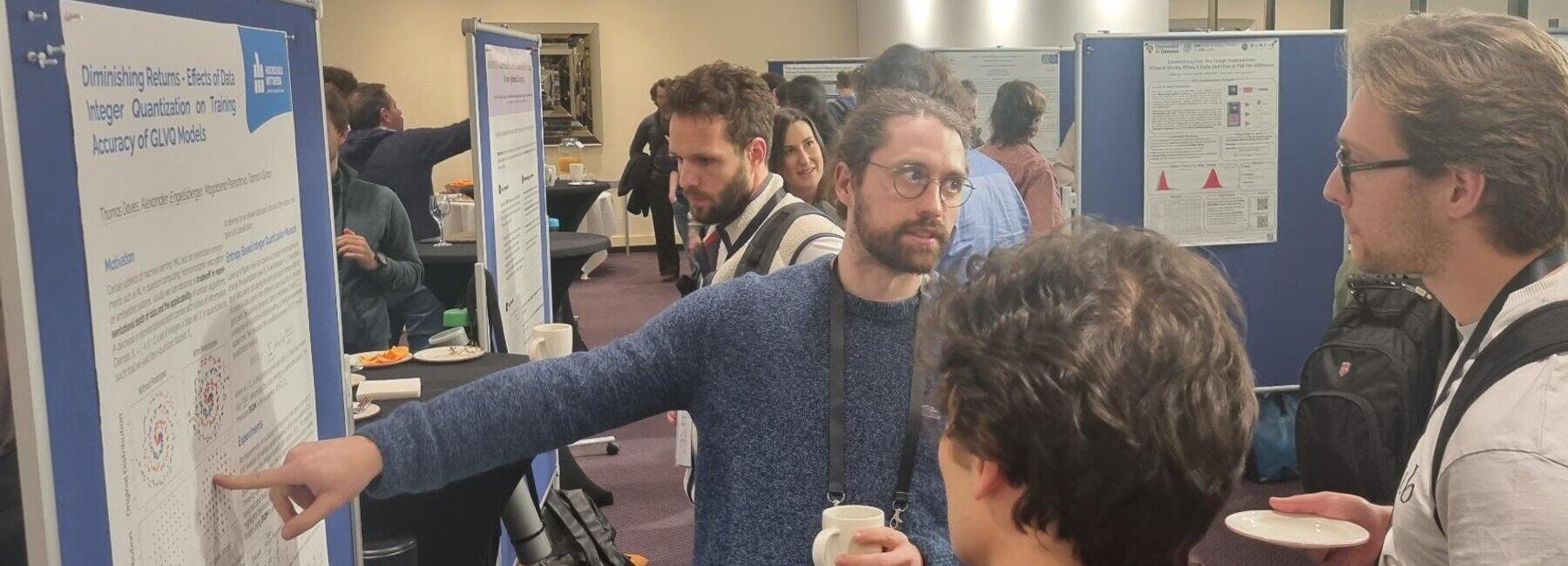
There is a great deal of scientific activity at SICIM (Saxon Institute for Computational Intelligence and Machine Learning): the past few weeks have seen a significant amount of scientific output. It all began at the end of April with a visit to the 34th edition of the renowned international AI conference, the European Symposium on Artificial Neural Networks and Machine Learning (ESANN). In Bruges, Belgium’s cultural and historical capital, around 200 researchers gathered to present and discuss their latest findings and developments in the field of AI.
Mittweida University of Applied Sciences was represented by eight academics from the Department of Mathematics and the SICIM. For Professor Thomas Villmann, this was already his 32nd time attending this long-established conference. Seven recent research papers on AI models from Mittweida University of Applied Sciences were presented; these had been developed in 2026 and selected for presentation following a review and selection process by the international conference programme committee.
This meant that seven of the eight papers submitted by Mittweida University of Applied Sciences were accepted as contributions to the conference, against a general rejection rate of around 70% this year. These papers were primarily devoted to the mathematical verification and development of AI models designed to ensure the safe use of AI, for example in the fields of medicine, social research and digital forensics.
Dr Marika Kaden and Professor Thomas Villmann co-organised a special session focusing on explanatory models based on the generation of meaningful counterfactuals to investigate the limits of the predictive quality of AI models. In this field, the Mittweida researchers are collaborating with colleagues from Bielefeld University. Mathematical verifiability and cognitive models of inference both play a significant role in this aspect of AI research as well. With more than 150 attendees, the session also met with considerable interest amongst conference participants.
Following the conference, two of the papers presented at the Mittweida conference were also selected by the conference programme jury to be submitted in an expanded form as articles for a well-established and frequently cited AI journal. The topics of the two papers to be submitted relate, on the one hand, to the aforementioned counterfactuals (counterexamples in AI) and, on the other hand, to the development of resource-efficient small AI models for technical, bioinformatic and medical applications.
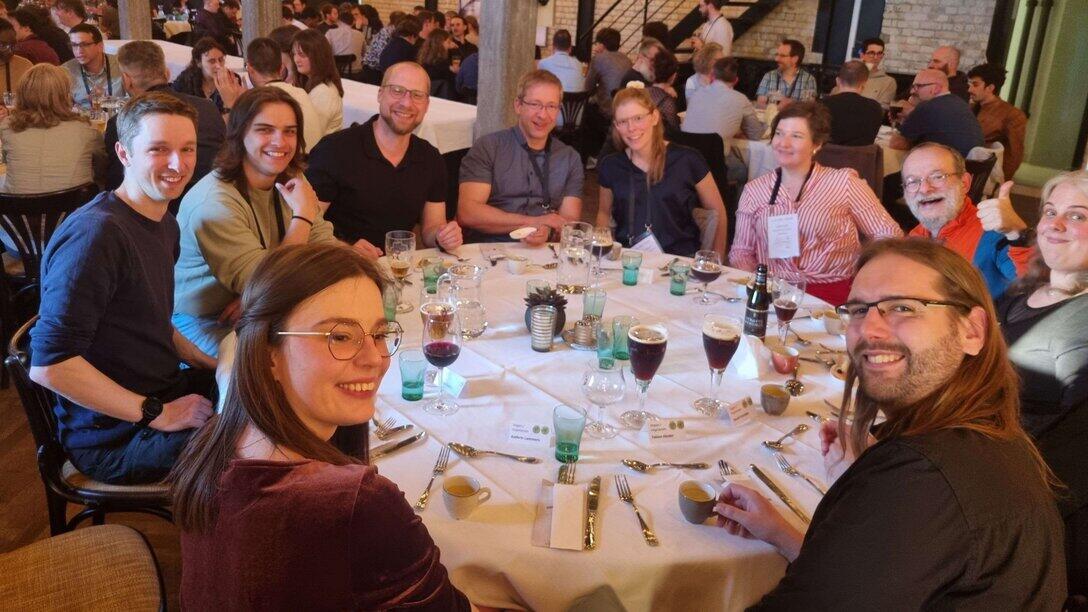
Alongside the conference’s academic focus, both the venue and the traditions at ESANN are always a highlight. Bruges, a beautiful little town that attracts thousands of visitors every day – particularly in spring – can be admired on a city tour. The social dinner at the local brewery ‘De Halve Maan’ was also part of the culinary programme.
Dr Marika Kaden’s participation in the conference was financially supported by a grant of €1,500 from the Gender Equality Team at Mittweida University of Applied Sciences. Thomas Pfaff, Julius Voigt and Professor Thomas Villmann received financial support through the PAL project.
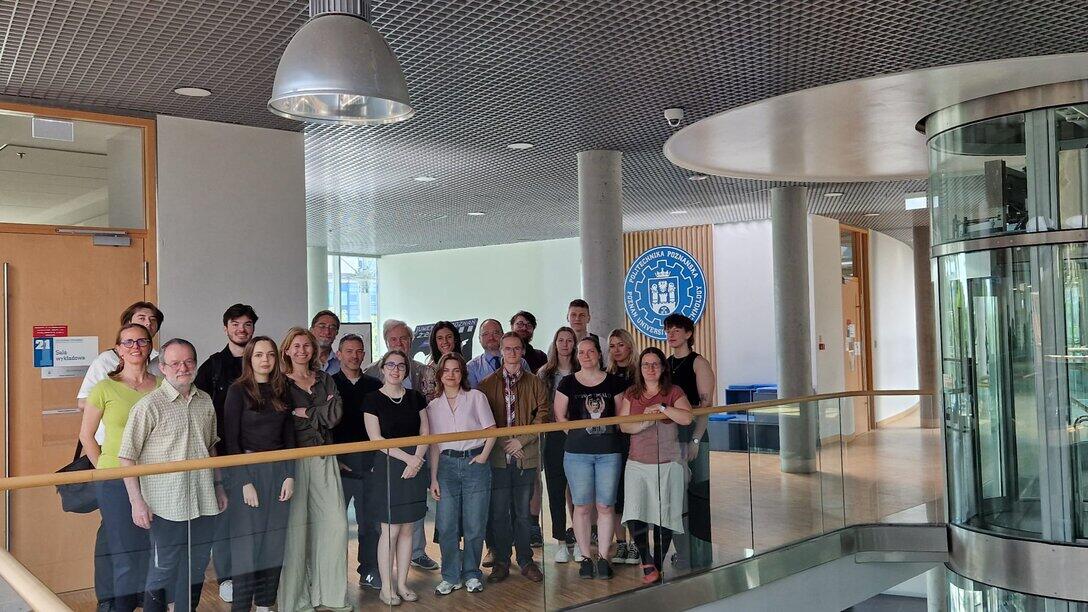
And in early June, we travelled on to the GOATS workshop in Poznań (Poland), organised by our long-standing academic colleagues Prof. Marta Szachniuk and Prof. Aleksandra Świercz from the University of Poznań. At this small but excellent workshop, which focused on the application of AI methods in bioinformatics and medicine, there were three presentations from Mittweida.
Julia Abel presented the future Digital Core Lab from Mittweida University of Applied Sciences, which is being developed at the university as part of the ILEAS teaching architecture project, Marika Kaden gave a presentation on safety statements relating to AI model predictions, and Professor Thomas Villmann spoke on the reliability of machine learning models as part of the scientific colloquium organised by the Institute of Computer Science.
Alongside these fascinating presentations, new contacts were made and future collaborations established. Of particular note is the future closer collaboration with Giovanni Felici, Director of the ‘A. Ruberti’ Institute for Systems Analysis and Computer Science in Rome. The BioSys research group there focuses primarily on bioinformatics and medicine from the perspective of genomic research. The AI expertise from Mittweida is of great interest to them in analysing and understanding the complex interrelationships, for example in the aetiology and development of cancer, with a view to deriving clinical applications. This collaboration also represents a valuable addition to the AI-Med network, in which Prof. Villmann’s research group is one of the principal investigators.
The Mittweida group’s contributions to ESANN were as follows (only Mittweida co-authors are listed):
- Reliable counterfactuals for machine learning models
Marika Kaden, Ronny Schubert, Thomas Villmann - Geometric-analytical generation of counterfactuals for prototype-based classifiers
Marika Kaden, Lynn Reuss, Thomas Villmann - Enforcing Feature Sparseness for Reliable Classification by Prototype-Based Models
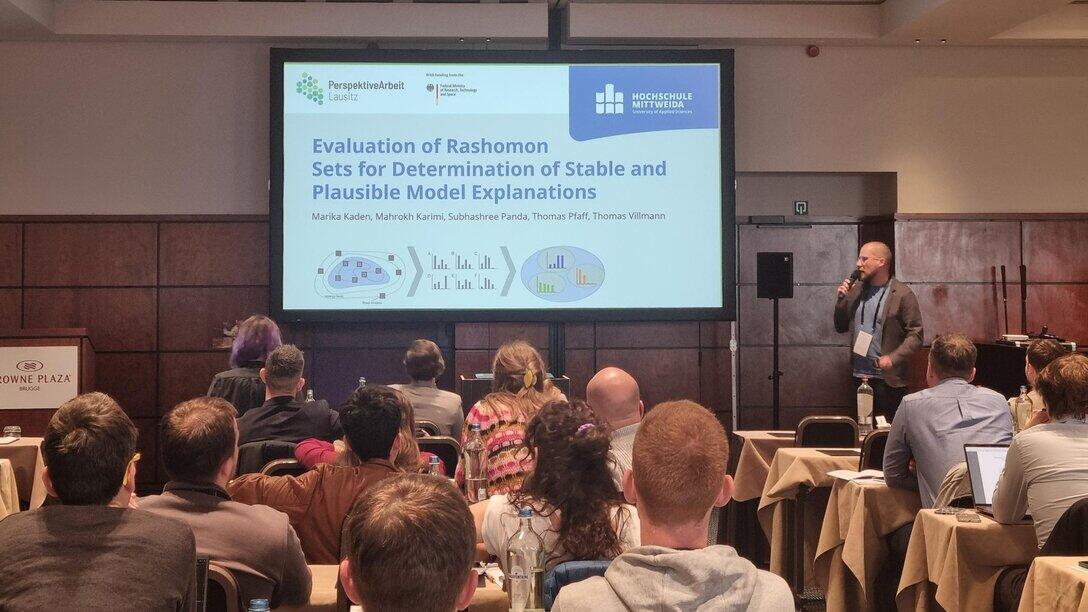
Marika Kaden, Julius Voigt, Thomas Villmann - Evaluation of Rashomon sets for the determination of stable and plausible model explanations
Marika Kaden, Mahrokh Karimi, Subhashree Panda, Thomsa Pfaff, Thomas Villmann - Diminishing returns – Data integer quantisation and its effects on the training dynamics of distance-based classifiers
Thomas Davies, Magda Pšeničkova, Thomas Villmann - Topology-preserving prototype learning on Riemannian manifolds (Topology-preserving prototype learning on Riemannian manifolds)
Magda Pšeničkova, Thomas Villmann - Domination reliability analysis based on graph features using generalised matrix LVQ
Mandy Lange-Geisler, Klaus Dohmen, Thomas Villmann
The diversity of topics covered in these papers demonstrates the breadth of AI research at SICIM, whilst the high acceptance rate also reflects the research strength of Mittweida University of Applied Sciences as a leading AI institution in Saxony with an international reputation.

Text:
Prof. Villmann, Marika Kaden and Thomas Pfaff
Photographs:
Julius Voigt, Marika Kaden, Thomas Pfaff