This page was translated automatically using artificial intelligence (DeepL). The German version is binding. More information about automatic translation
Electricity comes from the socket – but to ensure this continues to work reliably in the future, the energy sector faces enormous challenges. The growing share of renewable energy, the increasing feed-in from decentralised installations such as balcony power stations, the rising number of electric vehicles and heat pumps, as well as new legal requirements regarding grid stability and consumption management, are fundamentally changing the demands placed on planning, technology and market roles – that is to say, on, for example, generators, grid and metering point operators, for example.
At the same time, the focus is shifting more strongly towards customers – as active participants in the energy transition. Self-sufficient or partially self-sufficient neighbourhoods, local energy communities and the smart management of generators and consumers are opening up new opportunities, but are also placing new demands on coordination, infrastructure and regulatory implementation.
All stakeholders in dialogue
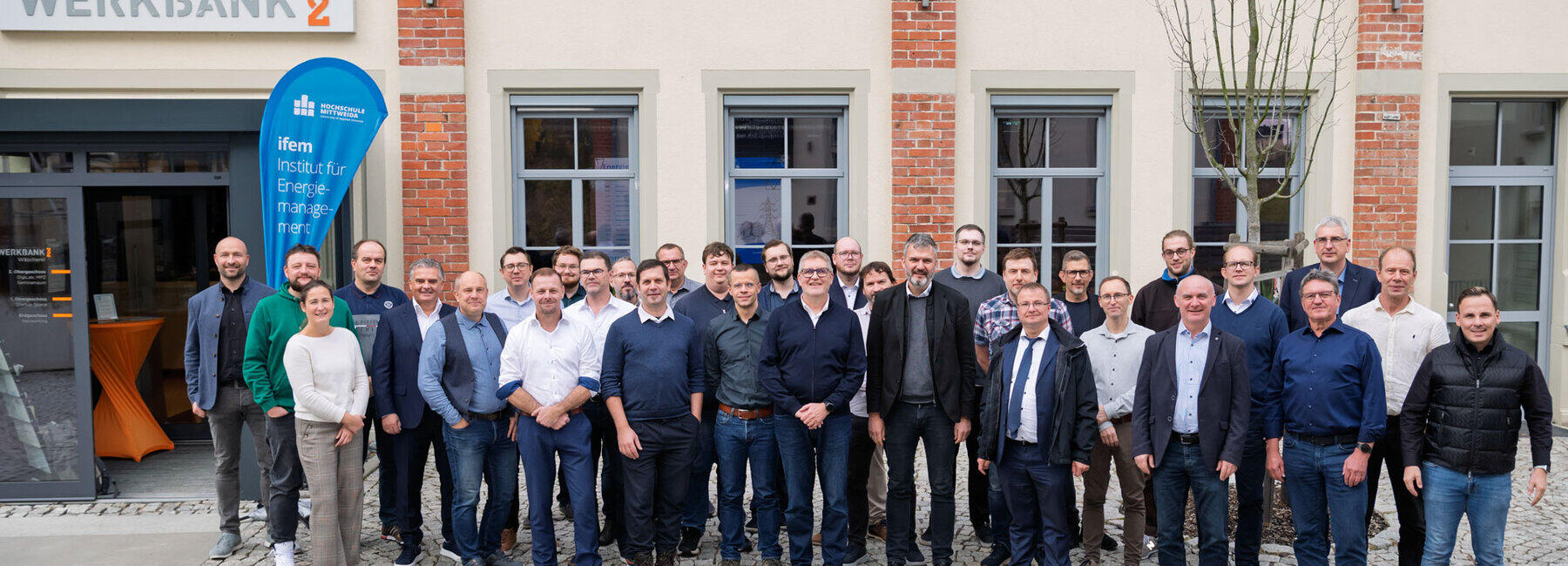
On 11 November 2025, Mittweida University of Applied Sciences (HSMW) demonstrated how technical innovations, legal frameworks and practical applications can be effectively combined in the face of these challenges. To this end, the Institute for Energy Management (ifem) at HSMW hosted an event at Werkbank32 under the motto ‘Energy in Dialogue – Research Meets Practice’. Over 30 participants from the property sector, energy suppliers and network operators, chambers of commerce, agencies, universities and IT service providers took the opportunity to exchange ideas.


The focus was on practical solutions for integrating electric vehicles into local energy systems, developing digital control technologies and implementing community-based energy supply at neighbourhood level. The presentations and discussions presented research-based answers to key practical questions: How can local energy supply be organised in a stable, sustainable and affordable way? How can consumption and generation be balanced in a way that benefits the grid? And how can new market models and regulatory requirements be put into practice?


Telewerk display model
During a tour of the Telewerk real-world laboratory, participants were able to see first-hand how research meets practice at HSMW. Together with Werkbank 32 and the AMSEL tiny house, Telewerk forms a neighbourhood where researchers demonstrate, whilst the facilities are in active use, how real buildings, solar installations, storage systems and charging points – and how Networked Intelligent Systems are used to coordinate consumption, feed-in and load shifting. Telewerk and AMSEL were made possible thanks to funding from the simul+ Innovation Hub of the Saxon State Ministry for Infrastructure and Regional Development (SMIL).


For Professor Ralf Hartig, Director of ifem, “Energy in Dialogue” was a resounding success: “The event demonstrated impressively that the energy transition requires dialogue, collaborative learning and bold pilot projects – particularly at neighbourhood level. This is precisely where event formats such as this one, which bring together research and practice, are needed.”
The ifem is planning the next ‘Energy in Dialogue’ event for 2026, focusing on current challenges in energy supply and the Telewerk real-world laboratory as a research and demonstration building. In doing so, the scientists from Mittweida will each address a key topic for the future that is equally relevant to research, network operators and energy stakeholders.
About ifem
The Institute for Energy Management (ifem) at HSMW has been conducting research for many years at the intersection of energy, digitalisation and society. Together with partners from the energy supply sector, the housing industry, IT and local authorities, ifem develops solutions for a networked, decentralised and resilient energy system. The focus is on local energy markets, smart metering and control technologies, regulatory implementation strategies and real-world test environments – such as the Telewerk real-world laboratory in Mittweida.