This page was translated automatically using artificial intelligence (DeepL). The German version is binding. More information about automatic translation
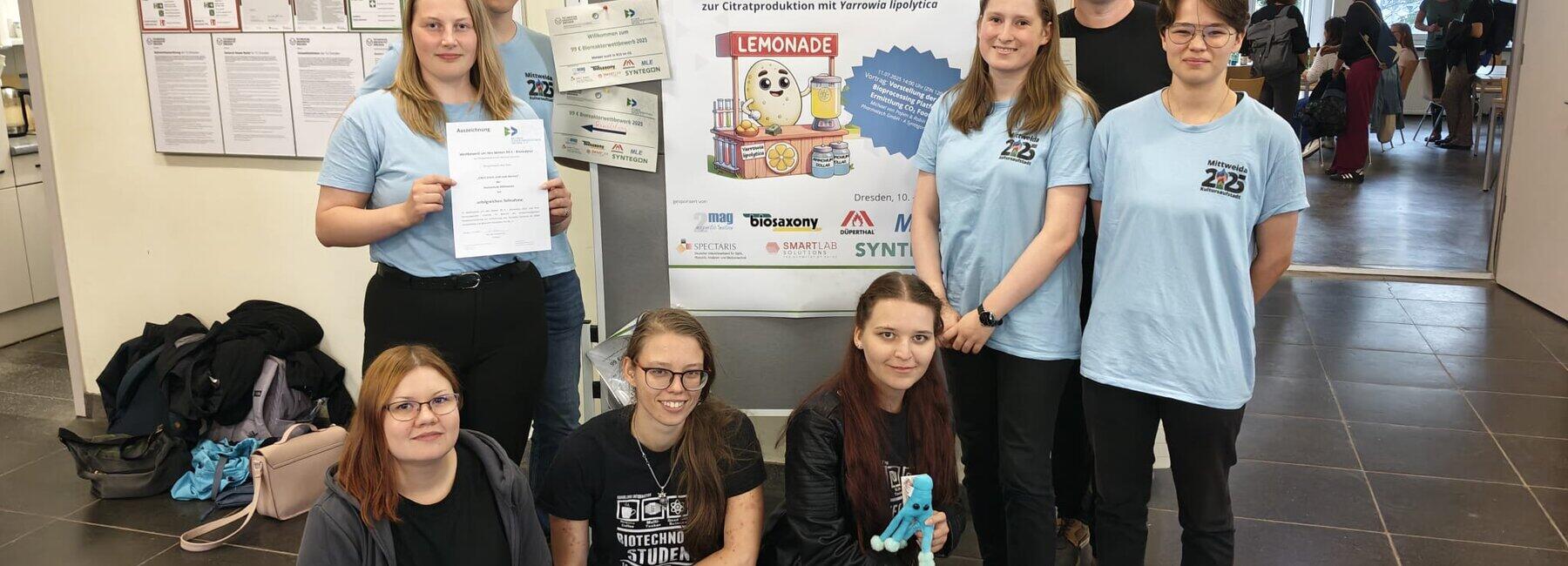
CACD – that stands for Citric Acid Cool Device. It wasn’t just the device that was ‘cool’, but also the whole competition and the Mittweida team. In mid-July, the Institute of Food and Bioprocess Engineering at TU Dresden hosted the 99€ Bioreactor Competition for the 10th time, welcoming 11 teams to the Saxon capital.
Citratherstellung mit einem Budget von 99 Euro
Das diesjährige Wettbewerbsziel war es, in einem selbstgebauten Bioreaktor Citrat mit der Hefe Yarrowia lipolyitca herzustellen – und das unter Einhaltung eines Budgetlimits von 99 Euro. Industriell eng verwandt mit Citrat ist die Zitronensäure, die traditionell durch die Verarbeitung von Zitrusfrüchten gewonnen wurde; heute erfolgt ihre großtechnische Herstellung überwiegend mittels Fermentation durch den Schimmelpilz Aspergillus niger. Dieses Verfahren birgt jedoch einige Nachteile, wie eine unbefriedigende Ausbeute nach der Aufreinigung und die Anhäufung erheblicher Mengen fester und flüssiger Abfälle, weshalb die Hefe Yarrowia lipolytica zunehmend in den Fokus der Forschung rückt, da sie das Potenzial bietet, Citrat effizienter zu produzieren [1]. Citrat ist dabei ein Nebenprodukt verschiedener energieliefernder Stoffwechselwege, wie der Glykolyse und dem Citratzyklus [2].
Cooles Equipment fordert kreatives Team
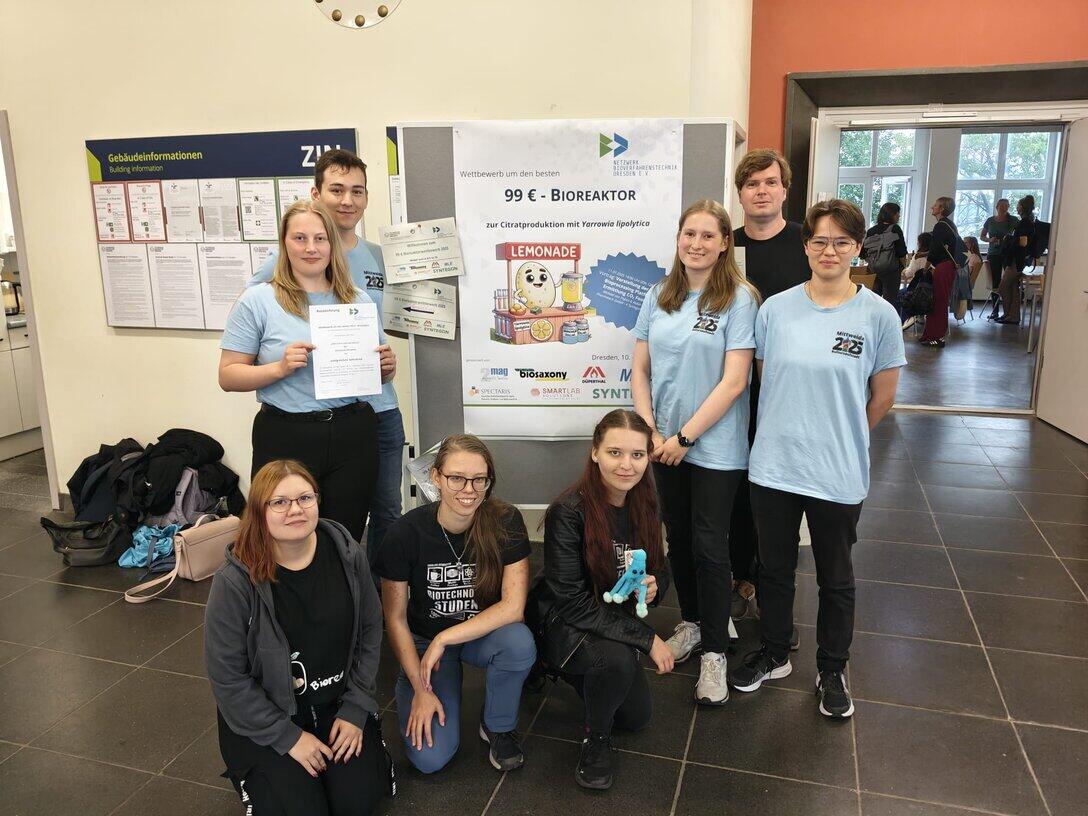
Die Hochschule Mittweida wurde dieses Jahr durch die Masterstudierenden Anna Naruschat, Jenny L. Woide und Vanessa Bergler, sowie durch die Bachelorstudierenden Emilia Korb, Josephine Speer, Julian Spies und Pia Lange unter der Betreuung von René Kretschmer von der Fachgruppe Biotechnologie vertreten.
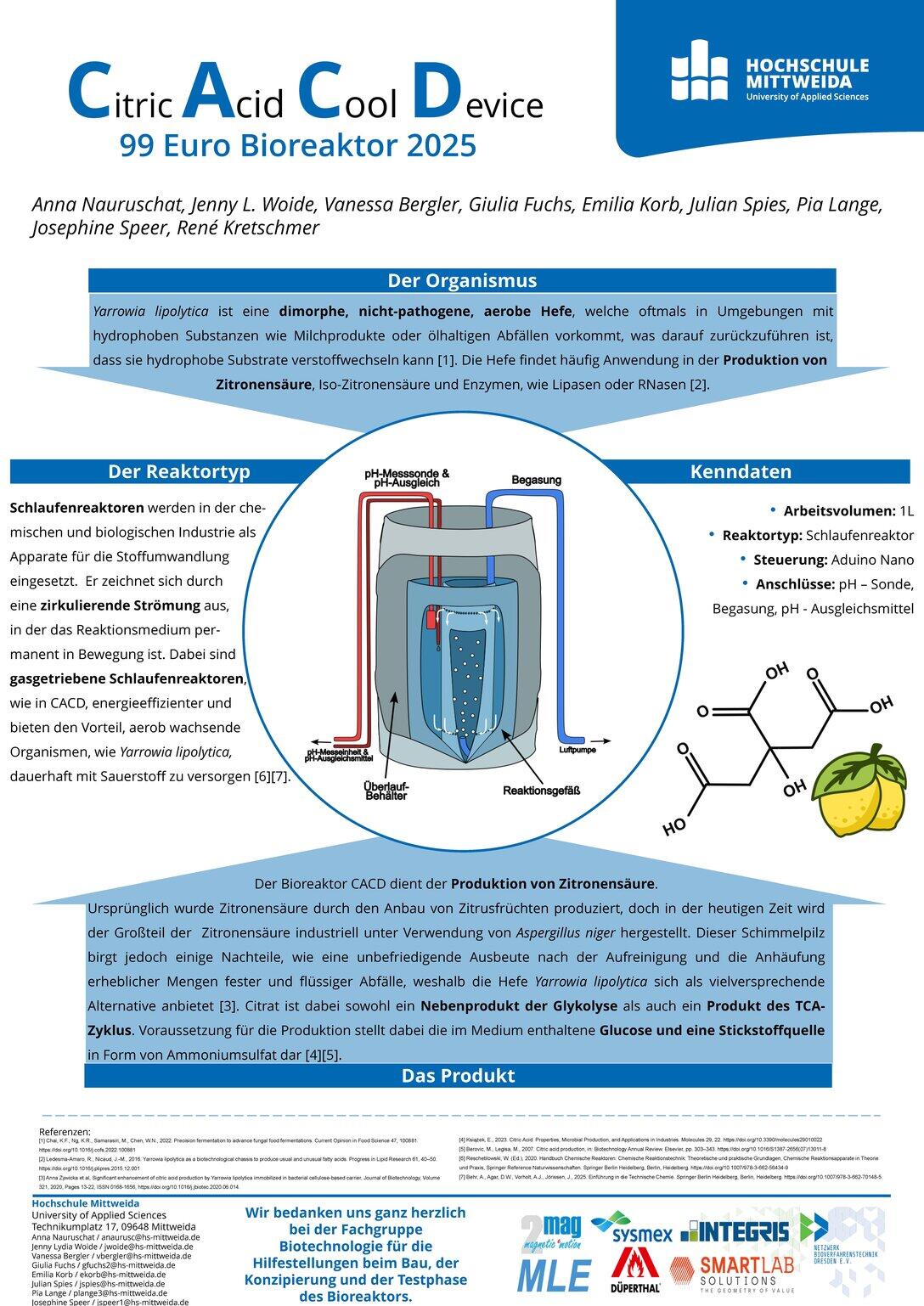
Es etablierte sich schnell der Plan, einen Schlaufenreaktor herzustellen. Schlaufenreaktoren zeichnen sich durch eine kontinuierlich zirkulierende Strömung aus, bei der das Reaktionsmedium ständig in Bewegung bleibt. Besonders gasgetriebene Schlaufenreaktoren, wie in CACD, gelten als energieeffizient und haben den Vorteil, dass sie sauerstoffabhängige Organismen wie Yarrowia lipolytica zuverlässig und dauerhaft mit Sauerstoff versorgen können [3], [4].
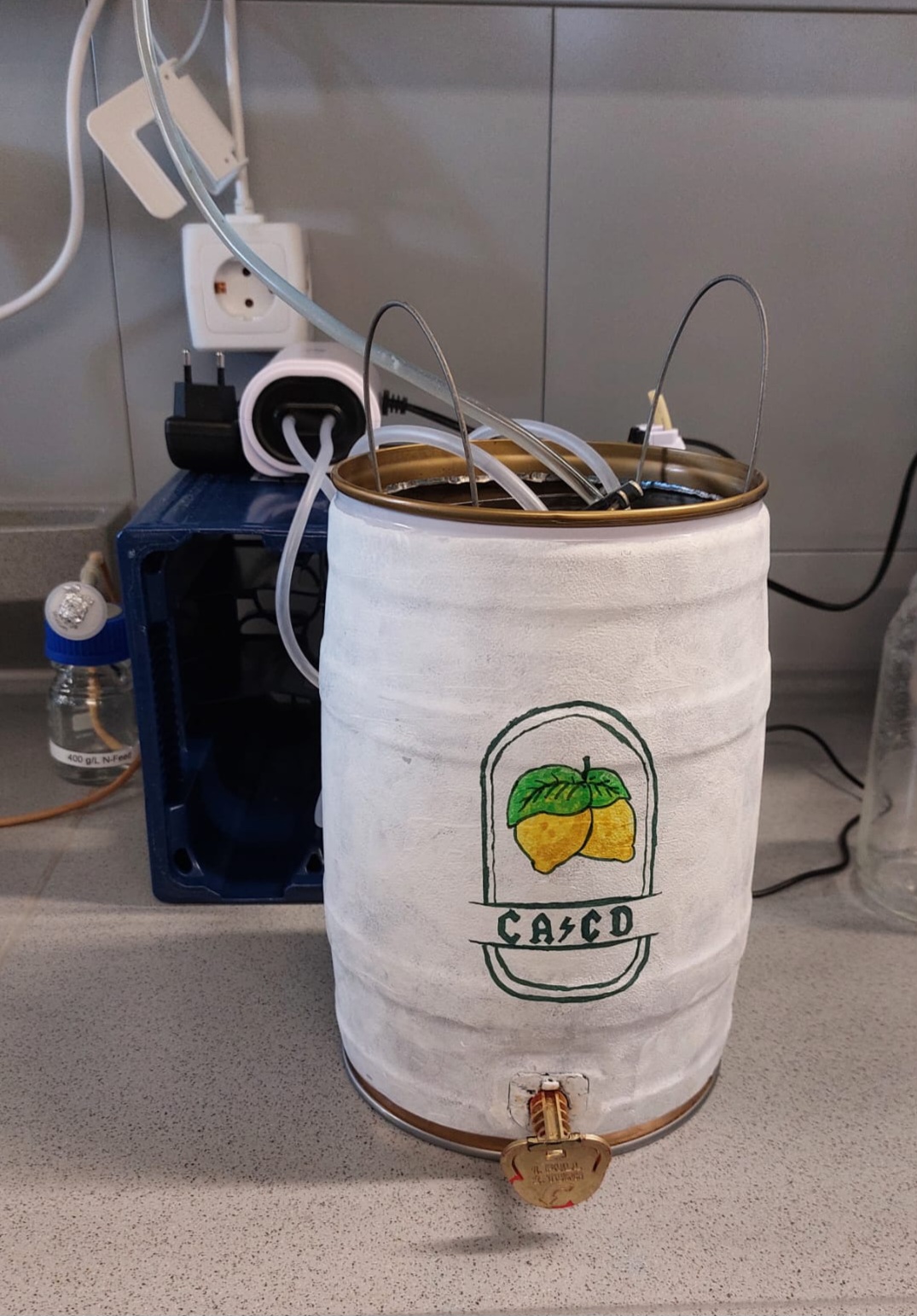
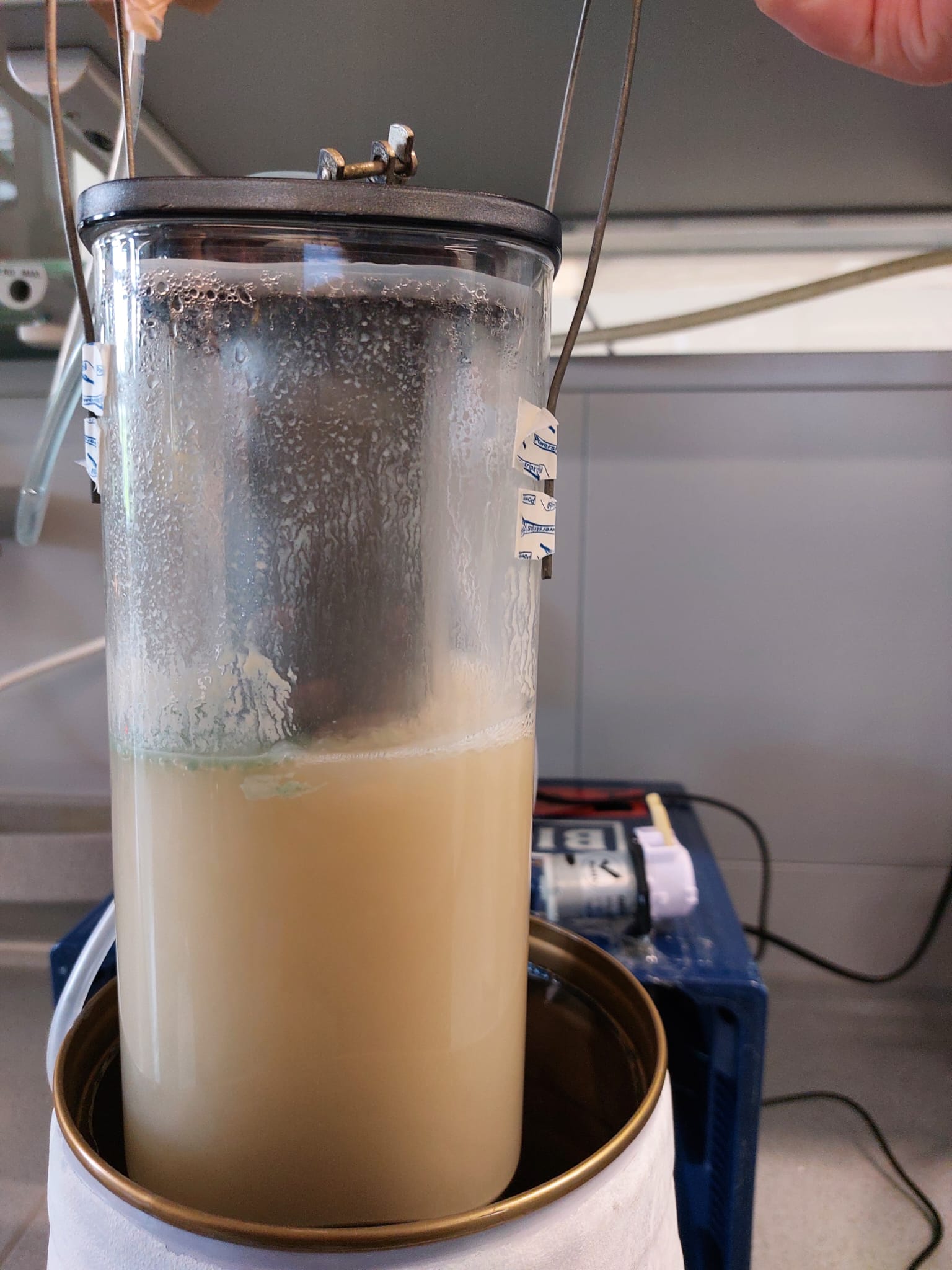
Conventional trickle stones and other equipment from the aquarium trade were used to build the reactor. The planned pH control system, comprising a pH electrode and a pump, failed shortly before the competition began for technical reasons, whereupon the team responded with great ingenuity: A syringe containing diluted caustic soda was quickly glued to a shelf, and the flow rate was adjusted using a hose clamp so that the drip rate would be sufficient to stabilise the pH level between 4.5 and 5.5. The reactor itself was housed in a repurposed beer keg to prevent any potential water damage. This unusual ‘packaging’ ultimately generated a great deal of excitement, as the interior of the reactor remained a mystery to the competing teams throughout the entire 24-hour cultivation period.
With a yield of 0.616 g and a low cost of €66.86, HS Mittweida ultimately secured 5th place. The winners were the home team from TU Dresden, with an impressive yield of 2.88 g of citrate.
We offer our warmest congratulations on this success!
References
[1] Anna Żywicka et al, ‘Significant enhancement of citric acid production by Yarrowia lipolytica immobilised in a bacterial cellulose-based carrier’, *Journal of Biotechnology*, Volume 321, 2020, pp. 13–22, ISSN 0168-1656, doi.org/10.1016/j.jbiotec.2020.06.014.
[2] Książek, E., 2023. Citric Acid: Properties, Microbial Production, and Applications in Industries. Molecules 29, 22. doi.org/10.3390/molecules29010022
[3] Reschetilowski, W. (Ed.), 2020. Handbook of Chemical Reactors: Chemical Reaction Engineering: Theoretical and Practical Fundamentals, Chemical Reaction Apparatus in Theory and Practice, Springer Reference Natural Sciences. Springer Berlin Heidelberg, Berlin, Heidelberg. doi.org/10.1007/978-3-662-56434-9
[4] Behr, A., Agar, D.W., Vorholt, A.J., Jörissen, J., 2025. Introduction to Technical Chemistry. Springer Berlin Heidelberg, Berlin, Heidelberg. doi.org/10.1007/978-3-662-70148-5