This page was translated automatically using artificial intelligence (DeepL). The German version is binding. More information about automatic translation
At the end of June, Mittweida University of Applied Sciences was represented at the Innovation Conference in Dresden – an industry gathering focusing on forward-looking technologies, research and the transfer of knowledge between academia and industry. The conference centred on practice-oriented approaches to promoting innovation, new developments in applied research and their potential for commercial application.
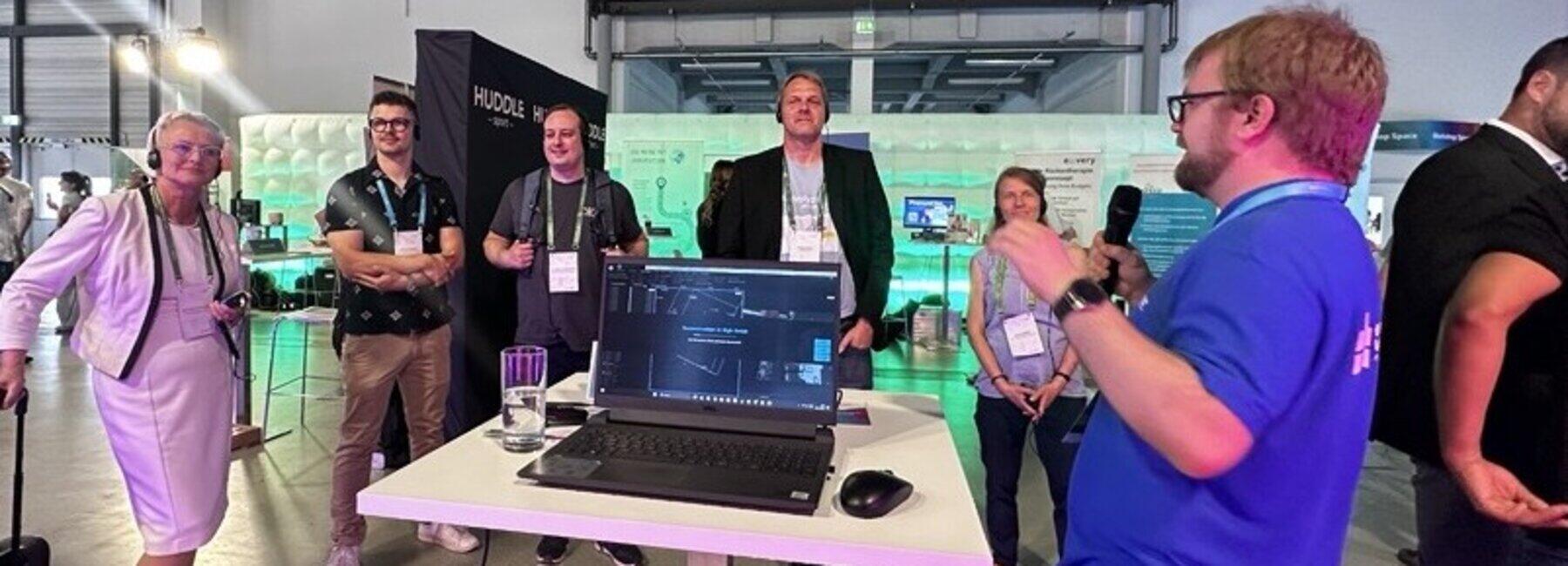
Among the exhibitors was the Forensic Science Investigation Lab at Mittweida University of Applied Sciences, which delighted numerous visitors with its interactive ‘Crimecave’. The exhibition stand offered a vivid introduction to forensic work and the methodology of forensic case handling. The Crimecave project aims to develop a mobile 3D human body scanner that can be used in the context of forensic analysis of video footage. To this end, 3D models of suspects are to be created using photogrammetry and rigs (digital skeletons), which can then be used for comparison with perpetrators in crime videos to enable the identification of suspects as perpetrators. At the event, Eric Renner and Fabian Schmiedel – long-standing members of the specialist group with extensive experience in forensic case work – demonstrated how innovative methods are applied in the collection and analysis of forensic evidence.
Fabian Schmiedel: “Visitors to our stand were very interested in our Crimecave and were able to gain a fascinating insight into our rig method and how it is used. There were many informative discussions on the subject and some surprised reactions to the current capabilities of forensics.”
Text: Maria Rein, Fabian Schmiedel
Images: Mittweida University of Applied Sciences