This page was translated automatically using artificial intelligence (DeepL). The German version is binding. More information about automatic translation
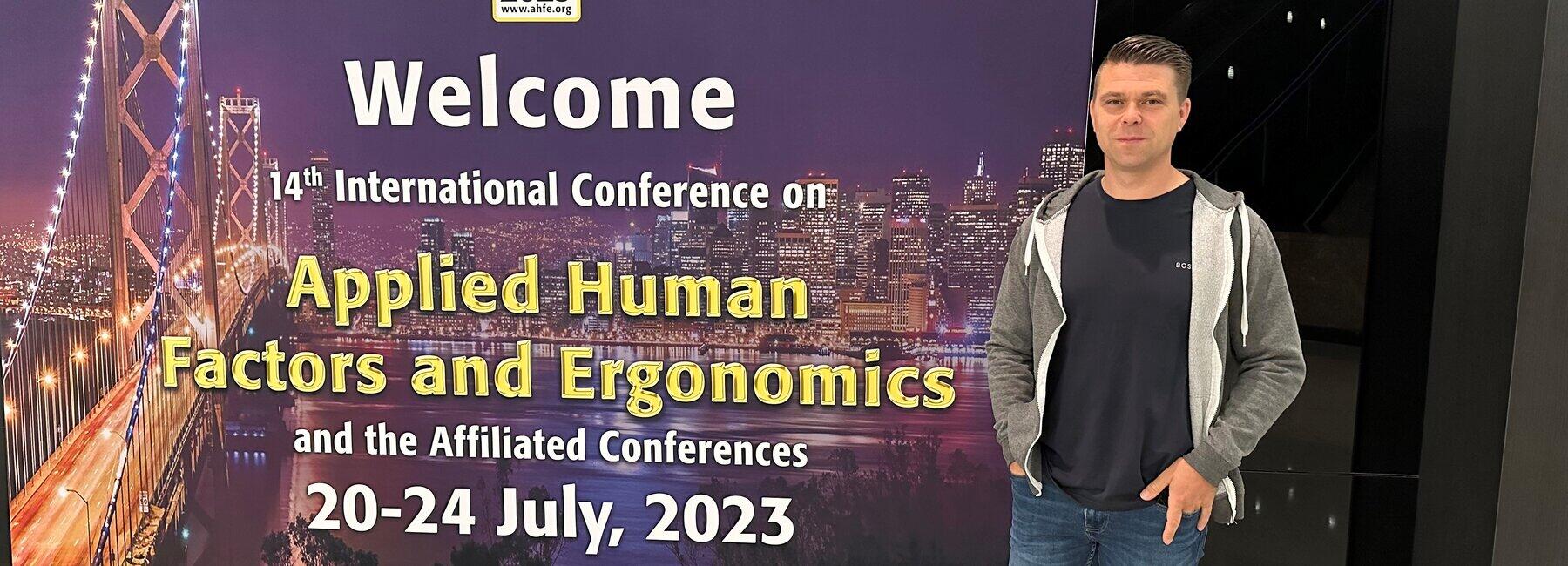
AHFE stands for Applied Human Factors and Ergonomics. This global forum facilitates the exchange of scientific findings on various aspects of human factors and ergonomics in the context of the use of multiple technologies. The conference has established itself as a driving force behind groundbreaking innovations and developments and attracts an interested audience every year. AHFE2023 took place in San Francisco at the end of July this year, and among the more than 5,000 researchers from around the world were Professor Christian Roschke and Rico Thomanek from Mittweida.
In the session ‘Cognitive Computing for Healthcare and Wellbeing’, Professor Christian Roschke and Rico Thomanek presented the latest research findings in the field of computer-aided detection of human activities.
‘AI-powered real-time analysis of human activity in videos via smartphone’ – what sounds like the plot of a spy thriller at first glance is, in reality, a fascinating field of research.
In our increasingly digitalised world, there are ever-growing opportunities to integrate technology seamlessly into our everyday lives. With the growing number of video recordings – many of which are now captured using smartphones – the immediate classification of human activities and their tagging for archiving purposes is proving extremely useful. However, this concept is not limited to mobile recordings. There are also a wide range of applications in stationary settings, such as the detection of precise movement sequences in the sport and health sectors, or monitoring and automated alerting in security-critical environments such as demonstrations and festivals.
The enthusiasm and interest shown by the participants in the research advances presented demonstrate that activity recognition is an important field of research that is constantly opening up new possibilities and potential.
In addition to the presentations, the conference offered a wide-ranging programme of interactive workshops, panel discussions and a trade exhibition.
The two researchers received a very special honour during the conference: Together with their colleague Dominik Breck, they had their paper “Automated generation of synthetic person activity data for training AI models” – submitted to the AHFE International Conference Hawaii Edition – accepted for presentation in Honolulu. This paper focuses in particular on the automatic creation and annotation of synthetically generated animations of human activities in a virtual environment. The considerable volume of annotated data required for training poses a significant challenge in activity recognition.
Text and photos: Prof. Christian Roschke