This page was translated automatically using artificial intelligence (DeepL). The German version is binding. More information about automatic translation
Anyone unfamiliar with Saxony’s higher education landscape is regularly surprised by the scale of academic activity taking place in the supposedly small university town of Mittweida. This is particularly true of the three major cities. ‘The town with the highest number of students per inhabitant in Germany’. ‘Europe’s most modern academic media centre’. ‘Pioneering research of the sort usually found at universities’. ‘Mittweida connoisseurs’ know all this and much more about the HSMW. At the first SPIN2030 Science Festival, numerous residents of Dresden also got to experience it for themselves.
On 8 and 9 March, 8,000 visitors came to the Dresden Technical Collections to find out from over 50 scientific institutions what researchers in the Free State of Saxony work on every day – and what that means for their own lives. Right at the forefront were a large number of researchers from the HSMW specialising in Biotechnology, forensics, engineering, computer science, Physical Engineering and social work.
“I am proud and grateful that we were able to inspire so many people with the SPIN2030 Science Festival. That was, and remains, our aim, because Saxony depends on bright minds today and will depend on them even more in the future,” explained Science Minister Sebastian Gemkow afterwards. “The answers to the big questions of our time lie in science and research, whether it be climate change, a more resource-efficient and sustainable way of life, or the fight against disease. Research gives rise to innovations which are then realised in applications, new products and even businesses.”
Mittweida’s strengths in transfer and research have been demonstrated
The translation of research findings into applications or products is referred to in the academic world as ‘transfer’ or the ‘third mission’. “In this respect, we are well ahead of other universities. Research at HSMW is entirely application-oriented. We conduct research into what the business world needs and what drives it forward,” states Professor Uwe Mahn, Vice-Chancellor for Research at HSMW. “Through our European university alliance, EURECA-PRO, we are focusing precisely on the issues highlighted by the Minister: responsible consumption and production, and a resource-efficient and sustainable way of life. We actively contribute the knowledge gained from this to the region – whereby ‘region’ extends as far as Lusatia, where we are helping to manage structural change through the PAL project.”
It is no coincidence that Mittweida University of Applied Sciences once again set a record for third-party funding in 2022. Third-party funding refers to grants from public or private institutions that do not form part of the university’s actual budget. These additional funds are what make research at Universities of Applied Sciences (UoAS) possible in the first place. Unlike universities, UoAS receive very little funding to carry out basic research. Mittweida University of Applied Sciences (HSMW) secured 17.3 million euros and invested it in the region. In terms of the number of professorships at UoAS, this is a nationwide record and the top position amongst UoAS in Saxony. However, figures alone can hardly convey the significance of research. This is precisely why the researchers from Mittweida brought numerous exhibits to the SPIN2030 science festival.
Insights based on practical experience
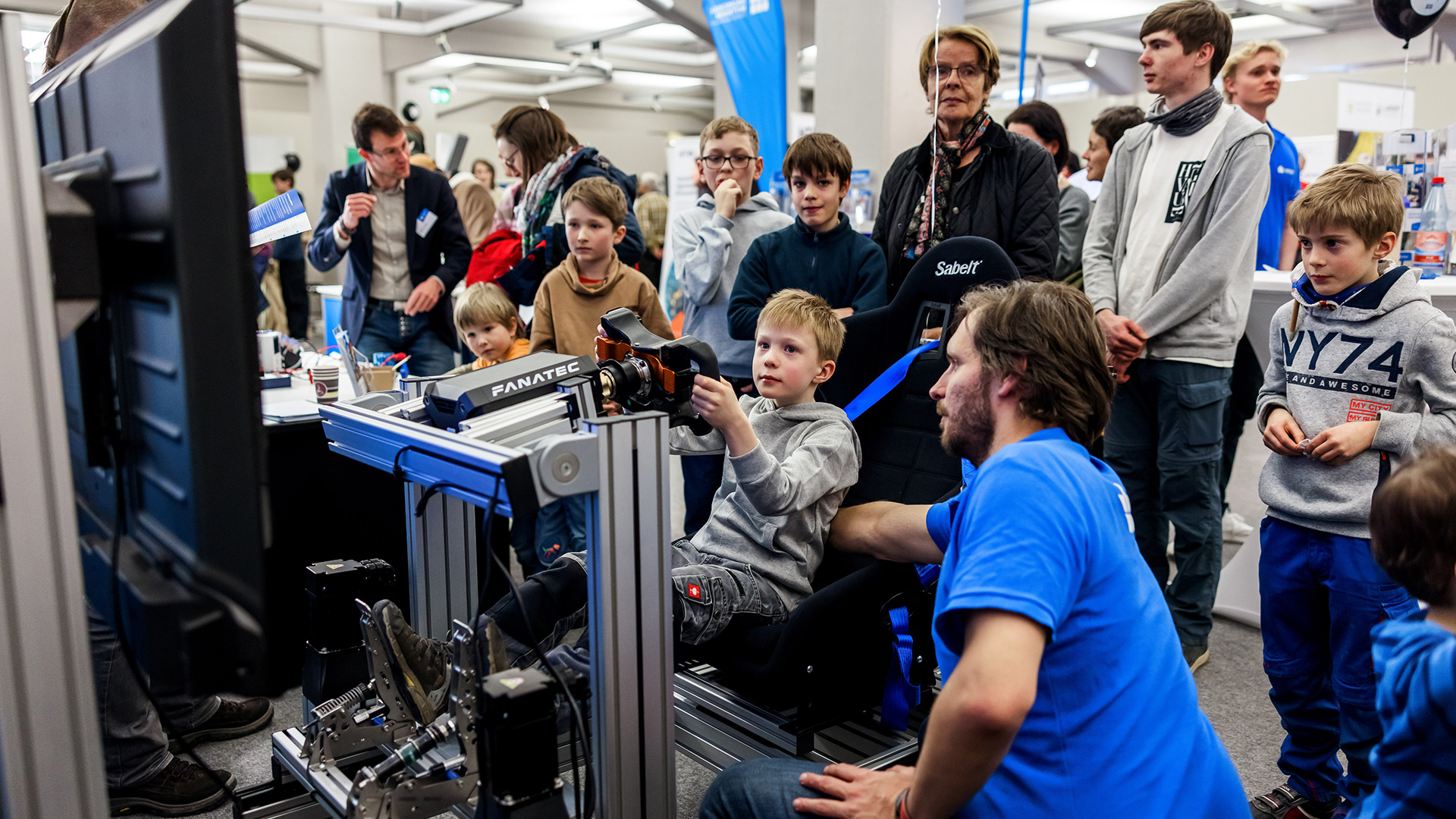
The media informatics students from Mittweida invited visitors to the Science Festival to take a seat in one of their driving simulators. In Dresden, the audience not only experienced first-hand just how realistically the simulations now replicate driving a car.
Professor Matthias Vodel’s team gave a practical explanation of how what might be seen as a gimmick at the Living Lab for Motion Simulation and Software Development in Mittweida helps to enhance the immersive experience; in other words, making the simulation even more realistic, which opens up new possibilities for driver training as well as for improving driver assistance systems. Among others, the media informatics students at Mittweida are collaborating on this with the Austrian brand KTM and the Nürburgring, as well as with IAV, one of the world’s leading high-tech service providers to the automotive industry.
Science for the very youngest
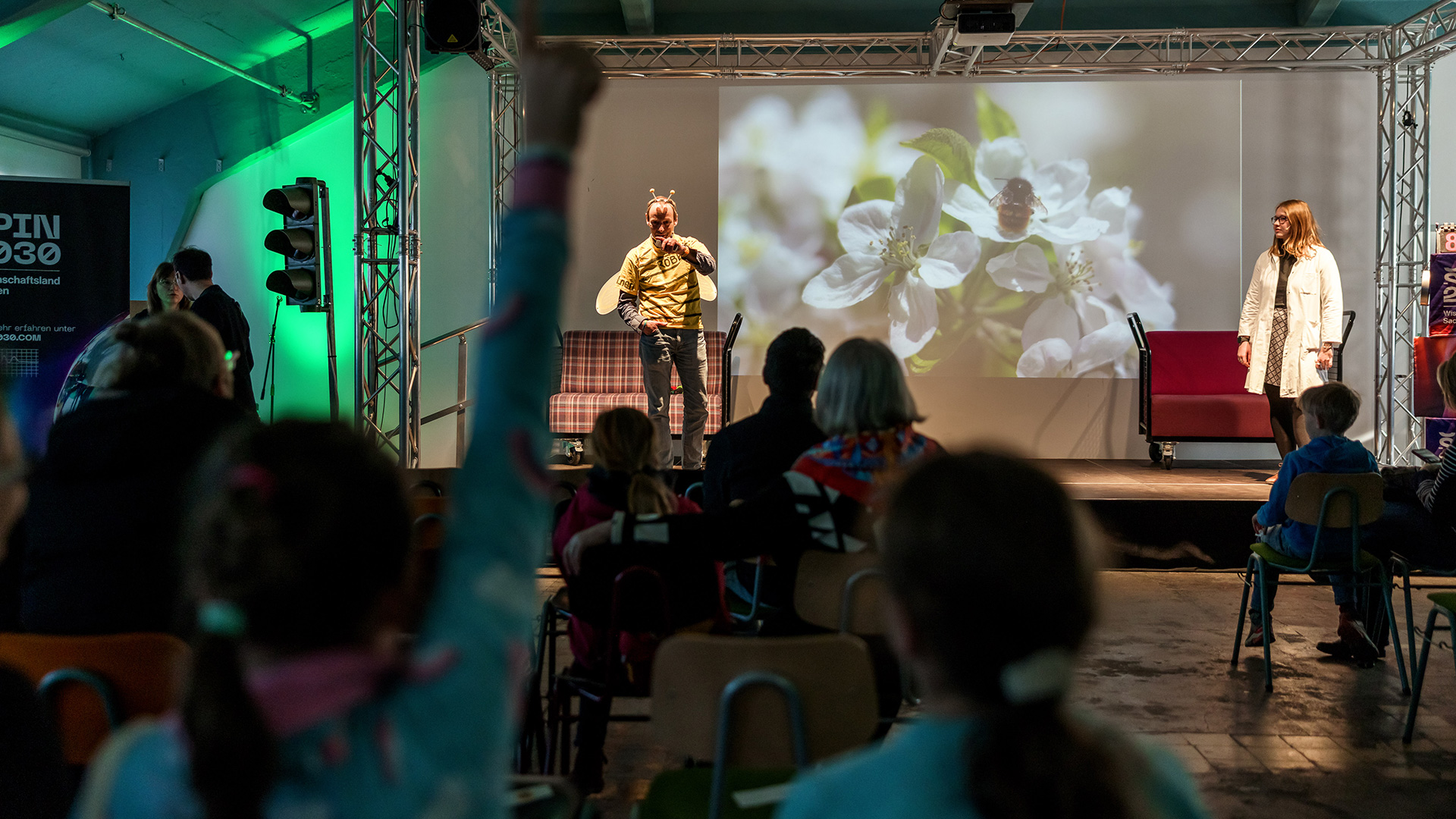
A particular focus for the Mittweida delegation at the SPIN2030 Science Festival was to spark an interest in science and research among the youngest audience members. Biotechnology professor Röbbe Wünschiers, dressed as a bee, captivated the academic talents in attendance at a special edition of the Mittweida Children’s University. He explained to the children – and, in some cases, their parents too – how important bees are for preserving biodiversity and for the delicious fruit on our tables.
Equally popular were the workshops run by the team led by Professor Richard Börner, an expert in Biophotonics. For more than 100 participants, the workshop entitled ‘Using light and Lego to explore the building blocks of life’ involved assembling a strand of DNA using the familiar interlocking bricks and “code” using a specially developed “Lego sequencer” equipped with optical sensors, and then match it online to a living organism.
A series of discussions is reshaping the image of the HSMW
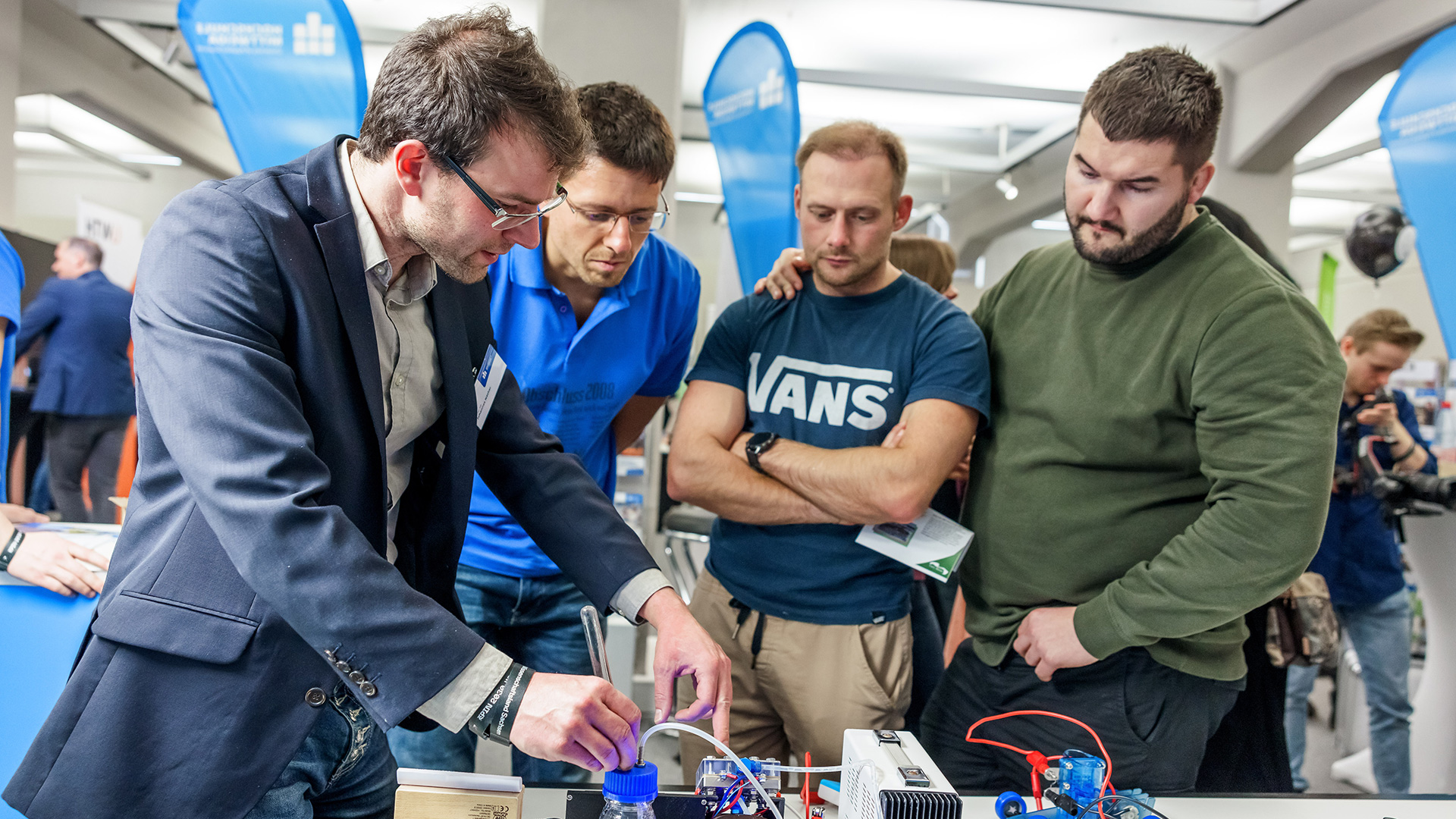
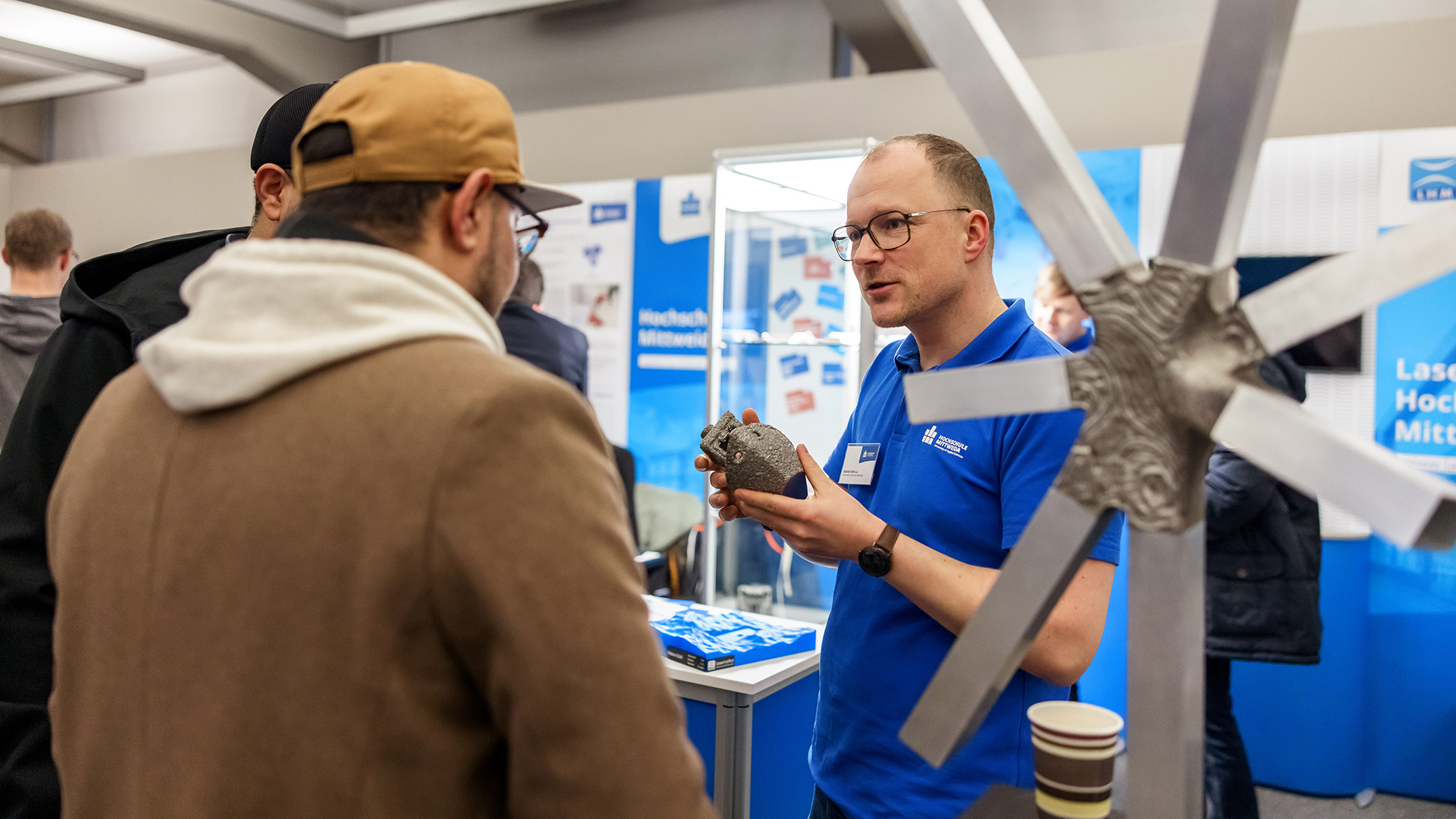
At the HSMW stand, where visitors were also able to witness the electrolysis of green hydrogen using a particularly cost-effective anode – the development of which is currently being coordinated by HSMW – other researchers also answered critical and interested questions. Professor Stephan Beetz, for example, spoke about how inclusion and diversity can lead to future opportunities; Professor Thomas Villmann discussed the potential and risks of AI with the guests.
Forensic science professor Dirk Labudde also provided a special highlight: he took to the stage at the SPIN2030 Science Festival on Friday evening as the centrepiece of Science Night and took the audience on an entertaining journey into the possibilities of digital forensics. “At night in the museum – things sometimes go missing.” was the title of his talk, in which he explained how the forensic scientists from Mittweida supported the investigating authorities following the theft of the 100-kilo gold coin from Berlin’s Bode Museum and the break-in at Dresden’s Green Vault.
About SPIN2030
Through the ‘SPIN2030. Saxony – Land of Science’ campaign, the Saxon Ministry of Science aims to showcase the diversity, excellence and appeal of Saxony as a research hub to a wide audience. Universities, the Saxony Vocational Academy and non-university institutions from across the state are taking part. SPIN2030 had already made a stop in Mittweida back in January. As part of the ‘Experience Saxony: Land of Science’ series, Minister for Science Gemkow took part in a discussion on the opportunities and risks of artificial intelligence within the HSMW’s ‘Controversial Dialogue (Dialog Kontrovers)’ event series.