This page was translated automatically using artificial intelligence (DeepL). The German version is binding. More information about automatic translation
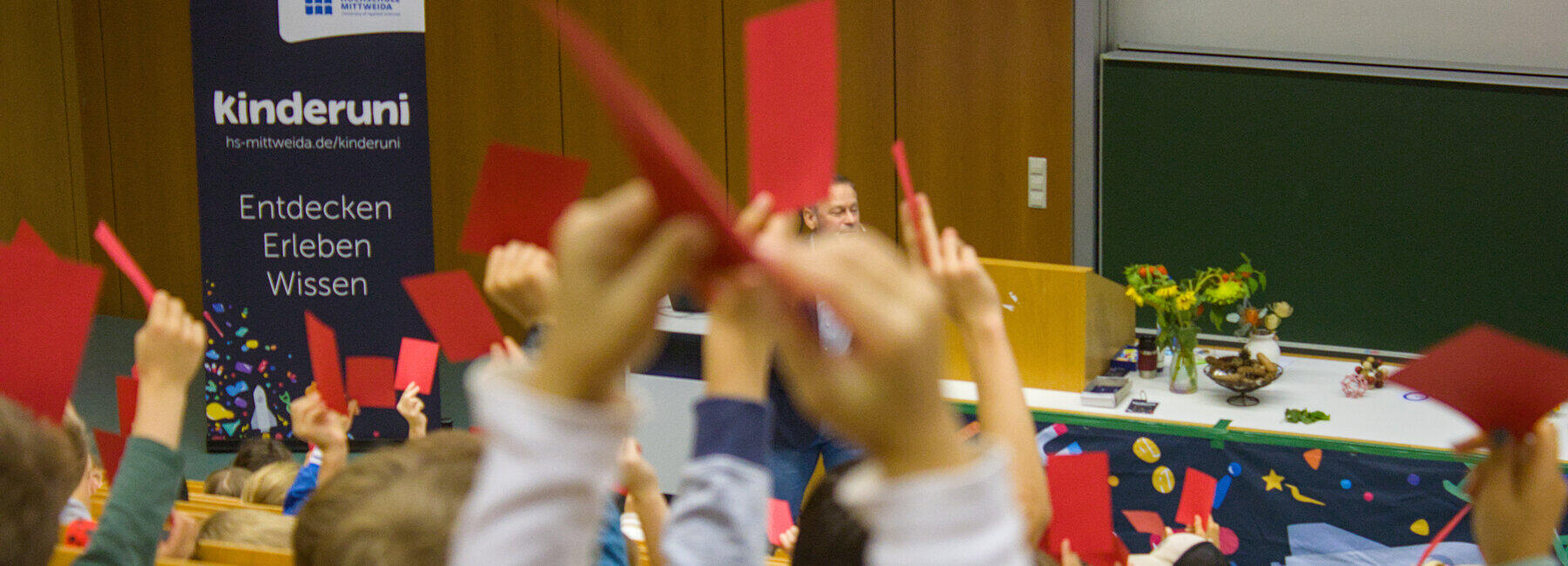
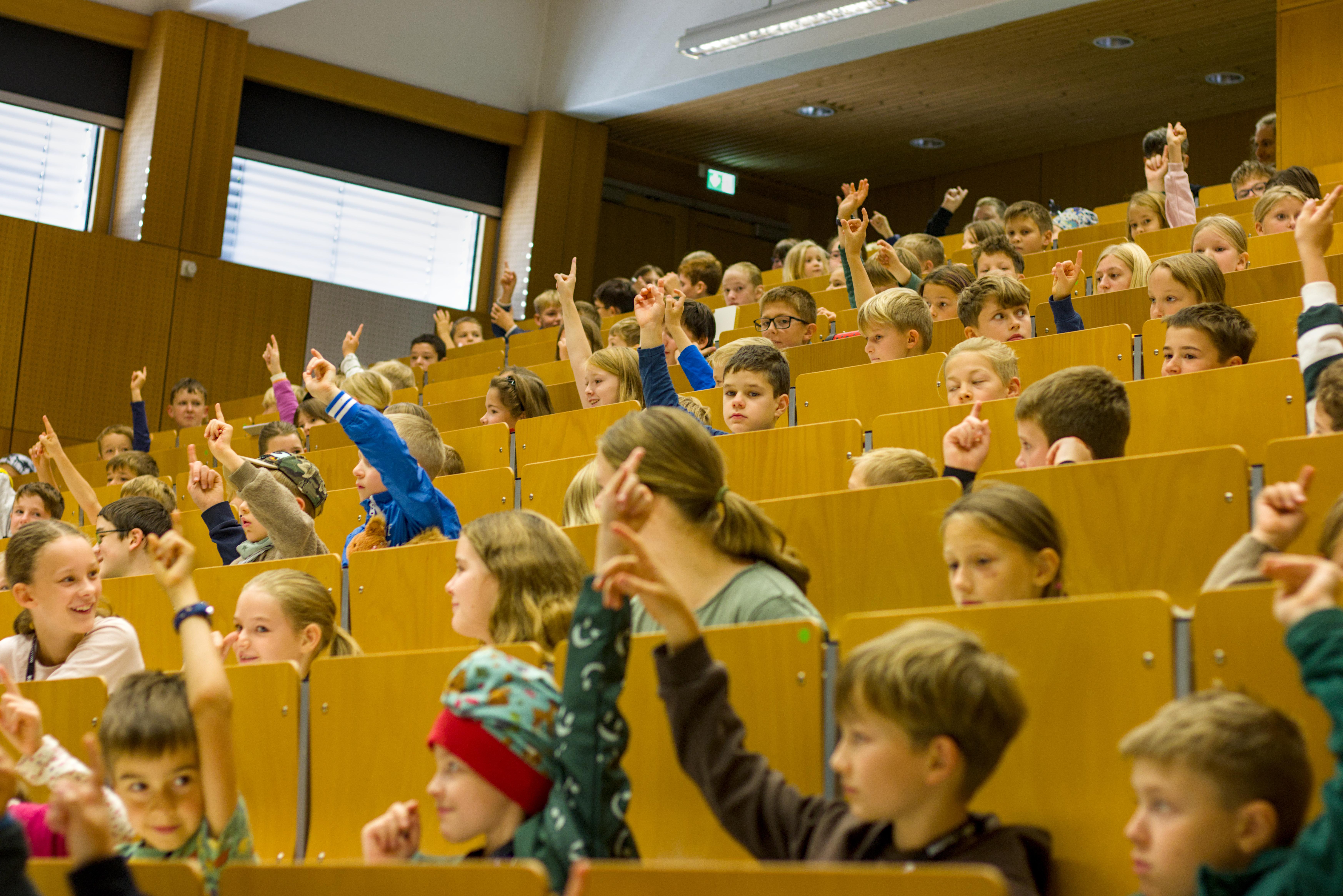
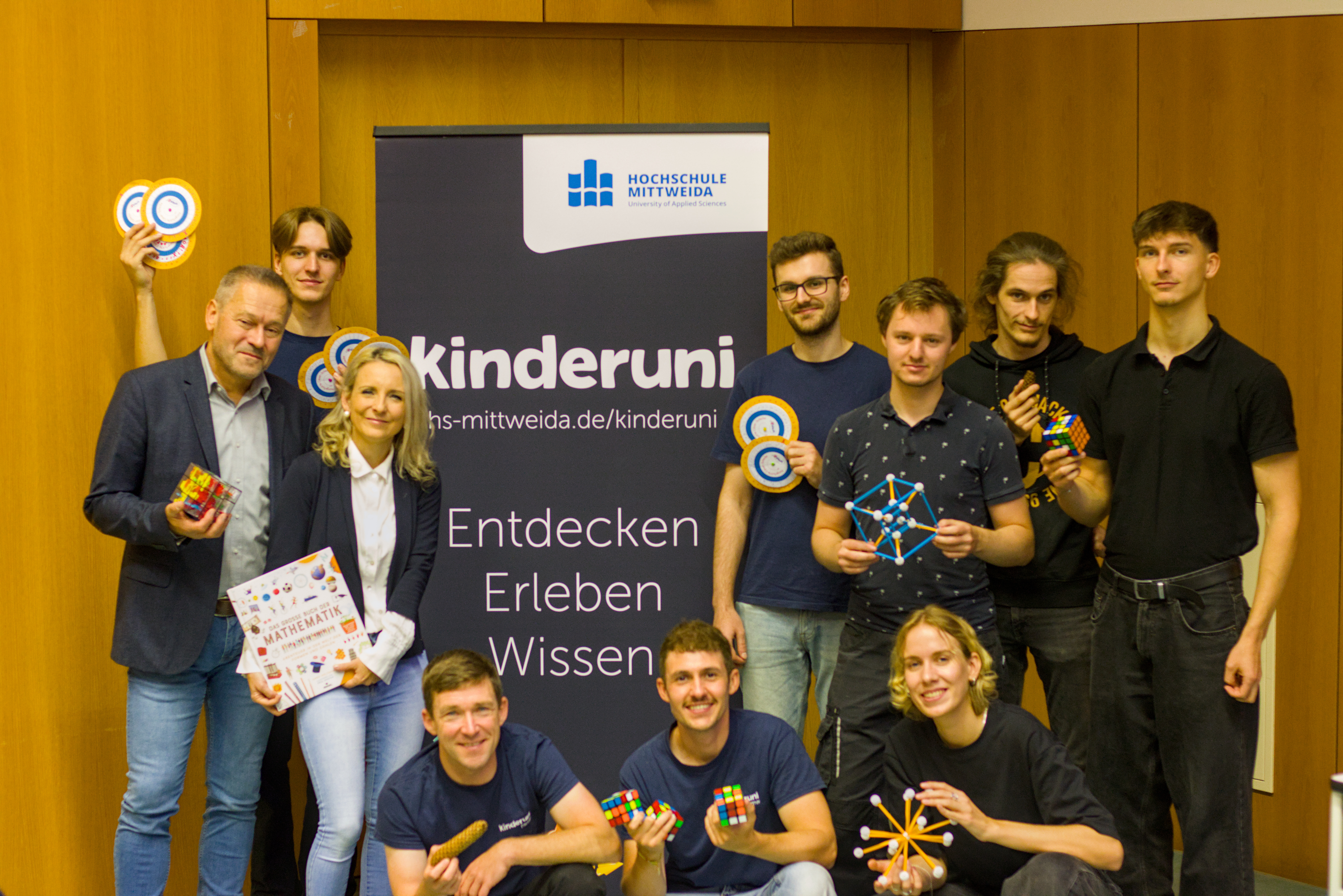
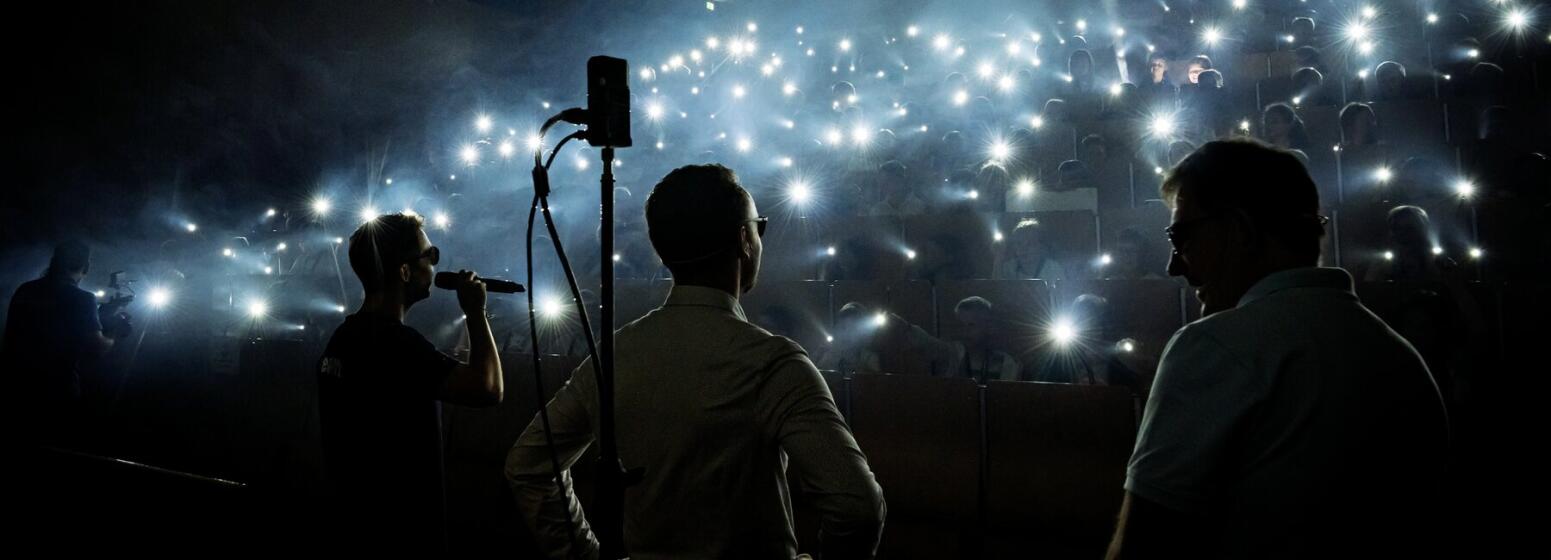
What do a sunflower, a secret code and a Rubik’s Cube have in common? At first glance, not much. However, as the Children’s University on 26 September 2026 showed, there is maths in all three. Around 200 children and just as many accompanying adults came to the HSMW to join Dr Mandy Lange-Geisler and Prof. Klaus Dohmen (Mathematics Department) in discovering the numbers, patterns and rules that describe our world.
Right from the start, it became clear that numbers sometimes grow faster than you might think. On a chessboard, the number of grains of rice was to double from square to square. A single grain of rice on the first square becomes more than 18 trillion grains on the last square – more than a hundred times the world’s annual harvest. This simple thought experiment clearly illustrated what exponential growth means: doubling a number may sound harmless at first, but it can lead to almost unimaginable quantities in a short space of time.
After that, we moved away from the world of numbers and out into nature. Using a pine cone, the children were able to count for themselves and marvelled at a mathematical pattern: 13 spirals run in one direction, 8 in the other – both numbers from the Fibonacci sequence. Even the seemingly random seeds of a sunflower follow a mathematical structure.
The question was: How can as many seeds as possible be arranged in the smallest possible space? The answer leads to what is known as the golden angle. What at first looks like a perfectly ordinary sunflower head thus turned out to be a sophisticated mathematical system of order.
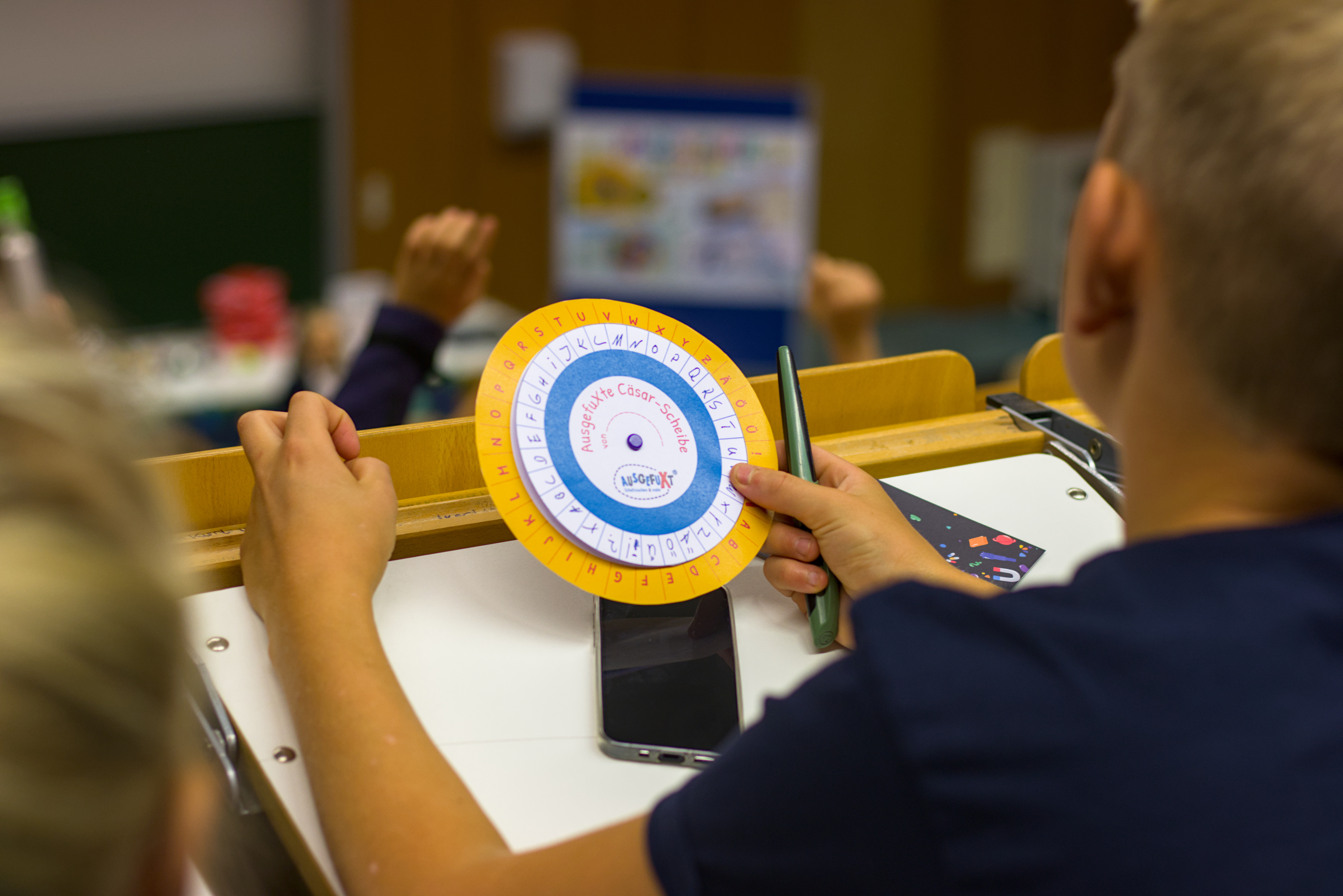
Then it became a secret: using a Caesar disc, the children encrypted words and tried to decrypt secret messages. What started as a seemingly simple letter puzzle thus became a first encounter with a mathematical process: letters are shifted according to a fixed rule – and can be transformed back using the same rule.
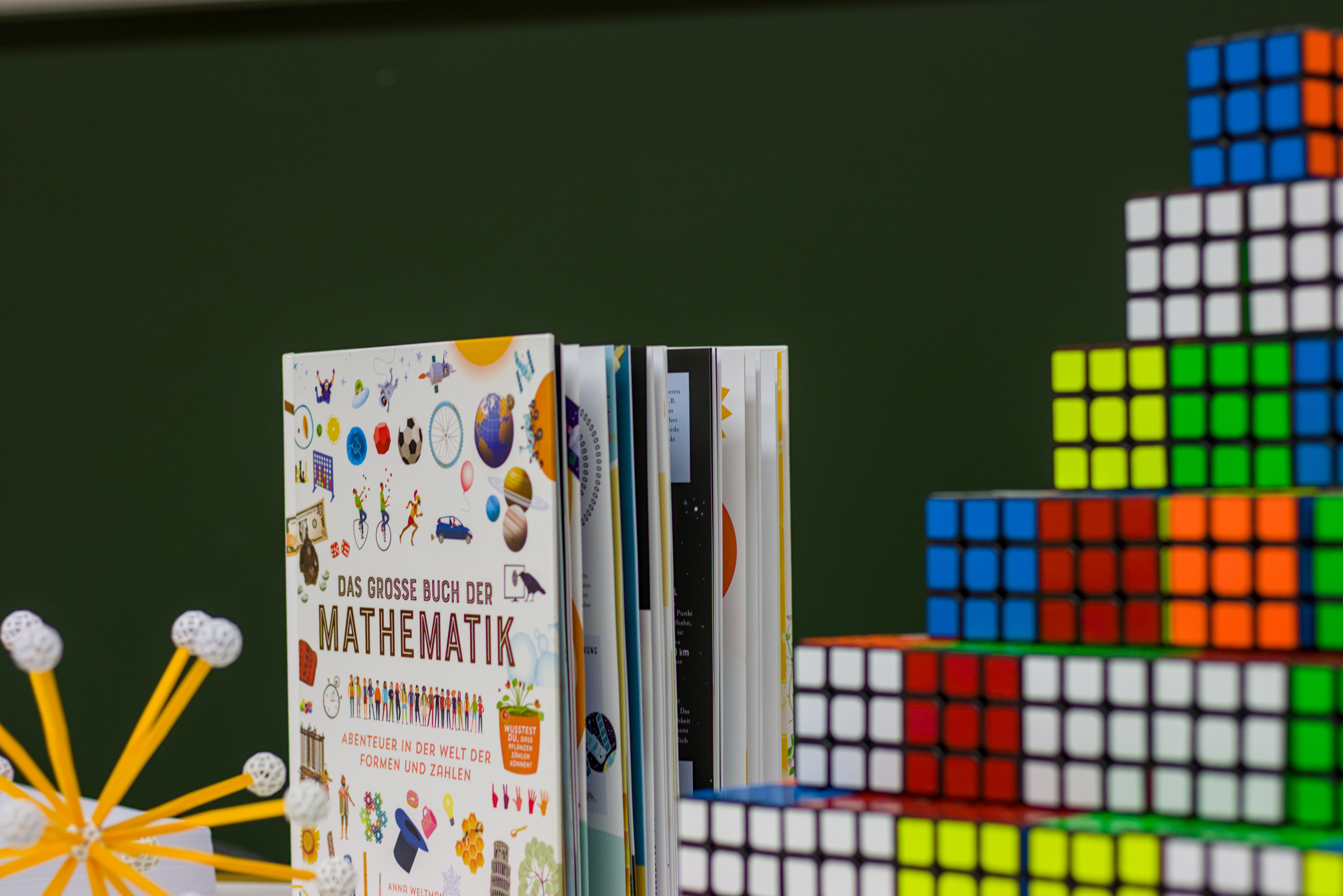
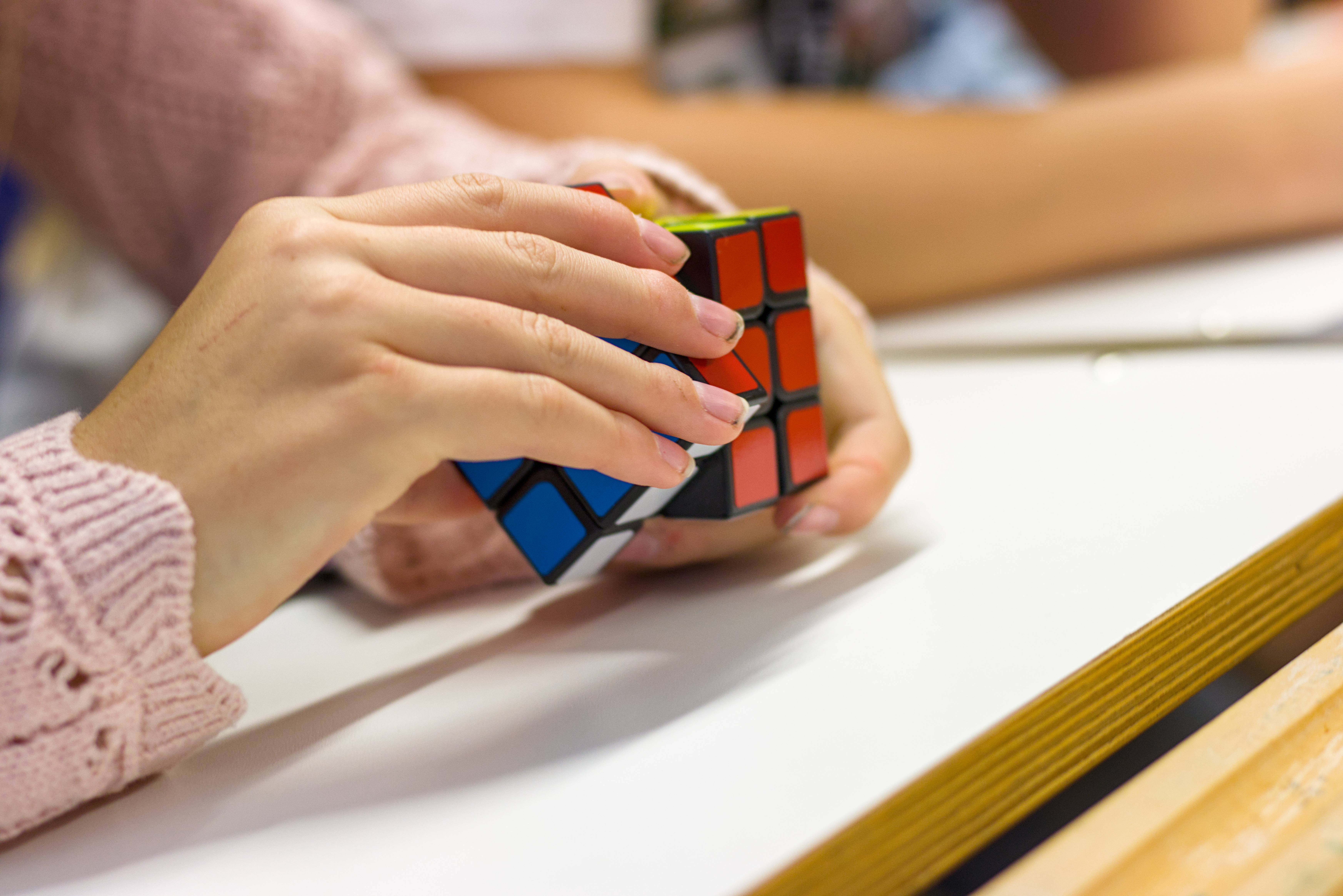
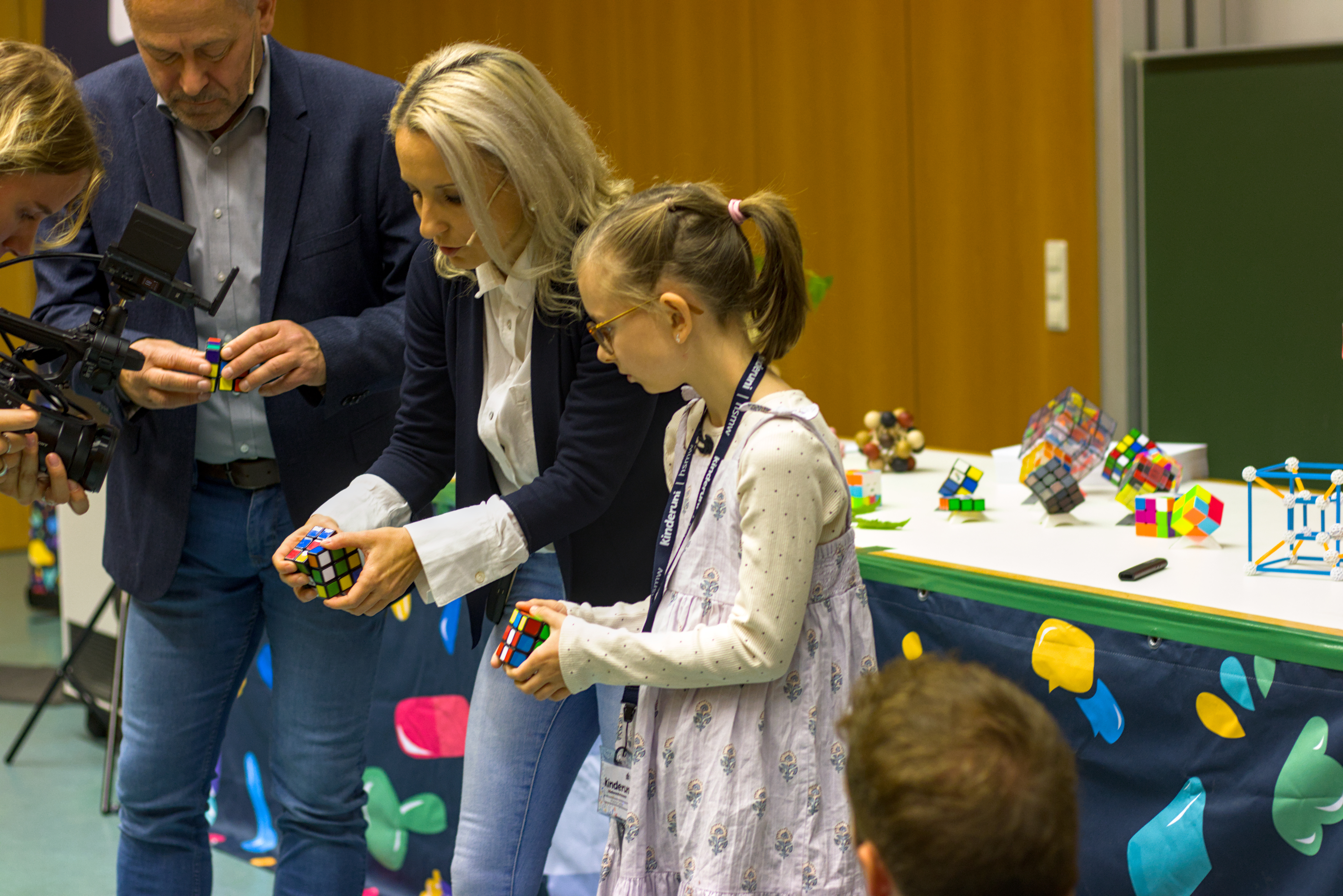
An object that many children have probably held in their hands at some point also became a subject of exploration: the Rubik’s Cube. Together, they counted the faces and individual pieces and experimented to see what happens with each turn. Behind the colourful cube lies a complex mathematical system, as every movement changes the arrangement of the elements according to specific rules.
The sheer number of possibilities is illustrated by a figure that is almost impossible to imagine: more than 43 trillion different arrangements are possible.
In this way, the Children’s University demonstrated in a variety of ways that maths is far more than just calculations and formulas. It is found in nature, in games and puzzles, and even in the question of how secret messages are encrypted. It wasn’t just about listening: the children counted for themselves, experimented, solved puzzles and discovered mathematical patterns.
“Mathematics becomes exciting when children are not just given explanations, but are able to discover it for themselves. For me, it is precisely these ‘aha’ moments that are at the heart of the Children’s University: a seemingly simple question suddenly gives rise to a scientific discovery,” says Robin Biebl, organiser of the Children’s University.
Through topics such as maths, Mittweida University of Applied Sciences aims to show just how diverse and relevant to everyday life STEM subjects can be. To this end, the Children’s University creates a space where science is not just explained, but experienced together. It sparks curiosity, encourages experimentation and shows from an early age that maths can be found everywhere – sometimes even where you would least expect it.
The Children’s University is a joint initiative organised by the Institute for Competence, Communication and Languages (IKKS), the University Library and the Faculty Media Sciences.
Together with Prof. Dr Jörg Hübler, we’ll take a look at the future of mobility and discover how electric powertrains work and how vehicles can be quieter, smarter and more environmentally friendly. Afterwards, the popular Children’s University diplomas will be awarded to those who have attended at least four events in 2026.
If you’re now keen for even more ‘aha’ moments, you don’t have to wait until the next Children’s University: in the ‘Knowledge Flash’ section on the Children’s University website, selected topics from past events are explained once again in a brief and easy-to-understand way. The videos last less than five minutes – perfect for a little extra bit of knowledge in between.