This page was translated automatically using artificial intelligence (DeepL). The German version is binding. More information about automatic translation
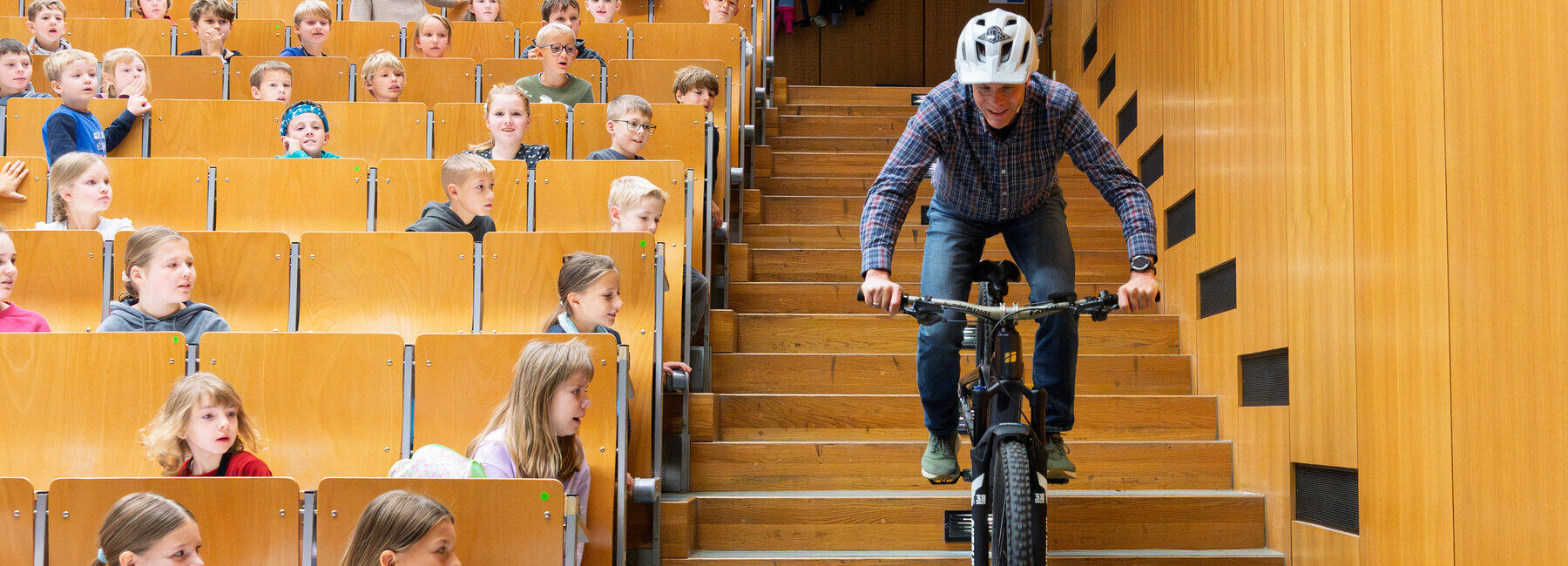
On 7 November, Prof. Dr Jörg Hübler (Design Section of the Faculty Engineering Sciences) got things off to a sporty start at Mittweida University of Applied Sciences’ Children’s University, leaving around 350 amazed faces in his wake: Instead of walking into the lecture theatre, he simply cycled in and even managed to navigate the steps on two wheels. This immediately captured the attention of the visitors. After all, the focus of the morning was a question that not only preoccupies engineers but also fascinated the children: How will we get around in the future?
A surprising revelation right at the start: electric vehicles are not a new invention. The first electrically powered vehicles were already on the roads over 140 years ago. The children learnt that, back then, vehicles with internal combustion engines nevertheless became the norm because fuel was readily available and they could achieve long ranges. Today, however, the focus is on other questions. How can we conserve resources? How can we reduce pollutant emissions? And which technologies can help with this?
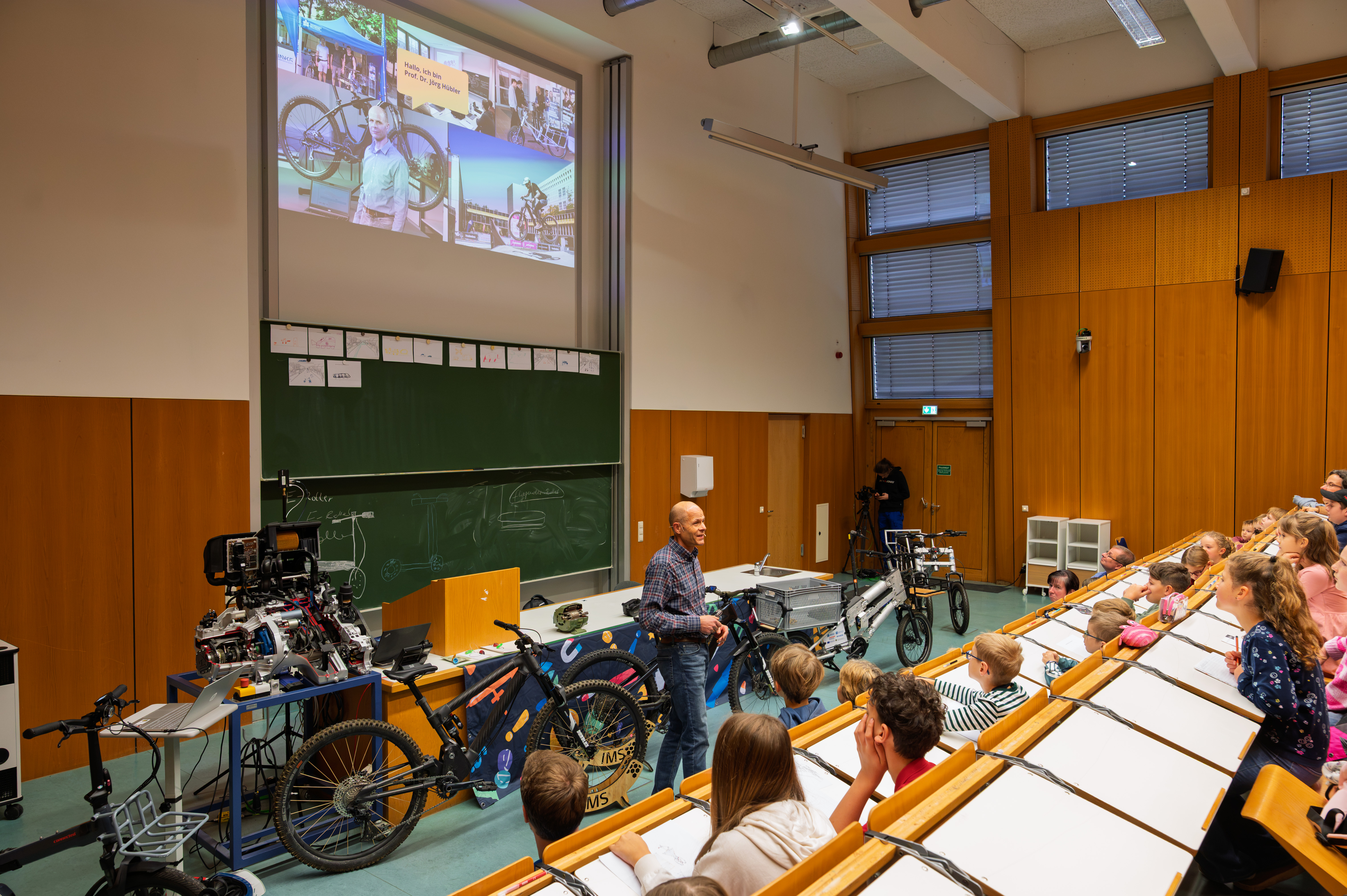
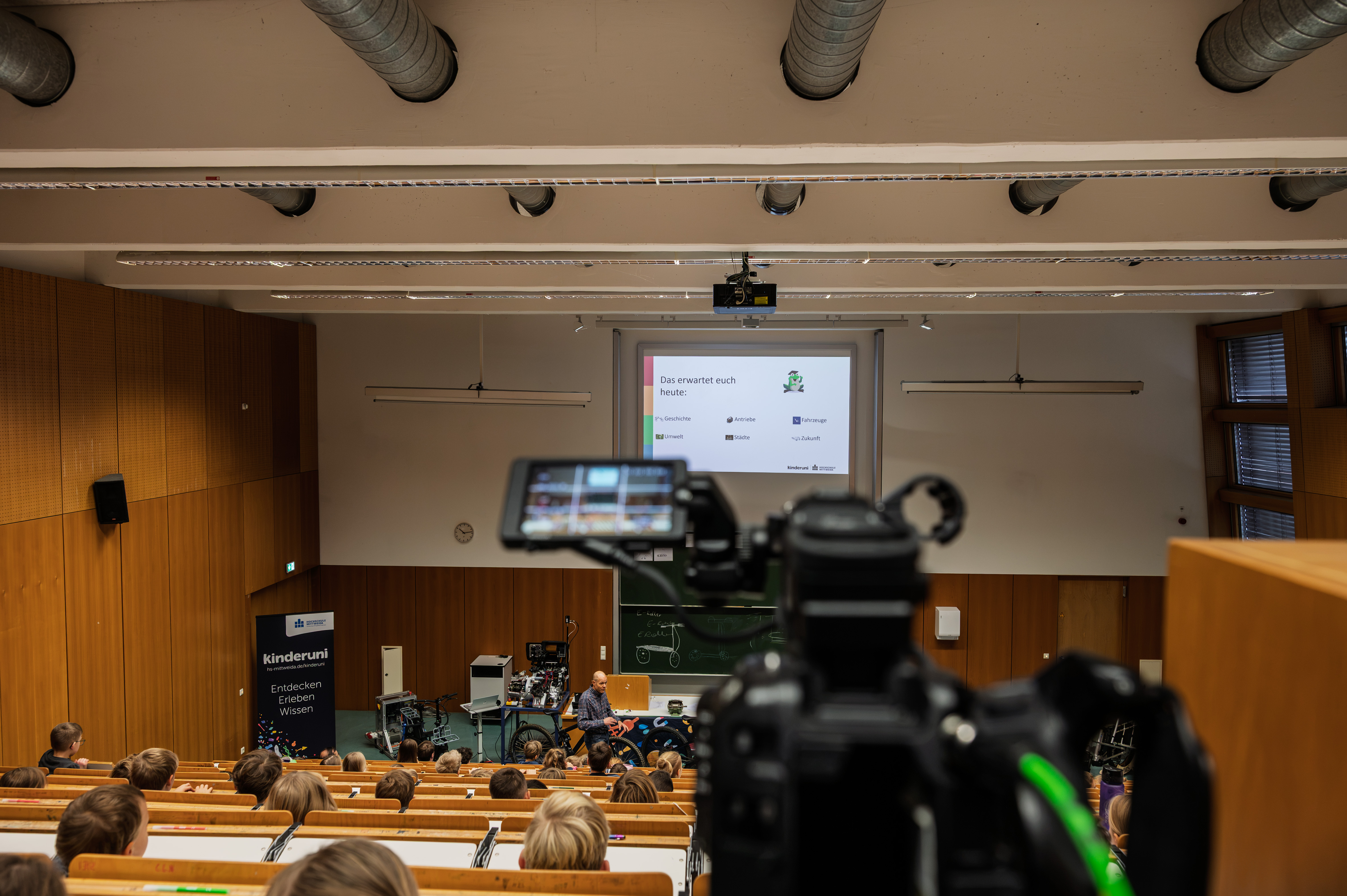
Together, they explored why electric motors waste significantly less energy than internal combustion engines. Whilst a large proportion of the energy is lost as heat in a conventional engine, the energy used in an electric motor is utilised much more efficiently. The children also learnt that a vehicle does not automatically become climate-friendly simply because it is electric. The source of the electricity required is also crucial. It quickly became clear why renewable energies play an important role in the mobility of the future.
Professor Hübler and his team also demonstrated what engineers work on every day. They do not simply develop new vehicles, but seek solutions to specific problems. How can vehicles be built more easily? How can batteries be improved? How can you travel as far as possible using as little energy as possible? And how can new modes of transport help make cities more liveable? The children were thus given an insight into a profession that combines creativity, a spirit of inquiry and technical knowledge.
Thinking ahead together
Things got particularly exciting when they looked to the future. Together, the young students considered which vehicles might shape our everyday lives in a few decades’ time. It became clear that the mobility of tomorrow is likely to be more diverse than it is today: ranging from e-bikes and cargo bikes to innovative, lightweight electric vehicles. Many solutions that still seem unusual today are already being researched and developed at universities and in companies. Mittweida University of Applied Sciences is also contributing to this through its own projects.
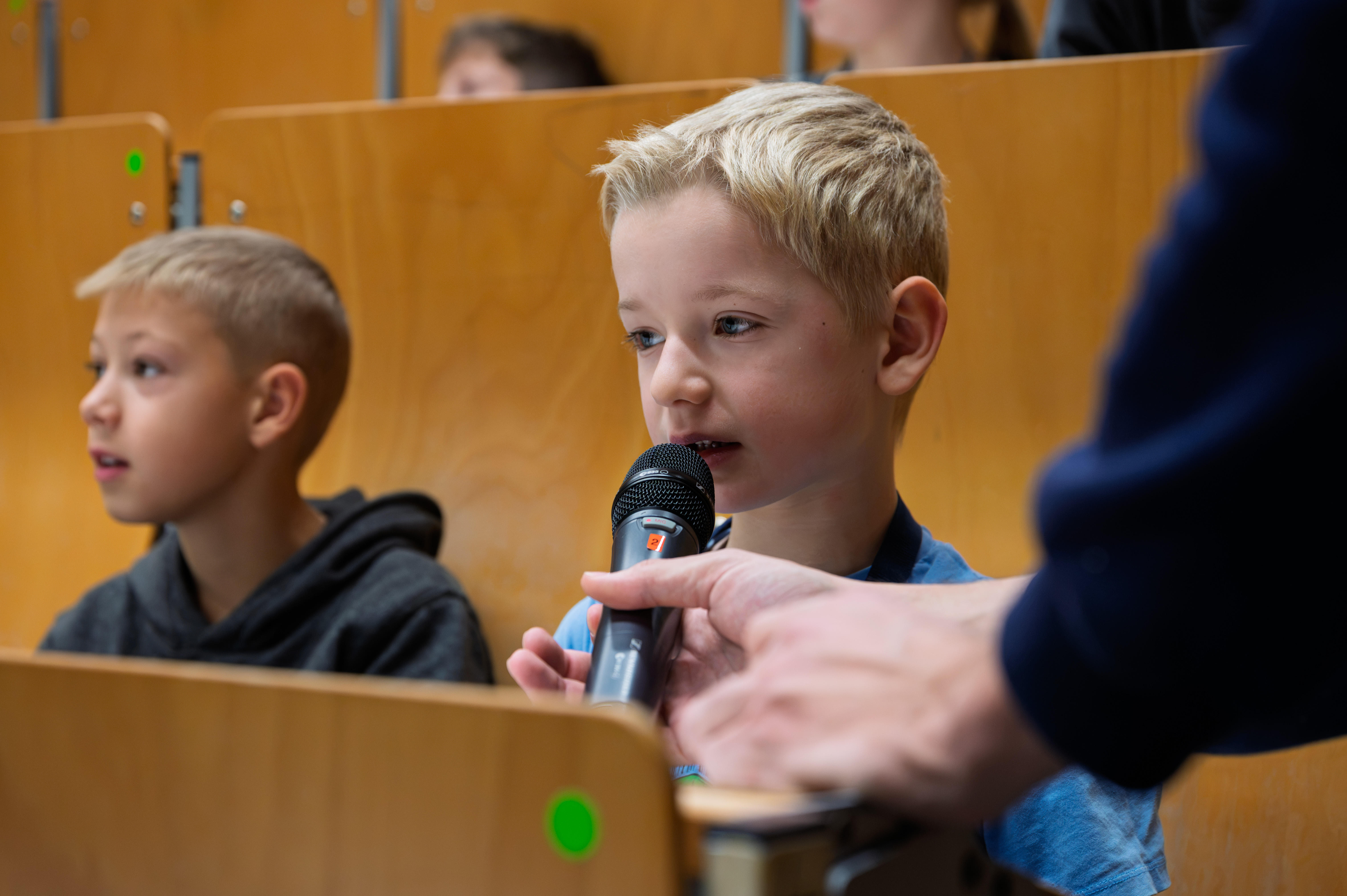
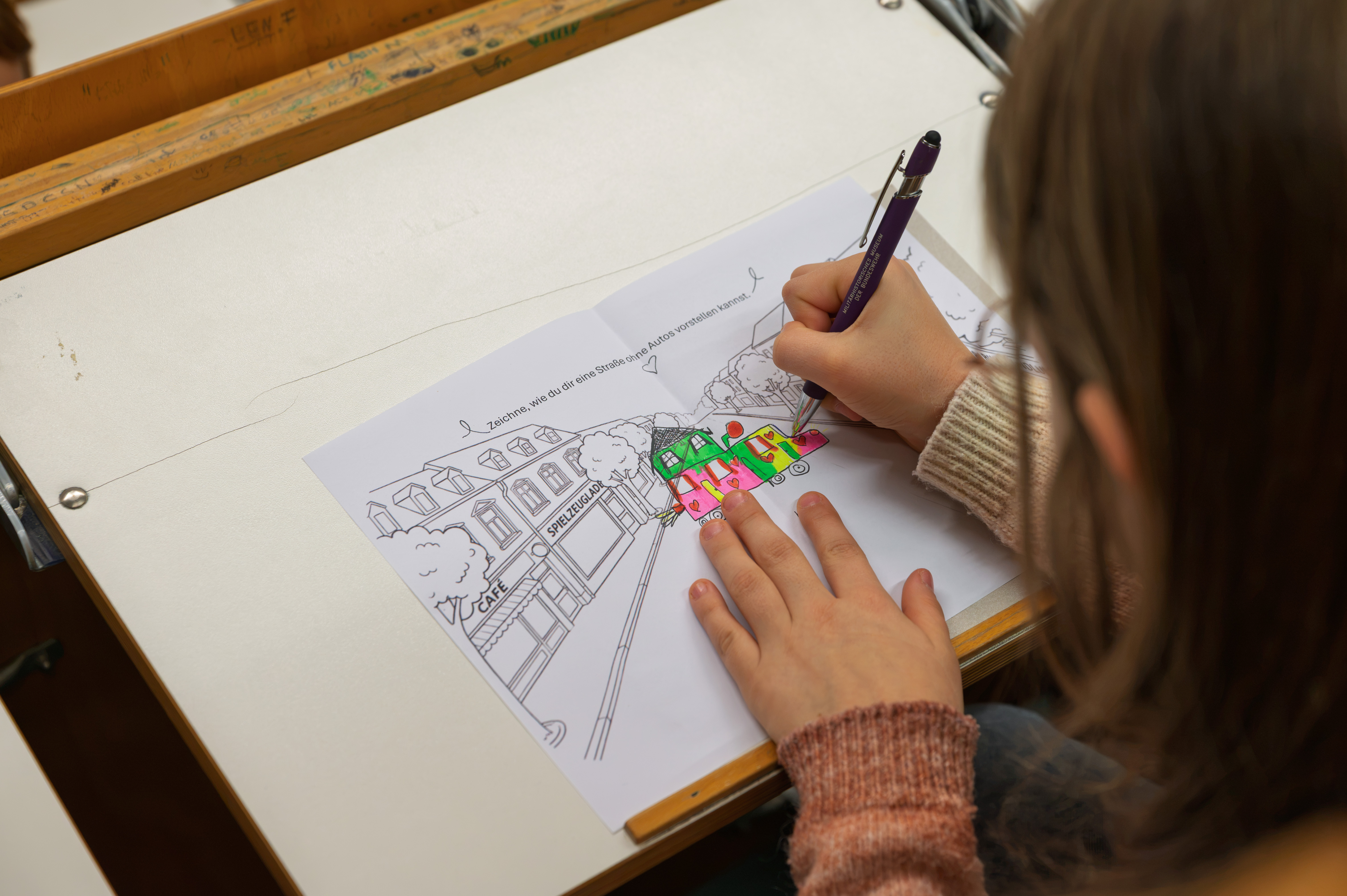
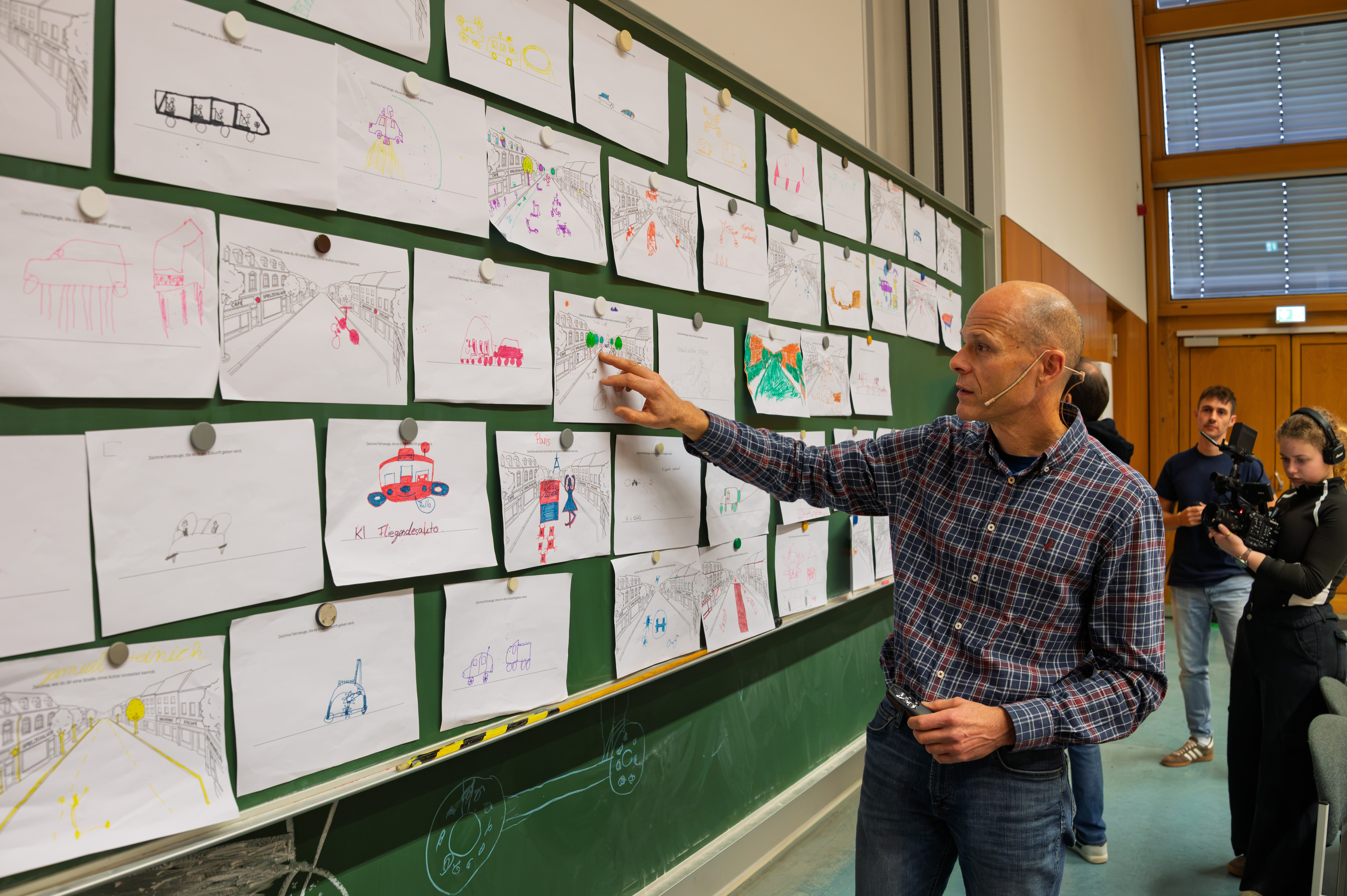
Muscle power versus electric power
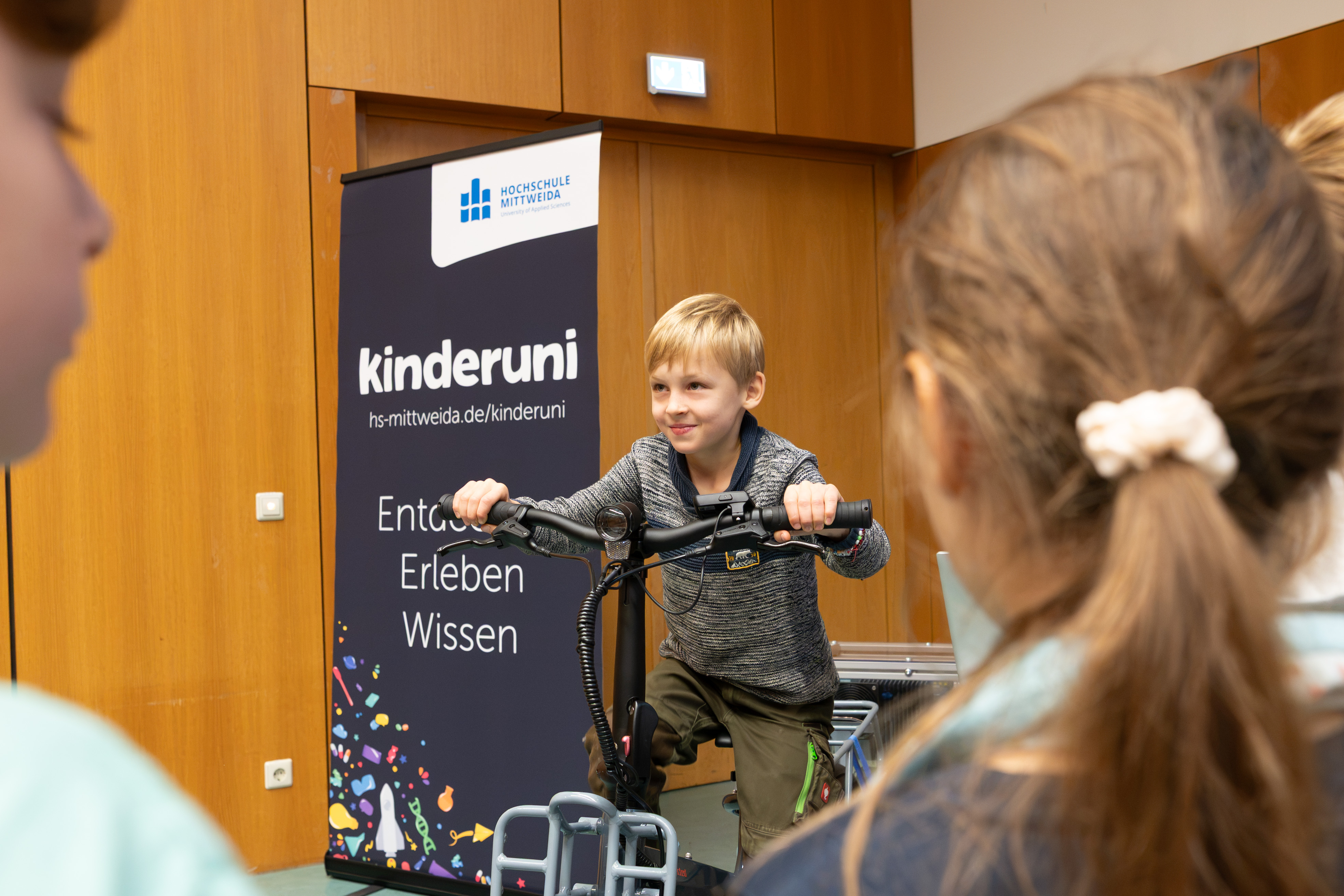
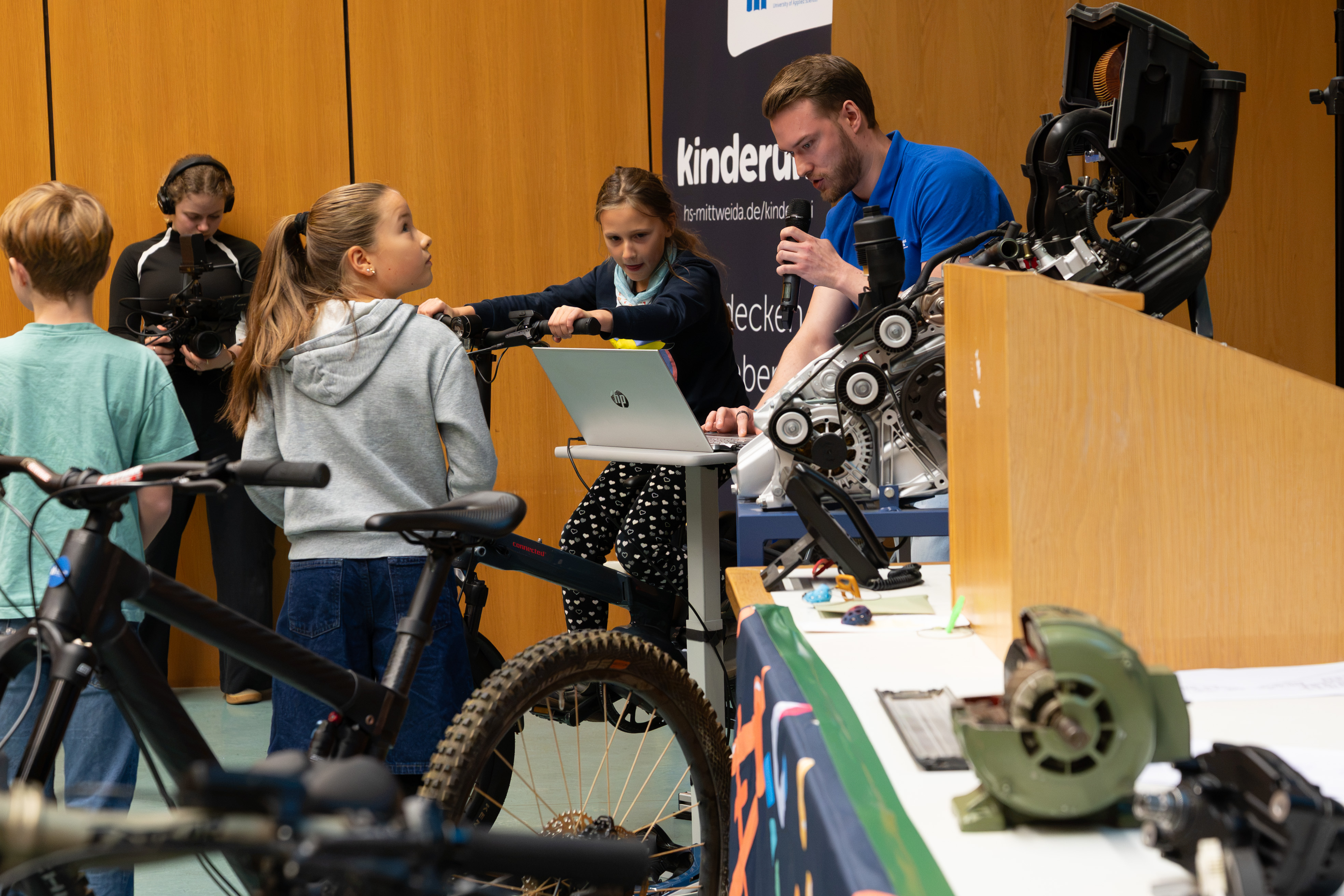
During and after the lecture, the young guests had the chance to become researchers themselves. At a hands-on station, the task was simply to pedal and compare. This allowed the children to experience first-hand the difference between the assistance of an electric motor and pure muscle power. This quickly turned into a little challenge, which sparked a great deal of ambition and enthusiasm. Even after the event had officially ended, more than 40 children were still taking part in the competition. In this way, theoretical knowledge was transformed into practical experience.
Another highlight followed at the end of the event. A total of 70 children received their Children’s University diplomas after attending lectures on several occasions this year. For many families, the ceremonial presentation of the certificates was a well-deserved reward for a successful year at the Children’s University. In addition, a little surprise awaited the young graduates. But everyone else went home with a treat too: as a memento of the morning, there were vehicle model kits and glowing 3D Printed key rings.
The 2027 programme is already in place
"When children don’t want to go home after a talk because they want to keep asking questions or trying things out, then we’ve achieved our goal. The families’ keen curiosity and interest show us just how important it is to have science programmes that are easy to understand. That’s why we’re continuing to develop the Children’s University in collaboration with our visitors. In 2027, there will once again be a total of six events, all tailored to the children’s wishes and interests. The new programme will kick off in January,” says Robin Biebl, organiser of the Children’s University at Mittweida University of Applied Sciences.
Full details about the Children’s University, the new explanatory videos and updates can be found on the Mittweida University of Applied Sciences’ Children’s University website.
The Children’s University is a joint initiative organised by the University Library, the Institute for Competence, Communication and Languages (IKKS) and the Faculty Media Sciences.