This page was translated automatically using artificial intelligence (DeepL). The German version is binding. More information about automatic translation
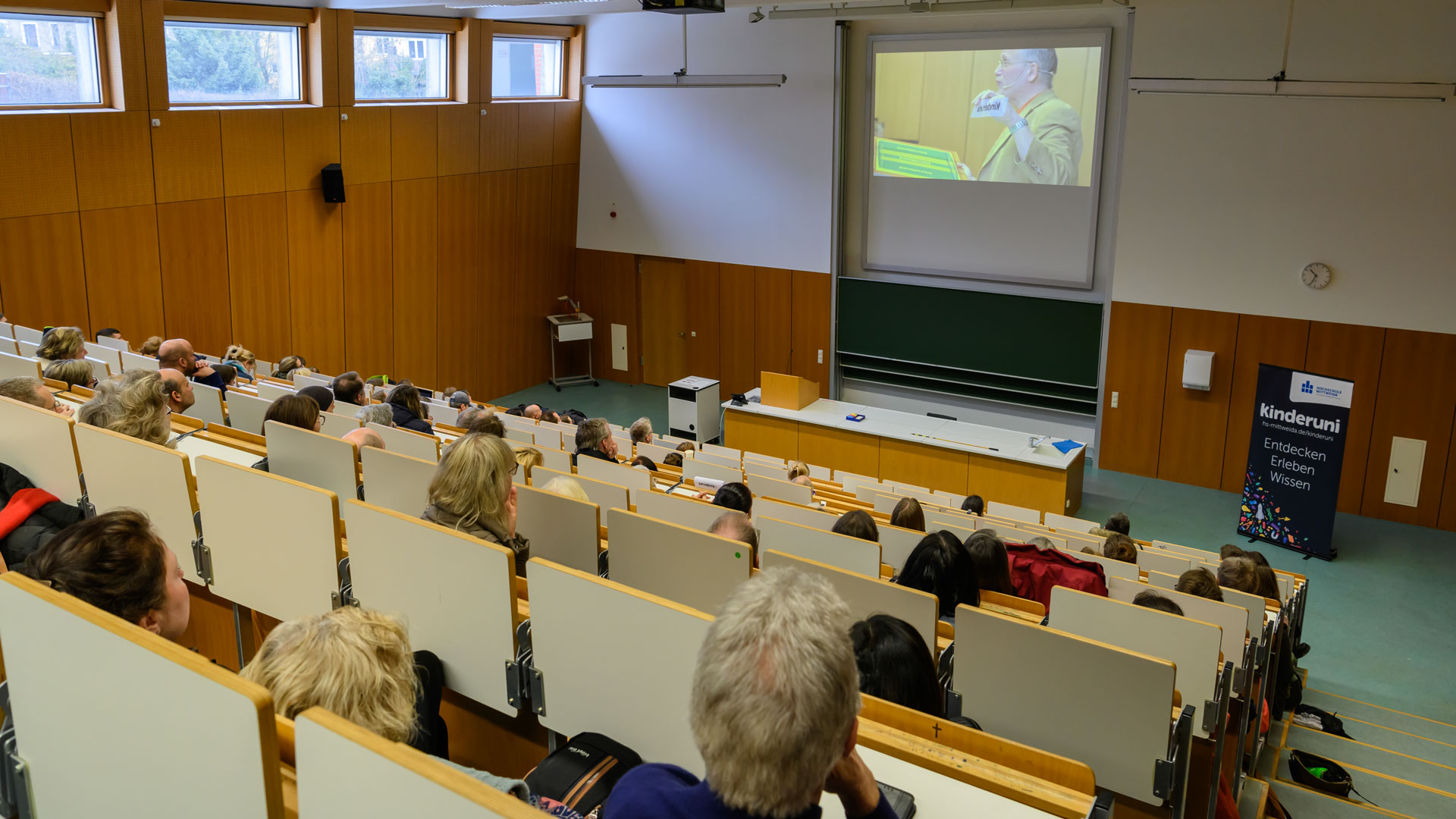
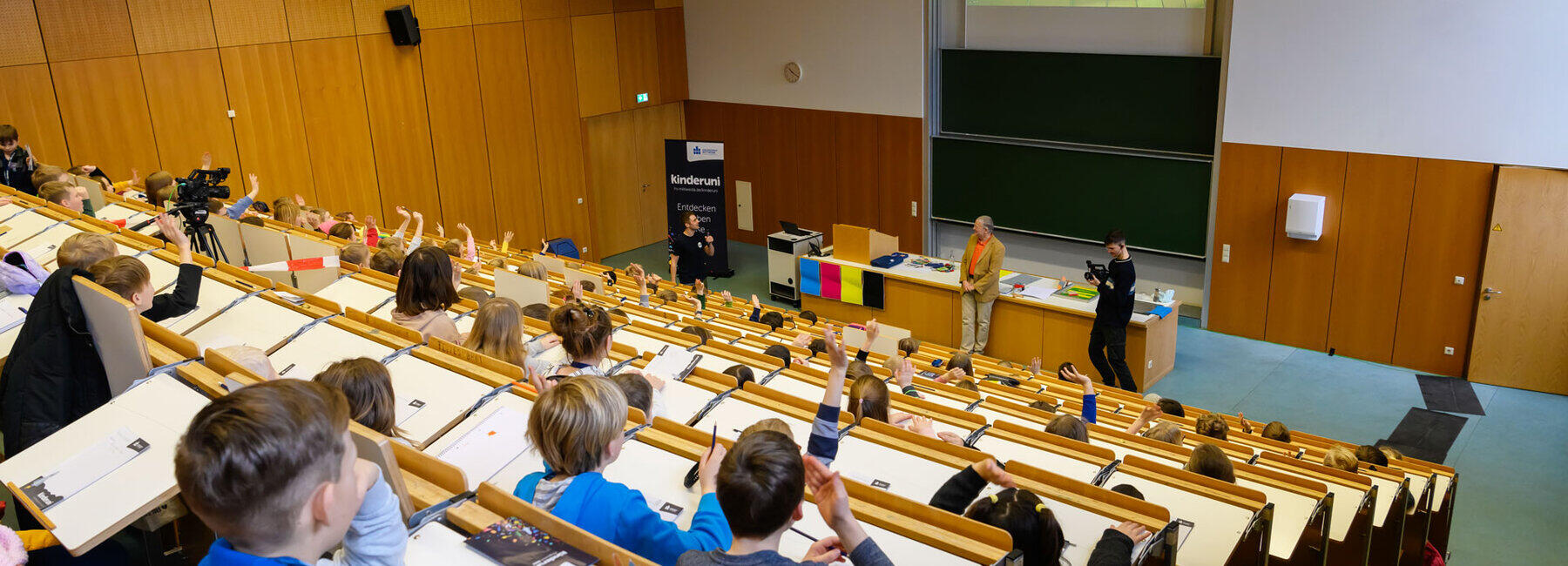
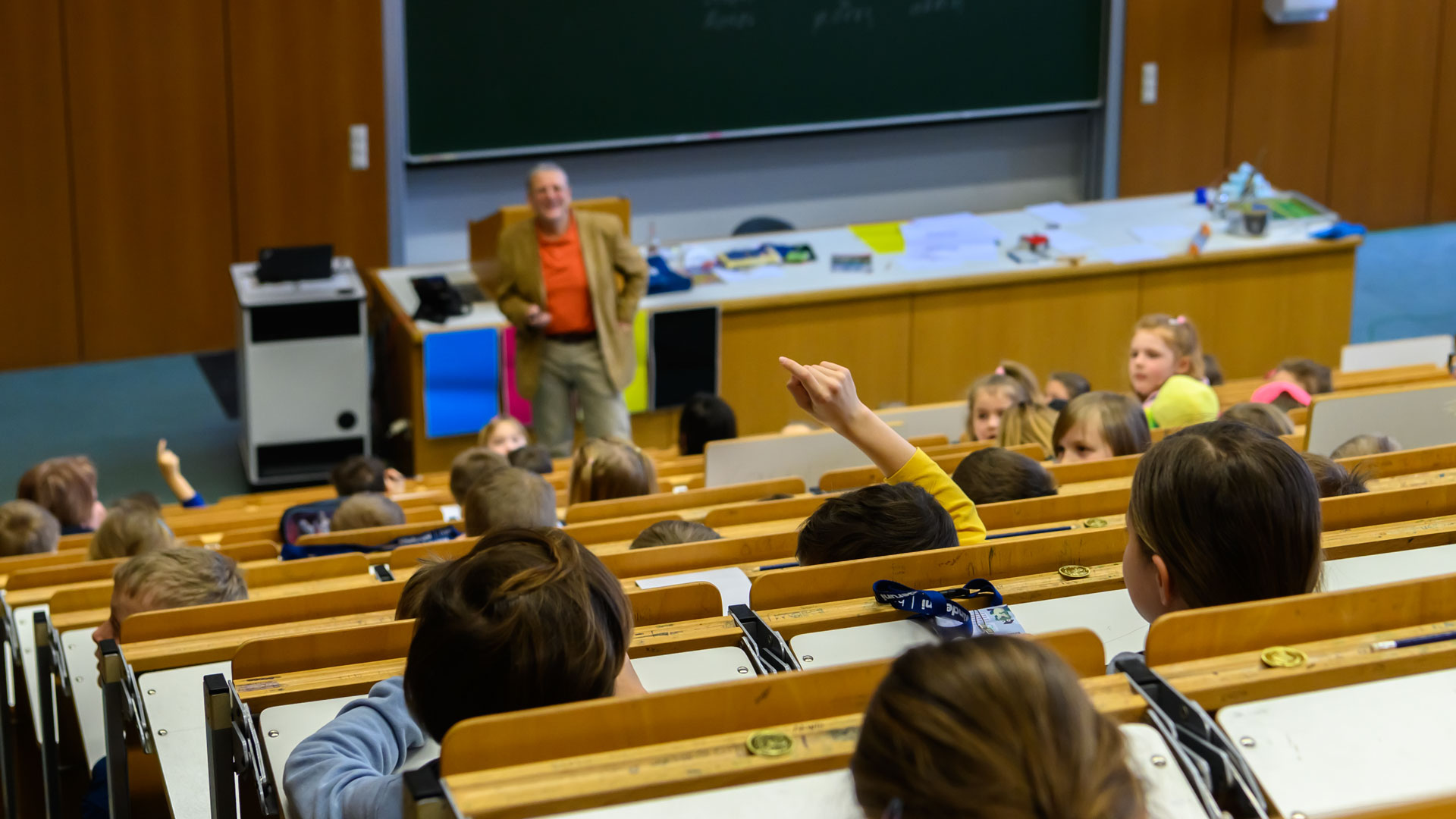
Due to the large turnout, the lecture by Children’s University lecturer Christian Greim from the Faculty Media Sciences began a ‘quarter of an hour’ late on 4 March. He found himself facing almost 170 children in the lecture theatre, all eager to learn how ink gets onto paper – and, of course, onto colourful card or printed T-shirts.
Robin Biebl, organiser of the Children’s University at Mittweida University of Applied Sciences: “I’m absolutely delighted that the Children’s University is increasingly becoming a popular destination for family outings, with (grand)parents staying on to watch the lecture from the neighbouring lecture theatre. The university also aims to build bridges with the local community through the Children’s University. We are getting closer to this goal.”
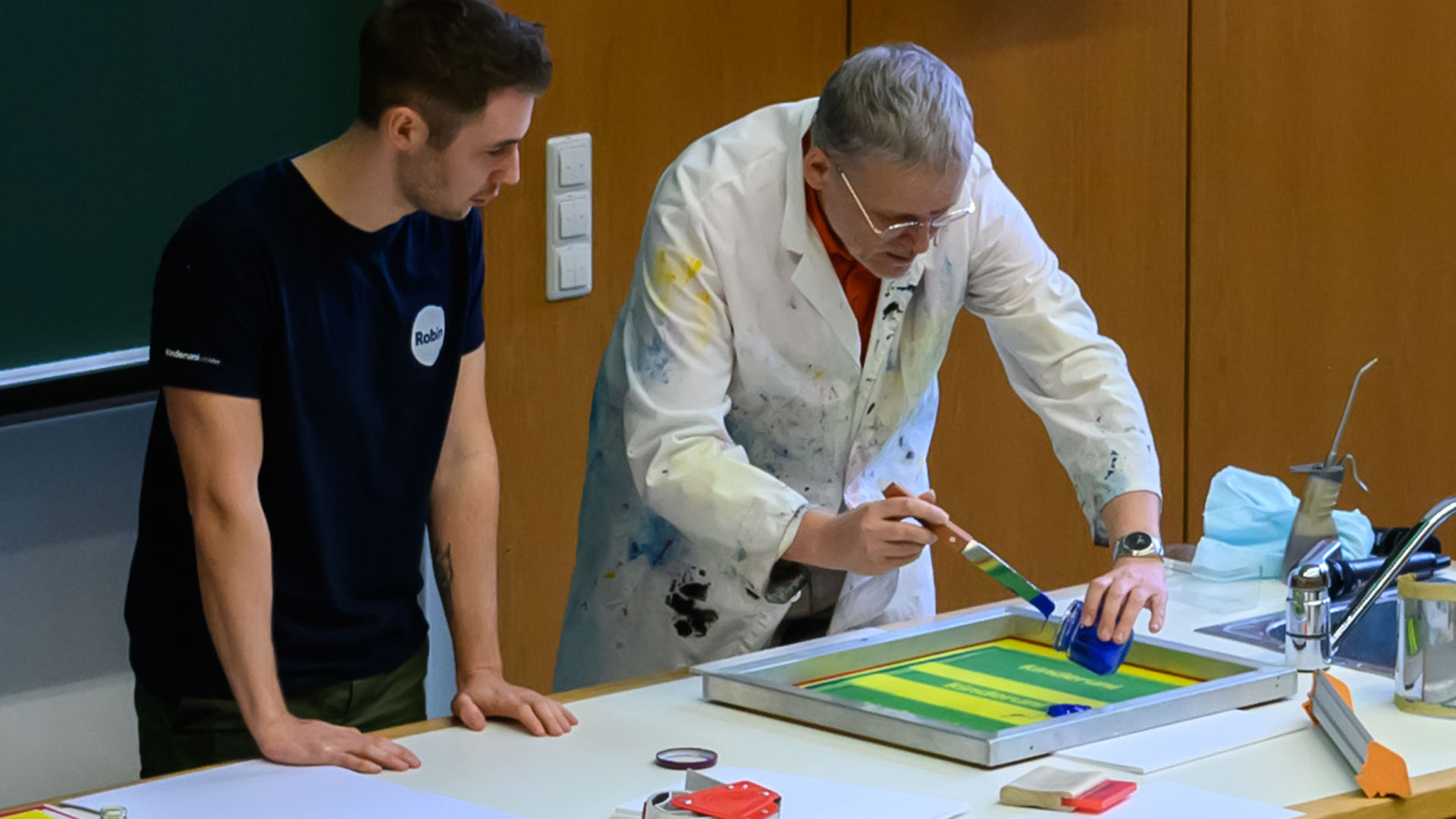
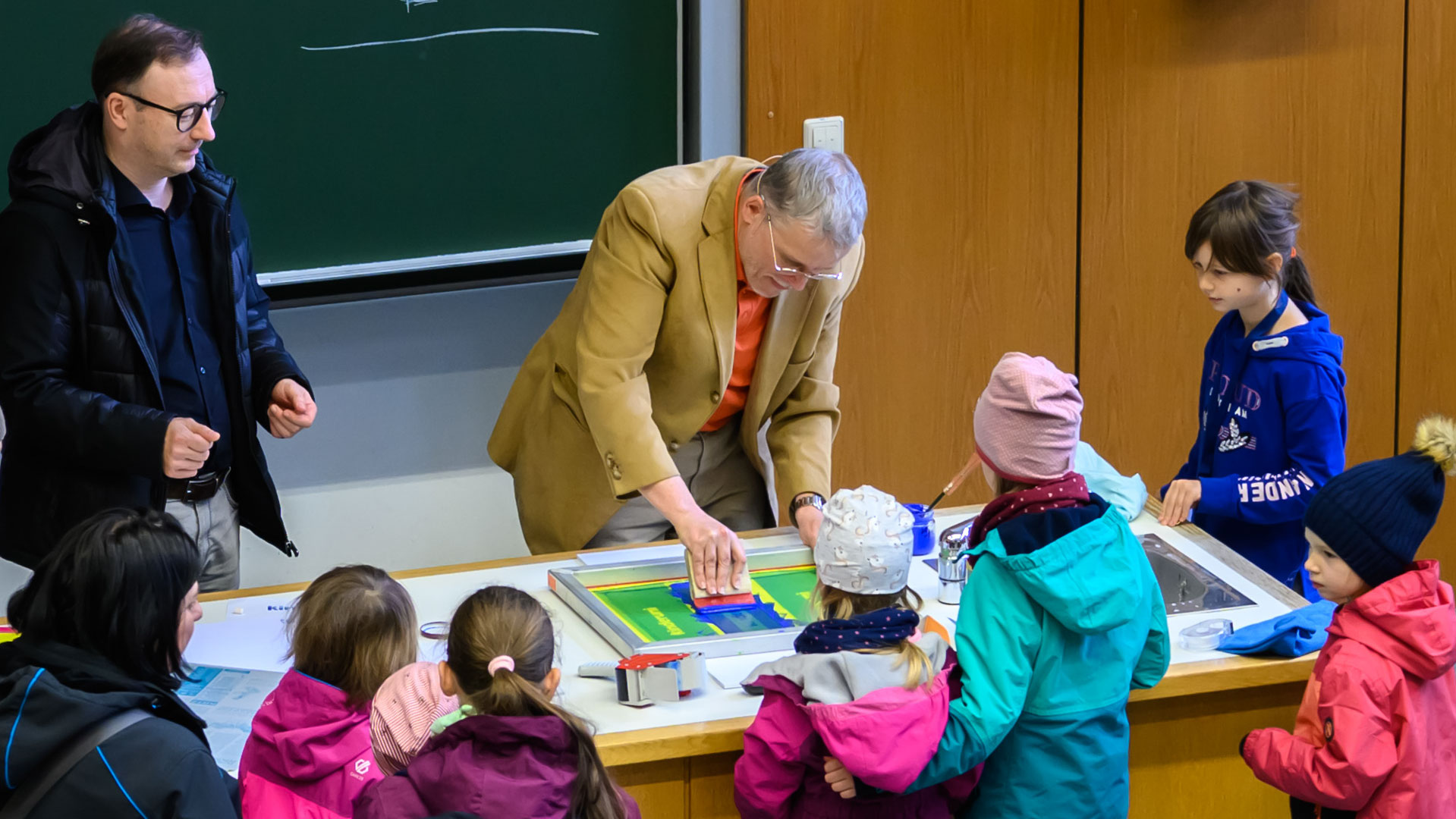
Printing engineer Christian Greim gave a clear demonstration of the most common printing processes: from gravure printing, through screen printing and flexographic printing, to offset printing. He also explained how all colours can be reproduced by overprinting the primary colours – sky blue, pink and yellow – and why printers are reluctant to print white.
Even at the Children’s University, it’s impossible to avoid technical terms entirely: ‘photopolymers’ – whose properties can be altered by UV light – are now a familiar concept to most children, partly because they are indispensable not only in printing technology but also for curing new dental fillings in the mouth.
New: no age restriction and a children’s summer university
The children’s attention throughout the lecture, which lasted around an hour, confirmed the decision not to set an age limit for the Children’s University for the first time. Robin Biebl says: “We have chosen not to specify a minimum or maximum age. Any child who is curious about science can take part. In the past, there have regularly been six-year-old ‘Children’s University’ students who have followed the lecture attentively. Listening and watching are far more important than taking notes. Parents know their children best and can judge whether a particular topic is suitable for them.”
Even the youngest children are likely to find this year’s second lecture, on 13 May, interesting: under the heading ‘Girls like horses and boys play football. Is that true?’, it will explore preconceptions and a new word: ‘stereotypes’.
This summer will see a first in the over ten-year history of Mittweida University of Applied Sciences’ Children’s University: the Summer University on 17 June will take young aspiring forensic scientists on a detective-style search for clues to the missing deer in Schwanenteichpark.
In the autumn, the programme continues in the lecture theatre on 23 September and 4 November: ‘Thinking, Feeling, Acting: How we can better understand our behaviour’ and ‘Virtual Worlds’ will be the exciting topics then.
Further information, which is always up to date, can be found on the Children’s University website.
If you’d like to stay up to date, you can also sign up for the Children’s University newsletter there.