This page was translated automatically using artificial intelligence (DeepL). The German version is binding. More information about automatic translation
The Mittweida Scripter has established itself as a powerful and data-protection-compliant tool for the automatic transcription of audio and video files. Developed at Mittweida University of Applied Sciences, it enables spoken content to be efficiently converted into text – entirely on the university’s own servers and in compliance with strict data protection guidelines.
The tool has now been enhanced with a new, particularly practical feature: the automatic generation of subtitles.
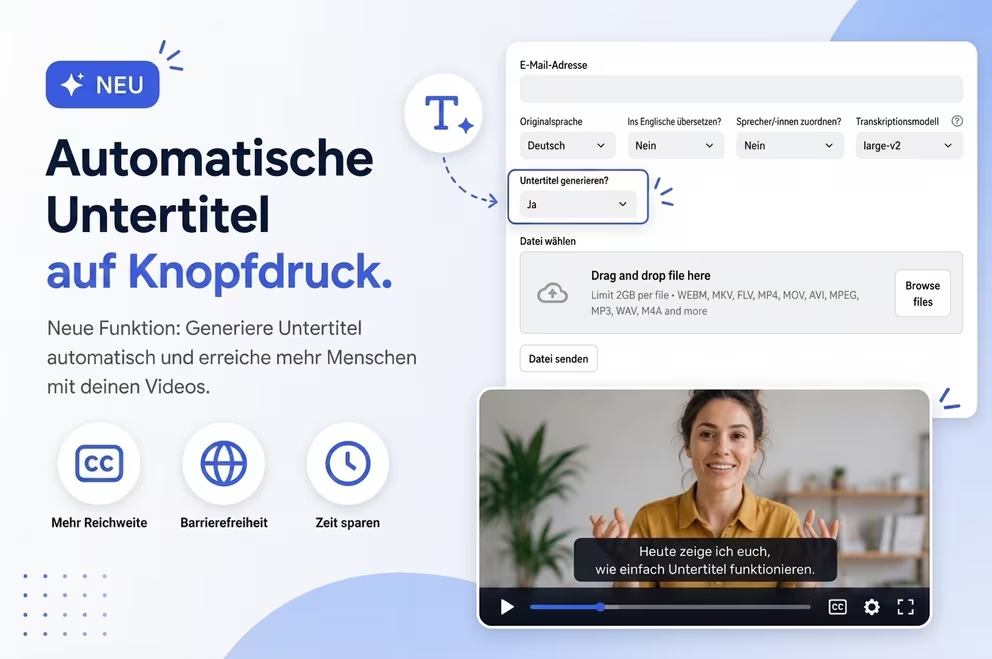
From transcription to subtitles
Until now, the Mittweida Scripter has focused on creating transcripts, for example of interviews, lectures or meetings. To do this, users upload their audio or video files and receive the result as a text document by email.
With this new feature, the tool now goes one step further:
in addition to standard transcription, subtitles can now be generated directly from the uploaded media.
This opens up numerous new areas of application, particularly in the fields of digital teaching and content creation.
Added value for teaching, research and media production
Automatic subtitle generation offers several advantages:
- Accessibility: Videos can be made more accessible to people with hearing impairments
- Improved comprehensibility: Subtitles aid understanding, particularly with complex content or foreign-language material
- Efficient post-production: Content can be processed more quickly, for example for learning materials or social media
- Time savings: There is no need for manual subtitle creation at all
This feature is a valuable addition, particularly in a higher education context, where video content is increasingly being used.
Technical background
As with transcription, the Mittweida Scripter is based on modern AI-powered speech recognition techniques. These enable the rapid and high-quality processing of audio and video data in numerous languages. The subtitling feature utilises this existing transcription data and supplements it with a temporal structure.
The subtitle files are generated in SRT and VTT formats and are also made available via email. The generated files can then be integrated into the relevant video player. This makes the transcription immediately available for display as subtitles.
Outlook
The new subtitling feature demonstrates how the Mittweida Scripter is continuously being developed to meet the requirements of modern digital working and learning environments. Further optimisations and features are conceivable in the future, such as additional export formats or expanded editing options for the generated content.