This page was translated automatically using artificial intelligence (DeepL). The German version is binding. More information about automatic translation
At the end of March, Braunschweig became the focal point for European bee research – and Mittweida University of Applied Sciences was right at the heart of it. At the invitation of the Institute for Bee Protection at the Julius Kühn Institute (JKI), researchers from Mittweida attended the 73rd Annual Conference of the Working Group of Institutes for Bee Research e.V. from 24 to 26 March.
Around 160 experts from academia, the beekeeping sector and public administration, hailing from several European countries, came together to exchange specialist knowledge. Guests included, amongst others, JKI President Professor Frank Ordon, representatives of the German Beekeepers’ Association and the German Professional and Commercial Beekeepers’ Association, as well as representatives from federal and local politics. The conference is regarded as one of the key specialist events in bee research in Germany.
Great posts made @HSMW
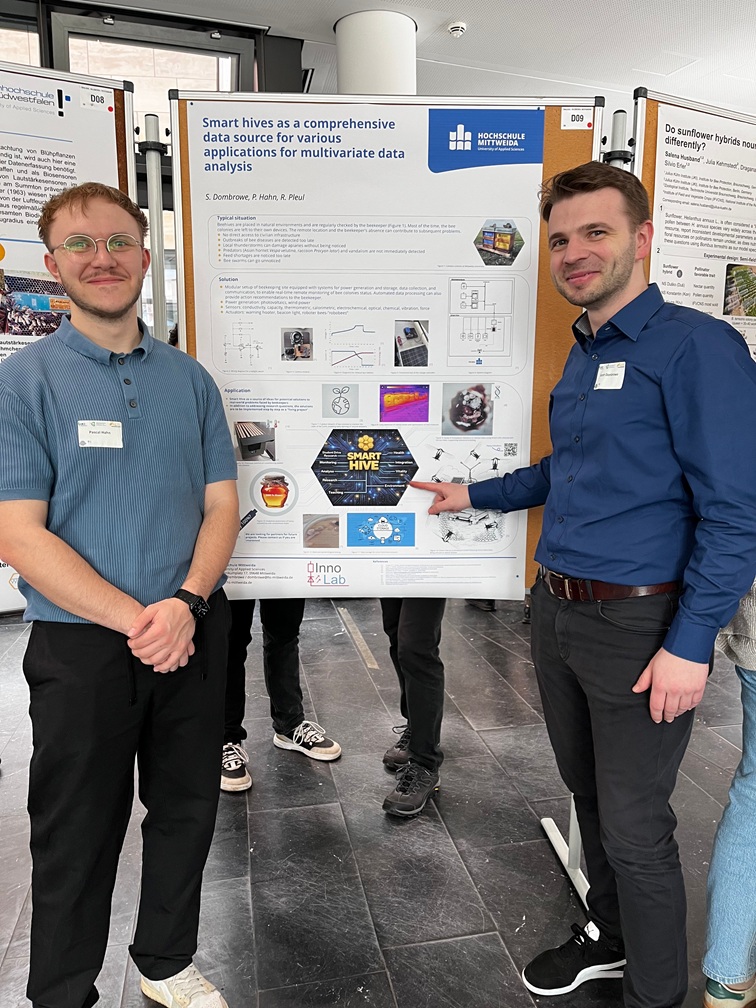
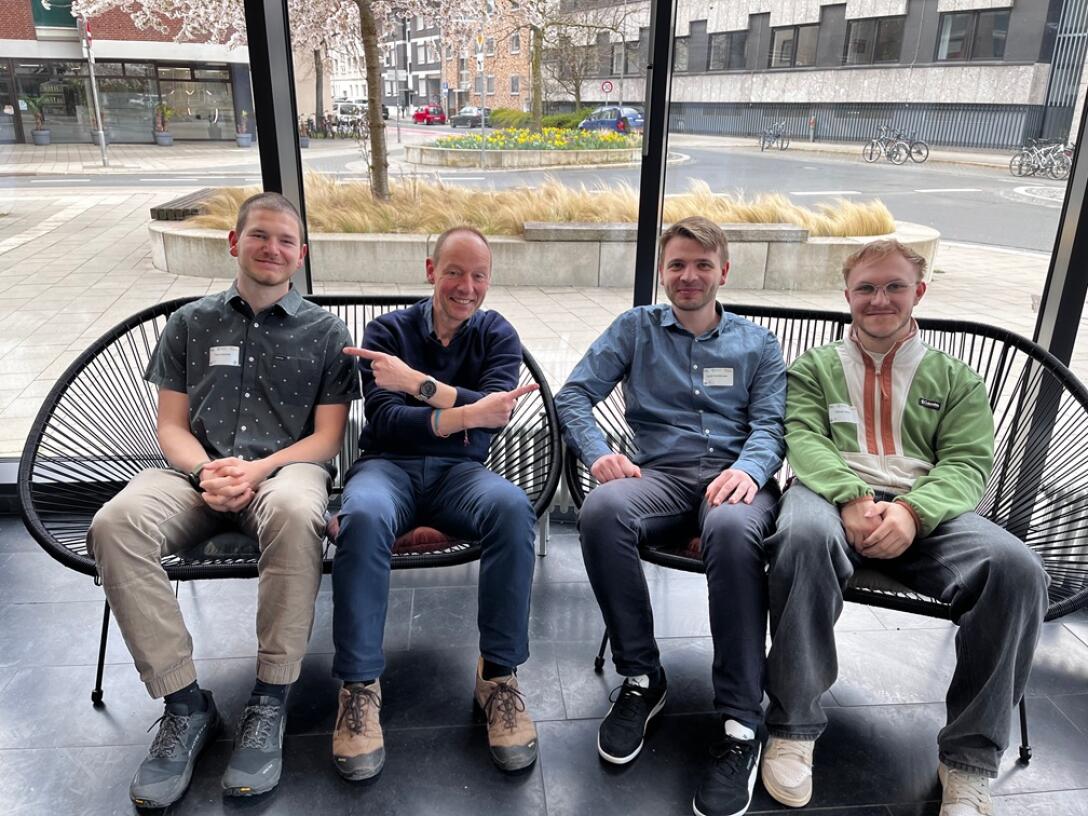
Representing Mittweida University of Applied Sciences, Professor Röbbe Wünschiers and his PhD student Tom Schmidt (Faculty of Computer and Life Sciences), as well as PhD student Scott Dombrowe and student Pascal Hahn (Faculty Engineering Sciences), presented their current projects. The topics covered ranged from wild bee health and the genetic basis of Varroa mite resistance to the interdisciplinary Smart Hive project.
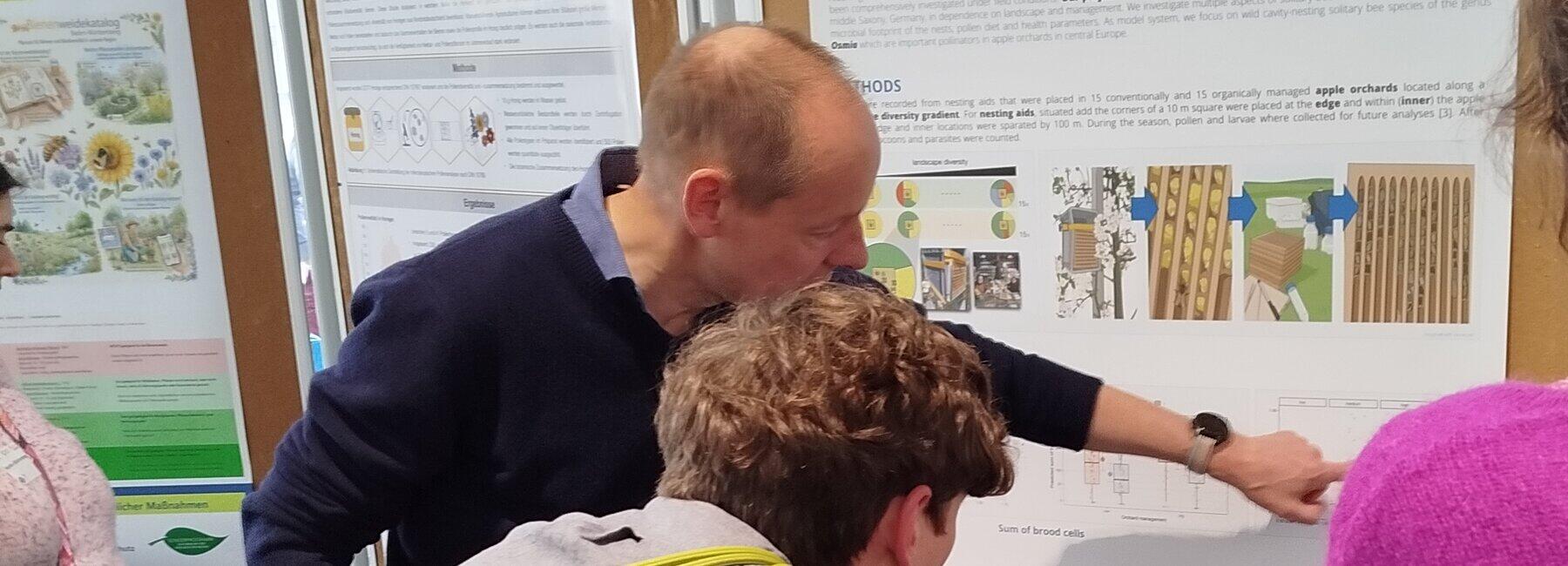
The programme of presentations was accompanied by a total of around 60 research posters, three of which were from Mittweida. The conference provided a valuable platform, particularly for early-career researchers, to present their own research and network internationally.
Varroa resistance, wild bees and smart hives
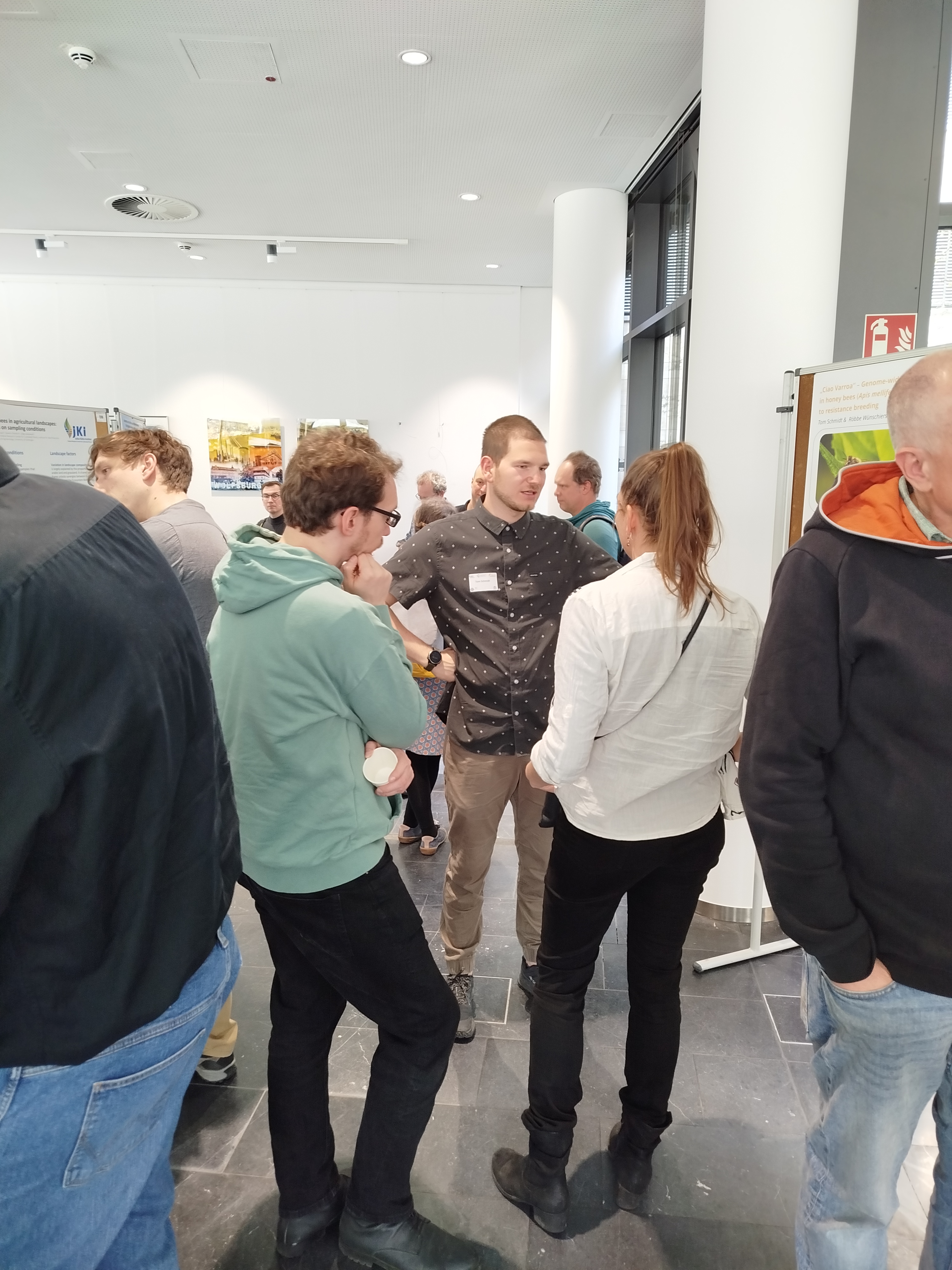
Tom Schmidt’s collaborative PhD research focuses on the genetic investigation of Varroa resistance in Buckfast honeybees. In close collaboration with the Saxony Regional Association for Varroa Resistance Breeding (Landesverband Sachsen für Varroaresistenzzucht e.V.), which has been breeding resistant bee colonies since 2018, molecular markers are being identified and validated. The long-term aim is to be able to dispense with chemical treatments.
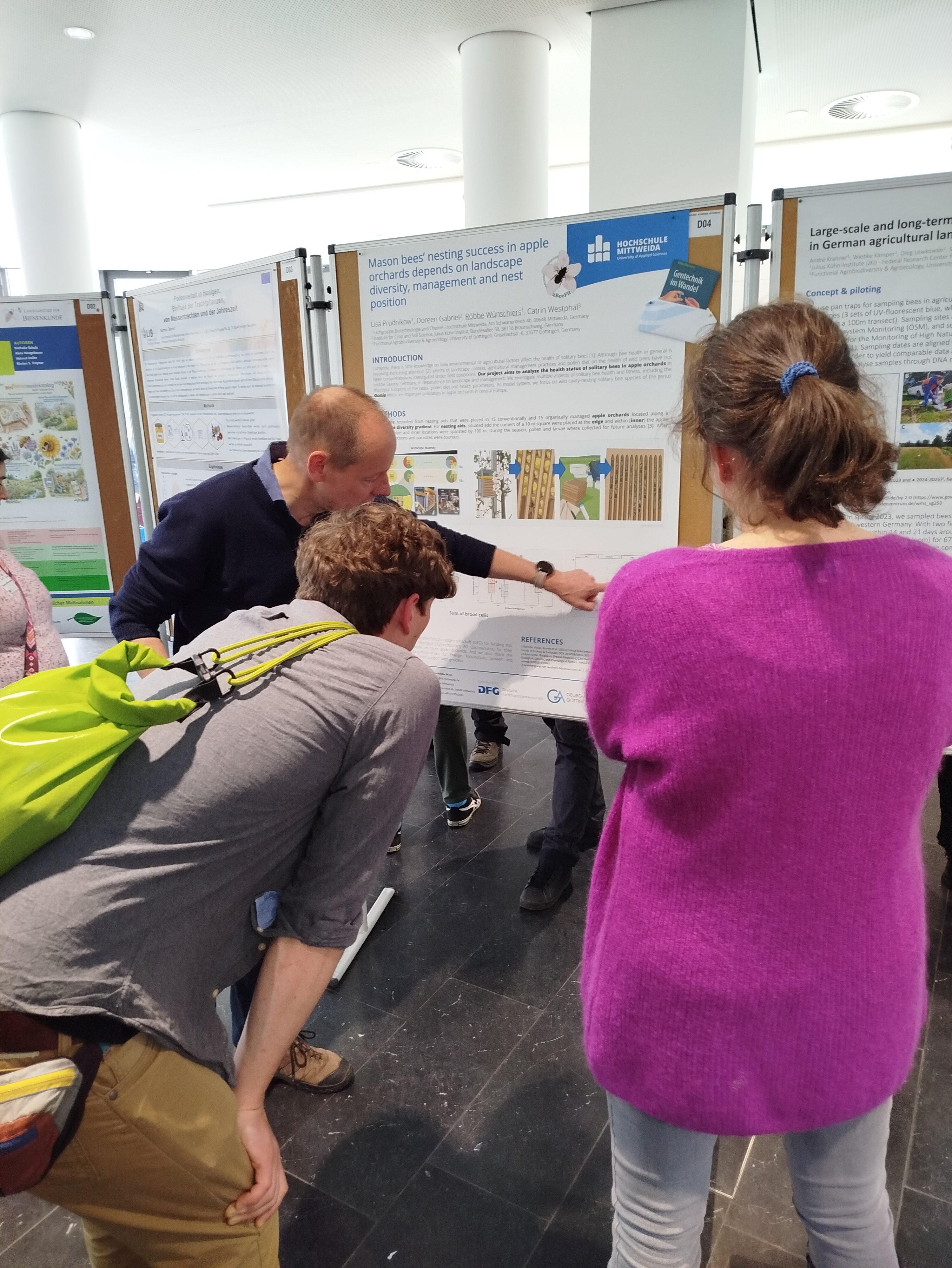
Professor Röbbe Wünschiers presented the latest findings from Lisa Prudnikow’s doctoral research, which investigates how farming practices and landscape structures influence the health of solitary bees in Saxon orchards.
The Smart Hive project, presented by Pascal Hahn and Scott Dombrowe, offered a glimpse into the future of beekeeping. The project was launched last year as part of the campus beekeeping initiative at the Innovation Lab (InnoLab) at Mittweida University of Applied Sciences. Using sensors, laboratory analyses and machine-based data evaluation, the aim is to link environmental and hive data – with the aim of gaining a holistic understanding of factors affecting bee colonies and being able to predict them more accurately in future. The fact that this fledgling project has already been invited to present at one of the most important specialist conferences underscores its research potential and its high relevance.
Exchange, Anniversary and Outlook
The annual conference was rounded off by a festive evening event to mark the 10th anniversary of the Institute for Bee Conservation, as well as by cultural excursions in Braunschweig. Overall, the conference impressively demonstrated how important interdisciplinary and international collaboration is for the protection of bees and the advancement of research.
Smart-Hive: Your participation is very much encouraged
The interdisciplinary Smart Hive team is looking for further members from all areas of the university. Anyone interested can contact Scott Dombrowe directly.
The campus beekeeping scheme is also continuing: due to its overwhelmingly positive reception, it will be continued and expanded in 2026. Anyone wishing to donate beekeeping equipment they no longer need – either free of charge or ‘for a song’ – is warmly invited to get in touch. Pre-orders for honey can be placed via the University Communications team.
And for anyone who wants to know for certain: the campus wild bees do not sting.

- Annual Conference
- The Smart Hive project at Mittweida University of Applied Sciences