This page was translated automatically using artificial intelligence (DeepL). The German version is binding. More information about automatic translation
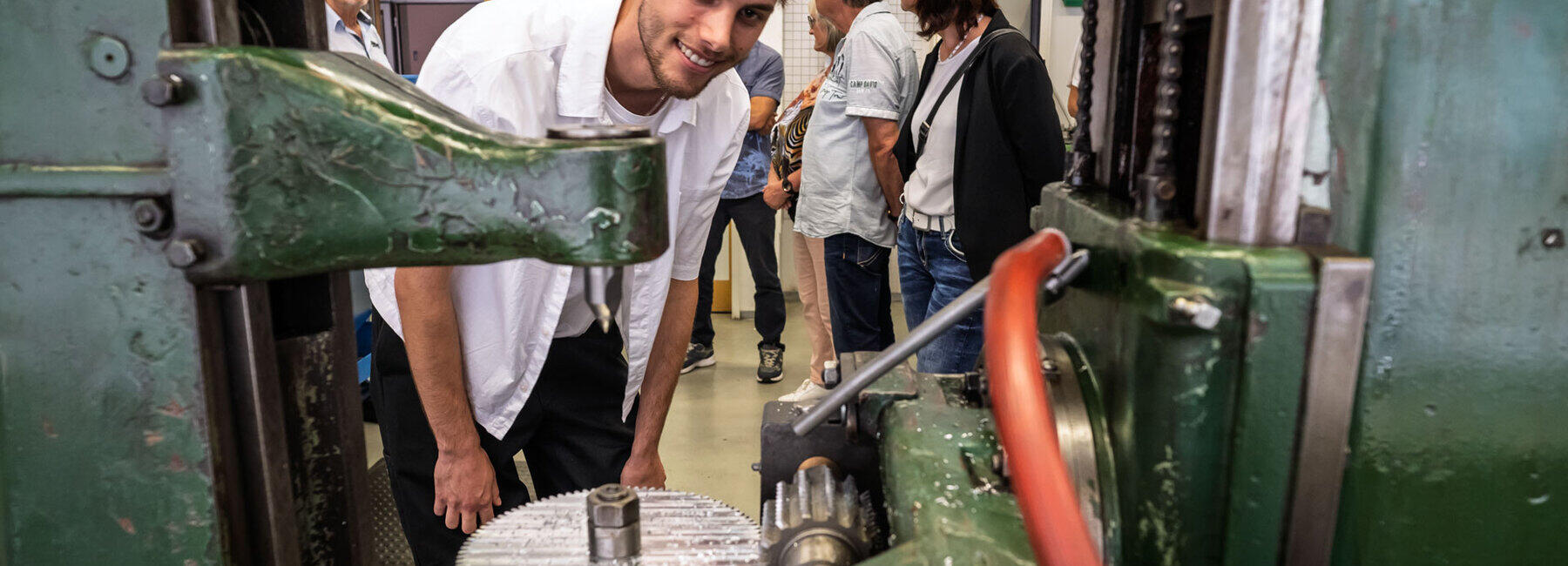
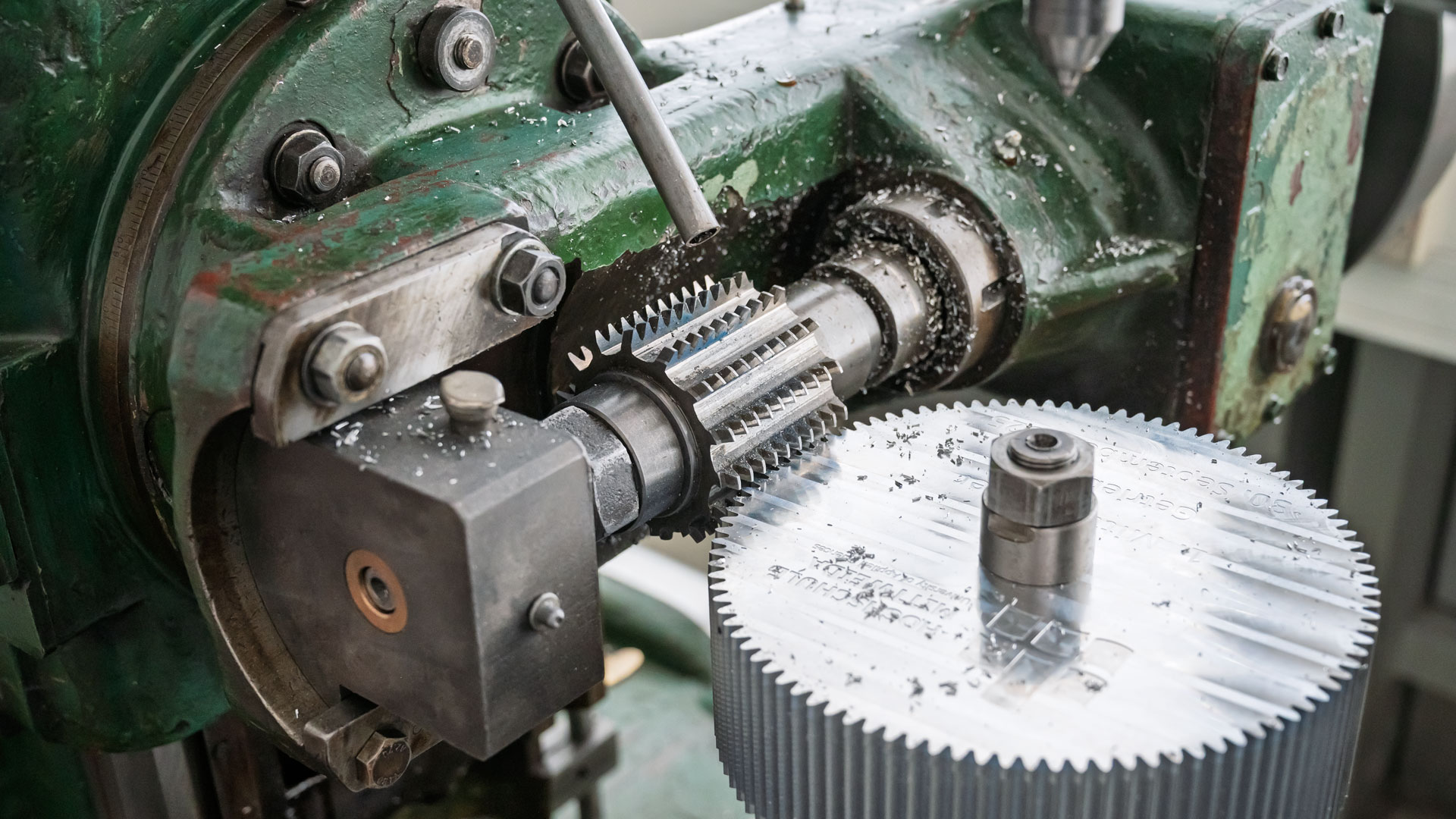
Gears are needed almost wherever something needs to be moved. Where higher forces are involved, they are usually made of metal and are milled from solid stock. The process of gear hobbing for the manufacture of gears was invented in Chemnitz well over a hundred years ago and is still in use today. Modern machines carry out this process largely automatically: changing the tool and workpiece takes just a few seconds. A new gear is produced behind safety glass so quickly that the actual process remains hidden from view.
Illustrating principles
“In the training of our Mechanical Engineering students, we place great emphasis on a strong practical focus, whether we’re teaching traditional processes such as milling or modern additive manufacturing processes such as 3D Printing. Mechanical Engineering is currently undergoing an exciting transformation. There are constantly new challenges: sustainability is becoming more important, and AI is making its mark. The degree programme at Mittweida prepares students for this. This also involves demonstrating fundamental processes in a clear and practical way,” says Professor Ruben Bauer from the Faculty of Engineering at Mittweida University of Applied Sciences (HSMW), who is delighted with the latest piece of equipment in his laboratory: a seventy-year-old gear hobbing machine.
“Hobbing is a complex process,” Bauer continued. “The tool and workpiece must rotate at precise speeds and be moved relative to one another with pinpoint accuracy. In the truest sense of the word, all the gears must mesh correctly. On this machine, the students learn to select the right tools and set all the parameters correctly – and they gain a clear understanding of what happens if just one detail is wrong.”
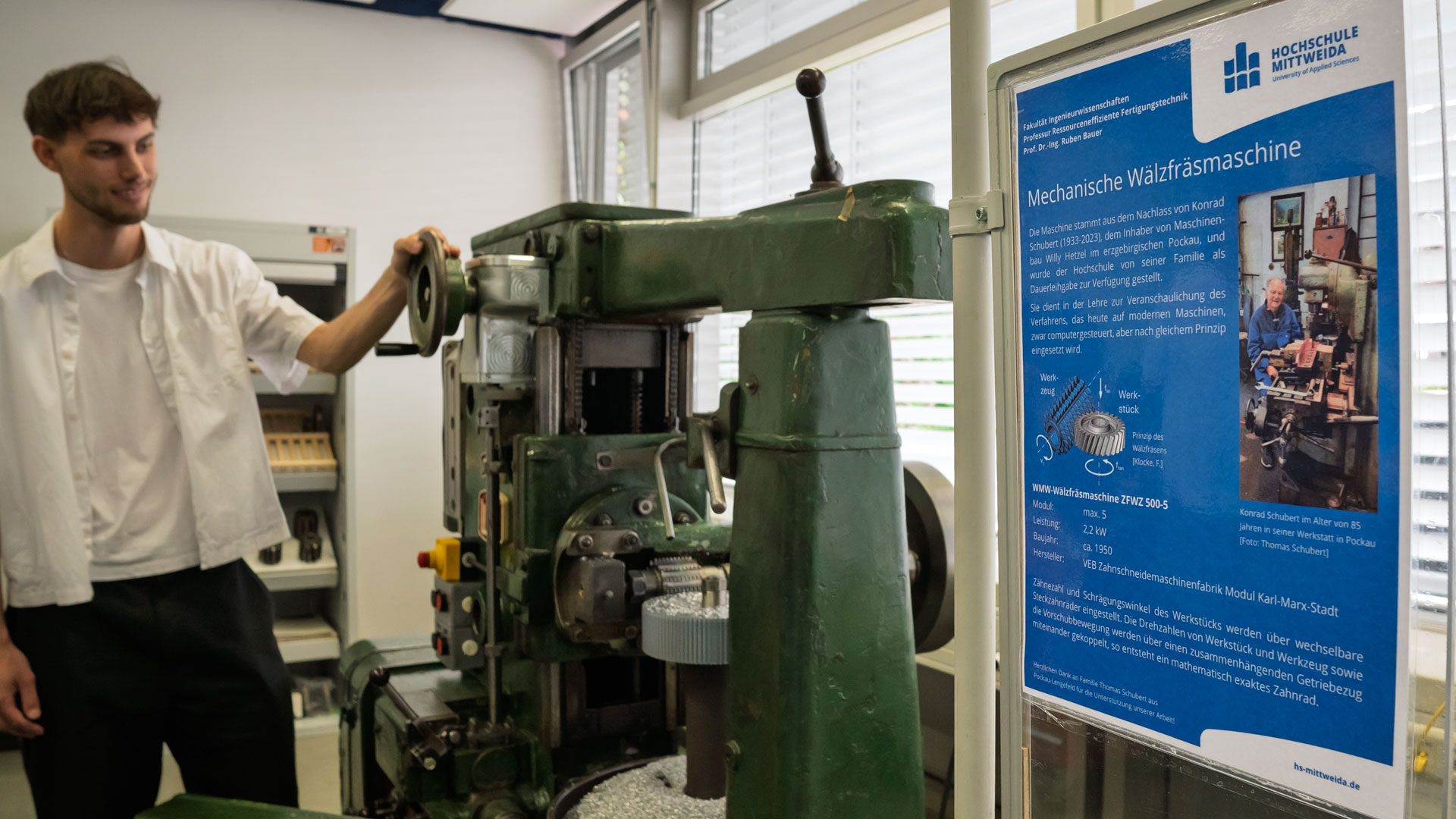
Practical Project: Machine Restoration
Max Brunner had set himself the task of ensuring that the old machine was in perfect working order again before it was put into use in the university laboratory. Over the past six months, the mechanical engineering student has examined every component, adjusted it, lubricated it, replaced any parts that were broken, and remade any that were no longer available as spare parts after seventy years.
“During my work placement at a major machine tool manufacturer in Kempten, I’m currently working with the modern successors to my ‘ZWFZ 500-5’,” says Max. “They’re significantly faster, more precise and more automated – but the basic principle remains the same. The opportunity to study them in such depth in Mittweida was a once-in-a-lifetime chance. I’m delighted that my fellow students can now gain practical experience working with them.”
A mechanical engineering degree with a personalised touch
Max will complete his degree in autumn 2025 with a Bachelor of Engineering. After his first year of study, which covered the fundamentals of natural and engineering sciences and provided an overview of the diverse field of Mechanical Engineering, he had a choice of four specialisations: Laser and surface technology; Vehicle Development for Sustainable Mobility; Resource-efficient Manufacturing Technology, the specialist area of Professor Ruben Bauer; or Digital product development, which Max chose.

Educational pieces, not mementos
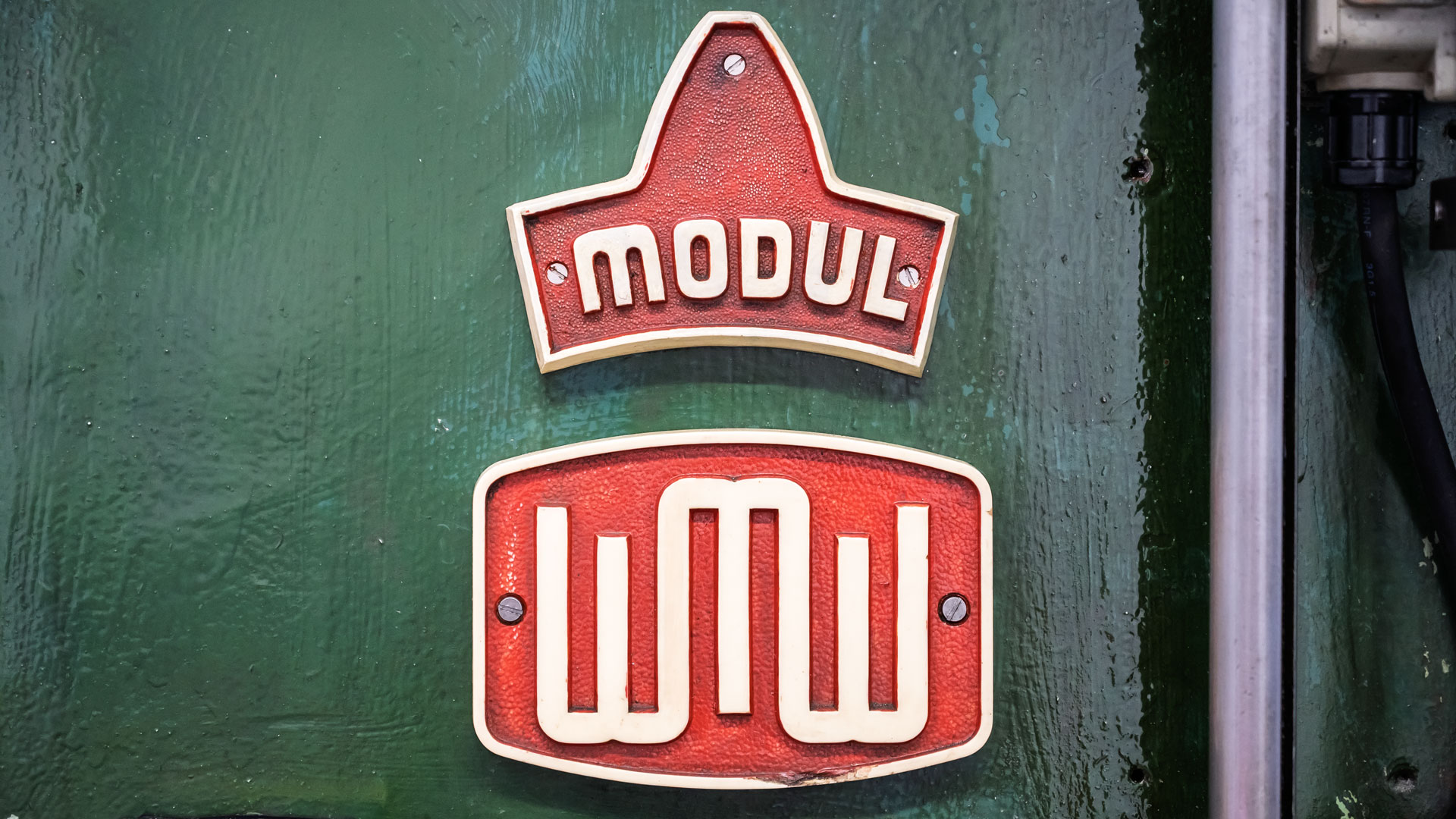
Dieter Fritzsche and Roland Wolf have supported Max Brunner with their expertise. At the Chemnitz Industrial Museum, they look after old machines, including those from their former employer, ‘Modul Karl-Marx-Stadt’, which manufactured the ‘ZWFZ 500-5’ gear hobbing machine which is now in use at the HSMW.
“For us, these old, working machines are not mere mementos of times gone by, but teaching aids and examples of technology that we want to bring closer to people today,” says Fritzsche.

A family tradition spanning four generations
The machine is on permanent loan from the Schubert and Talke families and comes from the estate of Konrad Schubert (1933–2023), the owner of Mechanical Engineering Willy Hetzel in Pockau in the Ore Mountains. Four generations of the family were present at the ceremonial handover on 27 June in the HSMW’s mechanical engineering laboratory.
Thomas Schubert, Konrad’s son, was delighted that the machine had found a new home in Mittweida and is now playing a valuable role in the training of future engineers in Mechanical Engineering. Hanna Schubert, Konrad’s widow, adds: “He would have been delighted!” – presumably also that his great-grandson Damian will be studying Mechanical Engineering at the HSMW from the winter term onwards.

Photos (unless otherwise stated) and text: Helmut Hammer