This page was translated automatically using artificial intelligence (DeepL). The German version is binding. More information about automatic translation
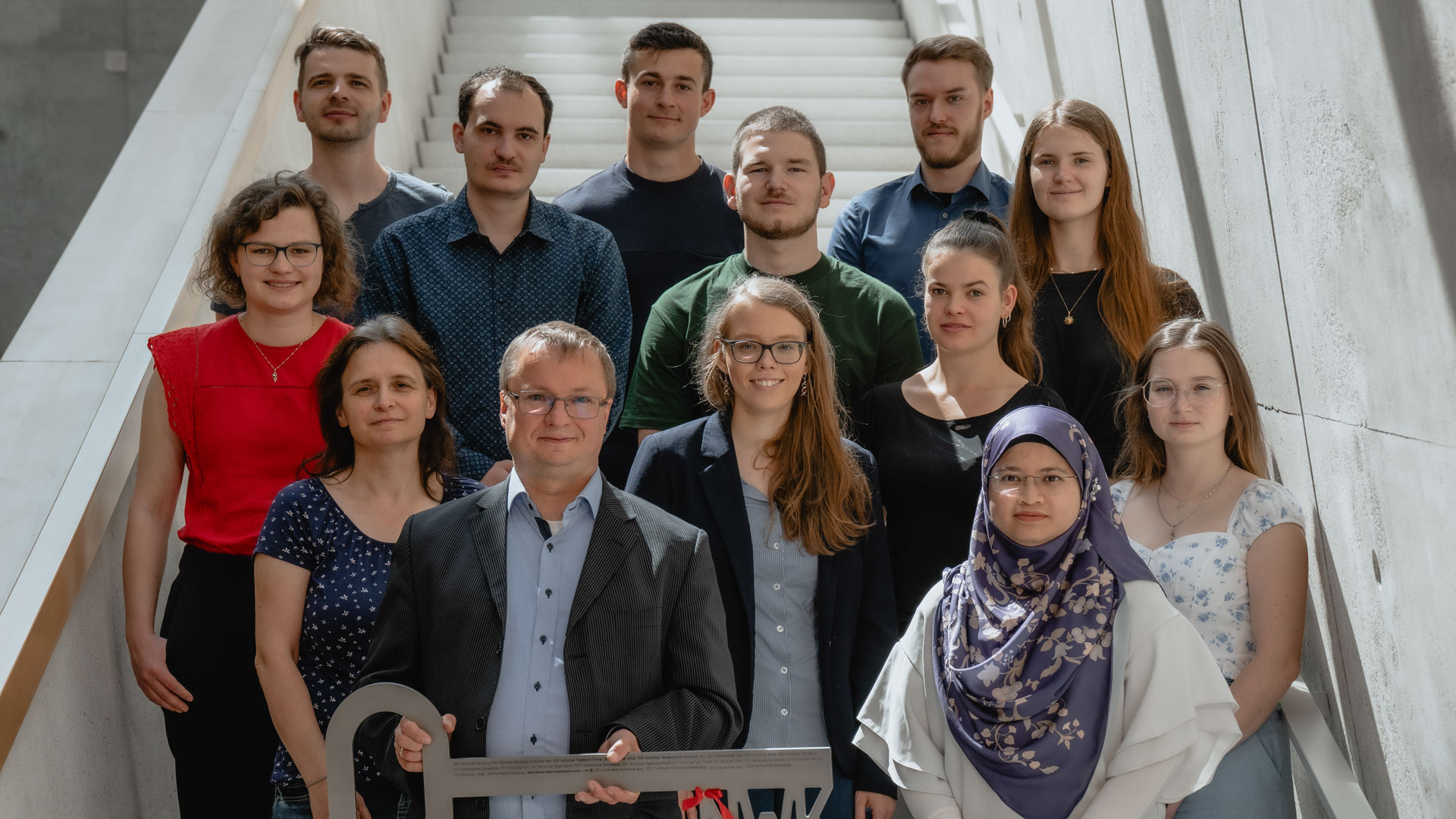
On 13 and 14 June, the HSMW is hosting the Conference for Academic Talent (NWK) for the second time since 2017. On Thursday morning, Vice-Rector Uwe Mahn opened the conference, which attracted around 150 participants. These include young researchers from 22 higher education institutions and universities across Germany, representing a broad academic spectrum. At the Centre for Media and Social Work, they are presenting their research projects in over 50 presentations across 12 thematic sessions and 10 research posters. All contributions have undergone peer review. In addition, there are plenty of opportunities to network and seek advice on academic careers from experienced colleagues.
Award for outstanding final-year projects
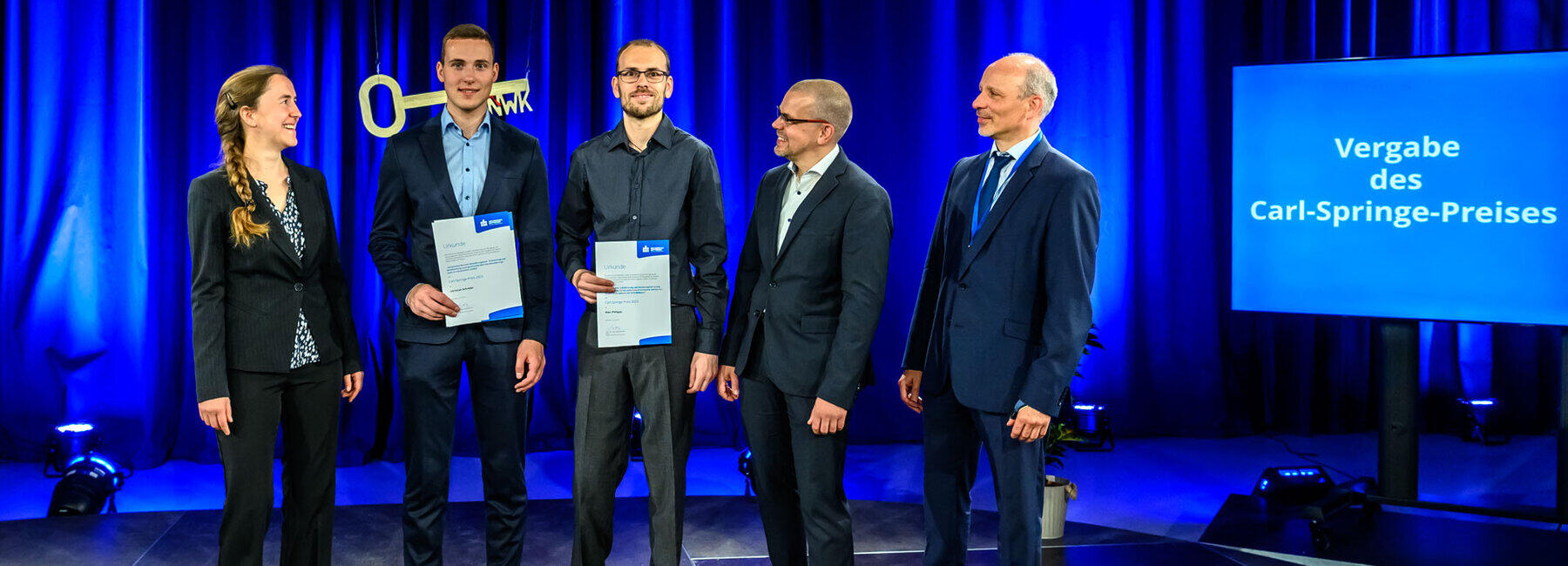
Before the best entries were awarded prizes at 5.30 pm on Thursday evening, the Faculty of Engineering Sciences at HSMW took the opportunity to present the Carl Springe Prize to the predominantly young academic audience at the opening event. This year, the prize went to two graduates of the Master’s programme in Electrical Engineering – Automation at the HSMW: Marc Philipps and Christian Schröder. Both studied the specialisation ‘Networked Intelligent Systems’, which was designed in close cooperation with industry and also allows students to work whilst studying. The award-winning projects are correspondingly application-oriented.
Whilst working for his employer, IAV GmbH in Gifhorn, Marc Philipps was involved in the development of an autonomous harvesting robot. This formed the basis of his Master’s thesis: ‘Classification, localisation and instance segmentation of strawberries for an autonomous harvesting system using neural networks based on RGB image data’.
Christian Schröder is now conducting research at Fraunhofer IWU in Chemnitz. His Master’s thesis, completed last year, is entitled “Generic Barcode Decoding Tool – Development and deployment of a generic barcode decoding tool in an industrial environment” and deals with the recognition of barcodes and Data Matrix codes on workpieces using AI-based image processing. Schröder was also able to present his findings at a conference in Michigan (USA) in the spring of 2024.
About the person: Carl Springe
Carl Springe (1877–1958) studied electrical engineering and Mechanical Engineering in Mittweida from 1901 to 1904. He was highly successful in the development of electricity meters and served as director of ARON-Werke in Vienna. Out of gratitude to the HSMW, his grandson Helmut von Dreising has been sponsoring the prize, worth 1,000 euros, since 2001.