This page was translated automatically using artificial intelligence (DeepL). The German version is binding. More information about automatic translation
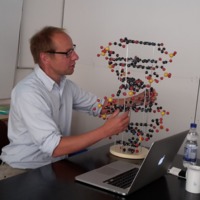
Well, as biotechnologists, we naturally turn our attention to biology lessons. The profession is changing at an unprecedented pace. The latest trends are, for good reason, not included in the curriculum. By the time pupils reach upper secondary school, the foundations in the key sub-fields of biology have been laid. Those who want to learn more can enrol in vocational training or go on to university. But there is one thing subject teachers should be able to do: spark a desire to learn more. To achieve this, however, biology teachers need to keep up with the latest trends and skilfully incorporate them into their lessons. Some teachers are so passionate that they want to offer their pupils more, for example during project days. Professor Wünschiers, together with his then PhD student Robert Leidenfrost, teachers from Baden-Württemberg and with the support of the Chemical Industry Fund, has developed an experiment designed to bring cutting-edge Biotechnology into the classroom and inspire a desire to learn more (Fig. 1).
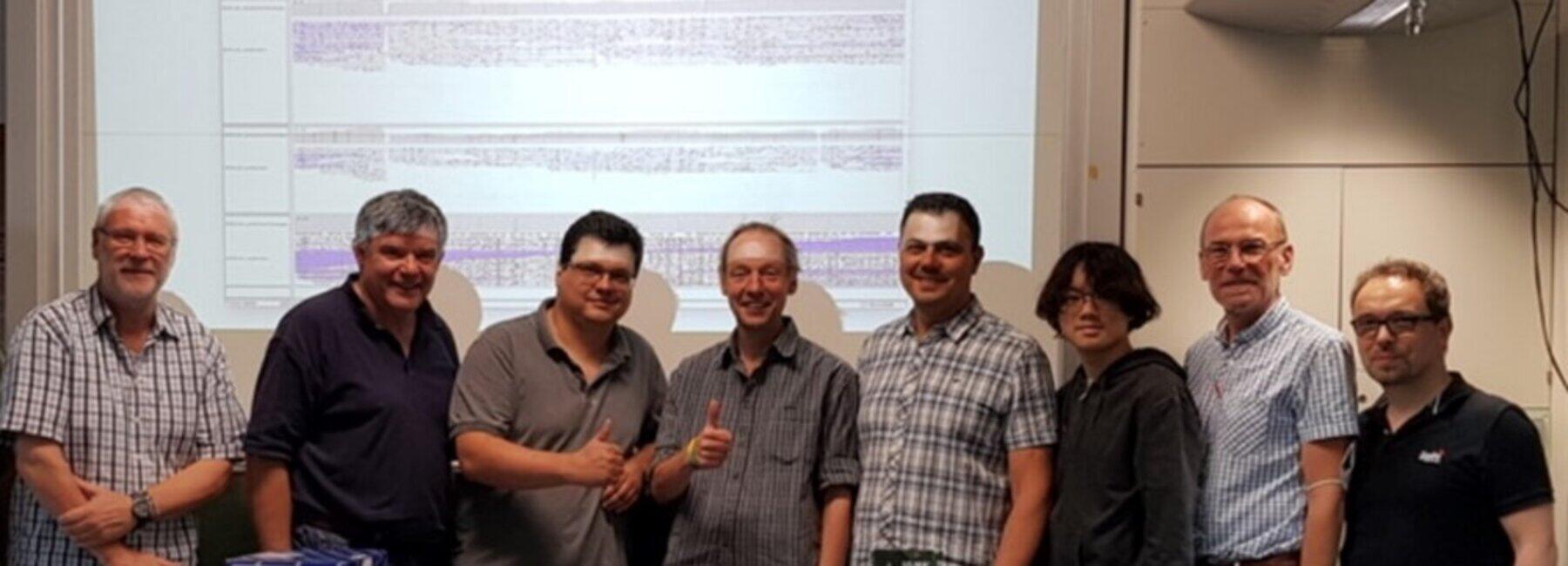
The collaboration began many years ago when a nationwide network of biotechnology teachers spent a day with the biotechnologists in Mittweida. “The biggest challenge initially was avoiding the need for expensive basic equipment,” says Professor Wünschiers, describing the development of the experiment. In this experiment, DNA is specifically cut using the CRISPR/Cas gene-editing system, and the cut site is detected via DNA sequencing (Fig. 2).
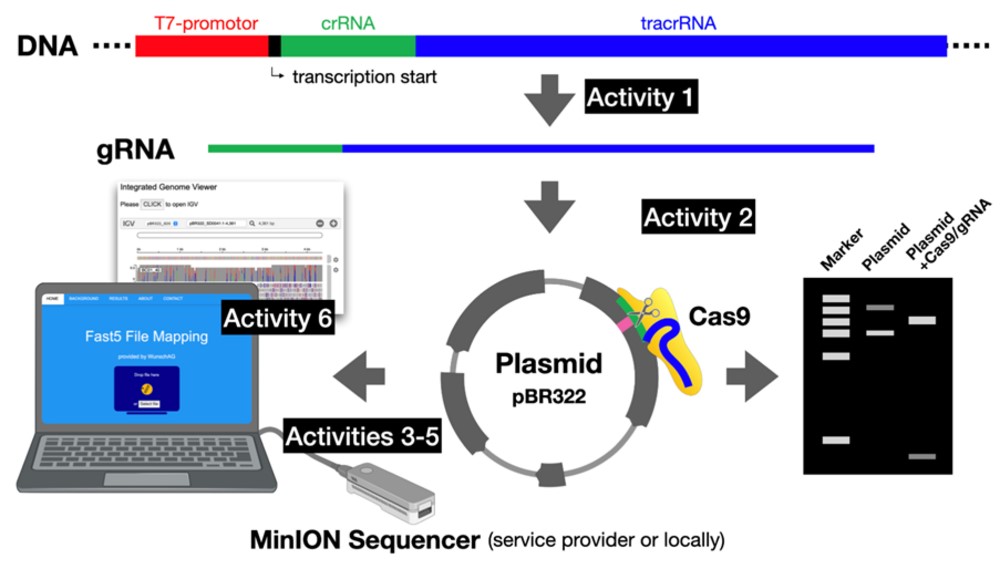
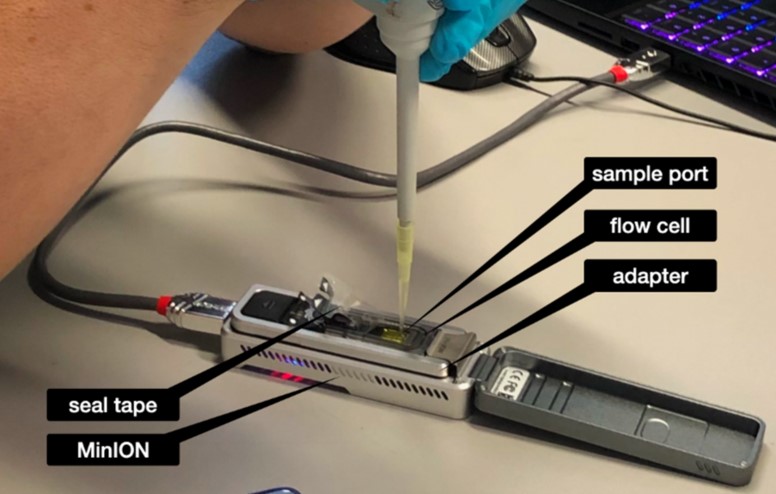
“It’s not rocket science, and we’re just shooting water balloons at flies, but it’s still an educational experiment that can be completed in a day and easily adapted.” The experiment involves cutting isolated DNA. Legally speaking, this does not constitute genetic engineering and can therefore be carried out in all schools. For DNA sequencing – used to verify the cleavage site – a hand-sized sequencer is used, which costs around a thousand euros (Fig. 3).
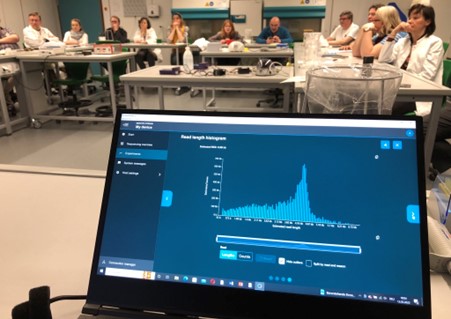
“Every teacher can apply to the Chemical Industry Fund for 2,500 euros to support teaching,” says Professor Wünschiers, adding: “They are familiar with our pilot scheme and are supporting it, and the money is enough to cover the cost of the sequencer and consumables.” The experiment was first used during teacher training courses in Bruchsal, Esslingen, Ulm and Villingen-Schwenningen (Fig. 4).
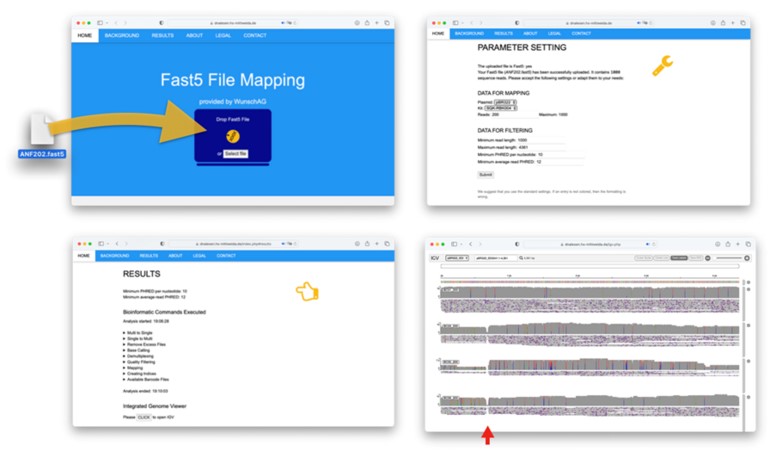
“This presented a second hurdle: the bioinformatic analysis of the data,” says Professor Wünschiers, describing his experiences. He subsequently developed a website (https://dnalesen.hs-mittweida.de) which, once the raw data has been uploaded, handles the entire analysis and visualisation process (Fig. 5).
“The experiment is now ‘chief-physician-proof’, as Dr Jürgen Braun, head of the Baden-Württemberg WUN Group, likes to say.” The entire experimental procedure, including its educational context, was published in May 2024 in the *Journal of Microbiology and Biology Education* and is freely accessible thanks to support from the university: doi.org/10.1128/jmbe.00187-23. The collaboration with the teachers continues. This year, for example, an experiment was developed to identify individual bacteria in mixtures using DNA sequencing. Furthermore, the experiment has already been successfully implemented in other European countries, including Athens, Istanbul and Vilnius.
Text and illustration: Röbbe Wünschiers.