This page was translated automatically using artificial intelligence (DeepL). The German version is binding. More information about automatic translation
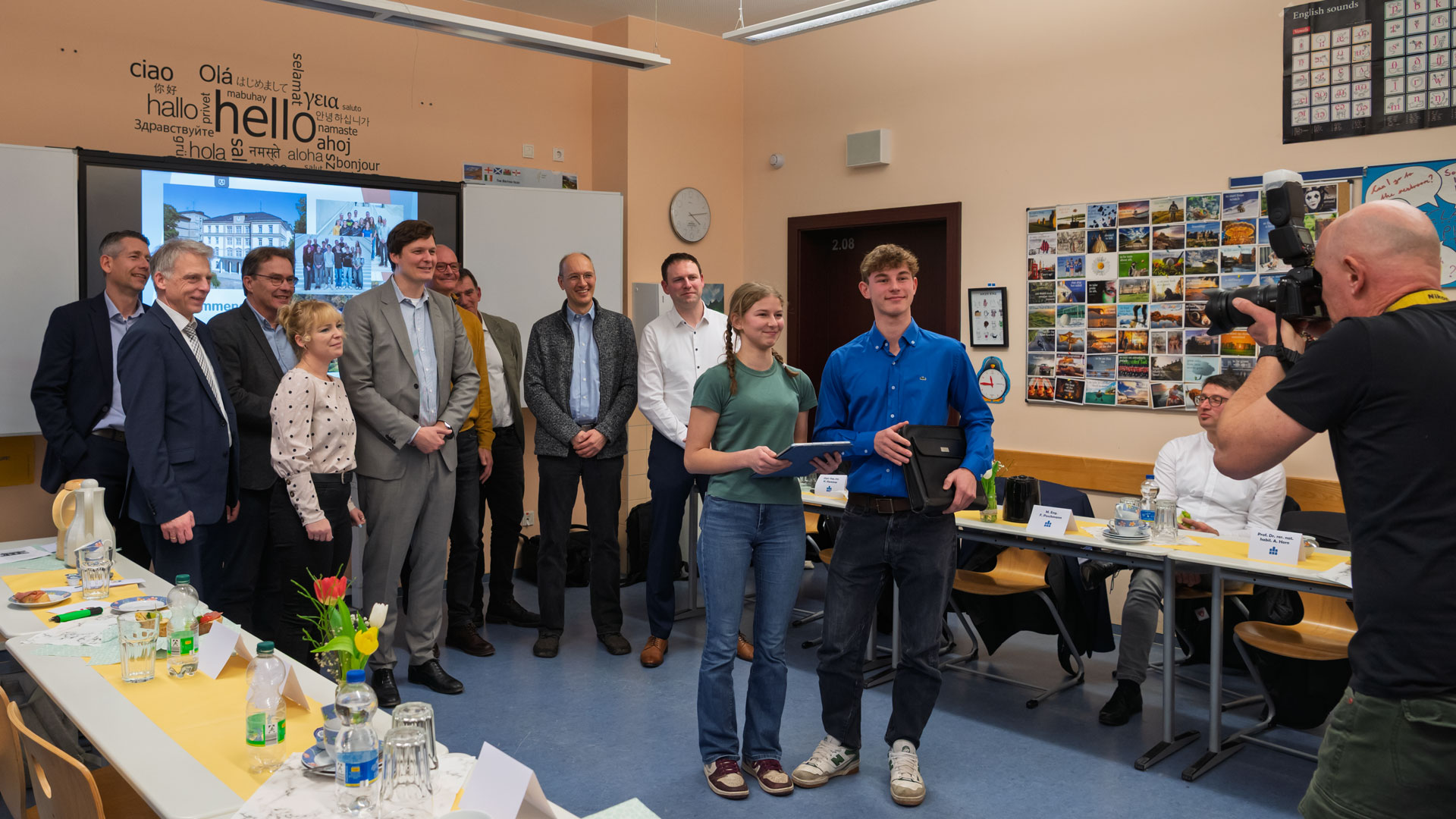
Saxony’s Minister for Education and Cultural Affairs, Conrad Clemens, visited the Mittweida Municipal Grammar School on 15 January to meet with representatives from the university, the grammar school and the town of Mittweida to learn about a special partnership between the university and the grammar school. This partnership is, quite literally, setting a precedent in Mittweida. Just one week after the minister’s visit, the Saxon State Office for Schools and Education (LaSuB) formally recognised the university’s previously voluntary contribution to supplementing teaching in the grammar school’s science-focused programme: As part of the ‘Unterichtsversorgung’ project, the participating university lecturers are now authorised to award marks independently, which appear on pupils’ school reports as ‘profile’ marks. Furthermore, the work previously carried out exclusively on a voluntary basis is now being remunerated.
A wonderful spirit – very inspiring!
Conrad Clemens
The proximity of the two educational institutions and the links between parents from the university and their children at the grammar school had already led to a number of joint projects in the past – for example, a donation of technical equipment by the Laserinstitut Mittelsachsen e.V. for the physics laboratory, full-day programmes for pupils and support from professors for ‘complex learning tasks’ undertaken by Year 10 pupils.
Against the cancellation of lessons
In 2023, however, it was a cry for help from the school and the parents’ council that brought the professors and staff of the Faculty Engineering Sciences into action: many lessons in the science stream for Years 8 to 10 had been cancelled. Together with the school management, they agreed on a content-based concept for a ‘supplementary programme’ for the second term of the 2023/2024 academic year. It could not be called ‘lessons’, because university lecturers are not qualified teachers. That was not the only hurdle. Extended criminal record checks had to be submitted; two different timetabling systems – those of the school and the university – had to be taken into account; and attendance monitoring and marking procedures had to be clarified. Finally, the content had to be coordinated with the subject teachers in line with the curriculum.
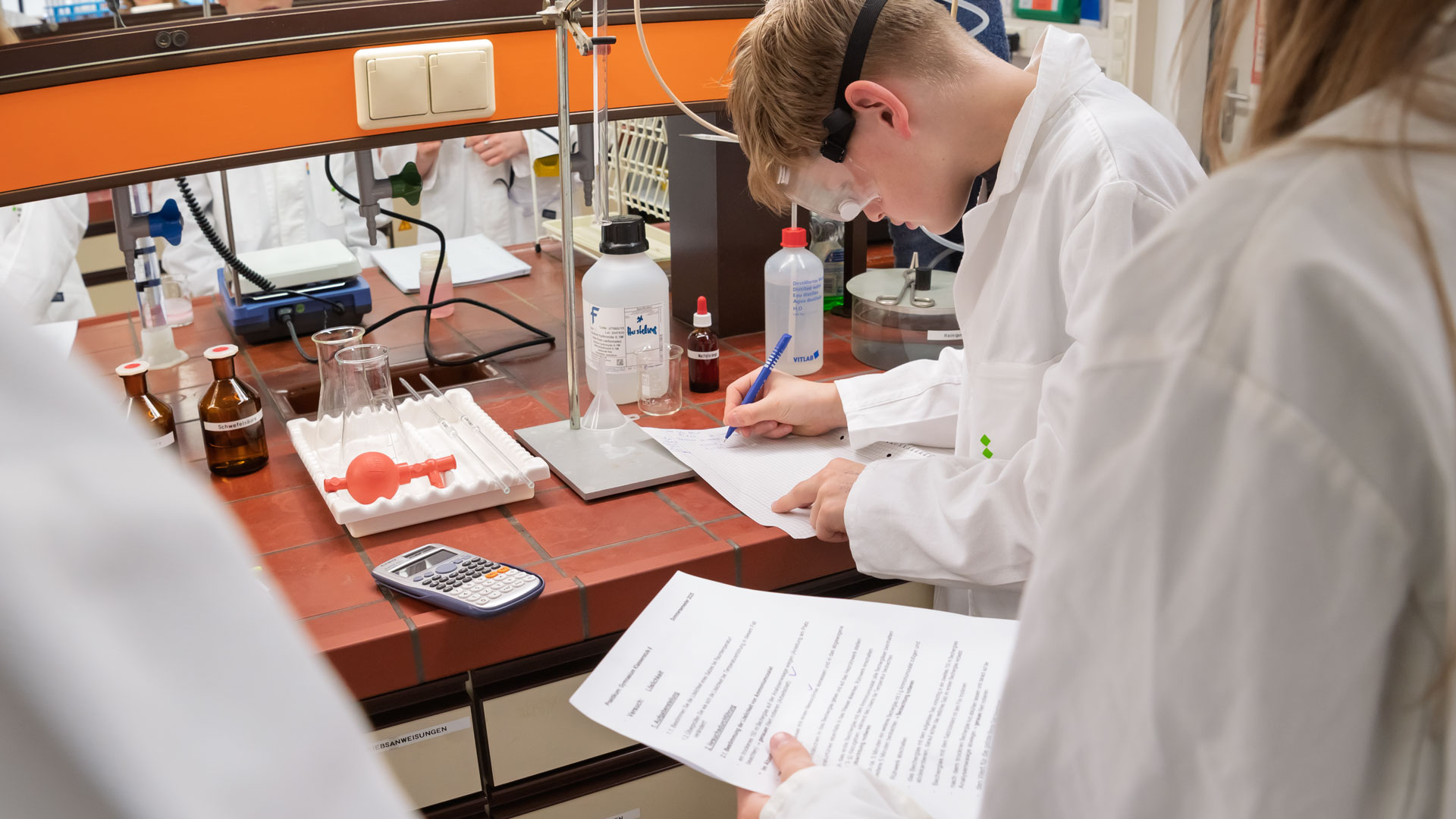
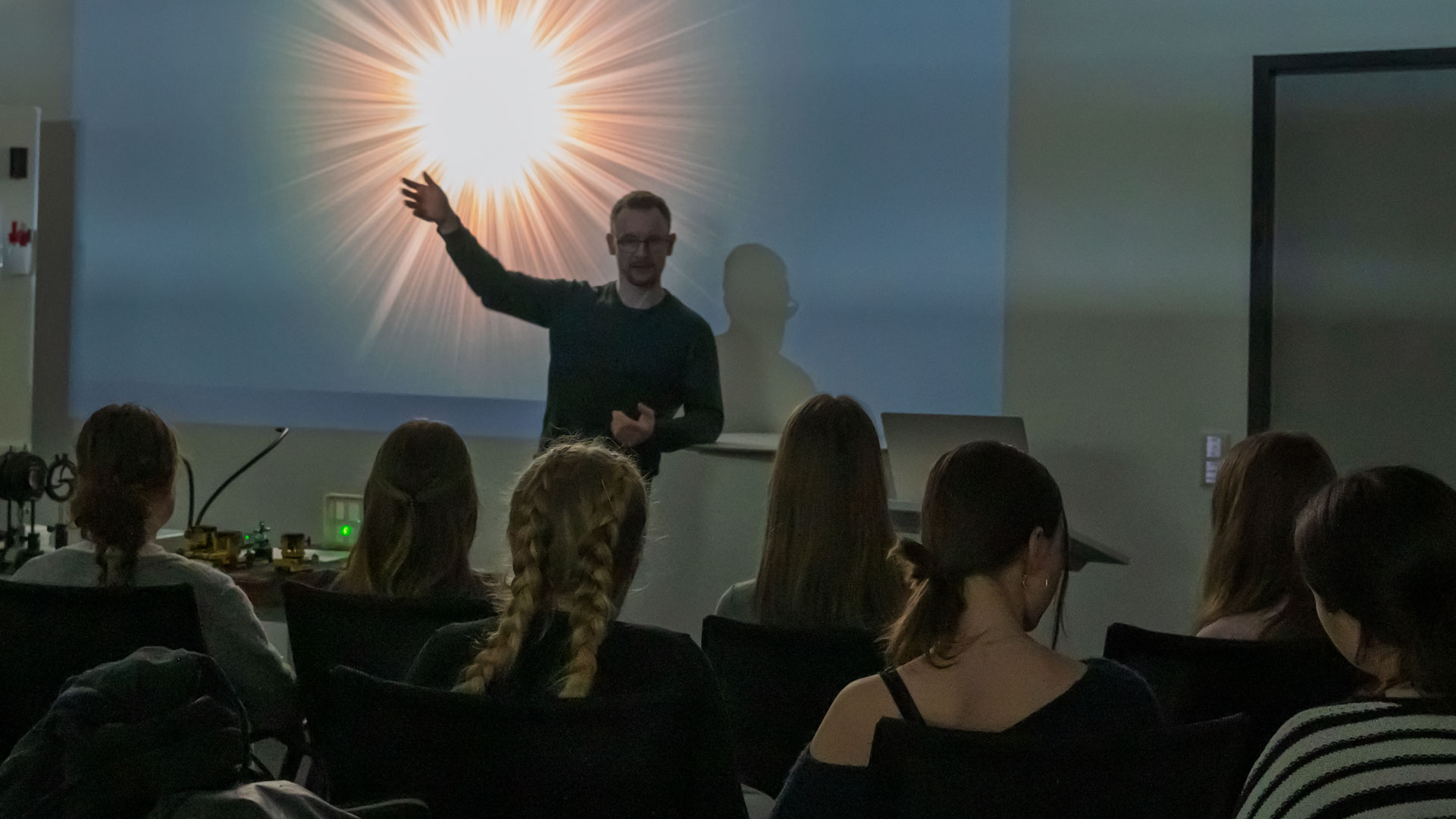
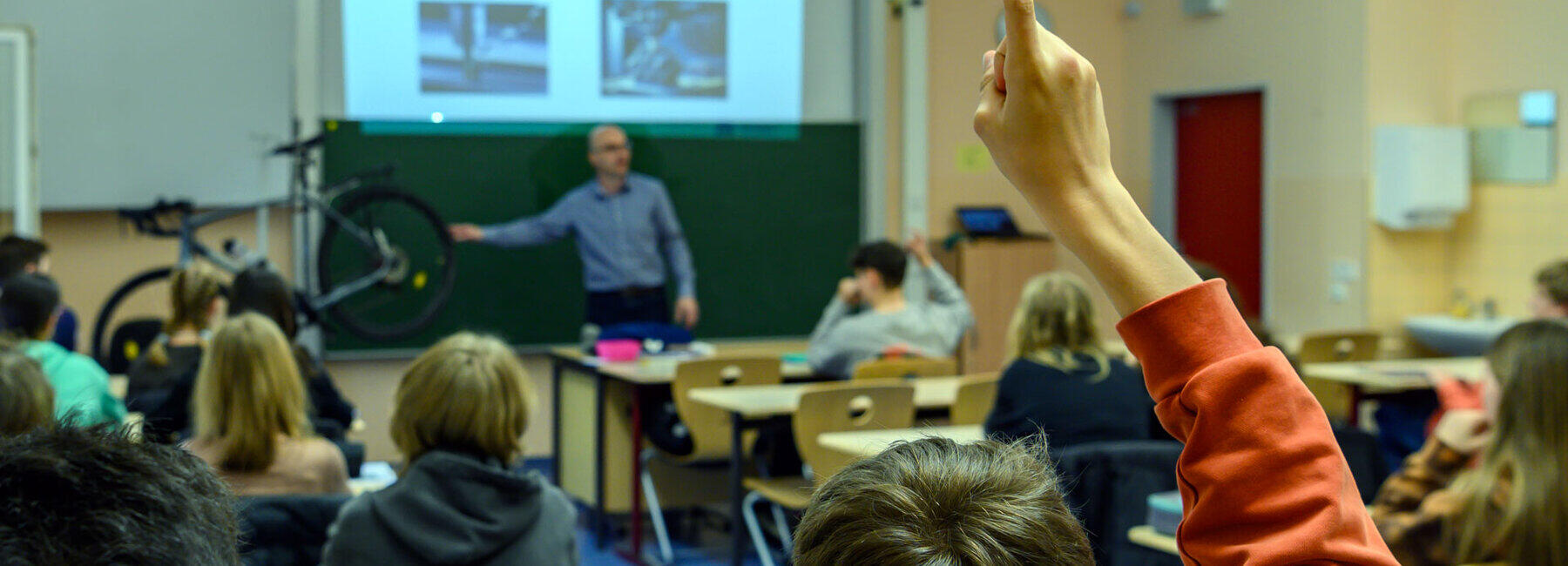
On 13 March 2024, the programme finally got underway for over seventy pupils in Years 8, 9 and 10, partly organised as a block at the university and partly involving the professors and staff ‘visiting the school’ in the classrooms.
Professor Jörg Matthes, then Dean of the Faculty of Engineering Sciences at Mittweida University of Applied Sciences, explained the rationale behind the initiative: “This current project with the grammar school benefits the pupils and is one of several ways of fulfilling what is, from the university’s perspective, an important mission: namely, to transfer knowledge and enthusiasm for science and technology to society.”
To inspire enthusiasm for STEM
Mario Esche, headteacher at the Städtisches Gymnasium, confirmed: “The programme offered by the university goes some way towards compensating for the current reduction in science-focused lessons in Years 8, 9 and 10. This is a benefit for our pupils – also with a view to their future educational paths. We expect that, with more prior knowledge and an interest in the natural sciences, they will be more likely to choose a relevant course in the upper school.”
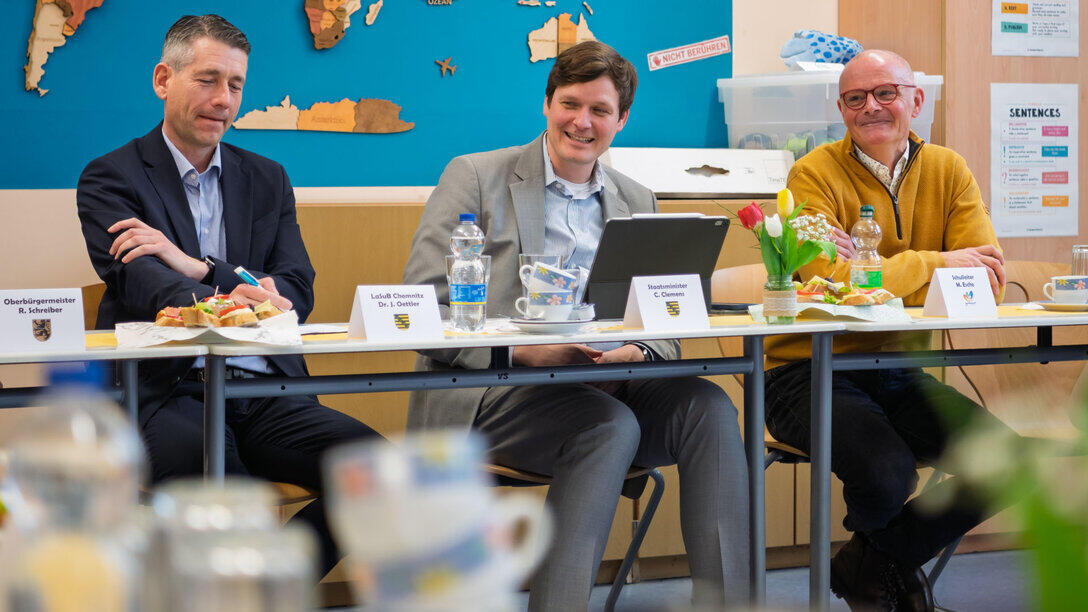
On 15 January 2026, the school and Mittweida University of Applied Sciences presented Minister for Education and Cultural Affairs Conrad Clemens with a review of what was now the second phase of the project. Staff from the Faculty of Engineering Sciences countered the 25,217 missed lessons in the science-focused streams at the grammar school during the second term of the 2024/25, they offset 217 cancelled lessons in the science streams at the grammar school with 144 hours of teaching, during which they mostly brought the pupils to the university – in itself a welcome change from the daily school routine.
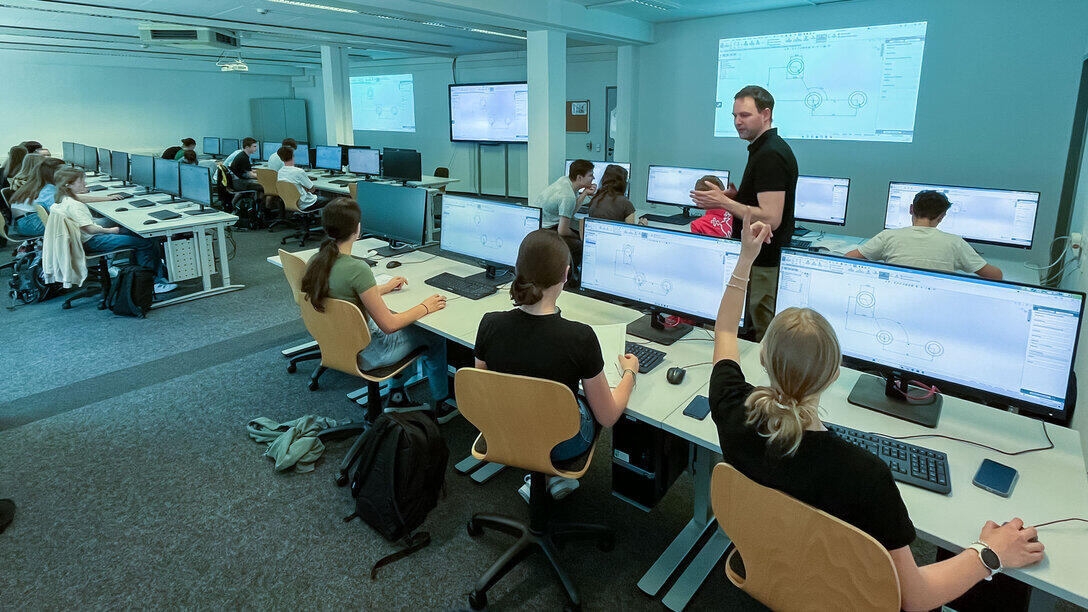
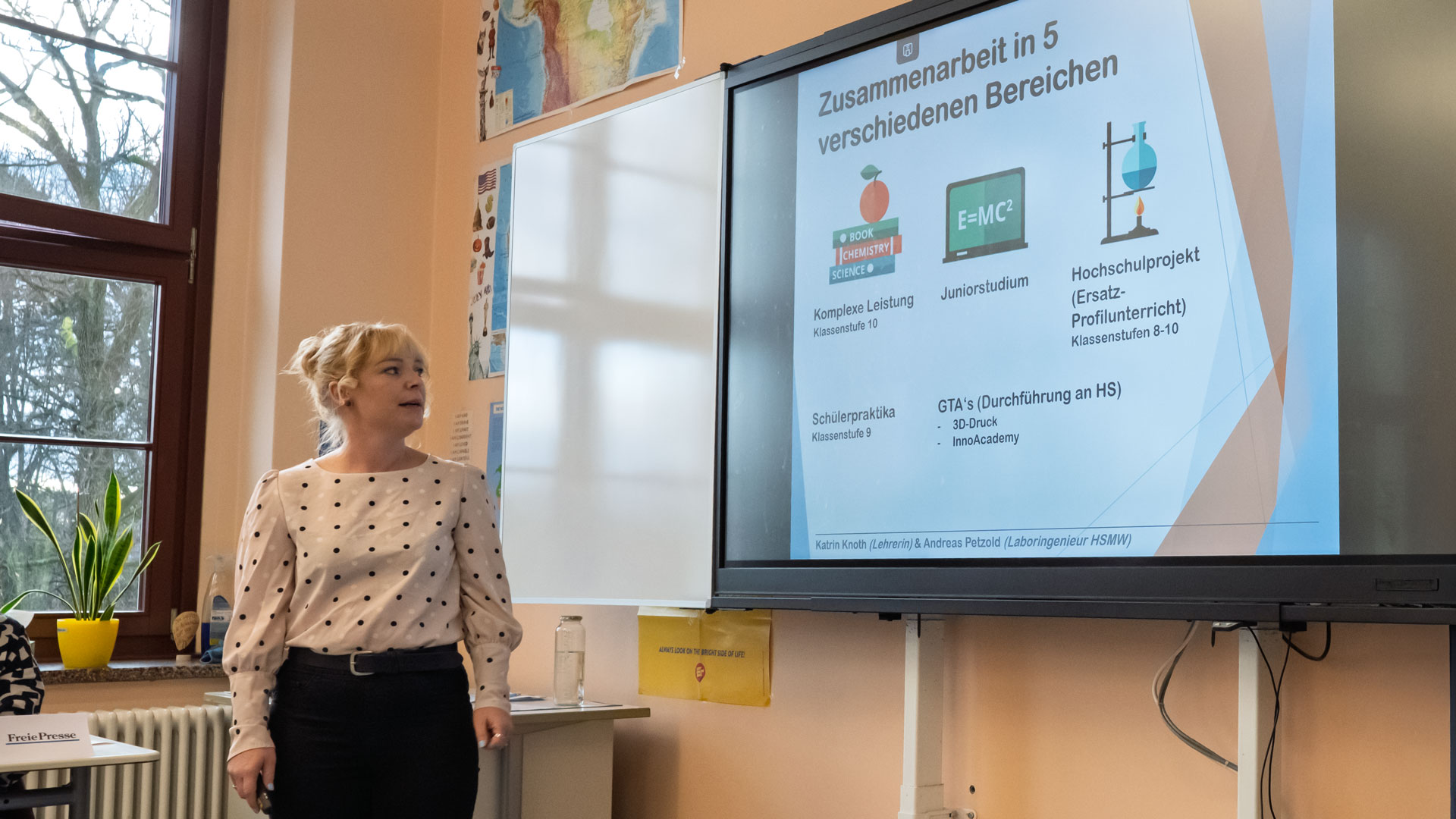
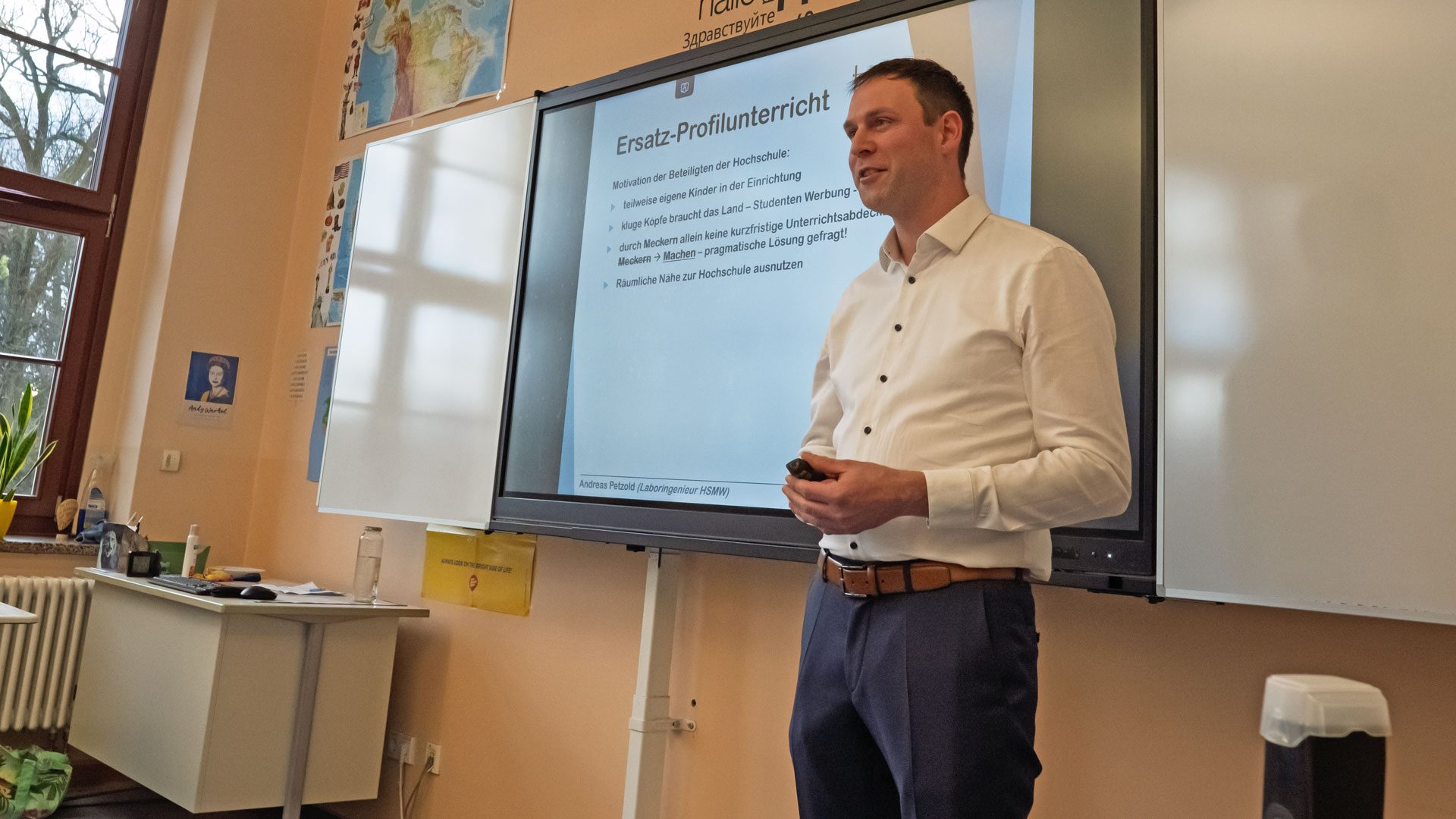
Andreas Petzold, a laboratory engineer in the faculty’s Design Group, is one of a total of 24 university staff members involved in the project. He emphasises: “We’re doing this on a voluntary basis, alongside our work at the university. Like most of my colleagues, I’m motivated by the fact that we have school-age children and are concerned about their future. Naturally, we also want to pass on our enthusiasm for our subject to the younger generation.”
For the future
The workload, which extends beyond normal teaching hours, was one of the sticking points openly discussed with the Minister – issues that threaten the long-term viability of the programme. Clemens and Dr Jörg Oettler, Head of the State Office for Schools and Education (Lasub) in Chemnitz, promised to look into the requests for funding for materials and the removal of certain bureaucratic hurdles in a straightforward manner. Just one week after the meeting in Mittweida, the LaSuB agreed to fund the remuneration of university lecturers as part of the ‘Unterrichtsversorgung’ programme, which also provides funding for retired teachers or trainee teachers working in schools.
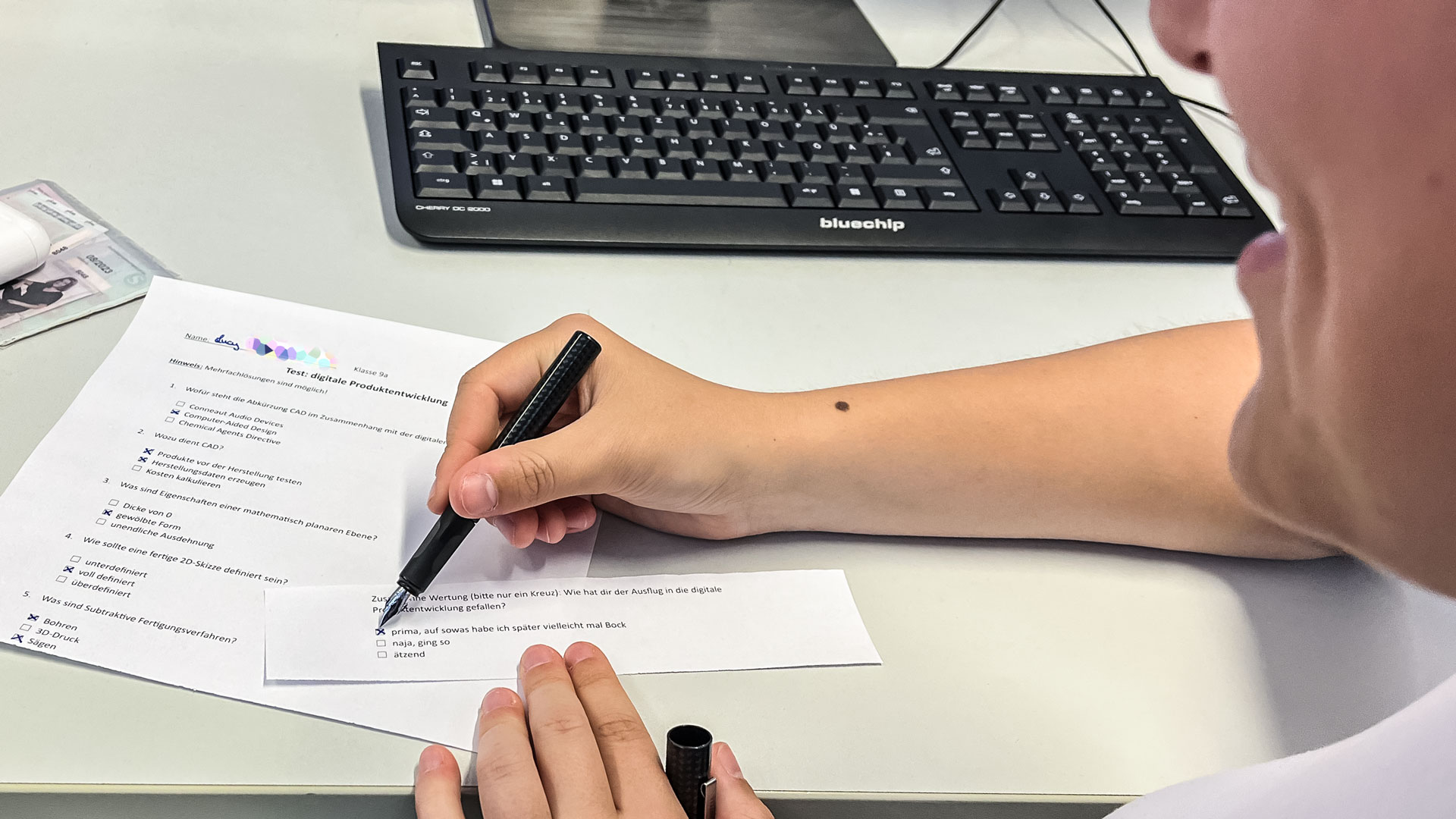
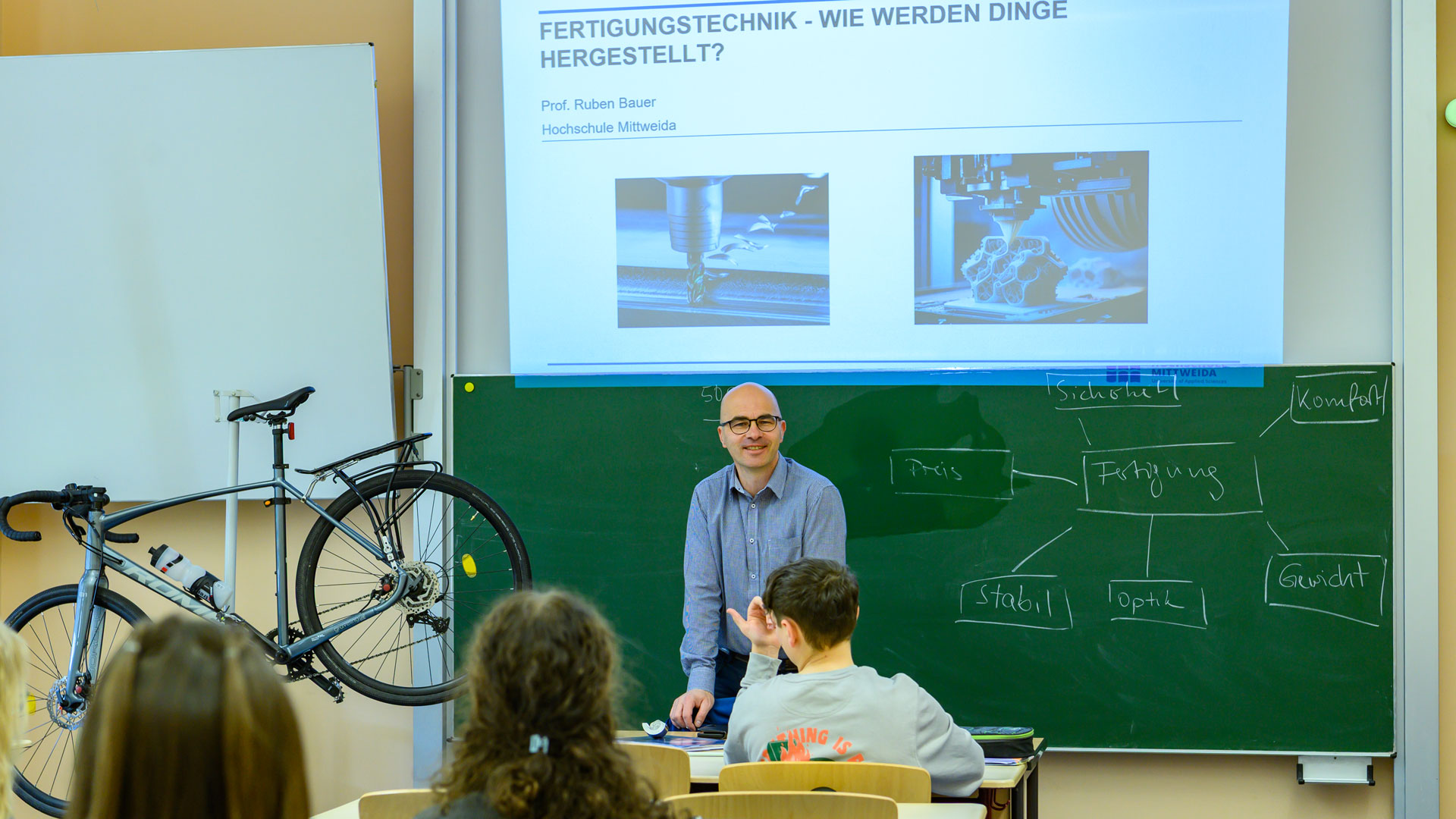
This bodes well for the third condition of the ‘substitute subject-specific lessons’ programme, due to start in the spring. The topics range, for example, from water and its quality in the chemistry curriculum for Year 8, through bionics, manufacturing technology and digital product development in Year 9, to programming and autonomous driving in Year 10.
Katrin Knoth, Head of Natural Sciences at Mittweida Municipal Grammar School and a member of the extended school management team, is delighted for her pupils that the university lecturers are continuing the project: “The pupils get to know the university’s laboratories and experience what everyday life is like for the students. They are allowed to carry out experiments on exciting topics themselves. The field trips to the sewage treatment works on the River Zschopau and to the water tower also convey the content of physics and chemistry lessons in a practical and vivid way.”
Commitment with a side effect
Professor Michael Kuhl, Dean of the Faculty of Engineering Sciences, is delighted with the commitment shown by his colleagues and staff – and is hoping for a knock-on effect, although this will only become apparent in a few years’ time:
I hope that our specialised classes and the junior study programme will spark and sustain pupils’ interest in technology and the natural sciences in the long term. And, of course, I would love to see one or two of them again whilst they are studying at Mittweida University of Applied Sciences.
A return to university with a complex performance
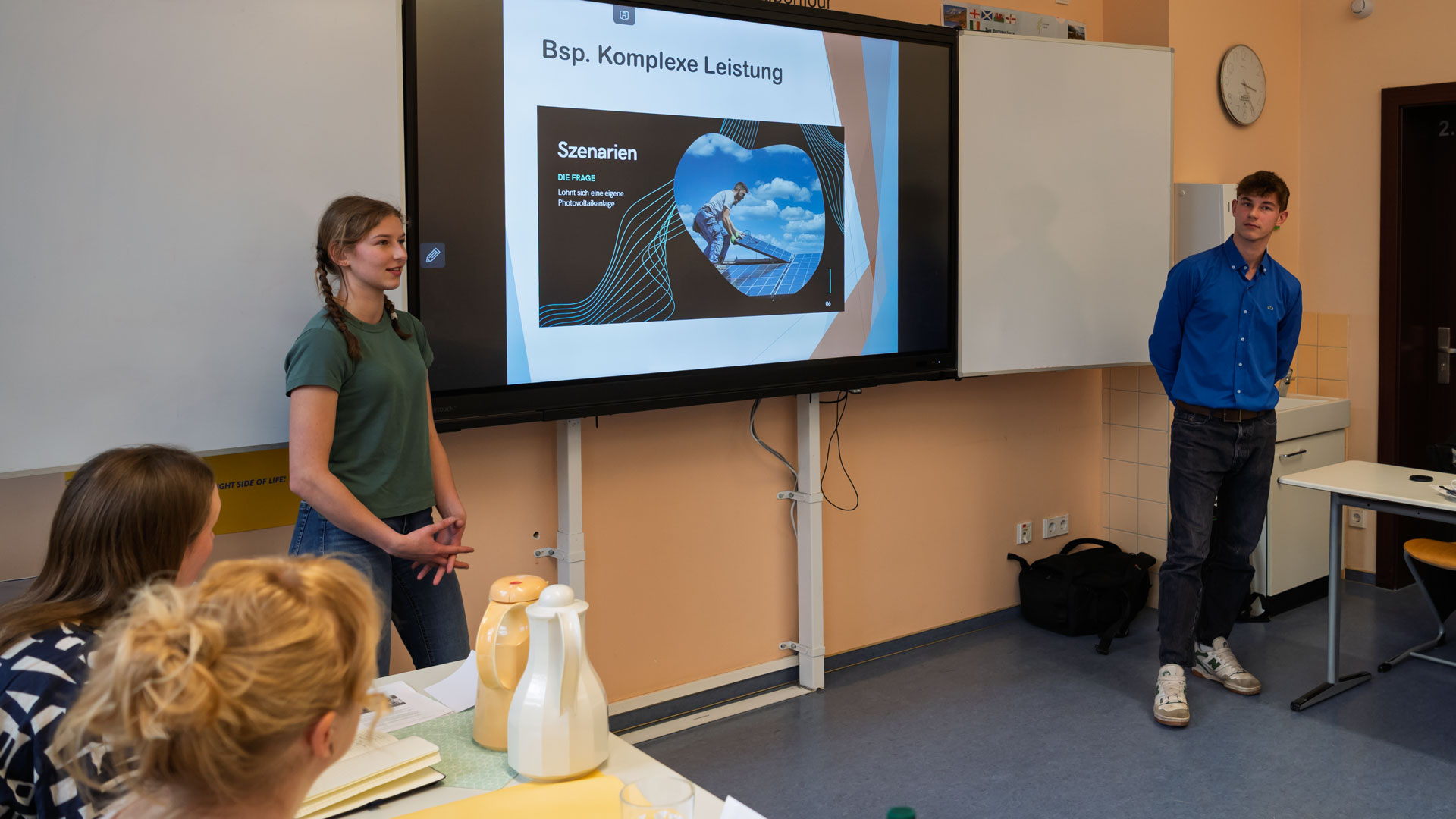
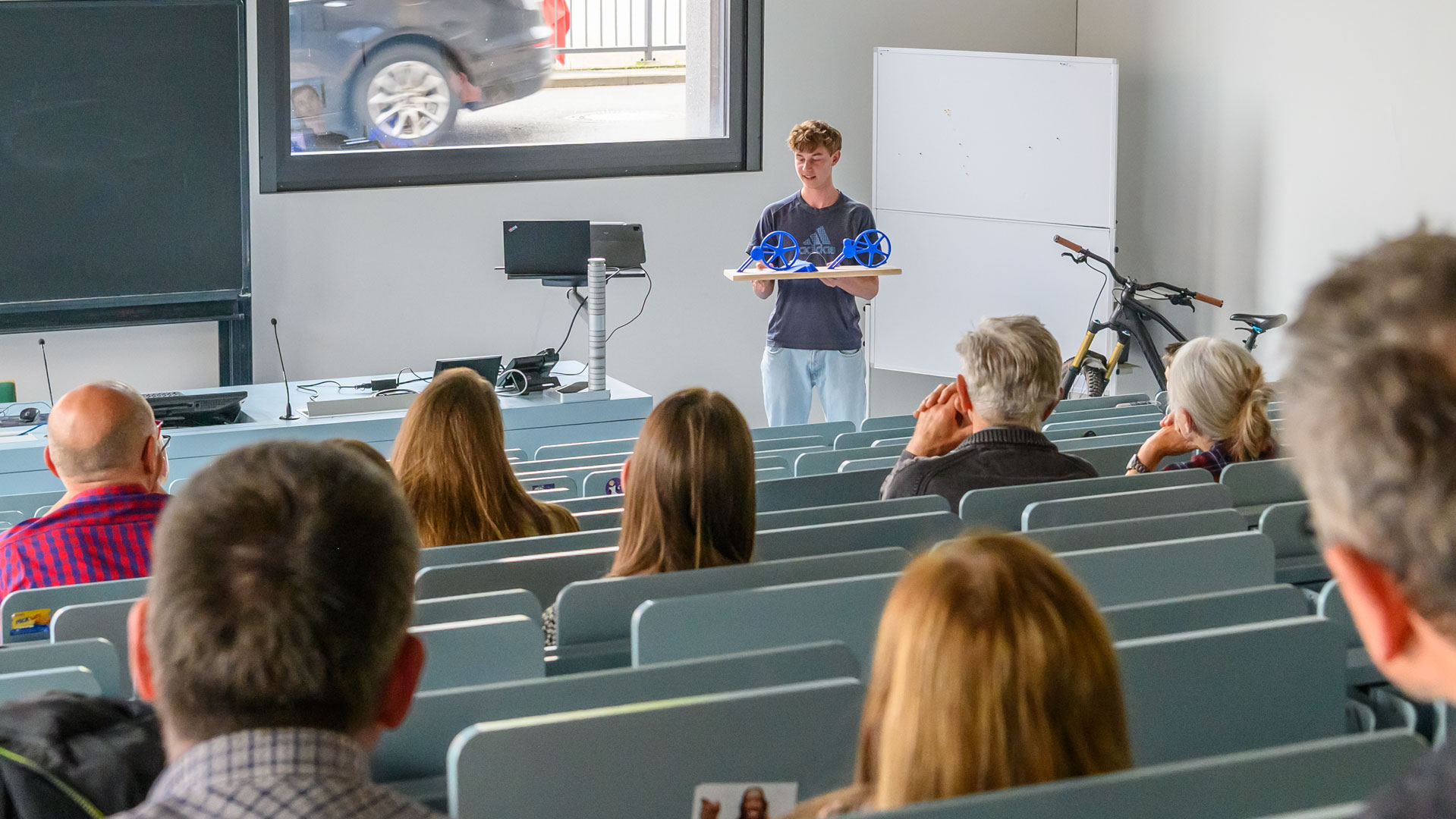
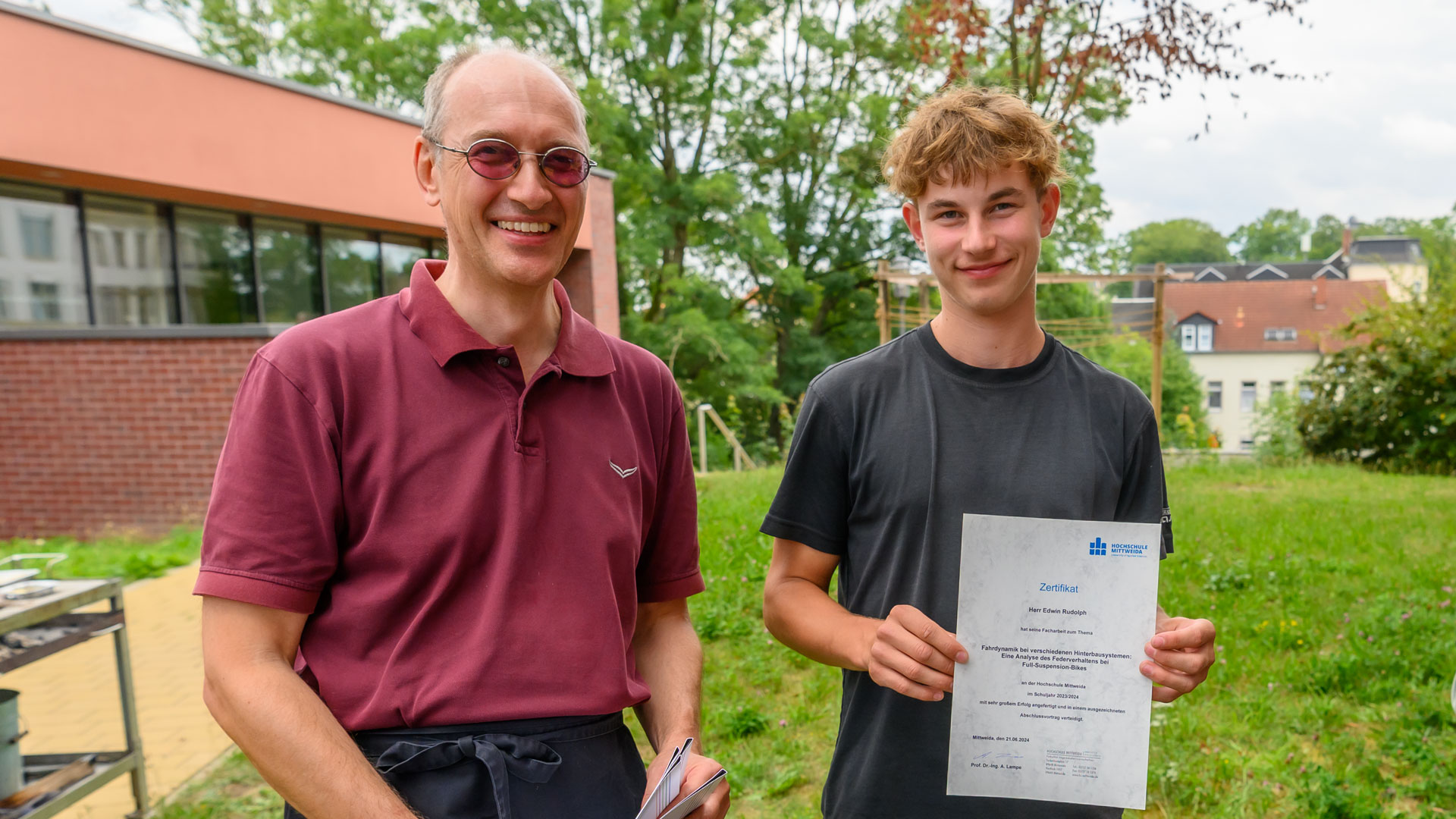
Artificial intelligence is a new addition to the range of topics covered in specialised lessons this year. However, it has been part of an ongoing collaboration between the university and the school for some time: The ‘Junior Study Programme’ for Year 10 pupils – which includes courses on LaTeX and the Python programming language, as well as the opportunity to work in university laboratories – provides inspiration for the so-called ‘complex projects’ that pupils are required to undertake. Launched by Professor Alexander Lampe in 2021, the range of topics has long since extended beyond the boundaries of engineering. This year, Lampe and his colleagues from other faculties are supervising twelve pupils who are exploring, amongst other things, AI applications in music, medicine and history. Others are investigating the drag resistance of swimming fins or working on the forensic analysis of distances in photographs. The pupils will present their work to an audience in the lecture theatre in May.