This page was translated automatically using artificial intelligence (DeepL). The German version is binding. More information about automatic translation
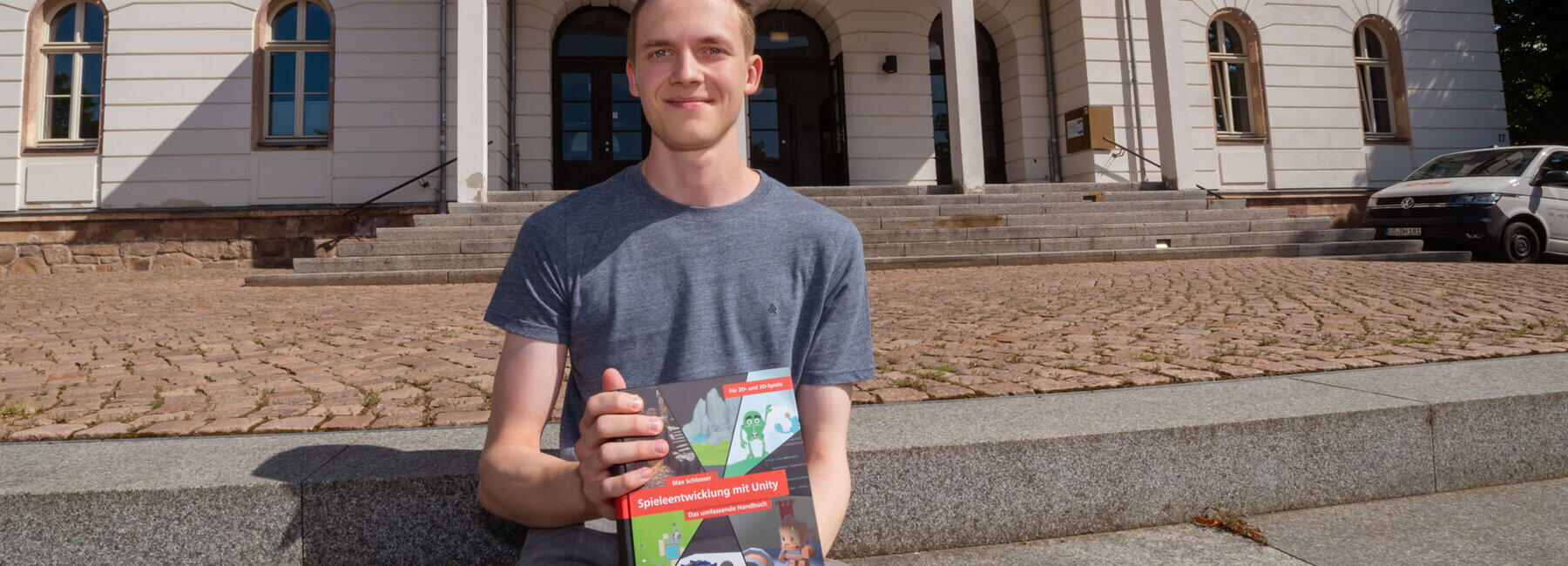
“I’ll definitely never forget this moment!” says a man holding his baby for the very first time. The man speaking is Max Schlosser, aged 23, who is about to complete his Master’s degree in “Media Informatics and Interactive Entertainment” at Mittweida University of Applied Sciences (HSMW). His ‘baby’ weighs 1.8 kilos, runs to 935 pages and is called ‘Game Development with Unity: The Comprehensive Handbook’, published by Rheinwerk-Verlag in Bonn. The unforgettable moment took place in early May 2024. It was the culmination of 16 months of hard work.
Max, what drove you on? And for all the newcomers: what is Unity?
‘Unity’ is a widely used game engine, a tool for developing computer games. It might sound a bit of an exaggeration, but I’m firmly convinced that anyone who’s keen to can develop games. All it really takes is creativity and a PC – and you can get started straight away and enjoy seeing your own ideas come to life. I want to share this joy with people and make it as easy as possible for them to get started. Many people might be put off by cryptic source code or a fiddly learning curve with annoying hurdles. Game development is the exact opposite. There’s no other way to achieve such cool results in such a short time whilst having so much fun.
Fun is the top priority. Surely that applies to playing games as well?!
Yes, definitely. I’ve always been a bit of a gaming kid: in primary school, I nicked my brother’s Game Boy for the first time – from then on, no Nintendo console or even the PC was safe from me. At some point, I became curious about computer science and started by coding plugins for the video game Minecraft. One thing led to another, and I quickly moved on to game development and app programming. I was about 13 years old at the time. For most people, the passion for playing games and the passion for developing them go hand in hand. I then started uploading tutorials to YouTube and realised that sharing my knowledge was at least as much fun as programming myself. By the way, I also enjoy playing both classic and modern board games. They also play an important role in our Bachelor’s degree programme in ‘Media Informatics and Interactive Entertainment’ in Mittweida: in the first few semesters, we start by designing our own board games, because it’s a great way to learn how to develop the narrative structure of a game.
The degree programme in creative digital solutions
Do you need a degree in media informatics for all of this? Aren’t passion and creativity enough?
For me personally, I have to start by saying this: without my degree in Mittweida, my book wouldn’t exist. I definitely drew inspiration from my degree and gained experience from my work as a tutor in passing on knowledge to others and recognising common pitfalls in these subjects. Christian (Roschke), my lecturer, was also a great support to me.
But not everyone has to write a book...
That’s true. Combining my studies with writing wasn’t always easy either. But I can wholeheartedly make a recommendation for the Media Informatics degree programme at Mittweida to anyone who wants to create innovative digital solutions. The focus is on ‘human–computer interaction’, not just in games but also in other interactive applications such as engaging websites or practical apps. It’s this combination that makes the course so appealing: IT solutions for creative ideas. It’s important to be passionate about the combination of creativity and computer science. No other university in Germany offers the opportunity to study Media Informatics in such a practical way. Even people with prior experience in very specialised fields – such as programming, in my case – are in the right place here to both hone their skills and broaden their horizons. The numerous team projects during the course are particularly exciting: for example, spending two semesters developing your own game, which is then presented at a major event organised by our programme, the ‘beta’. We also work on projects with external partners from the business world during our studies. This provides invaluable preparation for future careers, as you’re not just working within your own community. However, I really value our large media informatics family, which is extremely well-connected across all years and always supports one another.
What are your plans for the coming months? Is the next book already in the pipeline?
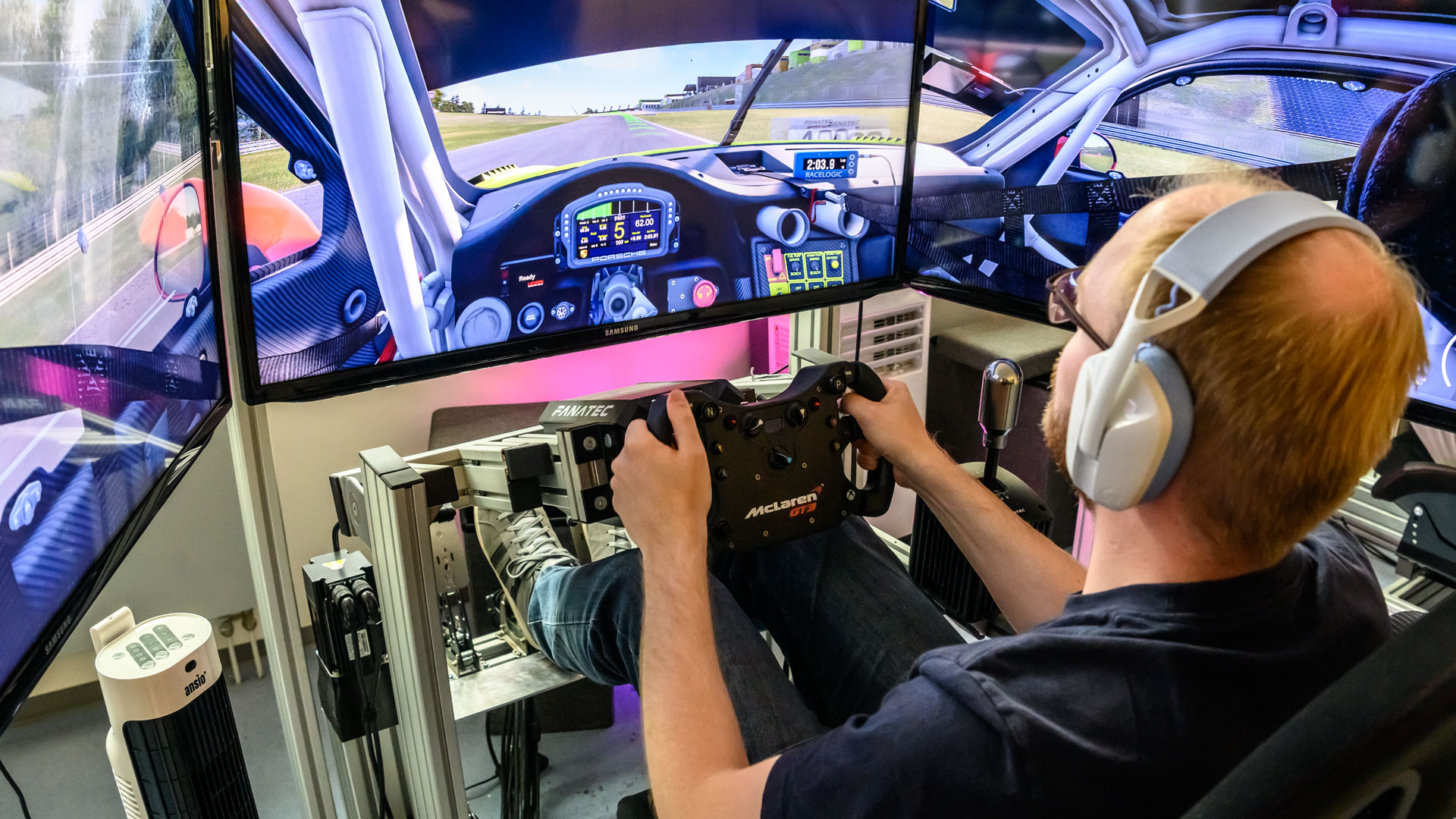
I have countless ideas in my head and would love to put every single one into practice right here, right now. At the moment, I’m working on a research project at the university: we’re using AI to collect and analyse driving data from motor racing and road traffic to optimise driving simulators.
Playing and exploring with enthusiasm
We do this not only to enhance the immersive enjoyment of PC racing simulations, but primarily to classify the driving behaviour of different drivers. It’s not just about achieving faster lap times on the racetrack, but also about improving road safety. At the same time, we’re making it possible to compare driving data from real vehicles directly with that from our simulators. This means that racing training on the track and in the simulator align more closely, and real-life accidents involving personal injury and vehicle damage can be avoided. One thing is clear: in this project, too, I’m working on what I consider to be one of the most interesting and promising topics of our time: programming and computer science. And I doubt I’ll ever be able to stop inspiring people of all ages to get excited about it.
Up close: HSMW at Gamescom in Cologne
HSMW will be making several appearances from 21 to 23 August at the world’s largest trade fair for computer and video games, ‘gamescom’. Together with other stakeholders from Saxony, the university will represent the Free State as a hub for the future in the fields of IT, entertainment and games (Business Area, Hall 04.1, Stand A051g-B060g).
In the Indie Area (Hall 10.2, Stand No. 26B), the media informatics students from Mittweida will be showcasing their self-developed games ‘Spooky Bodies’, ‘BOT slash BOT’ and ‘Wummsen Village’.
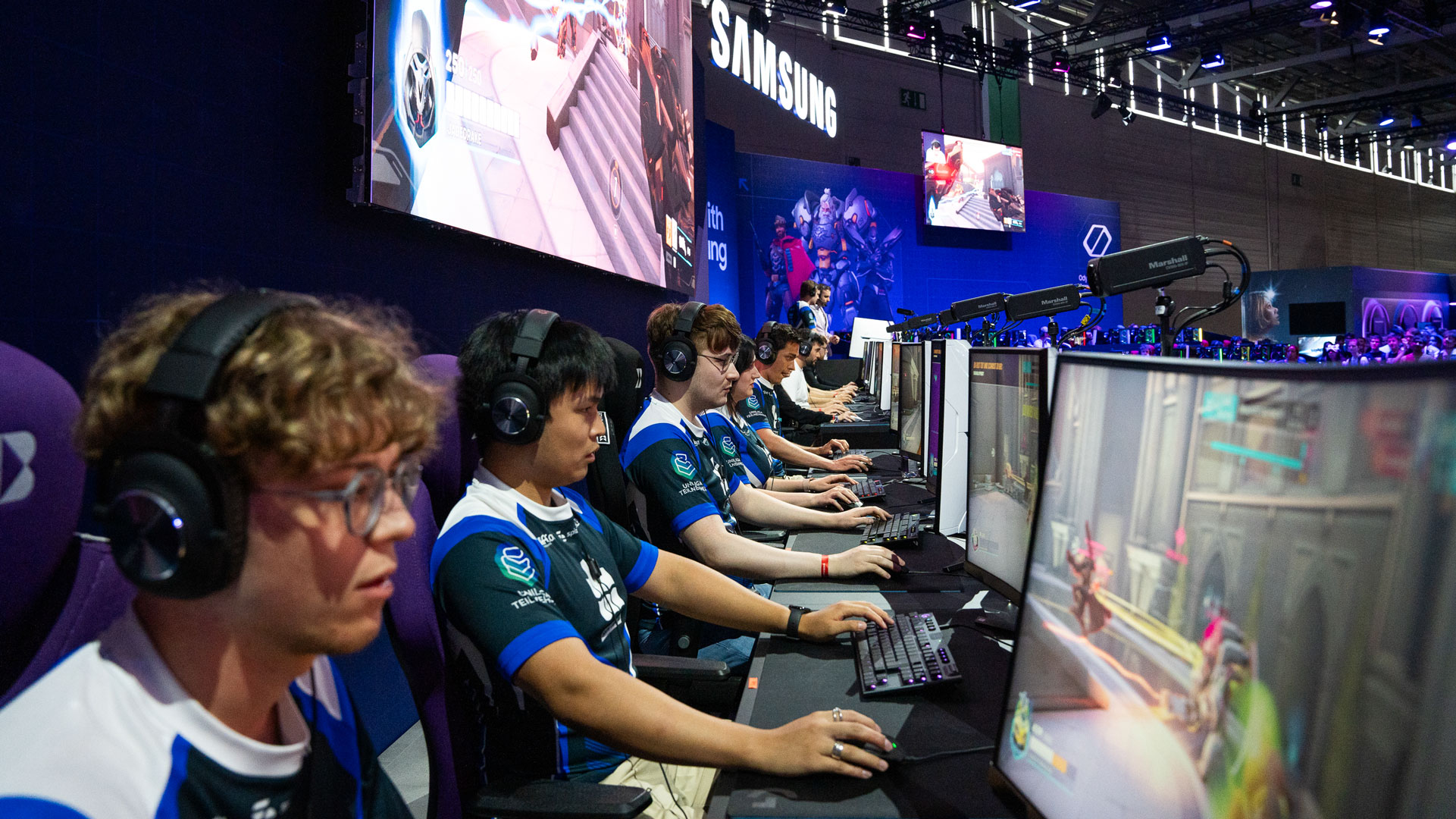
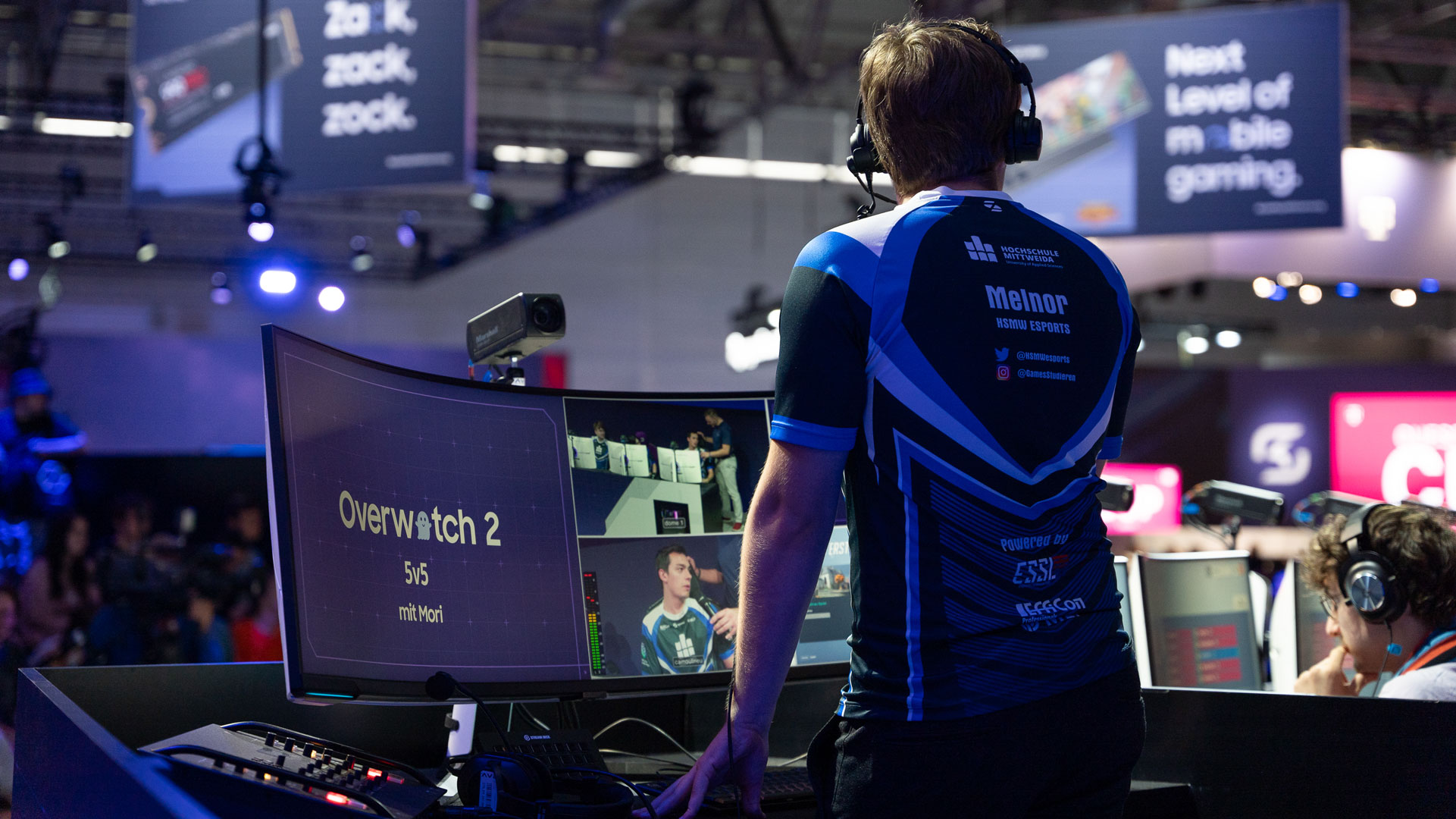
In Hall 9, at Samsung’s largest stand ever at Gamescom, HSMW Esports will be competing against visitors as the “Samsung Team” in various titles. In addition, several casters from Mittweida will be providing live commentary on the games over the microphone.