This page was translated automatically using artificial intelligence (DeepL). The German version is binding. More information about automatic translation
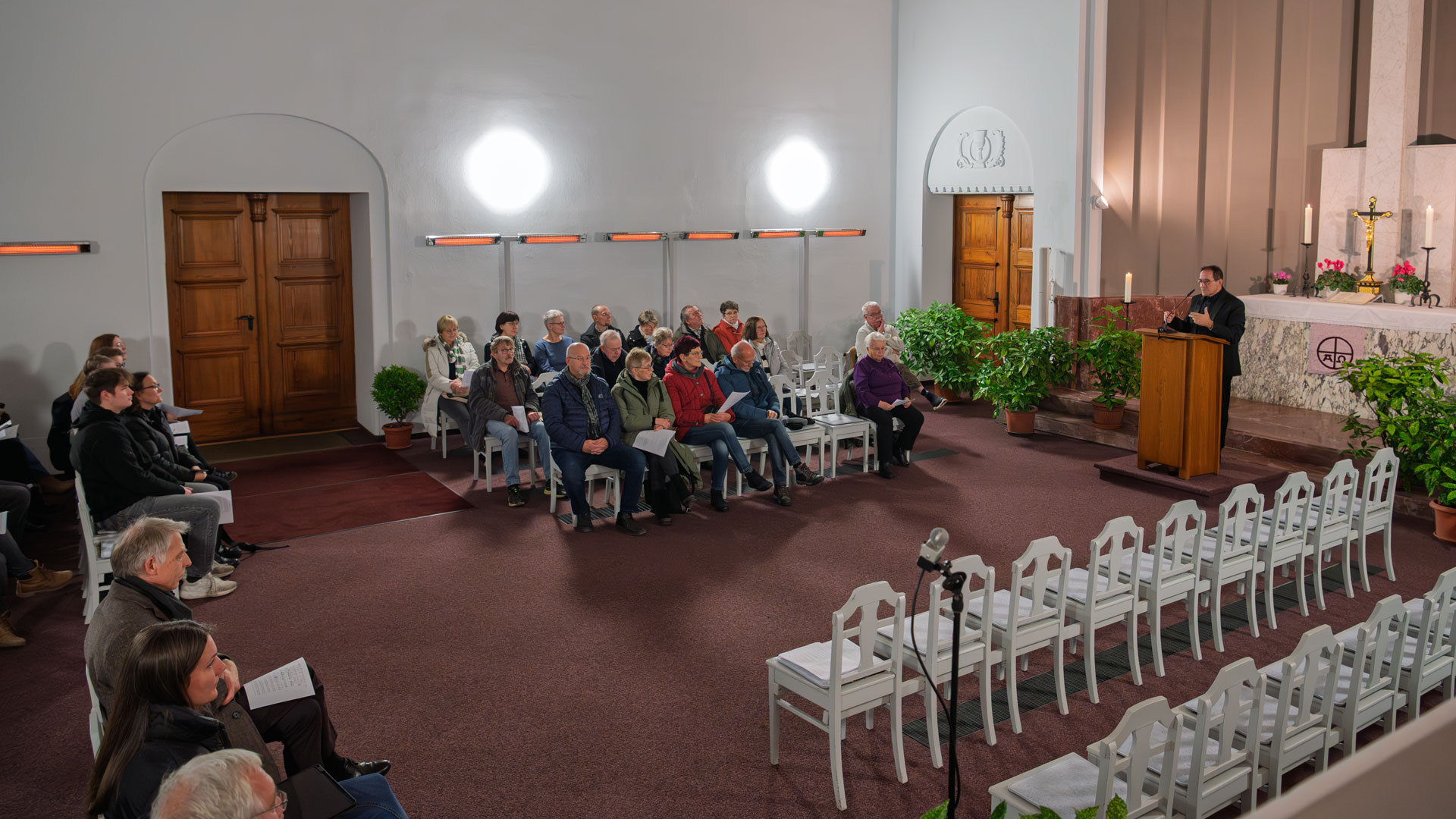
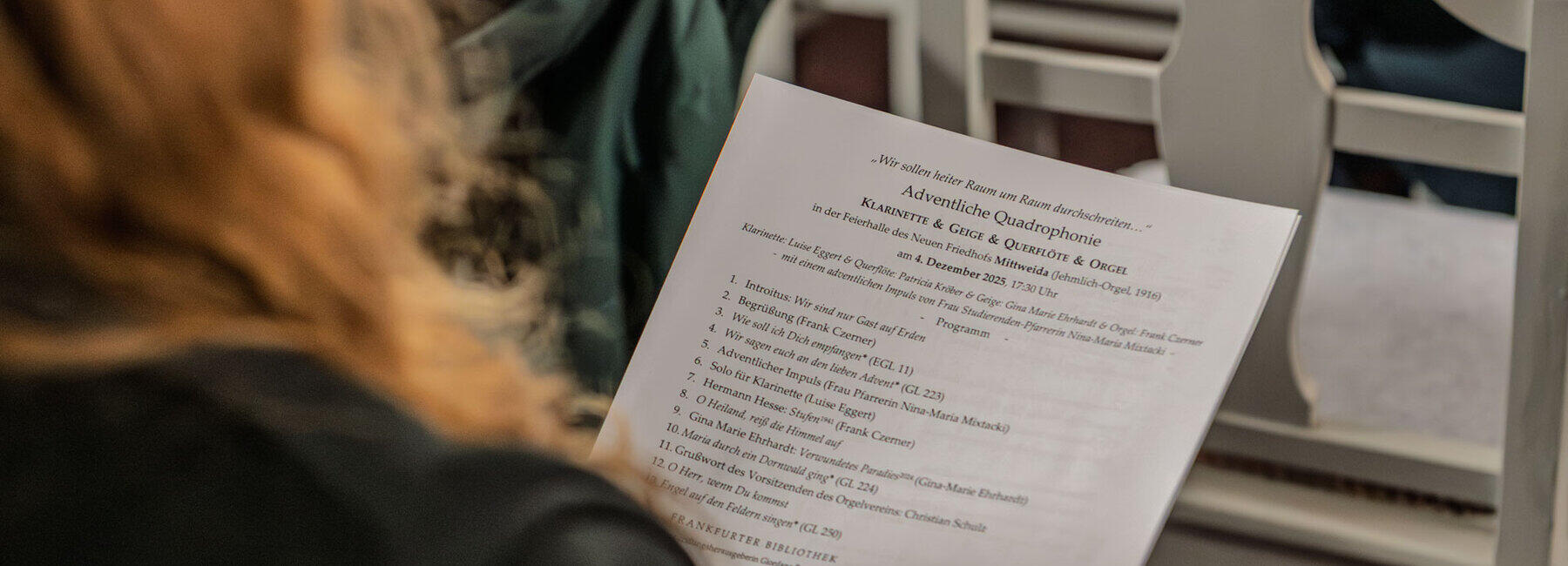
With an ‘Advent Quadraphony’, Professor Frank Czerner transported around 60 listeners to the chapel of the New Cemetery in the university town of Mittweida in the late afternoon of 4 December. With this unusual venue, the professor once again broke with a tradition within the tradition of pre-Christmas gatherings open to university staff and members of the public – which had previously taken place around the organ in Mittweida’s Protestant Town Church.
Neither the audience nor Professor and organist Czerner – who taught himself to play the organ and admits to being unable to read music – had to do without the sound of the organ, however. In his academic life at the university, he teaches law on the ‘Social Work’ and ‘General and Digital Forensic Science’ degree programmes. With three accompanists from these disciplines, the concert became a ‘quadraphonic’ affair: fellow faculty member Professor Patricia Kröber from the Social Work department on the flute, and the two forensics students Luise Eggert on the clarinet and Gina Marie Ehrhardt on the violin.
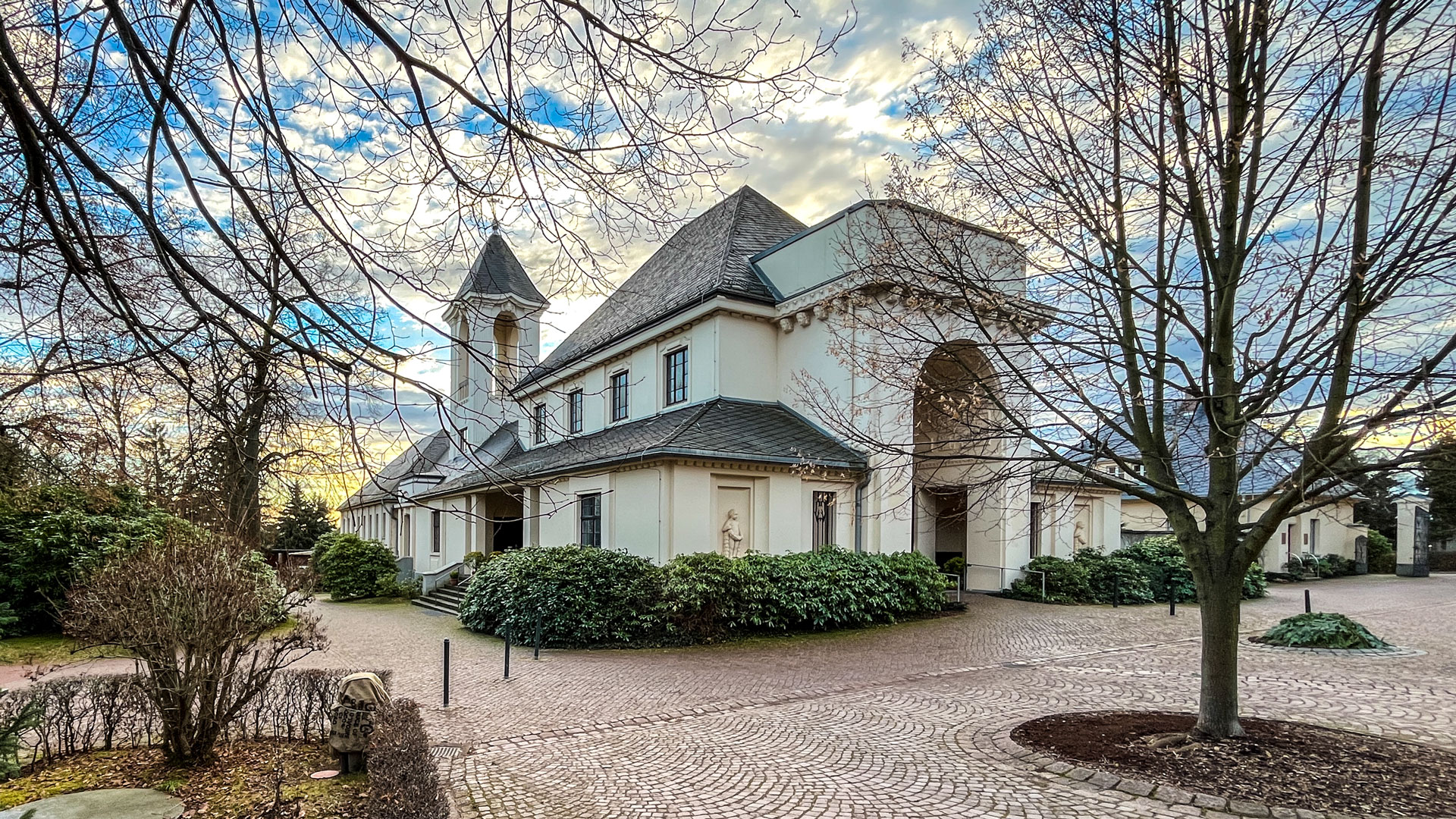
Commenting on the choice of venue, Czerner says: “I am drawn to the architecture of the funeral hall, which features classical elements and Art Nouveau characteristics. Furthermore, we have a 110-year-old organ here which, like its much larger counterpart in the town church, bears the hallmark of the Dresden-based organ-building firm Jehmlich and, thanks to the dedication of the Mittweida Organ Society, has recently undergone a comprehensive overhaul by the firm Eule from Bautzen. I’ve been very keen to play it.”
The opening piece, ‘Wir sind nur Gast auf Erden’ (‘We Are But Guests on Earth’), alluded to the cemetery chapel’s primary purpose, but afterwards, with pieces such as ‘Wie soll ich Dich empfangen’ (‘How Shall I Welcome You’) and ‘O Heiland, reiß die Himmel auf’ (‘O Saviour, Tear Open the Heavens’), the atmosphere became one of Advent anticipation. It was a mood that the space itself powerfully enhanced. Whilst one might tend to think of a cemetery as a sad, dark place and a chapel as a small, cramped room, the hall in Mittweida surprises with its spaciousness and bright décor. This was perfectly complemented by Hermann Hesse’s poem ‘Steps’, with its famous line ‘And every beginning has a magic of its own’, which served as the thematic leitmotif for the ‘Quadrophonie’.
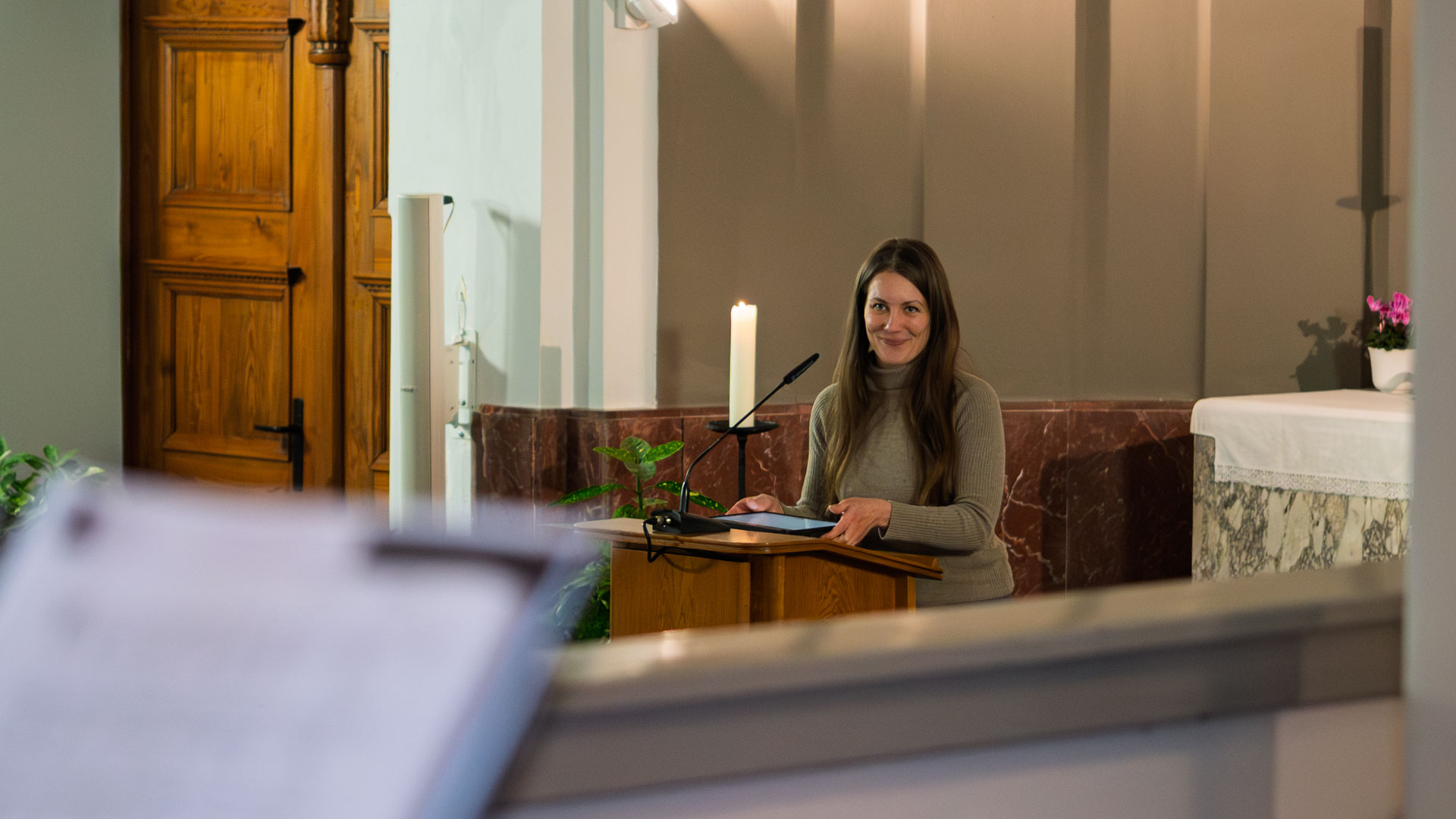
The music was accompanied by further words: Gina Marie Erhardt recited her poem ‘Verwundetes Paradies’ (Wounded Paradise), the Protestant student chaplain Nina-Maria Mixtacki offered an Advent reflection, and Professor Christian Schulz from the Organ Society spoke about the history of the organ and its distinctive features. It is constructed entirely as a swell, which means that the visible facade pipes are silent and serve merely as a ‘facade’. The sounding pipes are located behind a shutter that can be opened and closed with a foot pedal. Czerner demonstrated this highly nuanced dynamic range on several occasions.
Christmas reminds us that every person is valuable – regardless of their achievements or background. Christmas calls for peace rather than violence, and reconciliation rather than conflict. Christmas offers the hope that our world is not lost.
We wish all readers of HSMW News a merry and peaceful Christmas and a hopeful start to the New Year.