This page was translated automatically using artificial intelligence (DeepL). The German version is binding. More information about automatic translation
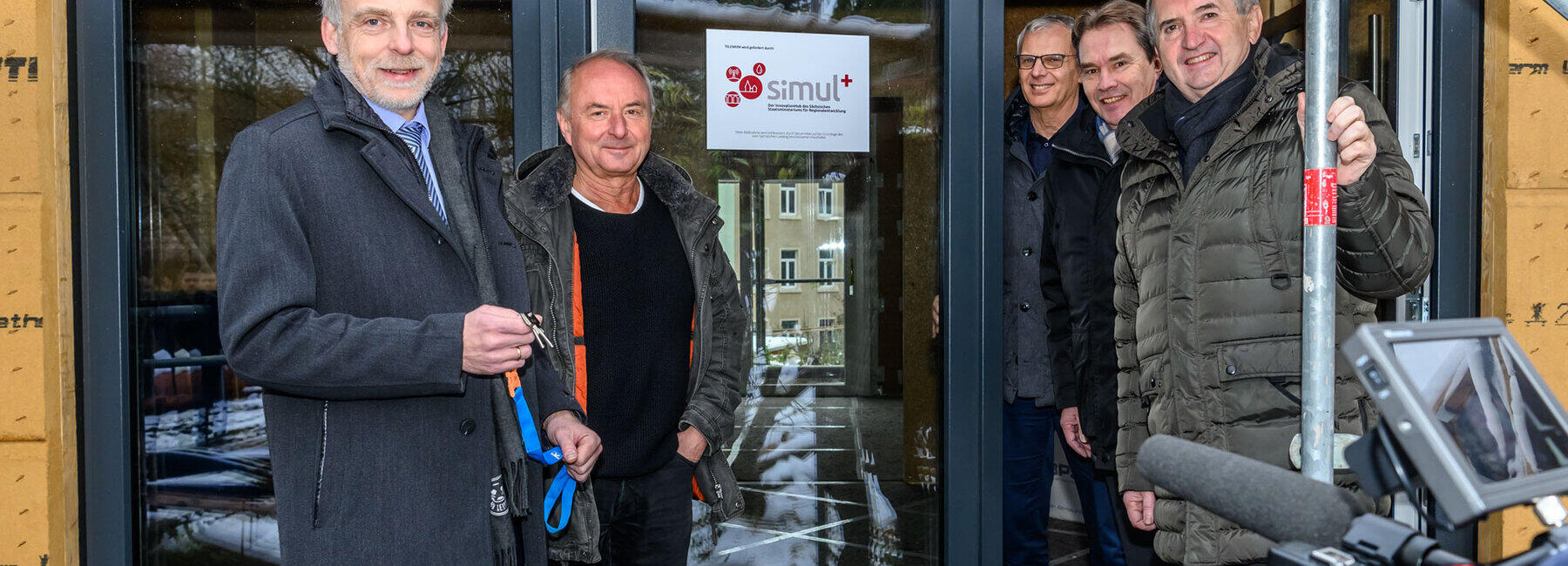
Even the shell made of wood, glass and photovoltaic modules, which has taken shape over the past few months, clearly demonstrates the unique nature of the Telewerk project. On Thursday morning, the project partners – Mittweida University of Applied Sciences, the Fraunhofer Institute for Transport and Infrastructure Systems IVI and Volksbank Mittweida – provided , an opportunity to take a first look inside the new building and learn about its future purpose – a space designed to research and demonstrate what working in decentralised co-working spaces will look like in the future. The SMR is facilitating the project as part of its simul+InnovationHub and is also supporting the pilot settlement ‘AMSEL – self-sufficient micro-settlement for an energy-conscious lifestyle’, which is being developed at the same address, Bahnhofstraße 32, over the coming months under the leadership of Fraunhofer IVI.
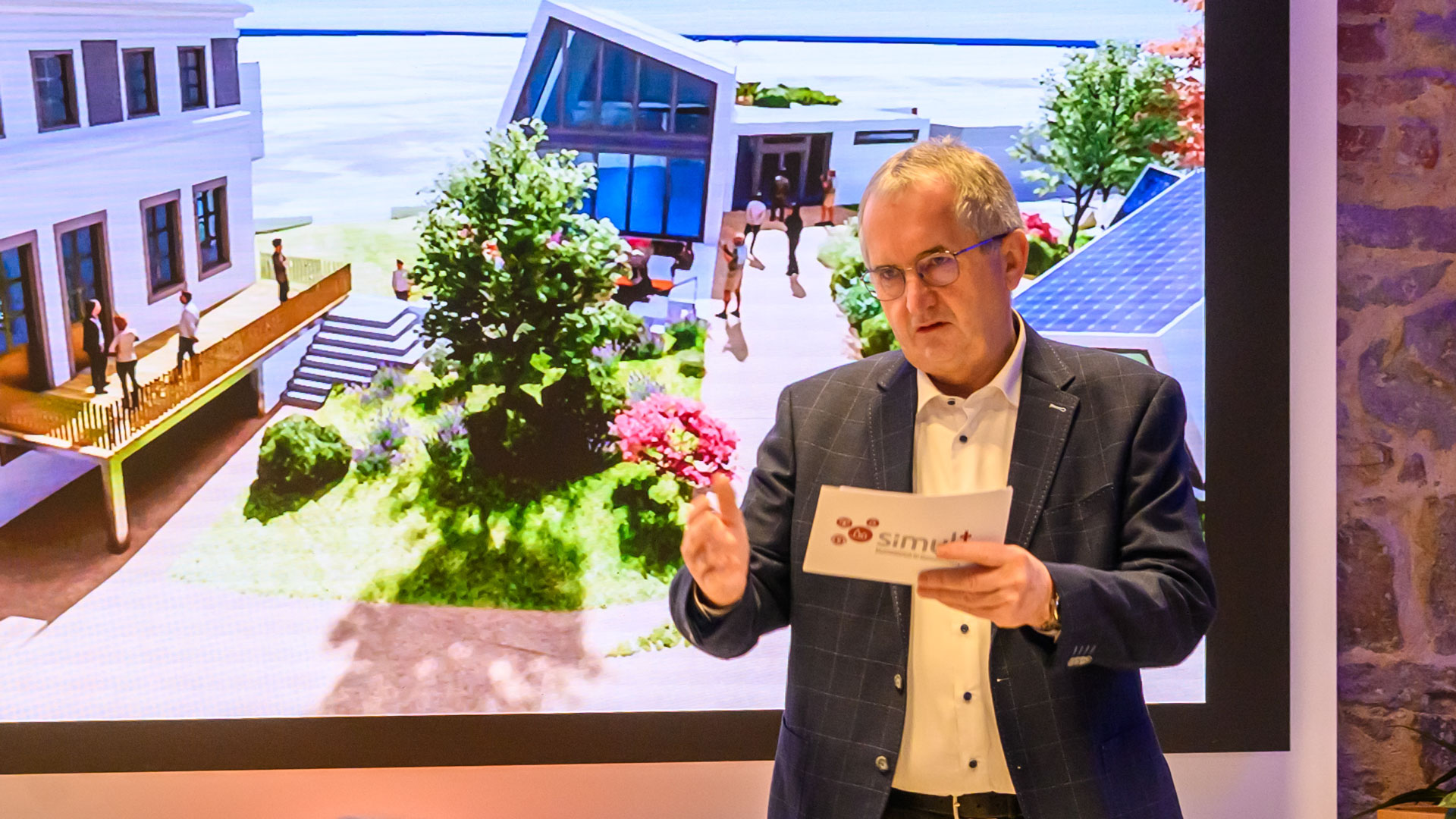
Minister of State Thomas Schmidt praised the commitment and said: “What Mittweida University of Applied Sciences and its partners are tackling here is truly fascinating. ‘Real-world laboratory’ may sound complicated at first, but it means that what will perhaps be routine for us all in ten or twenty years’ time is already being put into practice. This is where it all begins! This applied research is important pioneering work for our region of tomorrow. Ideally, by testing and improving Saxon products, the project will set value chains in motion, for example in the field of building and plant engineering.”
Through the ‘real-world laboratory’, Mittweida University of Applied Sciences brings together its own expertise with that of other leading institutions. Together, they are conducting research and providing practical demonstrations of what modern living and working in rural areas can look like, thereby driving the region forward. The Telewerk building, constructed using innovative timber-frame technology, is not merely the physical shell for this endeavour, but is itself part of the experiment – indeed, it is both a ‘real-world laboratory’ and an experimental platform.
Telewerk brings together new ways of working – with a forward-thinking approach in key areas that matter: from the cyber security of digital infrastructures, Internet of Things connectivity in building and plant engineering, a minimal carbon footprint in construction and operation achieved through the use of the renewable material timber and renewable energy supplies, right through to social science issues relating to teleworking and sustainable ways of life in rural areas.
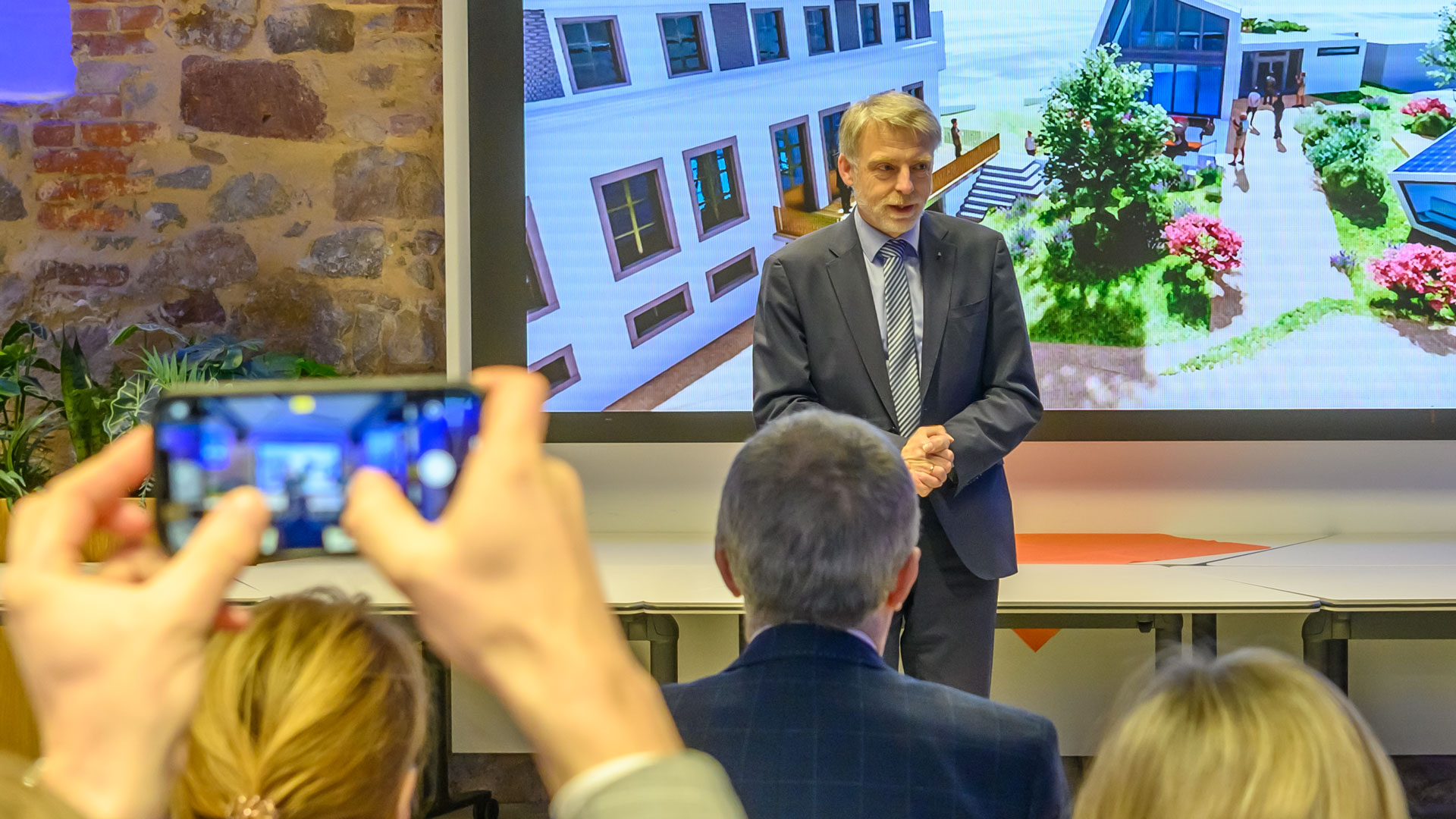
Project leader Professor Volker Tolkmitt, Rector of Mittweida University of Applied Sciences, was delighted: “Today, together with Minister of State Schmidt, we are taking the project a step further and looking ahead to the future – to the future of Telewerk and AMSEL, and to how we will address the issues surrounding future working and living conditions in rural areas. Doing so whilst upholding the principles of sustainability, safety and a better work-life balance is a key factor in the development of our region.”
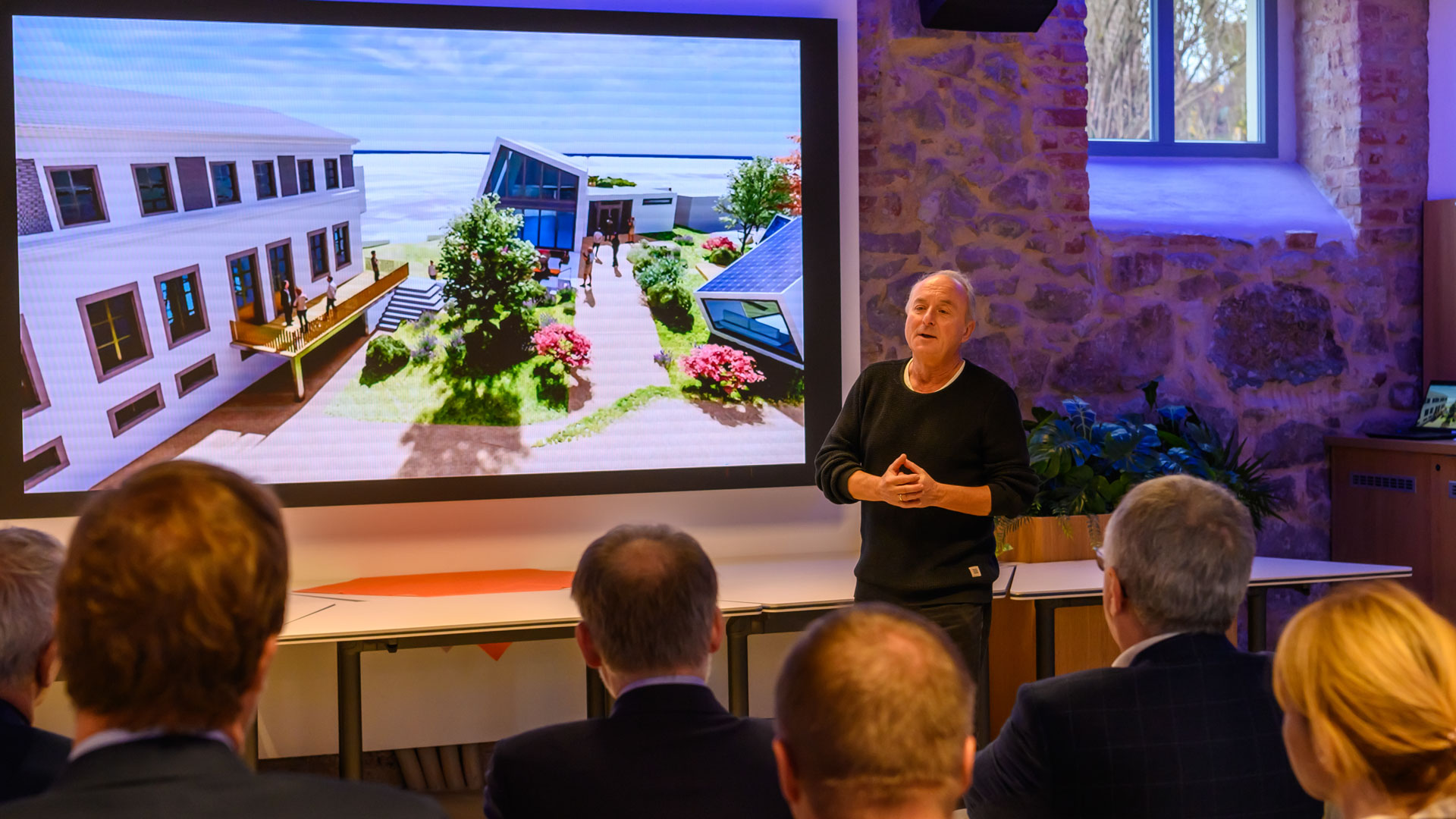
Sustainable construction
Telewerk stands on a foundation with a concrete core temperature control system, which allows thermal energy to be stored for cooling or heating the building. The materials and design of the building’s exposed parts also reflect the aim of minimising the CO₂ footprint: wood is a renewable raw material which, unlike concrete, sequesters CO₂. Timber construction is also better suited to creating surfaces that make optimal use of solar radiation. In addition to solar energy, optimised load management helps ensure that Telewerk is also forward-looking in terms of energy efficiency. Optimised load management ensures more even energy consumption by, for example, optimally scheduling load-intensive but time-flexible processes.
Professor Matthias Klingner, Director of Fraunhofer IVI, summarised: “With Telewerk and AMSEL, a complex of timber buildings is being created in Mittweida that serves as a real-world laboratory demonstrating living and working in rural areas and – entirely in line with the simul+ initiative of Saxony’s Minister for Regional Development, Thomas Schmidt – brings together local partners and generates regional value.”
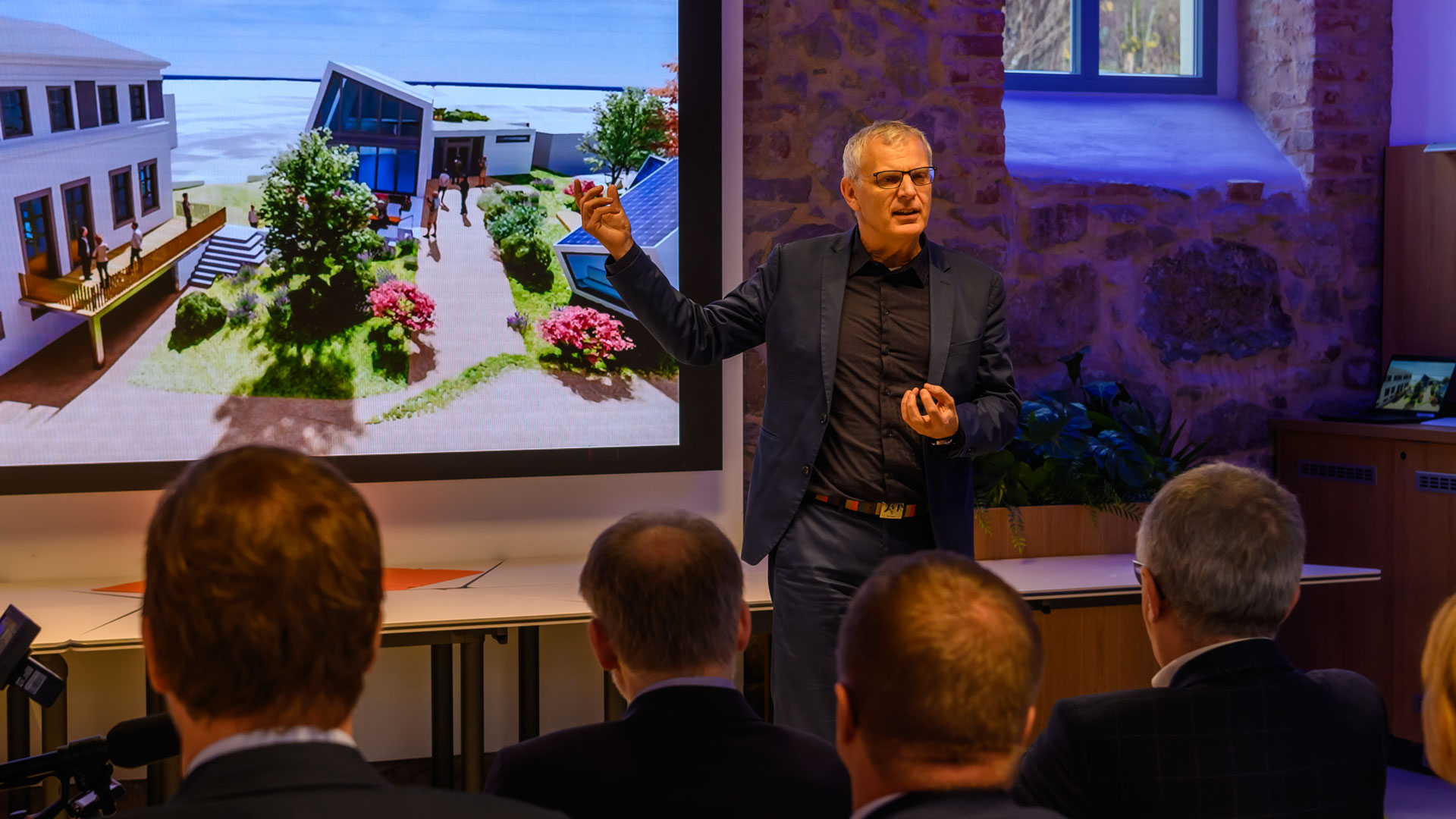
The complex comprising Telewerk and AMSEL, currently under construction in Mittweida, will be linked to Werkbank32, the existing innovation and start-up centre run by Volksbank Mittweida.
Michael Schlagenhaufer, Managing Director of Volksbank Mittweida, emphasised: “Telewerk and AMSEL are a real asset to this location, which is already home to our Werkbank32 innovation centre. But it is never institutions; it is always people who take the initiative and move into the future with new ideas.”
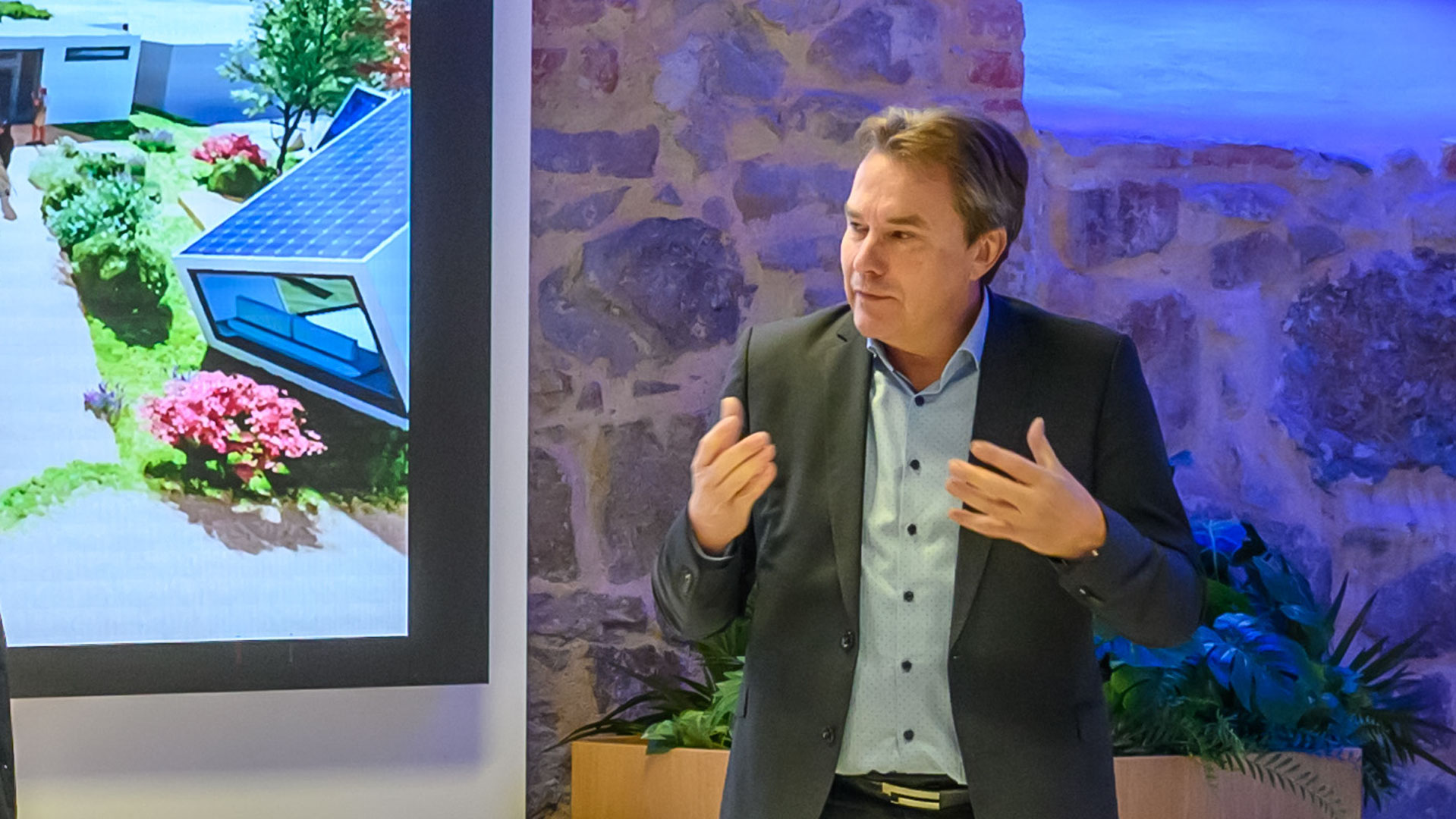
Ralf Schreiber, Mayor of Mittweida, is certain: “The funding from Simul+ is very well spent in Mittweida. I see this real-world laboratory as a great opportunity for the future, as it enables research into living, working and residing in rural areas. And here, once again, our town’s motto – ‘better together’ – is proving its worth.”
Launch of the experiment: insights and outlooks
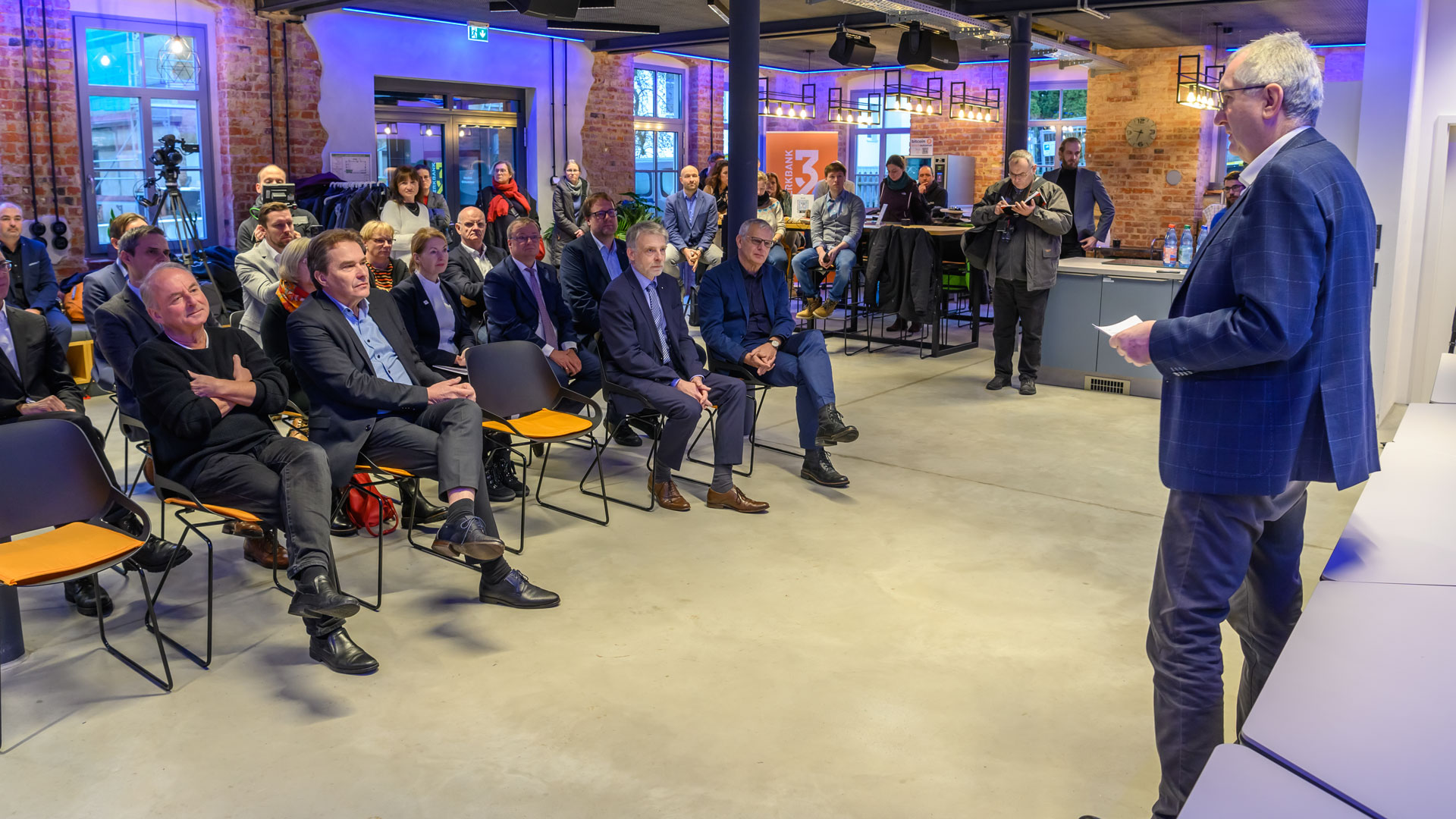
Cybersecurity, energy, construction, social affairs: experts presented these key areas to interested guests at the launch event, held in the new Telewerk building even before construction had begun.