This page was translated automatically using artificial intelligence (DeepL). The German version is binding. More information about automatic translation

Faculty Applied Computer Sciences and Biosciences

Chair in Virtual Technologies
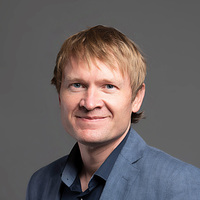
Prof. Dr.-Ing. Philipp Klimant
Visitor address
Goethestraße 25
09648 Mittweida
22-203
Postal address
Mittweida University
Technikumplatz 17
09648 Mittweida
What we’re working on

Teaching responsibilities and areas of research

Courses

The courses offered by the Chair of Virtual Technologies are mainly part of the Media Informatics and Interactive Entertainment (B.Sc.) and Media Informatics and Interactive Entertainment (M.Sc.) degree programmes. The Chair of Virtual Technologies is currently involved in the following modules:

Digital twins

This module explains the use of digital twins in a wide range of application scenarios, from industrial applications through to building services engineering and new technical developments. In addition to the integration of 3D models – which usually form the basis of the digital twin – the module focuses on the enrichment of these models with external data. This approach enables new insights to be gained and processes to be continuously improved, not only during the development phase but also whilst a plant or building is in operation.

The lecture covers the following key topics:

  • Fundamentals of a digital twin
  • Data acquisition and sensors, IoT devices and data protocols
  • Data integration and processing
  • Modelling and simulation
  • Communication and networking
  • Applications across various industries
  • Real-time interaction and control
  • Security and data protection
  • Future trends and developments

Using Unity3D, students independently create their own digital twin during the course in short development sprints.

The module is offered as a compulsory elective in the second standard semester of the Bachelor’s programme; it is worth 6 ECTS credits, with the module code 03-DIZW and module number 5525. Further information can be found in the module handbook.

Science and Business 2–4

Through a practical project, the modules teach students the process of developing an interactive application to map processes that have hitherto been predominantly analogue in nature. This involves capturing and analysing existing content within its respective application contexts, with the aim of thoroughly restructuring and synthesising this content to create a targeted concept. Throughout the process, there is ongoing consultation with (external) stakeholders, which is intended to enhance students’ communication skills and foster team development.

The module is divided into a practical component, guided by traditional and agile project management methods, focused on the iterative development of the interactive product, and a component dedicated to meeting documentation and communication requirements.

Practical work phase

  • Team management and organisation
  • Requirements analysis
  • Effective development of a rough concept
  • Integration of media techniques with specific themes
  • Implementation as a team

Presentation and supporting materials

  • Presentations outlining the various concept phases
  • Best practice for presenting and iteratively aligning prototype work stages with stakeholders
  • Techniques for constructive feedback
  • Advanced presentation techniques
  • Development of a sustainable record for work documentation

The ā€˜Science and Business 3’ module builds on the work carried out in the ā€˜Science and Business 2’ module.

Building on the products developed, partially evaluated and optimised in the ā€˜Science and Business 2’ and ā€˜Science and Business 3’ modules, the ā€˜Science and Business 4’ module hones students’ skills in academic publishing. To this end, students acquire extensive, in-depth and advanced knowledge in the field of publication science and its public impact, for example at subject-specific conferences.

The courses are offered as part of the Bachelor’s programme during standard semesters 3–5; the module codes are 03-WISS2, 03-WISS3 and 03-WISS4, with module numbers 5503, 5504 and 5505 respectively. Further information can be found in the module handbook.

Career

May 2013

PhD (Dr.-Ing.) from the Faculty of Mechanical Engineering at Chemnitz University of Technology, with a thesis entitled ā€˜Virtual reality-based kinematics and material removal simulation for milling machines using hardware-in-the-loop’

June 2011 – May 2013

Participants and year representatives at the Fraunhofer Institute for Machine Tools and Forming Technology (IWU) Executive Academy

2002–2007

Studied Electrical Engineering and Automation Technology at Mittweida University of Applied Sciences

since September 2023

Head of the Chair of Virtual Technologies at Mittweida University of Applied Sciences

since February 2021

Head of the Process Digitalisation and Manufacturing Automation Business Unit at the Fraunhofer Institute for Machine Tools and Forming Technology (IWU)

February 2019 – January 2021

Head of the Smart Factory – Digitalisation and Automation Division at Fraunhofer IWU

Jan 2019 – Aug 2023

Executive Chief Engineer of the Chair of Production Systems and Processes at Chemnitz University of Technology
(the Chair of Machine Tool Design and Forming Technology was renamed the Chair of Production Systems and Processes with effect from 1 October 2020)

April 2018 – December 2018

Senior Research Engineer at the Chair of Machine Tool Design and Metal Forming at Chemnitz University of Technology

January 2017 – December 2020

Chemnitz Site Coordinator for the ā€˜Saxon Alliance for Material- and Resource-Efficient Technologies – AMARETO’

February 2016 – January 2019

Head of the Digital Production Systems and VR Research Group at Fraunhofer IWU

April 2013 – March 2015

Head of the Central Co-ordination Office of the eniPRODĀ® cutting-edge technology cluster ā€˜Energy-efficient product and process innovations in production engineering’ at Chemnitz University of Technology and the Fraunhofer IWU

January 2011 – April 2019

Head of the Teaching and Research Department for Process Informatics and Virtual Product Development at the Chair of Machine Tool Design and Metal Forming at Chemnitz University of Technology

September 2007 – August 2023

Research Assistant at the Chair of Machine Tool Design and Forming Technology at Chemnitz University of Technology

since January 2017

Founder and Managing Director of auvirea GmbH
, a software company specialising in industrial augmented and virtual reality

November 2006 – May 2007

Final-year student at Siemens AG Chemnitz in the A&D AS RD DH C
department. Thesis topic: Development and testing of a control programme for operating redundant analogue outputs with partial-current sources to ensure spike-free switching and testing of the redundant components.

April 2006 – October 2006

Work placement at Veeco Instruments Inc. in Santa Barbara, California, USA
. Development of an automated test for inspecting printed circuit boards for 3D microscopes on the production line.

February 2005 – August 2005

Internship and working student role at Siemens AG Chemnitz in the A&D AS RD DH C
department: conducting tests on a new microcontroller with an integrated AD converter and adapting its firmware.

since March 2025

Member of the Steering Committee of the VR/AR Section of the German Informatics Society (Gesellschaft für Informatik e.V.)

since January 2024

Member of the XR-INTERACTION innovation network – RESEARCH ALLIANCE FOR EXTENDED REALITY

since March 2023

Frontiers in Virtual Reality (Frontiers Media S.A.)
Member of the International Editorial Board as a Community Reviewer for the topics ā€˜Augmented Reality’ and ā€˜Technologies for VR’

since January 2019

CIRP – The International Academy for Production Engineering
: Corporate Member

since July 2018

IJIDeM – International Journal on Interactive Design and Manufacturing (Springer)
Member of the International Editorial Board as Associate Editor

Projects

Entwicklung und Evaluation der 3D-Testumgebung

  • Term: 2026/04/01 – 2028/03/31
  • Financed by: SƤchsisches Staatsministerium für Wissenschaft, Kultur und Tourismus
  • Funding code: 100759677
  • Project managers: Philipp Klimant
2922 Philipp Klimant

TeleprƤsenzsystem mit erweiterter Sensorintegration zur verbesserten (Extended) Wahrnehmung in remote Umgebungen (TiP-EX) AR-Integration und Benutzersteuerung

  • Term: 2026/02/23 – 2028/02/22
  • Financed by: EuropƤischer Fonds für Regionale Entwicklung (EFRE)
  • Funding code: 100782165
  • Project managers: Philipp Klimant
2915 Philipp Klimant

Haptisch-digitales Planungstool für die kollaborative Klinik- und Pflegeeinrichtungsplanung

  • Term: 2025/12/01 – 2026/11/30
  • Financed by: BMWE über VDE/VDI
  • Funding code: 16GM306602
  • Project managers: Philipp Klimant
2886 Philipp Klimant

VirtualJET - Entwicklung einer echtzeitfähigen virtuellen Prozesssimulation für das Hochdruckwasserabrasivstrahlschneiden zur Integration in digitale Planungssysteme

  • Term: 2025/10/15 – 2027/12/31
  • Financed by: EuropƤischer Fonds für Regionale Entwicklung (EFRE)
  • Funding code: 100782140
  • Project managers: Philipp Klimant
2887 Philipp Klimant

HAW-ForschungsraumQualifizierung: Wissensinkubator für neue digitale Technologien der Künstlichen Intelligenz und der EXtended Reality (KIX)

  • Term: 2025/10/01 – 2029/09/30
  • Financed by: BMFTR
  • Funding code: 13HAW076FQ
  • Project managers: Philipp Klimant
2888 Philipp Klimant

Publications

P. Klimant, C. Naumann, A. Geist, J. GlƤnzel

Ambient Influences on Thermal Errors in Machine Tools: Challenges, Modelling and Compensation

Presented on: 4th International Conference on Thermal Issues in Machine Tools (ICTIMT2025), 17.-19.06.2025, Zurich, Switzerland, 2026
21686 konferenzpaper
N. Weidensager, J. Brade, S. Winkler, F. Klimant, P. Klimant

Distance Estimation in a Telepresence Scenario Using a 360° Monoscopic Camera, an AGV and an HMD

Presented on: 9th International Conference on Intelligent Human System Integration: Disruptive and Innovative Technologies, UniversitĆ  di Firenze, Florence, Italy, 11.-13.02.2026, 2026
21409 sammelbandbeitrag
D. Müller, T. Tran, R. Schneider, P. Klimant

Evaluating a Multisensory Learning Approach using Mass Models and Augmented Reality to enhance the Intuitive Understanding of Dimensions

Presented on: IEEE ICALT 2026, 06.-09.07.2026, Hung Yen, Vietnam, 2026
21847 konferenzpaper
J. Zimmer, M. Schumann, P. Klimant

Generative KI in der Industrie

Appeared in: ZWF - Zeitschrift für wirtschaftlichen Fabrikbetrieb 121 (2026), No. 4, P. 268 – 272
21699 journalartikel
C. Naumann, P. Klimant, S. Lang, J. Mayr, M. Bambach, K. Wegener, C. Habersohn, F. Bleicher

Geometric Thermal Error Compensation Using Subassembly Models Enhanced by Adaptive Learning Control

Presented on: 4th International Conference on Thermal Issues in Machine Tools (ICTIMT2025), 17.-19.06.2025, Zurich, Switzerland, 2026
21687 konferenzpaper
What is the HSMW?

Find out more

Mittweida University of Applied Sciences is a boundless testing ground aimed at driving business and society forward. How? Through academically trained specialists and straightforward collaboration, which enables regional businesses to benefit directly from our findings – or to gain new insights through joint research projects that can be put into practice straight away. We enable students to test their limits by developing their own skills and exploring new horizons.

6.350
Students
590
dedicated staff
100
Partner universities worldwide
161
Years at HSMW
Find out more