
Cell division forms the basis of biological production (mass growth). The Buschmann Research Group investigates the mechanisms of cell division in algae and plants. Our work focuses on the question of how cell division can still take place – or even be enhanced – under difficult conditions. We are investigating novel bioreactors, including those utilising artificial symbioses, as well as the potential for using algae to detoxify heavy metals (bioremediation).

This page was translated automatically using artificial intelligence (DeepL). The German version is binding. More information about automatic translation

Faculty Applied Computer Sciences and Biosciences

Chair of Molecular Biotechnology

Prof. Dr. rer. nat. habil. Henrik Buschmann
FakultƤt Angewandte Computer- und Biowissenschaften
Visitor address
Lutherstraße 1a
09648 Mittweida
Postal address
Mittweida University
FakultƤt Angewandte Computer- und Biowissenschaften
Technikumplatz 17
09648 Mittweida
Passion, knowledge, teamwork

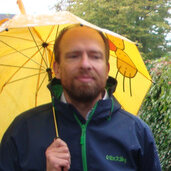
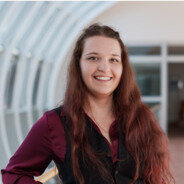
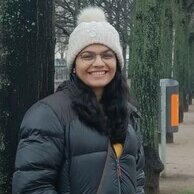
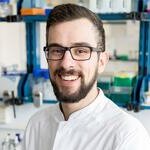
Our team

B.Sc. Moritz Bogner
B.Sc. Moritz Bogner
Lehrkraft für besondere Aufgaben
M.Sc. Vanessa Bergler
wiss. Mitarbeiterin
M. Sc.  Shreya Parag Kalan
M. Sc. Shreya Parag Kalan
wiss. Mitarbeiterin
M.Sc. Nils Schƶn
M.Sc. Nils Schƶn
Lehrkraft für besondere Aufgaben
M.Sc. Jenny Woide
M.Sc. Jenny Woide
wiss. Mitarbeiterin

Research

Molecular Biotechnology

Biotechnology provides key technologies for tackling the most pressing environmental and industrial challenges of our time. Prof. Dr Henrik Buschmann’s work focuses on researching the mechanisms of cell division in algae and plants. How can cell division (proliferation) be optimised under specific or even adverse conditions, for example in bioreactors or in water bodies contaminated with heavy metals? The latter can help to enable bioremediation (phytoremediation) – to provide clean water for the next generation. This scientific work combines cutting-edge translational research with forward-looking academic teaching. The aim is to harness sustainable technologies in agriculture, process management (circular economy) and for a healthier environment.

Innovative research for the environment and the future

The Buschmann Research Group investigates the cellular mechanisms that enable algae to proliferate under the extreme conditions of opencast mining tailings lakes. Which molecules are produced by algae to bind heavy metals? Which signalling cascades underlie this process? In parallel, the research group is investigating the fundamental mechanisms of cell division in algae and plants. Genomics and evolution serve as tools to better understand cell division in these organisms. Another forward-looking aspect is research into symbiosis between algae and bacteria. The focus here is on the behaviour of these communities in artificial, man-made habitats. The insights gained form the foundation for new bioeconomic applications.

Excellence in academic teaching

The close links between research and practice are directly reflected in the research group’s teaching programme. Students are thoroughly prepared for the demands of the modern life sciences. The programme covers core areas of molecular biology and classical Biotechnology.

In addition, the curriculum imparts cutting-edge technological skills:

  • Metagenomics: analysis of phytoplankton biodiversity, combined with image recognition using AI.
  • Nanotechnology: enhanced nanotechnology utilising biological systems.
  • Cell culture techniques: Cultivation and control of eukaryotic cells for industrial processes, tissue engineering and more.
  • Algal and plant biotechnology: what Agrobacterium does to plant cells …
  • Molecular cell biology: What do signal transduction, endocytosis, meiosis, the cytoskeleton and the transport of substances between organelles have in common? They are key characteristics of eukaryotic cells!

Through this combination of basic research and technological application, the research group makes a decisive contribution to the training of the next generation of biotechnologists.
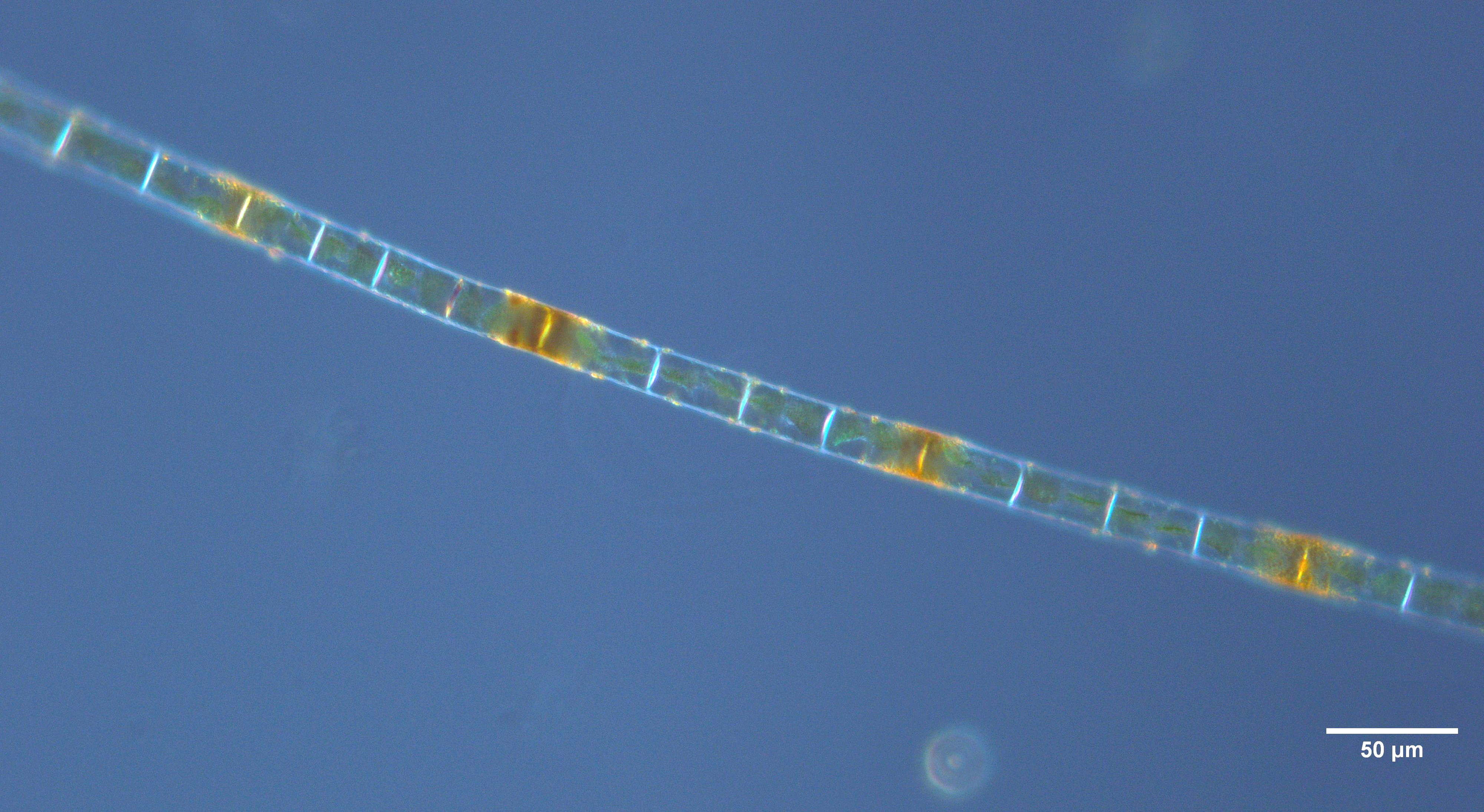
Zygogonium algae (genus: Ferrothrix) from a residual lake in an opencast mine. The algae produce brown ā€˜H-rings’ for the accumulation of heavy metals (in this case, relatively non-toxic iron ions).
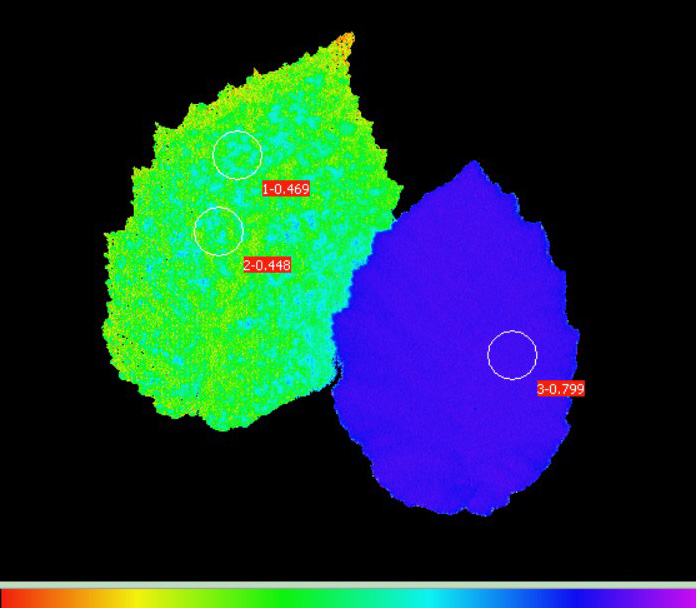
Photosynthesis and the effect of stress on the plant (Corylus avellana; hazelnut). Measurements taken by students using the Image-PAM. Left-hand leaf: cold-treated; right-hand leaf: normal temperature.

Research projects and publications

AlMiPro - Identifizierung und bioverfahrenstechnische Integration algenbasierter Mischkulturen in landwirtschaftliche Prozessketten

  • Term: 2025/08/15 – 2027/12/31
  • Financed by: EuropƤischer Fonds für Regionale Entwicklung (EFRE)
  • Funding code: 100764647
  • Project managers: Henrik Buschmann
2862 Henrik Buschmann

AlgaTerrest: Wie die Evolution der Zellteilung und der Verzweigung den Übergang von Algen zu Landpflanzen ermöglichte

  • Term: 2021/08/01 – 2025/12/31
  • Financed by: Deutsche Forschungsgemeinschaft
  • Funding code: 666728 / BU 2301/6-1
  • Project managers: Henrik Buschmann
2188 Henrik Buschmann
H. Buschmann, J. Hernandez-Garcia, C. Girou, I. Grubor, J. Keller, E. Lim, V. Schmidt, I. SĆørensen, S. Vosolsobe, H. Buschmann, P. Delaux, D. Domozych, A. Holzinger, H. Nakagami, T. Nishiyama, J. Petrasek, H. Renault, S. Rensing, J. Rose, H. Sekimoto, C. Delwiche, D. Weijers, J. de Vries

A roadmap to developing unified streptophyte algal model systems

Appeared in: Current Biology 35 (2025), P. R725 – R738
21537 review
H. Buschmann, J. Zheng, I. Irisarri, H. Yu, B. Zheng, Z. Ali, S. de Vries, J. Keller, J. Fürst-Jansen, A. Dadras, J. Zegers, T. Rieseberg, A. Dhabalia Ashok, T. Darienko, M. Bierenbroodspot, L. Gramzow, R. Petroll, F. Haas, N. Fernandez-Pozo, O. Nousias, T. Li, E. Fitzek, W. Grayburn, N. Rittmeier, C. Permann, F. Rümpler, J. Archibald, G. Theißen, J. Mower, M. Lorenz, H. Buschmann, K. von Schwartzenberg, L. Boston, R. Hayes, C. Daum, K. Barry, I. Grigoriev, X. Wang, F. Li, S. Rensing, J. Ben Ari, N. Keren, A. Mosquna, A. Holzinger, P. Delaux, C. Zhang, J. Huang, M. Mutwil, J. de Vries, Y. Yin

Genomes of multicellular algal sisters to land plants illuminate signaling network evolution

Appeared in: Nature Genetics 56 (2024), P. 1018 – 1031
21540 journalartikel
H. Buschmann, T. Darienko, S. de Vries, J. Fürst-Jansen, H. Buschmann, T. Pröschold, I. Irisarri, J. de Vries

Phylogenomic insights into the first multicellular streptophyte

Appeared in: Current Biology 34 (2024), P. 670 – 681.e7
21536 journalartikel
H. Buschmann, J. Fürst-Jansen, T. Darienko, D. Krone, P. Scholz, S. Sun, C. Herrfurth, T. Rieseberg, I. Irisarri, R. Steinkamp, M. Hansen, H. Buschmann, O. Valerius, G. Braus, U. Hoecker, I. Feussner, M. Mutwil, T. Ischebeck, S. de Vries, M. Lorenz, J. de Vries

Environmental gradients reveal stress hubs pre-dating plant terrestrialization

Appeared in: Nature Plants 9 (2023), P. 1419 – 1438
21538 journalartikel
H. Buschmann, S. Williams, A. Busch, I. Irisarri, C. Delwiche, S. de Vries, T. Darienko, A. Roger, J. Archibald, H. Buschmann, K. von Schwartzenberg, J. de Vries

A phylogenomically informed five-order system for the closest relatives of land plants
Appeared in: Current Biology 32 (2022), P. 4473 – 4482.e7
21539 journalartikel
What is the HSMW?

Find out more

Mittweida University of Applied Sciences is a boundless testing ground aimed at driving business and society forward. How? Through academically trained specialists and straightforward collaboration, which enables regional businesses to benefit directly from our findings – or to gain new insights through joint research projects that can be put into practice straight away. We enable students to test their limits by developing their own skills and exploring new horizons.

6.350
Students
590
dedicated staff
100
Partner universities worldwide
161
Years at HSMW
Find out more