This page was translated automatically using artificial intelligence (DeepL). The German version is binding. More information about automatic translation
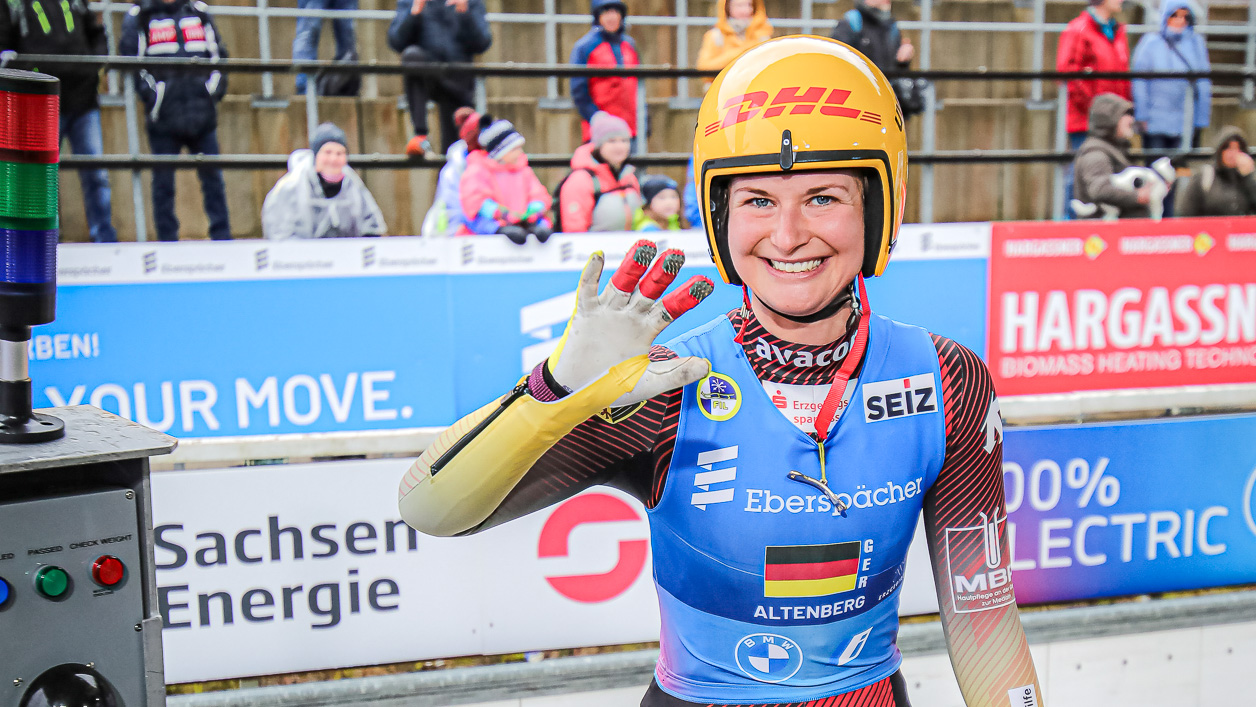
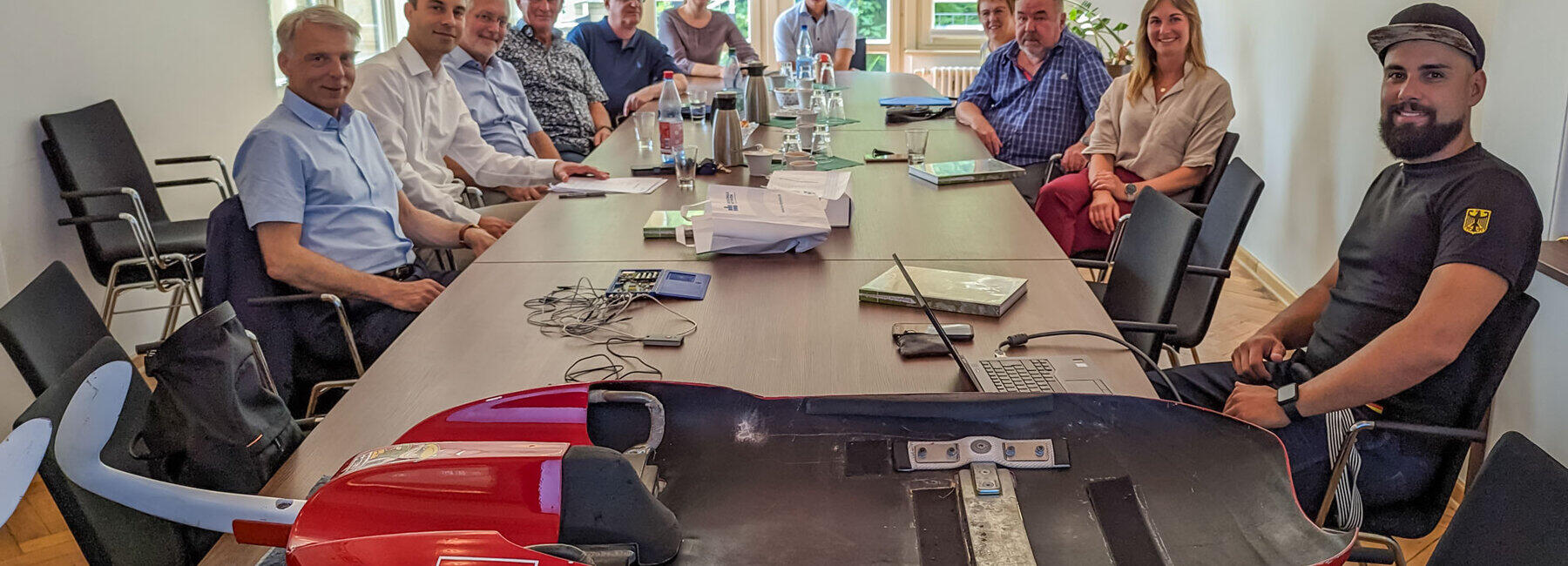
Julia Taubitz and her team-mates are currently on a winning streak: three medals, two of them gold, at the home World Championships in Altenberg on the last weekend in January; victories for Taubitz and Max Langenhan at the World Cup at the same venue a week later; and, most recently, on 10 February, the successes of Merle Fräbel and Taubitz in Oberhof. From Mittweida, the university’s rector, Professor Volker Tolkmitt, congratulates Taubitz on these achievements. “I am delighted for Julia and the German team. Last year, we held preliminary talks with her and national coach Andi Langenhan here in Mittweida. In mid-January 2024, Mittweida University of Applied Sciences and the TSBV finalised their expanded partnership.”
The agreement concerns the “joint resolution of specific research and development tasks and the professional development of elite athletes”. Two tasks which, at first glance, appear to have nothing to do with one another, but in the implementation of which Mittweida University of Applied Sciences brings a wealth of expertise and experience to bear. For one of these tasks, as a university specialising in elite sport, it enables competitive athletes to combine their sporting careers with their academic studies, amongst other things, through the individual tailoring of their study programmes. Prominent elite athletes among them include Eric Frenzel (Nordic combined) and Steffi Kriegerstein (canoeing).
Seeing and measuring: data fusion at 130 km/h
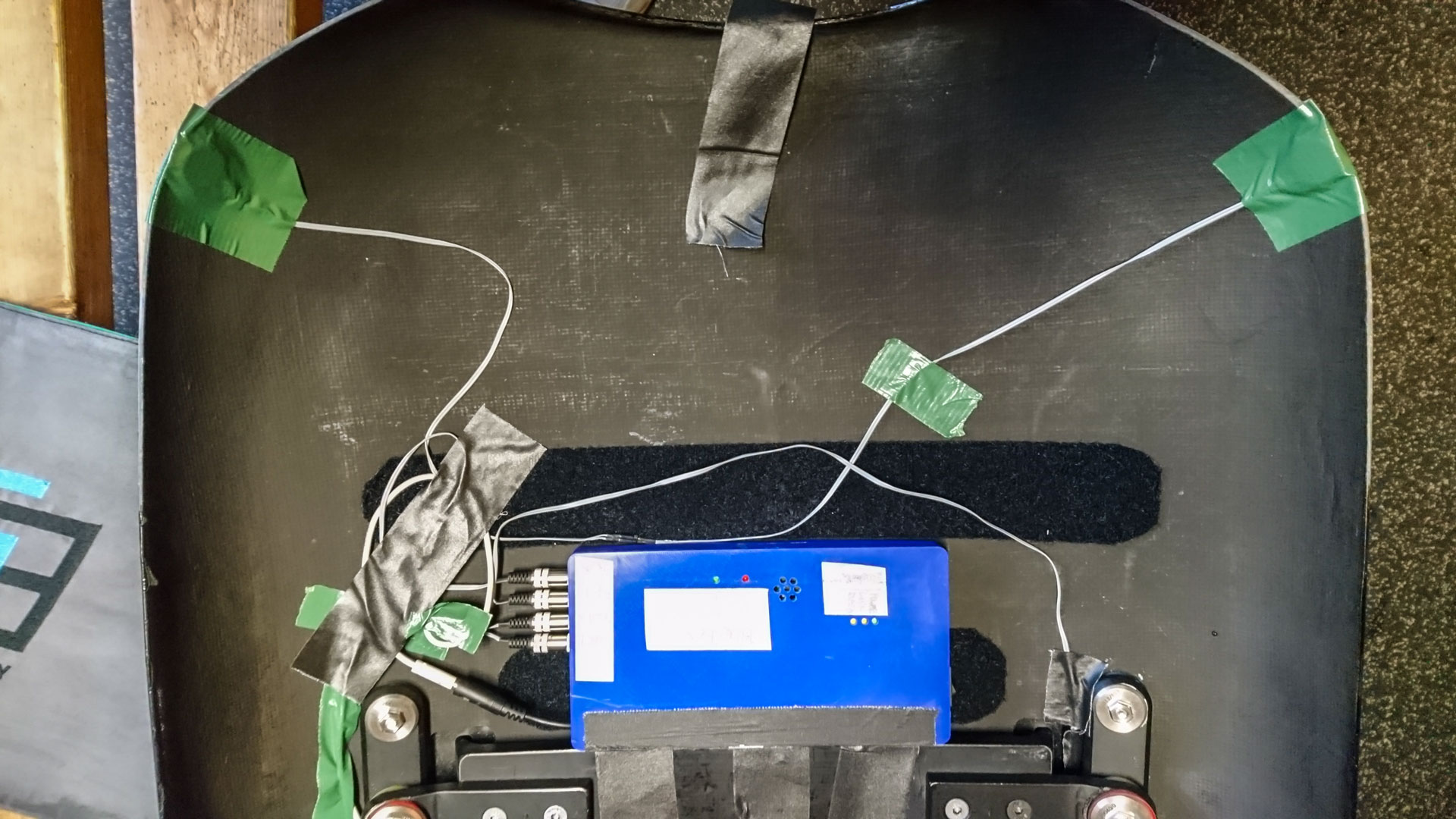
For the other project, Mittweida University of Applied Sciences is relying on an interdisciplinary team of specialists in measurement and materials technology, software, data science and virtual reality. Here, too, the aim of the collaboration is to help the athletes achieve success. “The starting point for this is the interaction between the athlete and the sled,” explains Professor Christian Schulz from the Faculty of Engineering Sciences. “Where thousandths of a second decide who wins a medal, it all comes down to the tiniest movements with which the riders steer the sled along the track at speeds of up to 130 kilometres per hour. But these forces cannot be seen, only measured. We capture them using sensors in the sled and record them during the run.”
The key feature of the measurement system from Mittweida is that the data is combined with the video footage from a camera mounted on the sledge. “We synchronise 120 high-resolution camera images per second with the measurement data, which means with an accuracy of a few milliseconds or – in relation to the distance covered by the sled during the run – to within a few centimetres. The measurement data is superimposed onto each individual frame.” This fusion of data enables an integrated visualisation of the run. This makes it easier to see how the athletes steer the sled through movement, weight transfer and pressure, and how the sled actually behaves on the track as a result.
Coach Jan Eichhorn: “We’re waiting for it.”
Coaches and athletes can see immediately after a run which force had which effect – and use this information to optimise their training in a targeted manner. “The coaches are looking forward to it,” says Jan Eichhorn, national training centre coach in Oberhof. “This system complements our previous reliance on video analysis alone. I’m delighted about the collaboration with Mittweida University of Applied Sciences and am looking forward to using it regularly in training.”
Johannes Ludwig, double Olympic champion at Beijing 2022, was the first test rider for the system’s development. As well as the current medal hopefuls, it is intended to benefit young talent in particular, so that they can reach the top more quickly. From March, the B squad will train using the system from Mittweida. It is so compact that it fits in the front section of the sled and does not get in the way.
Mittweida University of Applied Sciences and the Olympic Training Centre in Oberhof have been collaborating in the field of materials research for around 15 years. Professor Frank Müller, now a colleague of Schulz’s in emeritus status, had focused in particular on optimising the skates. In mid-January, an agreement was reached to expand the collaboration in the field of data-fused measurement and analysis.