This page was translated automatically using artificial intelligence (DeepL). The German version is binding. More information about automatic translation
International collaborations between universities are often described in terms of figures, institutional agreements or academic publications. However, far less attention is paid to the people behind these collaborations – to their day-to-day working lives, their professional exchanges and the tangible added value that such experiences bring to the research groups involved.
During the 2025/26 winter semester, we had the opportunity to supervise Alfio Scuderi, a PhD student from the Università Niccolò Cusano in Rome, at Mittweida University of Applied Sciences as part of a research semester. The focus of his stay was on additive manufacturing technologies and fibre-reinforced thermoplastic materials.
It soon became clear that the visit would go far beyond a traditional research placement. It developed into a valuable experience of academic exchange, intercultural collaboration and the joint advancement of existing fields of research.
How it all began
The origins of the collaboration between Rome and Mittweida
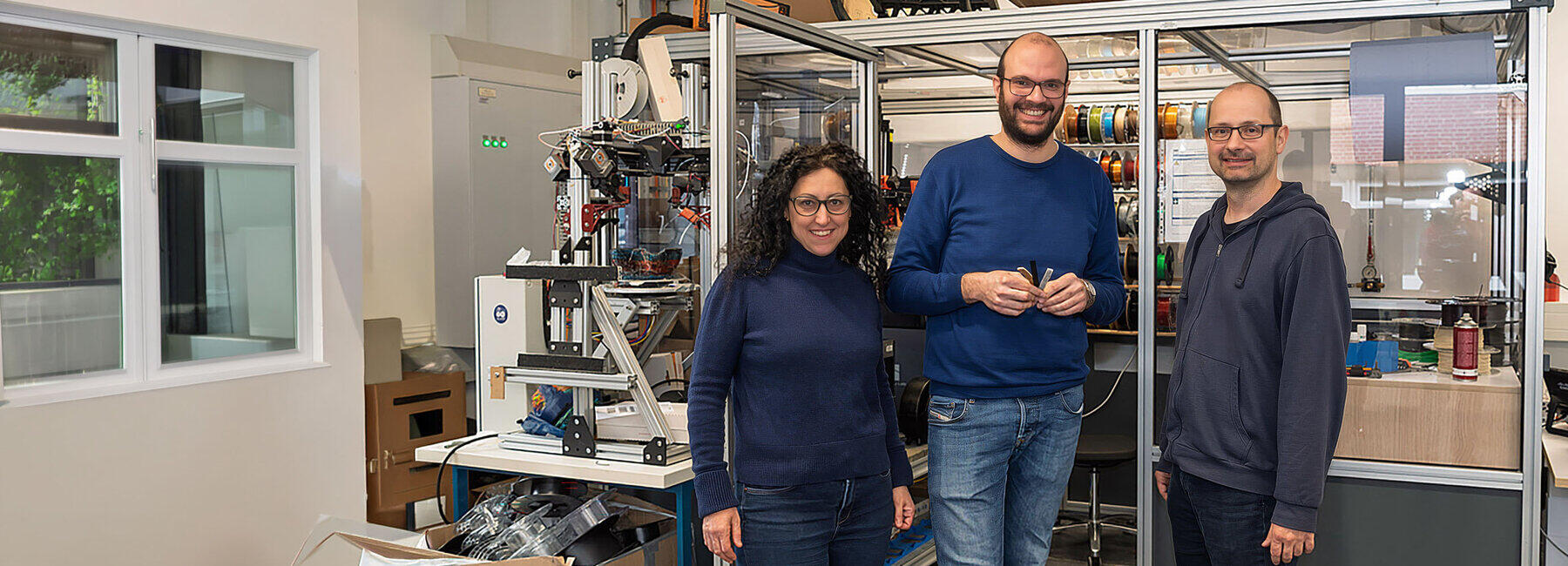
Alfio Scuderi’s research visit arose within the framework of an existing partnership between Mittweida University of Applied Sciences and the Università Niccolò Cusano, with which Dr Flaviana Tagliaferri maintains contact. During the regular NextGen consultation meetings, she told the team about the partnership. This brought the possibility of supervising an exchange PhD student to the attention of Dr Hagen Bankwitz, and the ball started rolling. Mittweida University of Applied Sciences provided the necessary framework; Hagen Bankwitz was able to make the required laboratory resources available and integrate the PhD student into an ongoing research project. This meant that the research work could begin without a significant lead time.
It became apparent even in the first few weeks that this close collaboration could lead to more than just a single semester abroad. The daily professional exchange quickly laid the foundations for a more intensive and long-term academic collaboration.
When 3D Printing meets UD tapes
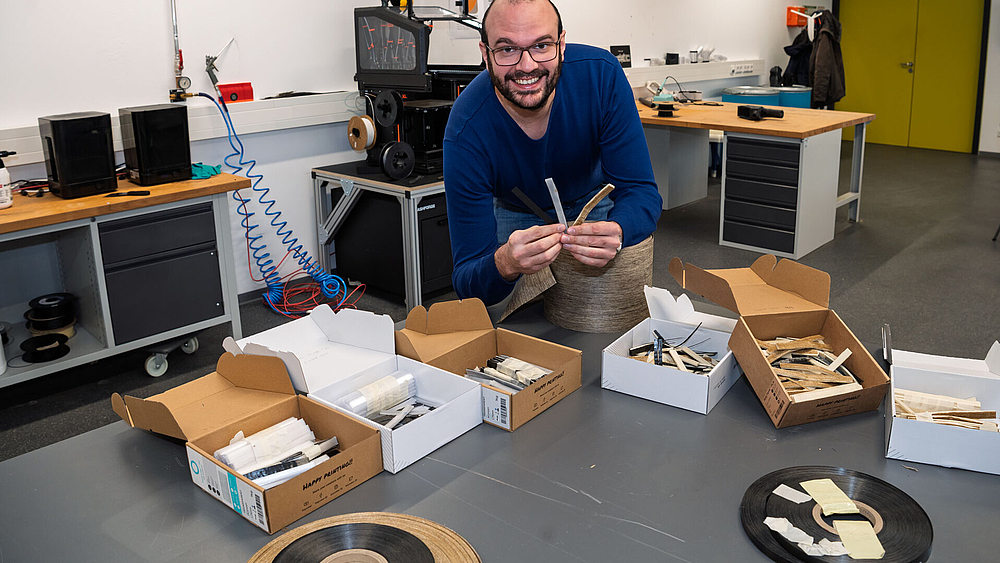
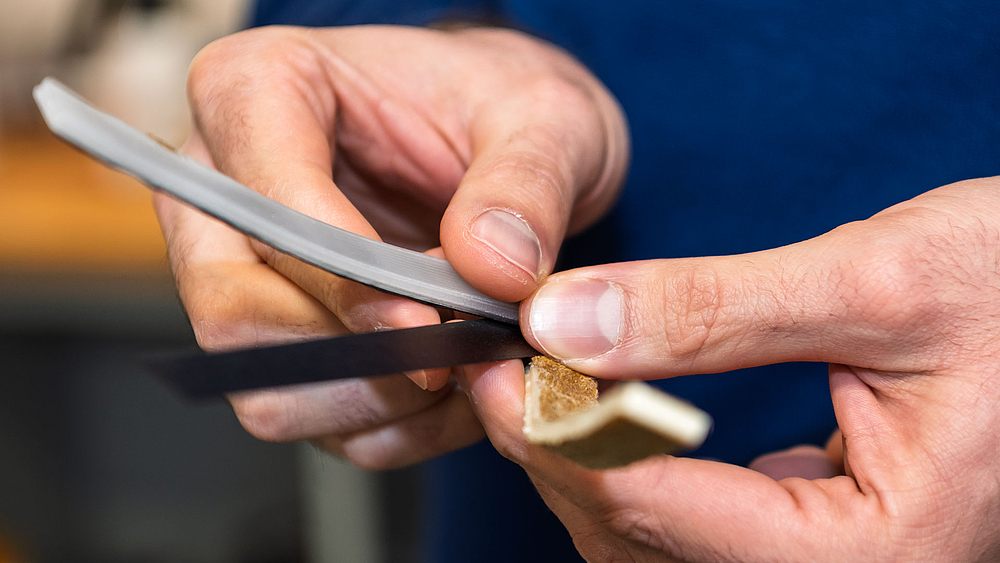
The research focused on combining FLM 3D Printing (Fused Layer Modelling) with thermoplastic UD tapes (unidirectional fibre-reinforced tapes) to structurally reinforce additively manufactured components. A well-known problem with many 3D-printed components is their comparatively low mechanical strength compared to conventionally manufactured components – due to the anisotropic properties of the layer-by-layer manufacturing process, particularly under bending stresses.
The aim of the project was therefore to investigate how the mechanical strength and stiffness of the printed test specimens could be increased through the targeted use of unidirectional fibre-reinforced tapes.
During the research semester, the following were:
- test specimens for 3-point bending tests were developed and manufactured,
- reinforcements were applied using UD tapes,
- experimental test series were planned and carried out,
- mechanical properties were determined and evaluated,
- and various reinforcement concepts were compared with one another.
Potential applications of this technology range from bicycle components and lightweight structural parts to the local reinforcement of complex additively manufactured geometries.
The value of joint supervision
From both a personal and professional perspective, one of the most interesting aspects of the visit was the joint supervision of the PhD student. Supervising a PhD student from another university involves not only an exchange of different academic approaches, but also gaining an insight into various working methods, communication cultures and organisational structures within the research community.
In our case, the ongoing collaboration brought benefits for everyone involved:
The PhD student was able to work in a new academic environment and gain access to complementary laboratories, methods and expertise.
The host research group benefited from qualified technical support and new methodological perspectives.
The supervisors developed new project ideas and deepened their academic collaboration.
An often underestimated aspect of such visits is the day-to-day working life shared by the team. Spontaneous technical discussions, problem-solving in the laboratory, data analysis and the planning of experiments become important opportunities for mutual learning.
The international dimension of research
In addition to the scientific results, the research semester also had a strong international and intercultural component. Integration into a new academic environment requires openness, adaptability and a willingness to communicate. At the same time, the host team also benefits from new cultural and specialist perspectives.
Particularly in the field of applied and interdisciplinary research, such experiences represent genuine added value:
They promote the development of international scientific networks.
They facilitate future joint projects.
They support the professional development of young researchers.
They strengthen the European dimension of academic education and research.
From the laboratory to the scientific journal
One particularly interesting aspect of the project was the direct transition from experimental work to a joint academic publication. The results achieved over the course of the semester proved promising for the joint drafting of an academic paper. At the time of publication of this article, the paper had already been submitted to an international journal and had received a positive review.
Link to the publication:
This highlights a key aspect of well-structured academic mobility. Where there are shared goals, mutual support and genuine integration into the research group, even comparatively short stays can yield sustainable scientific results.
Looking back to move forward
Looking back, Alfio Scuderi’s research visit to Mittweida University of Applied Sciences is a fine example of how international collaboration between universities can be enriching on both an academic and a personal level.
For us as supervisors, this experience has once again demonstrated that supervising international PhD students involves far more than simply providing academic support. It is a process of shared learning, professional development and long-term networking.
At a time when research is becoming increasingly interdisciplinary and international in scope, such experiences highlight the importance of creating spaces for joint academic exchange and cooperation.