This page was translated automatically using artificial intelligence (DeepL). The German version is binding. More information about automatic translation
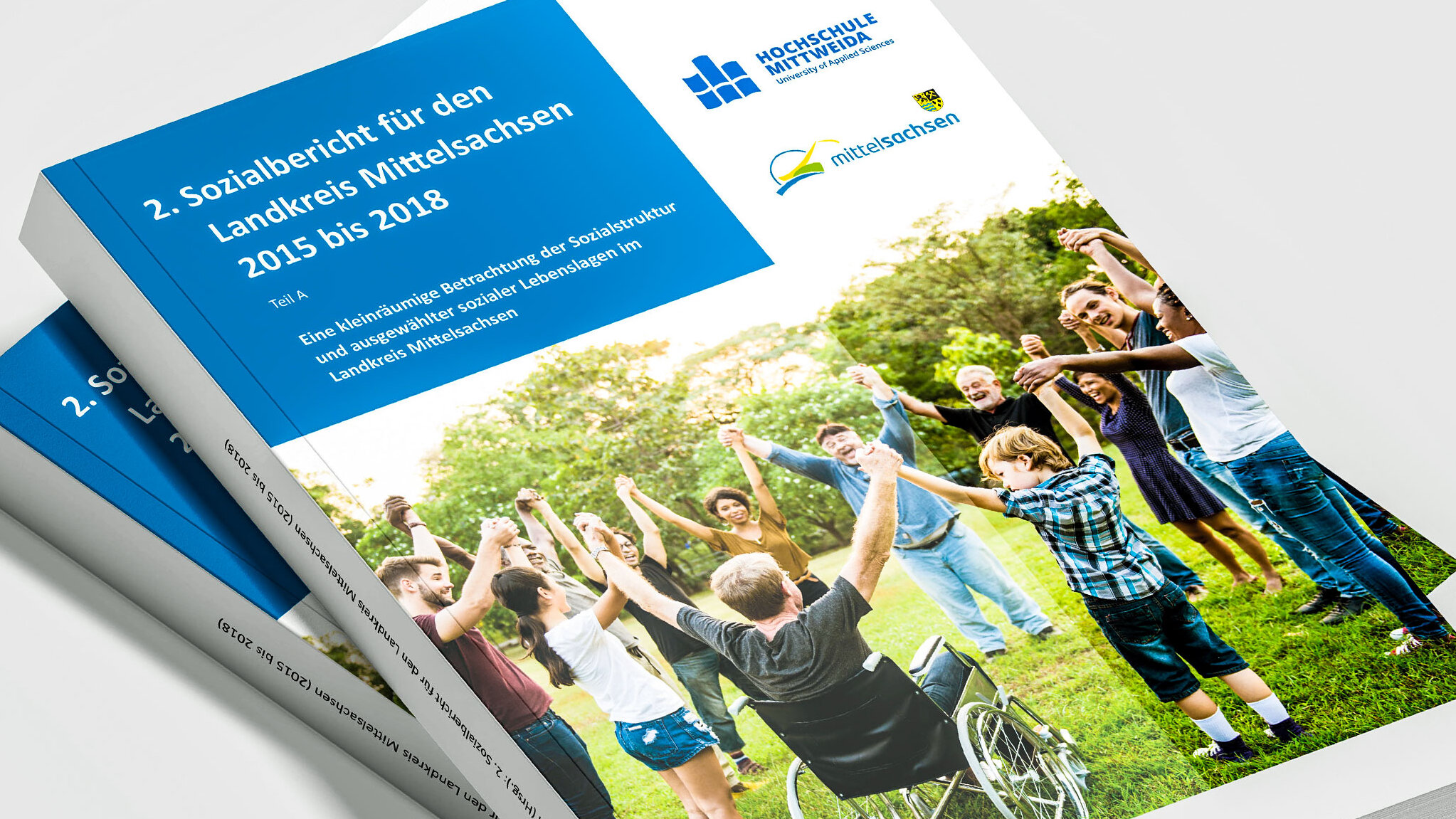
More comprehensive, diverse and informative – this is how the new website www.mittelsachsen-sozial.de presents itself, placing the spotlight on current social and socio-political issues. At regular intervals, the two researchers Tabea Esche and Friederike Haubold from the Faculty of Social Sciences at Mittweida University of Applied Sciences blog about topics relating to social reporting.
Social reporting examines people’s living conditions and highlights how living situations and opportunities for social participation are developing in the Mittelsachsen district, where social problems may arise, and what needs exist in terms of social infrastructure provision – for example, in local public transport, healthcare, nursery places and leisure facilities. Through local social reporting and the measures derived from it, the aim is to improve people’s living conditions and make the region (more) attractive as a place to live in the long term.
Working in close collaboration with the district administration, the blog also addresses topics such as the introduction of the citizen’s income and options for social support during the energy crisis. In this way, the blog raises the profile of social issues. It is aimed at practitioners and social services staff, as well as interested members of the public. The new blog format now also provides detailed information on the collaborative project between the university and the district administration, offers clearly presented academic content on social reporting, and serves as a platform for the latest findings from student research projects at the Faculty of Social Sciences – for example, on educational interests in later life. To ensure you don’t miss any of the latest updates, the blog now also offers the option to subscribe to a newsletter.

Continuity: Collaboration between academia and local government
Since 2014, the Mittelsachsen district and the Faculty of Social Sciences at Mittweida University of Applied Sciences have been working together to develop local-level social reporting. Milestones in this collaboration, which has now lasted almost ten years, include two comprehensive social reports – published in 2017 and 2020. The third social report is due to be produced in 2024.
Project leader Isolde Heintze, Professor of Social Policy and Social Work at the university, is delighted with the collaboration: “The Mittelsachsen district is a beacon amongst rural districts when it comes to social reporting. I am delighted that we are continuing our academic work with the District Office and can build on this success.”
The reports consistently highlight how living conditions and opportunities for social participation are developing in the Mittelsachsen district, and provide corresponding recommendations for action.
Fostering transparency and discussion
It is therefore only logical to share key findings from the reporting with those involved in the social infrastructure and decision-makers in local politics, as well as to provide insights to the people in the region whose living conditions are the focus of the report. It should also facilitate a discussion on current developments. Since spring 2022, the blog ‘soziales.mittelsachsen.gemeinsam.machen’ has proved to be an ideal tool for this purpose; it was originally developed in response to the restrictions on public events during the coronavirus pandemic. The successful format has now been redesigned and expanded at www.mittelsachsen-sozial.de.
Social Planning – Practical Research for Master’s Students in Social Work
Since the start of the collaborative project, students on the Mittweida Master’s programme ‘Social Work – Counselling, Leadership, Management’ have been regularly exploring the diverse topics of social reporting. Working closely with the specialist departments of the district administration – such as the social services department, the public health department and the youth welfare office – they use scientific methods of empirical social research to examine various issues in the context of social reporting, social planning and local social policy. Both sides benefit from this applied research: students gain an insight into processes and decision-making logic within a potential future field of work, whilst the local authority can base its actions on scientific research.