This page was translated automatically using artificial intelligence (DeepL). The German version is binding. More information about automatic translation
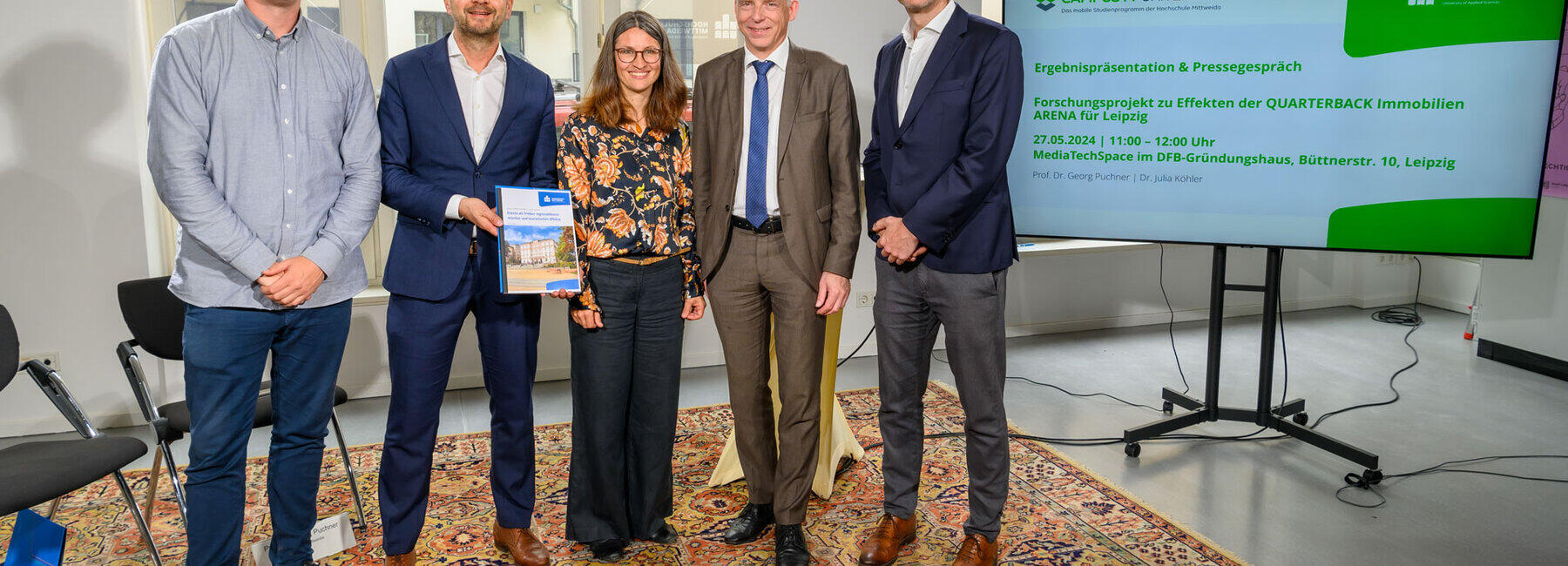
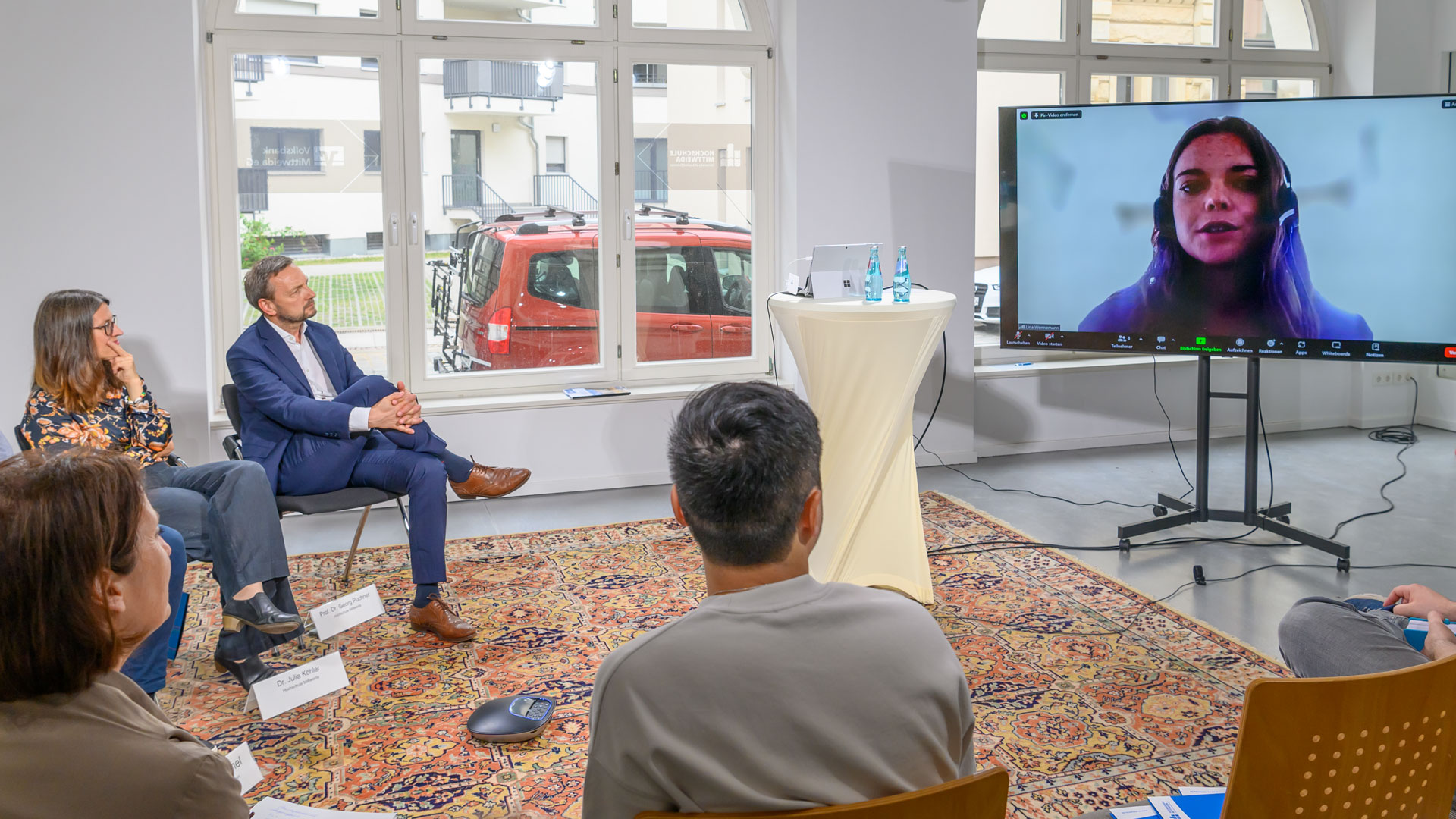
On 27 May, researchers from Mittweida University of Applied Sciences presented the insightful findings of a scientific study on the positive effects of major events at the DFB Gründungsaus in Leipzig. The subject of the study is the Quarterback Immobilien Arena (QIA; formerly: Arena Leipzig), one of the largest multi-purpose venues in Germany.
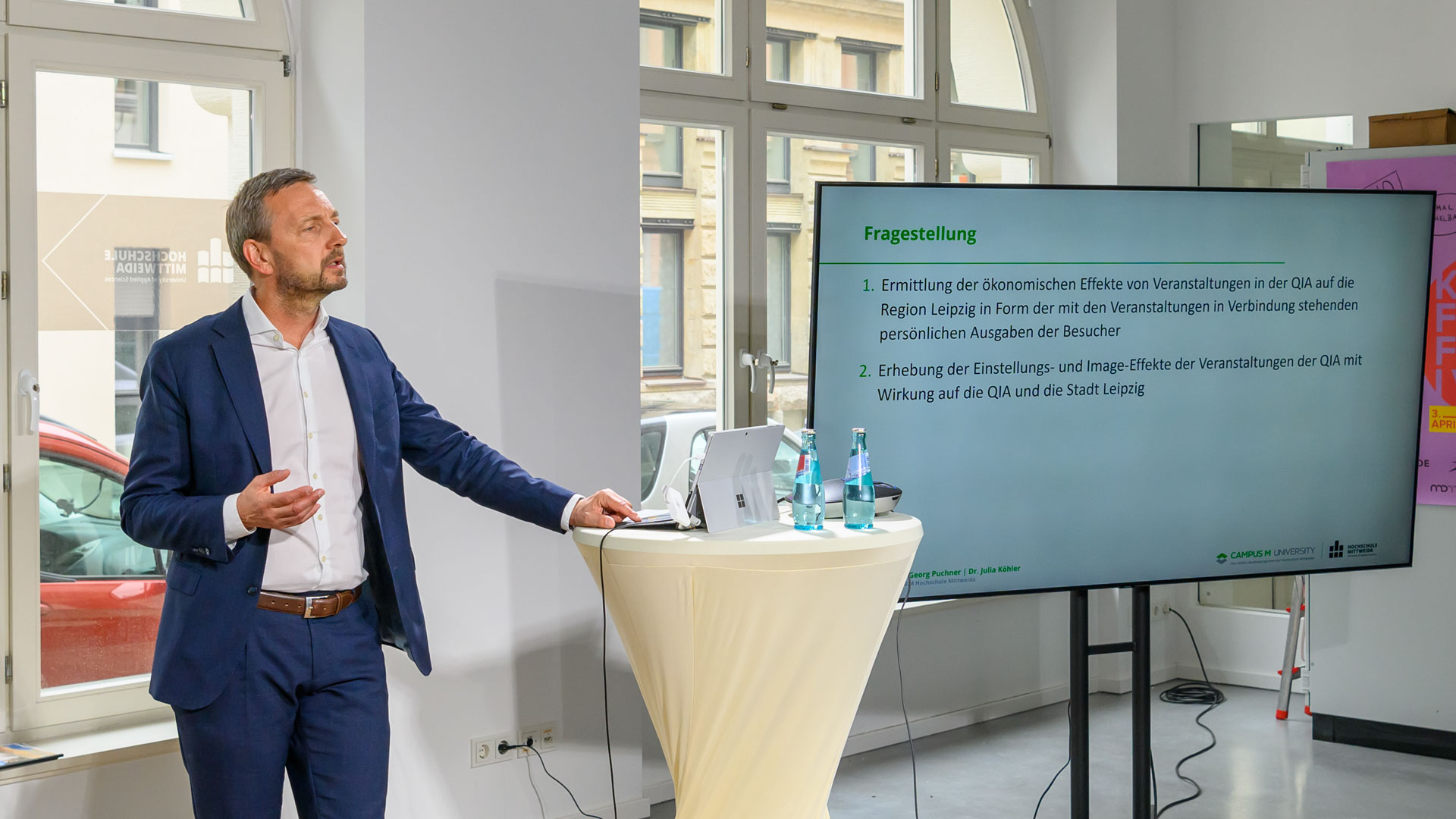
In the study, Professor Georg Puchner and Dr Julia Köhler demonstrate the QIA’s significance for tourism and the economy, both for the city and the region, as well as the future economic potential of a modern, well-equipped arena. They analysed concerts, shows and sporting events, with concerts accounting for the largest share of visitors and economic benefits.
Regional economic and tourism impacts
A key finding of the study is that visitors perceive the QIA and its events as a major attraction for Leipzig, with sporting events having a particularly positive impact on the city’s image. Cultural events, particularly concerts, attract a significant proportion of visitors from outside the city. Around a quarter to a third of them plan to take advantage of additional leisure and cultural offerings in Leipzig. This generates further benefits for tourism. The study also quantifies the direct economic effects of the events.
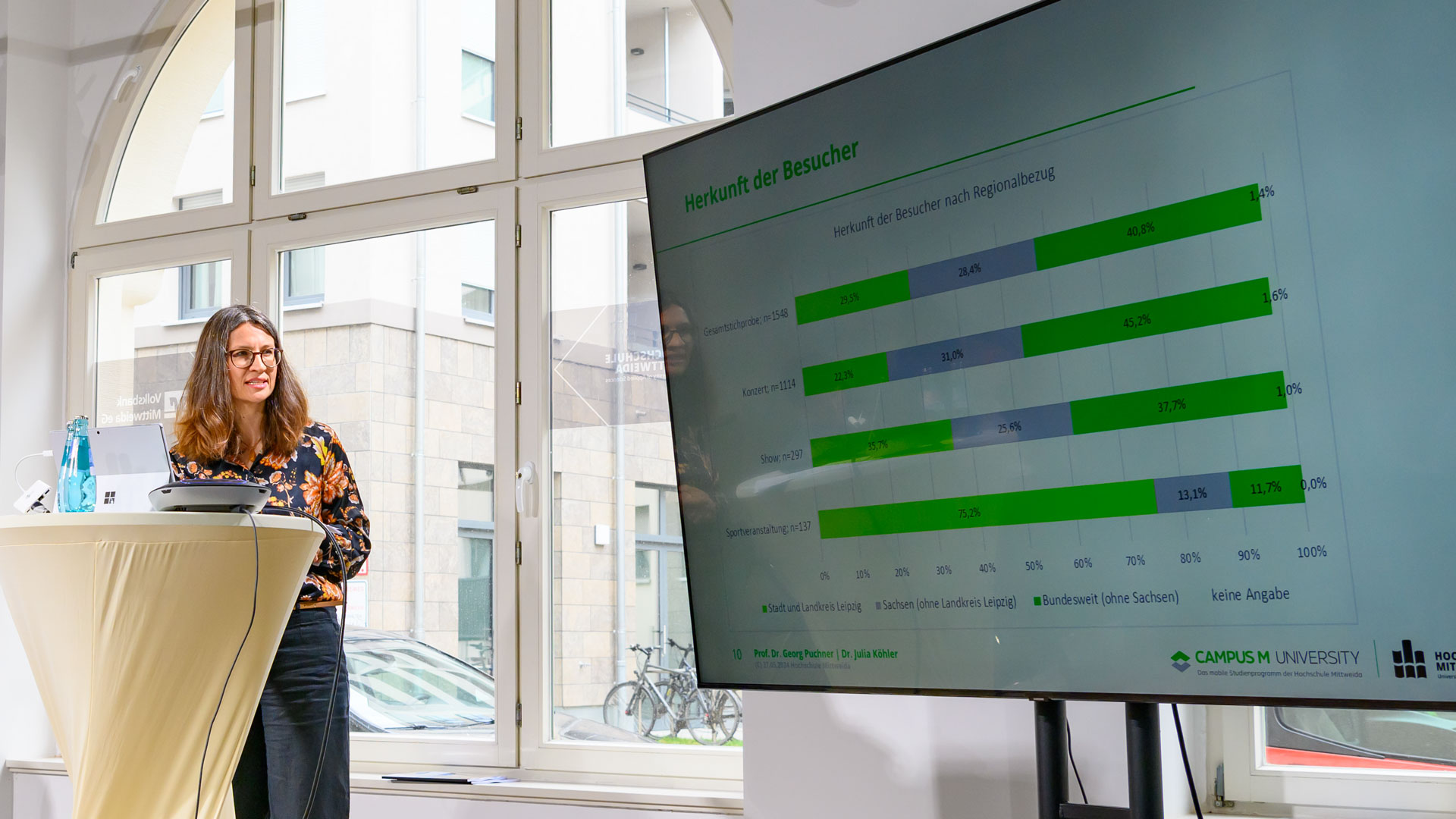
The results – based on conservative estimates – clearly demonstrate the financial significance of events at the QIA for Leipzig. During the survey period from April to June 2023, concerts generated direct value added of around 4.86 million euros and revenue of approximately 4.08 million euros. Shows contributed with direct value added of 698,000 euros and revenue of 586,000 euros, whilst sporting events recorded smaller but still significant direct effects of 18,700 euros in value added and 15,700 euros in revenue. These relatively low value-added effects compared to shows and concerts can be explained by the high proportion (75 per cent) of local fans. For the entire 2023 event year, the authors of the study estimate the direct value-added effects at around 21.1 million euros, with concerts accounting for the largest share at 12.2 million euros.
The underlying data was collected through a survey of more than 1,500 attendees at various types of events (concerts, shows and sporting events) in 2022 and 2023. The Mittweida study is thus the first comprehensive, systematic investigation into the effects following the Covid pandemic and the associated economic recovery of the events industry.
A detailed account of the study’s findings was published in 2024 in the *Scientific Reports* series by Mittweida University of Applied Sciences and is available online.
The impact of major events on cities and regions
Major events can have a positive impact on a location, particularly in terms of tourism and regional development, thanks to their high visitor numbers: for example, by generating additional revenue in the region (a so-called ‘hard’ factor) and enhancing the profile and image of a city or region (so-called ‘soft’ factors). They can also contribute to a positive perception of one’s own city or region amongst residents, or strengthen regional ties. Major events are therefore high on the regional policy agenda of cities and regions. However, only reliable findings regarding the desired effects and how they are achieved enable those responsible to take the right action.
Matthias Kölmel, Managing Director of the Arena’s operating company, confirms the value of the figures now collected through scientific research. He says it is valuable for the company to see not only that it has an impact on 500,000 visitors a year, but also just how significant this positive impact is on the city and region. In general, he says, his company’s approach is: “We are always keen to partner with the academic community.”
Applied science
Mittweida University of Applied Sciences carried out this independent study between October 2022 and July 2023 as part of a module-based academic-practical project within the ‘Business Management’ Master’s programme. As with Mittweida’s Bachelor’s programmes, which are recognised nationwide, the application of academic methods in real-world projects is a central component of the Master’s programme. Leipzig, as the most important media hub in the new federal states, is an obvious choice for such projects in two respects. This led to the collaboration between researchers from Mittweida and the management of QIA.