This page was translated automatically using artificial intelligence (DeepL). The German version is binding. More information about automatic translation
Laser-based manufacturing for architecture and the construction industry
The construction industry faces the challenge of using resources more efficiently and developing sustainable building concepts. Laser-based manufacturing technologies – in particular additive manufacturing – offer great potential in this regard. Our aim is to put innovative processes into practice and to establish resource-efficient construction on a sustainable basis.
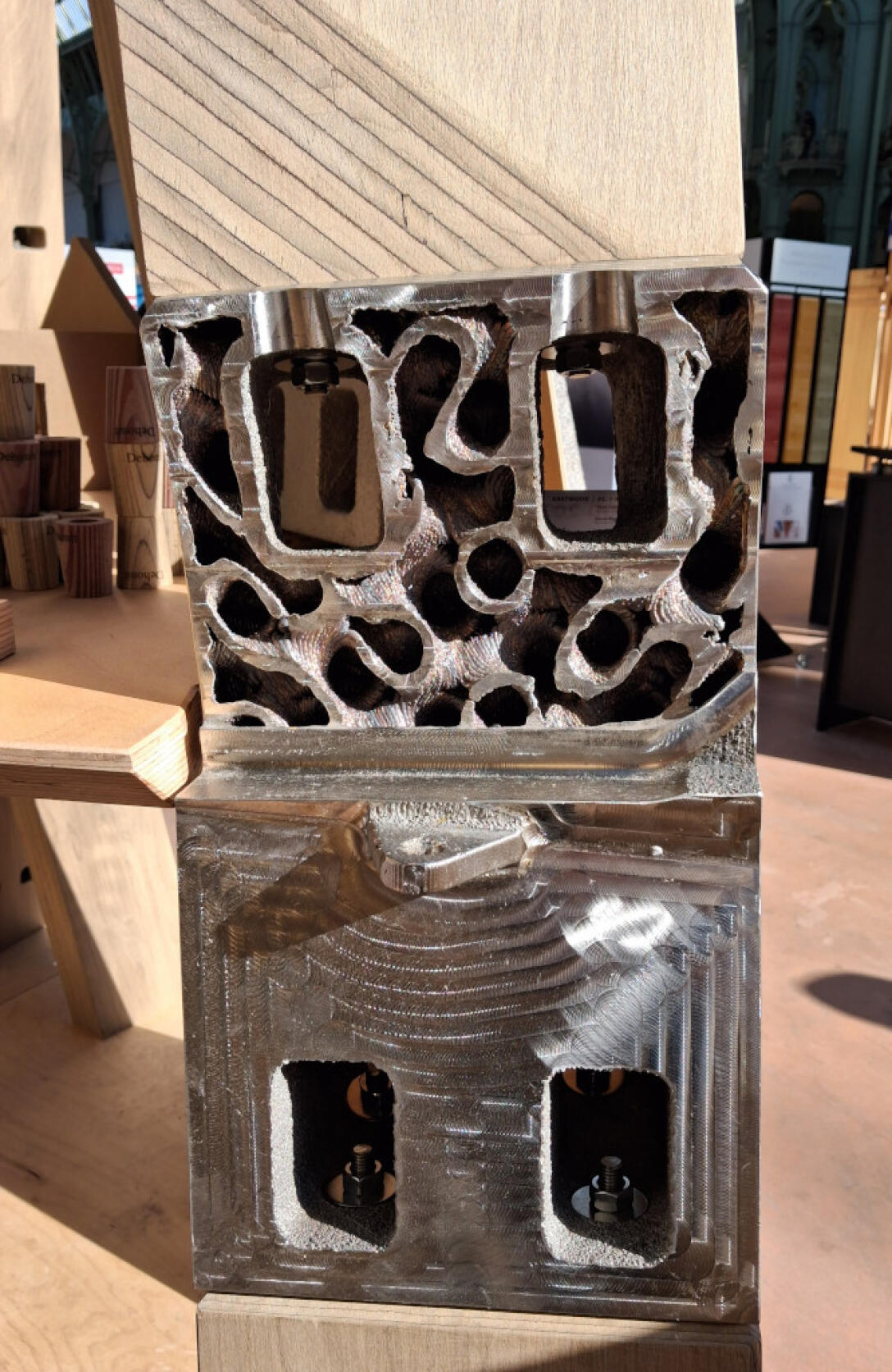
Additive manufacturing processes enable complex components, such as customised connection nodes for curved façade and roof structures, to be produced in a material-efficient manner. Bionic structural principles enable lightweight, resilient structures whilst also opening up new architectural design possibilities.
Facades also benefit from laser technology: microstructured surfaces with a lotus effect provide self-cleaning properties and reduce the use of cleaning agents. Aerodynamically optimised façades reduce wind loads and material requirements, whilst laser-based adhesion structures support innovative green façades, thereby helping to improve the urban climate.
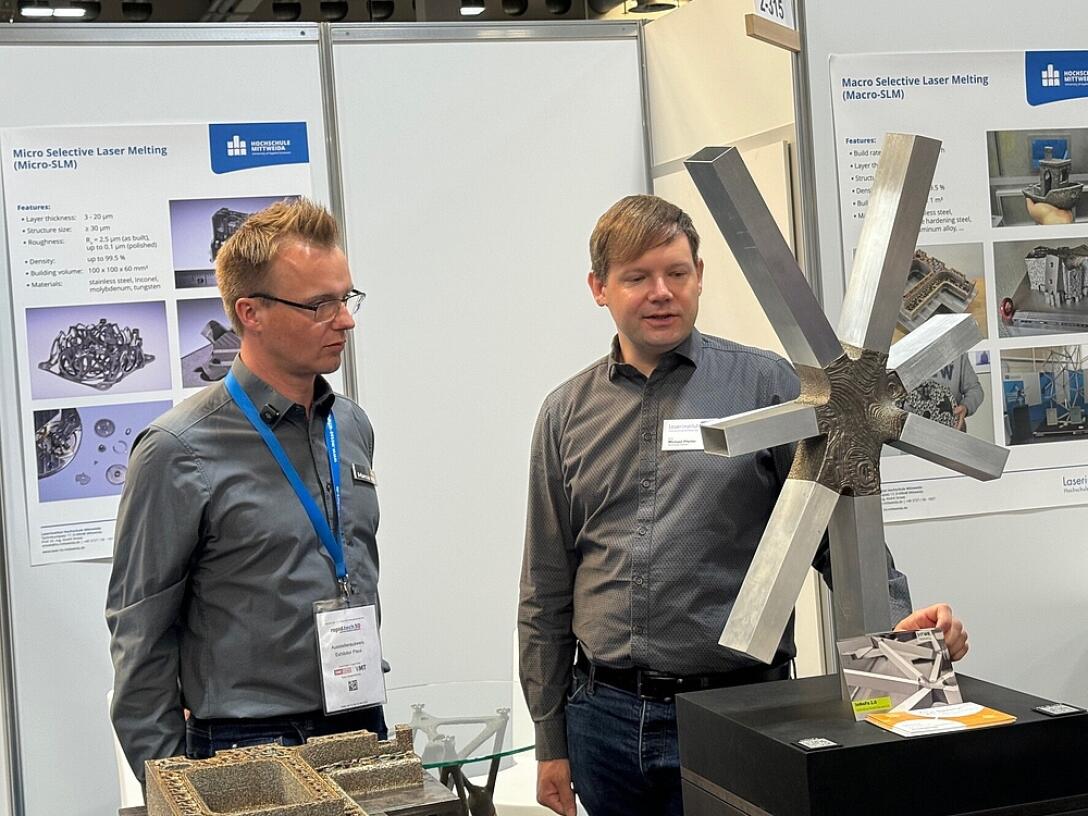
To bring the possibilities of laser-based manufacturing to life, we develop demonstrators featuring innovative functional surfaces and showcase them at trade fairs and in travelling exhibitions. Through our LinkedIn channel, we provide regular updates on the latest developments and support companies with bespoke advice on the application of these technologies.
In this way, we lay the foundations for sustainable, cost-effective and future-proof construction methods and support companies from the initial idea right through to successful implementation.


Computer-assisted transfer

In the ‘Computer-Assisted Transfer’ transfer mode, AI methods are developed and applied to enhance the effectiveness of transfer methods, as well as to improve and simplify communication and the transfer pathway between transfer partners. The use of AI for transfer activities is a new development in the higher education sector.
Within the consortium, the ‘Computer-Assisted Transfer’ mode is intended, on the one hand, to make an innovative contribution to transfer research and, on the other hand, to enable a more target-group-specific and systematic interaction with the transfer recipients through the use of artificial intelligence methods. In this way, the ‘computer-assisted transfer’ mode creates the conditions for more efficient knowledge transfer within the consortium.
Sub-project manager