This page was translated automatically using artificial intelligence (DeepL). The German version is binding. More information about automatic translation
In 2024, construction work began on the new university library building (scheduled to open in 2028).
Further information about the new building can be found here: New university library building
The Technikum’s book collection was initially kept in the Director’s offices, but very soon its management was entrusted to a permanent librarian and a dedicated ‘library room’ was set up.
In addition to books, the collection included scientific journals covering the fields of engineering, mathematics and the natural sciences, as well as numerous daily and weekly newspapers.
The library was available only to members of the Technikum. They were able to read the books and journals and make handwritten copies of them.
Only teaching staff were permitted to borrow items.
She kept the attendance registers and issued certificates.
All documents required for admission to the examinations had to be submitted to the library. From 1874 onwards, students’ absence records – on which every instance of absence was recorded and the reason given – were collected in folders.
The library director was responsible for the timetable, staff files, compiling statistics and carrying out building inspections.
Until the 1930s, the library’s holdings also included a collection of technical models. Drawing templates for students were kept in what was known as the ‘template room’, and later in several different buildings. There was a model room for motor vehicles and engine construction, a collection for physics and chemistry, the model room for electrical engineering, and an aeronautical engineering collection.
In 1919, the library moved to Weitzelstraße 1a.
Staffing and financial issues led to the partial closure of the library. When the Technikum, which had until then been privately run, was sold to a foundation for engineering schools in 1938, the library also became the property of the foundation.
The Technikum became a state school. The library moved into the school’s main building.
Following the reopening of the technical college and the library in November 1947, the library was opened to the public. A reading room was set up and a collection of textbooks was established.
It became possible to order literature via interlibrary loan.
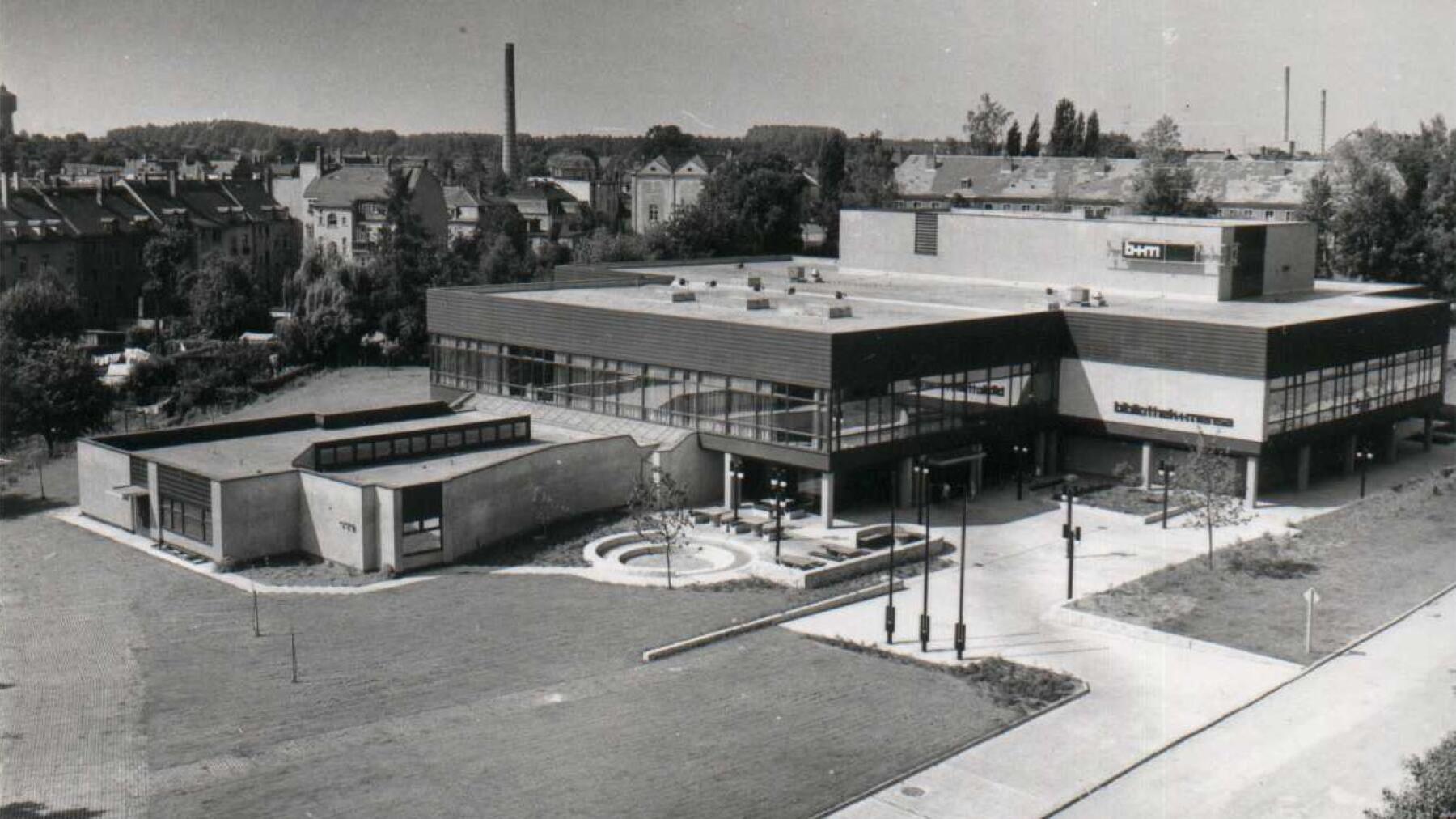
In 1983, the library moved to the library/canteen complex at Weststraße 11. A collection of pictures, records and children’s books was added to the range of literature on offer. Dissertations, degree theses and academic papers were given a place in the library
In 1989, automated loan processing was introduced.
All library operations were computerised, and the catalogue was made available on computers as an ‘OPAC’. The establishment of an environmental library (from 1993) resulted in an extensive collection of literature, which could also be used by schools in the surrounding area. The provision of computer workstations for all readers improved opportunities for literature research.
In 1999, the library/canteen building complex was refurbished. The library was expanded in terms of floor space and numerous user workstations were installed.
New shelving and additional workstations for readers create favourable conditions for study.