This page was translated automatically using artificial intelligence (DeepL). The German version is binding. More information about automatic translation
Project lead:
Duration
Project team member:
Research task / Brief description
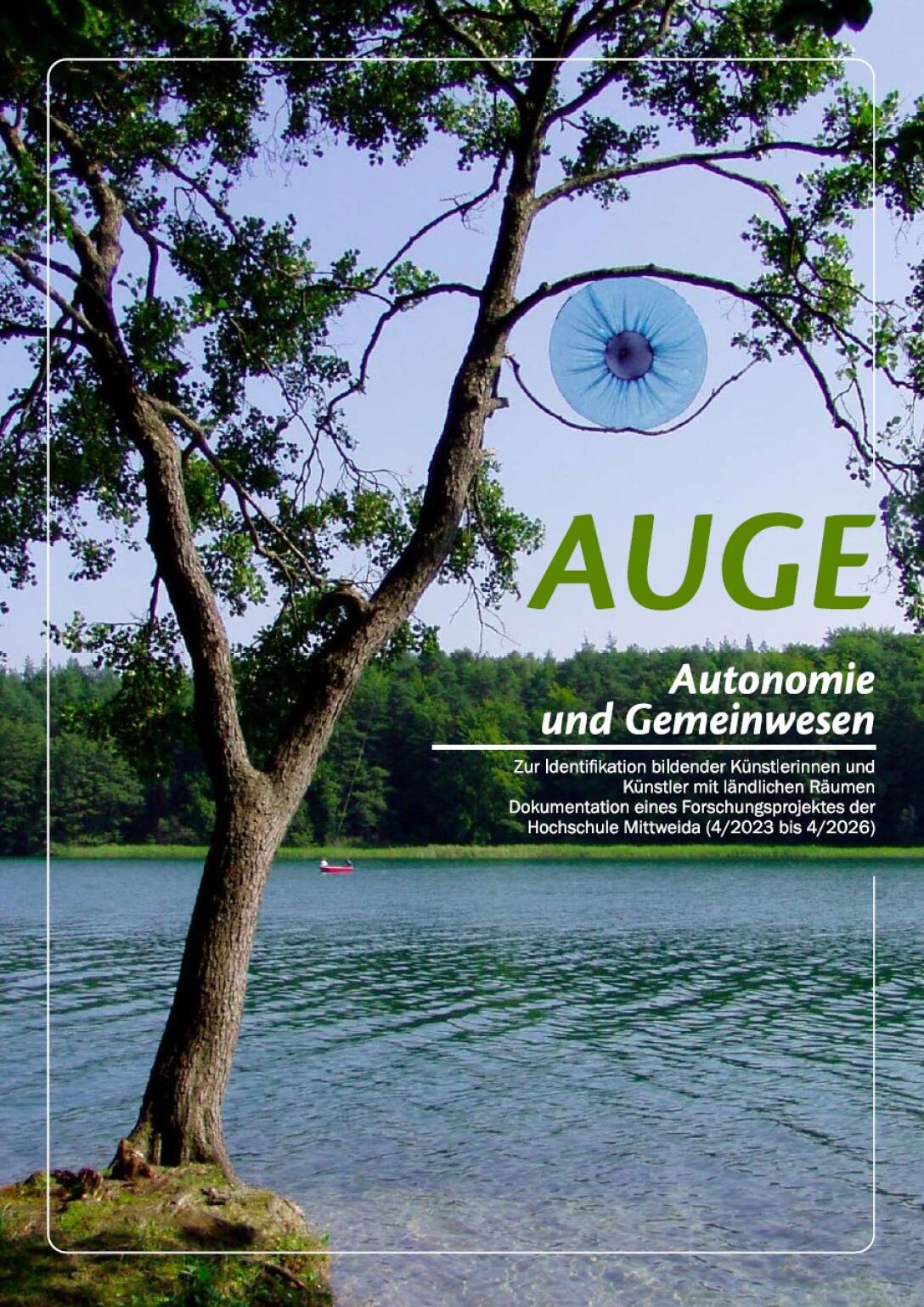
In current discourses on culture in rural areas, visual artists are attributed a central role. As sources of inspiration, communication, education and creative engagement with the living environment and everyday life, they can make a significant contribution to the development of village and small-town communities. However, alongside narratives of appreciation, recognition and neighbourly integration, there are also stories of mutual misunderstanding, alienation, rejection and parallel existence. Consequently, artists, with their claim to (aesthetic) autonomy, often find themselves at odds with the public’s preference for the popular, the useful and the ‘normal’. Even where there is a fundamental openness, it is by no means a given that the existing potential can be realised in the long term in the spirit of a mutually beneficial coexistence.
Against this backdrop, the aim of our research project is to explore in greater detail the perspectives that visual artists who live and work permanently in rural areas have on their social, cultural and natural environment, and the interrelationships that exist between the two sides. Among other things, the study examines visual artists’ identification with their rural living environment, their locally and regionally based aspirations for participation and creative influence in society and culture, how their relationship with the environment is reflected in their artistic work; and what opportunities for engagement and facilitation exist locally that can help to ensure the social potential of visual artists and their art is better realised.
Our approach is interdisciplinary. It combines thematic and methodological approaches from sociology, art history and – in collaboration with the filmmaker Bernhard Sallmann – documentary filmmaking. Through a process-oriented interplay of theory, conceptualisation and empirical research, the aim is to explore the relationship of approximately 12 to 15 visual artists to their rural social environment in the study regions of the Ore Mountains, the Uckermark and the Eifel through interpretative interviews, participant observation and film-based field research. This generates a multi-layered body of material, the elements of which – narratives, accounts, image sequences, soundtracks – complement one another but may also create tension between them. In parallel, the empirically obtained findings will be contrasted, through a review of the literature and primary sources, with local and regional contextual data from history, socio-economics, demography, etc. It is also of analytical interest whether, and to what extent, identification with rural areas differs between East and West, as well as across generations.
The AUGE research project is designed to be dialogic, networked and collaborative. In addition to discussions with artists, dialogue with local decision-makers is also sought. In a two-stage workshop process, the empirical findings and theoretical generalisations are to be discussed, validated and refined with the participants. The research process and knowledge transfer will also be supported by partners from the field of artistic associations and organisations. Central to the dissemination of results will be the public screening of the film-based research contribution and a final publication summarising key insights from the project and the debate. This approach is also intended to help highlight the conditions for success and the barriers in the relationship between visual artists and rural communities, as well as to identify starting points and pathways towards a fruitful interaction.
Practice partners (network)
- Saxony Regional Association for the Visual Arts e.V.
https://www.lbk-sachsen.de/ - Kunstkeller Annaberg e.V.
https://www.kunstkeller-annaberg.de/ - Daun Cultural Association e.V.
https://www.kulturkreis-daun.de/ - Altes Kino Lychen (Zwischen Menschen gUG)
www.alteskino-lychen.de
Transfer 2025
- 6 March 2025, Oederan: Event: ‘Visual Artists in Rural Areas’ (= Erzgebirge Workshop II) at the Volkskunstschule Oederan, featuring guest talks, a presentation of the AUGE project, the short film “Karl Rätsch”, a workshop discussion and a preview of the LBK’s 2025 annual magazine; in cooperation with the Landesverband Bildende Kunst Sachsen e.V. and the Kunstkeller Annaberg e.V.
- 27 May 2025, Lychen: Uckermark Workshop II featuring an AUGE project presentation, the short film “Karl Rätsch” and a workshop discussion at the Altes Kino; in cooperation with the Altes Kino Lychen
- 25 June 2025, Daun: Eifel Workshop II with a visit to the Kinopalast Vulkaneifel and a workshop discussion at the Atelier Alte Backstube (in-house event); in cooperation with the Kulturkreis Daun e.V.
- 30 August 2025, Daun: World premiere of the AUGE film “Artists in Rural Areas” and film discussion at the Kinopalast Vulkaneifel; in cooperation with Kulturkreis Daun e.V.
- 31 August 2025, Daun: Art matinee at the Atelier Alte Backstube (Franziskus Wendels) featuring a talk, exhibition, live jazz and an AUGE slide show; in cooperation with Kulturkreis Daun e.V.
- 20 September 2025, Lychen: AUGE as a guest at the “Kunsterbunt” arts festival, Uckermark premiere of the AUGE film “Artists in Rural Regions” and post-screening discussion at the Altes Kino; in collaboration with the Altes Kino Lychen (Zwischen Menschen gUG) and the Kulturbüro Lychen e.V.
- 27 September 2025, Annaberg-Buchholz: Matinee at the Gloria Filmpalast featuring the Erzgebirge premiere of the AUGE film “Artists in Rural Areas” and a post-screening discussion, an art-themed city tour, a visit to Atelier Rosa (Sabine Sachs), preview of the exhibition “Clara Mosch – Inner Freedom” at the Kunstkeller Annaberg: in cooperation with Kunstkeller Annaberg e.V.
- 11 November 2025, Berlin: Berlin premiere of the AUGE film “Artists in Rural Areas” and post-screening discussion at the Kino Krokodil; in cooperation with the Kino Krokodil (at Kulturhof OST e.V.).
Publications
- Ulf Jacob: Artistic Autonomy and Identification in Rural Societies. Initial findings from the AUGE research project, in: Landesverband Bildende Kunst Sachsen e.V. (ed.), Annual Magazine 2025, Issue No. 13, Rural Areas, pp. 15–17. more
- Ulf Jacob: The AUGE Project Visits the Vulkaneifel. Research on the visual arts and society in rural areas, in: Vulkaneifel District Administration (ed.): Vulkaneifel District Yearbook 2026 – News, Narratives, Stories, Kerpen 2025, pp. 56–66.
- Stephan Beetz/Ulf Jacob: Individualism and Community. The Complexity of Collective Actions and Negotiations by Visual Artists in Rural Areas, in: Weiterbildung. Journal of Fundamentals, Practice and Trends, Vol. 36, No. 6/2025, pp. 26–29.
- Ulf Jacob: Identification between Autonomy and Community (Interview: Lydia Hempel), in: Landesverband Bildende Kunst Sachsen e.V. (ed.), Annual Magazine 2024, Issue No. 12, Realities of Life, Dresden 2024, pp. 25–27. more
Project documentation
AUGE Films
Karl Rätsch
- Germany 2025, 9:33 mins, colour, sound: 5.1, screening format: DCP
- Director and Sound: Bernhard Sallmann, Cinematography: Martin Wolff, Editing: Christoph Krüger, Sound Mixing: Urs Hauck
A cinematic exploration in miniature of the sculptor Karl Rätsch (Lychen/Uckermark).
Artists in rural areas
- Germany 2025, 75 mins, colour, sound: 5.1, screening format: DCP
- Director and sound: Bernhard Sallmann, cinematography: Martin Wolff, editing: Christoph Krüger
- In his observational documentary, created as an artistic research contribution to the ‘Autonomy and Community’ (AUGE) project at Mittweida University of Applied Sciences, filmmaker Bernhard Sallmann explores the participating artists from the Ore Mountains, the Uckermark and the Vulkaneifel through images and original sound. The film’s three regionally organised chapters focus on the visual art created in the studios, combining these interior views with impressions of the immediate living environment and the striking mountain, lake and maar landscapes shaped by nature and humankind. The creative process is at times quiet and reserved, at times lively and communicative – just like the landscapes themselves. Markings and traces within the documented spaces point to social, cultural and historical contexts.
Project funding
Federal Ministry of Agriculture, Food and Regional Identity (BMLEH), Federal Programme for Rural Development and Regional Value Creation (BULEplus), funding scheme ‘Factor K – Research into the role of culture in rural areas’. Read more