This page was translated automatically using artificial intelligence (DeepL). The German version is binding. More information about automatic translation
Abstract
Objectives: The main objective is to develop new electrolytes for the electrochemical deposition of nickel-tungsten (NiW) and nickel-rhenium (NiRe) functional layers.
Potential applications: These layers will be able to replace hazardous chromium(VI) electrolytes, which are widely used to provide corrosion and wear resistance. The filling of polymer microstructures will enable the replacement of expensive gold as an X-ray-absorbing material in medical imaging and non-destructive testing.
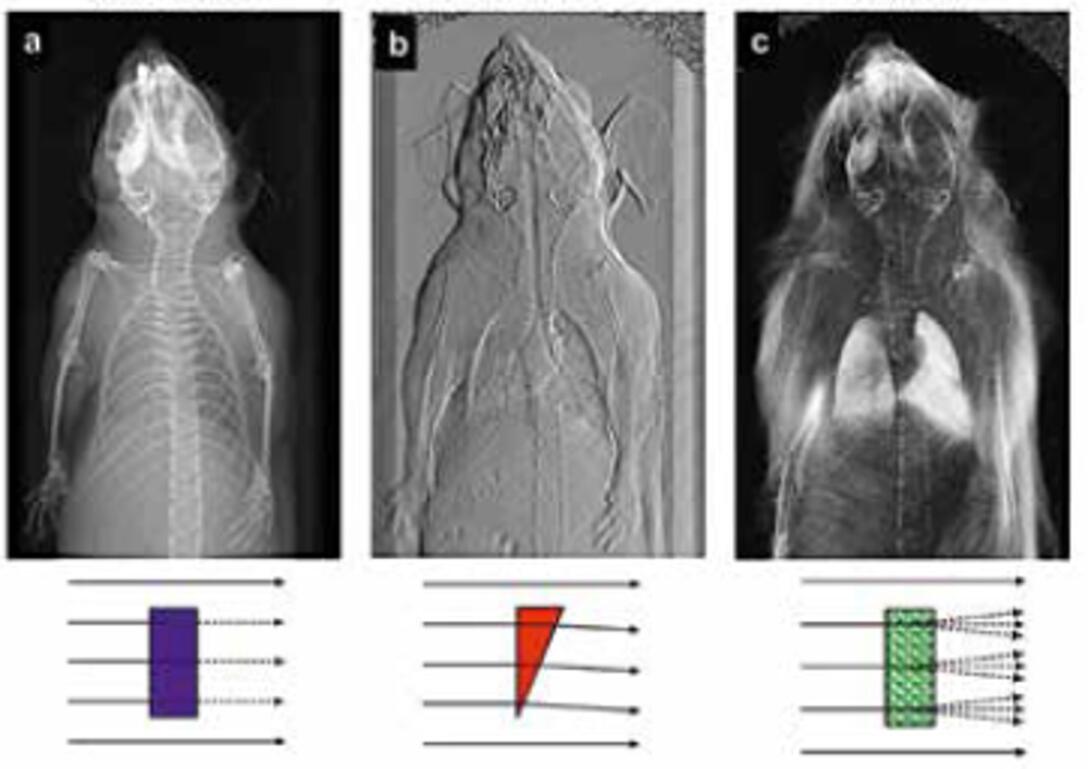
Impact and benefits: The introduction of NiW and NiRe as X-ray-absorbing materials will have a significant impact on the market launch of a new medical imaging modality known as dark-field imaging, through which, for example, diseases related to the degradation of lung alveoli – such as chronic obstructive pulmonary disease (COPD), can be detected at an early stage using conventional radiography. The replacement of chromium (VI) contributes significantly to environmental protection and improved working conditions for employees.
Abstract
Objectives: The main objective is to develop new electrolytes for the electrochemical deposition of nickel-tungsten (NiW) and nickel-rhenium (NiRe) functional layers.
Potential applications: The coatings can replace hazardous chromium(VI) electrolytes, which are frequently used to impart corrosion and wear resistance. Filling polymer microstructures will make it possible to replace expensive gold as an X-ray-absorbing material in medical imaging and non-destructive testing.
Impact and benefits: The introduction of NiW and NiRe as X-ray-absorbing materials will have a huge impact on the market launch of a new medical imaging method, dark-field imaging, through which, for example, diseases associated with the degradation of alveoli, such as chronic obstructive pulmonary disease (COPD), can be detected at an early stage using conventional X-rays. The substitution of chromium (VI) contributes significantly to environmental protection and to better working conditions for employees.
Project Partners
Mittweida University is a university of applied sciences in Central Saxony with a strong focus on research and knowledge transfer. Founded in 1867 as a technical centre, this state university has more than 7,000 students across five faculties and four research areas. The transfer of knowledge and technology plays a vital role at Mittweida University, particularly through its commitment to establishing national and international collaborations whilst, at the same time, taking responsibility for regional development.
A transfer strategy has been established, which defines four strategic areas of action in knowledge and technology transfer:
- Transfer via partnerships (in particular R&D projects, contract research, transfer projects),
- Transfer via talent (in particular collaborative PhD programmes and endowed professorships),
- Transfer via spin-offs and intellectual property rights
- Transfer via communication (in particular scientific events and publications).
Relevant expertise: Prof. Köster’s research group has many years of experience in the field of electroplating. Electrolyte developments, including layer characterisation, have been successfully carried out in several projects. In addition to galvanic deposition, the group also has extensive experience in the field of electroless deposition and the pre-treatment of substrates.
Role in the project: Lead for WP2 and WP6. Alongside project coordination, the scientific tasks in this project comprise electrolyte and process development, layer characterisation and the development of bath analysis methods.
Relevant expertise: As a research service provider, particularly for small and medium-sized enterprises, the IKS carries out industry-related research, development and technology transfer in the field of corrosion, corrosion protection and corrosion analysis. Through the institute’s participation in previous research projects in the field of process engineering and corrosion analysis, it possesses extensive knowledge and experience to carry out the proposed research project, as well as the specialist expertise required to evaluate the research results.
Role in the project: Lead of WP3. Upscaling of the developed electroplating technology for the deposition of novel and innovative NiW and NiRe layers as alternatives to hard chrome and for grid production as an alternative to gold, including substrate pre-treatments as well as the design of the electrodes and sample holders; characterisation of material properties (corrosion and wear tests, morphology, chemistry/composition); comparison of NiW and NiRe with hard chrome (from a technological and economic perspective); development of a process control system.
- The world’s most advanced research facility in the field of photonuclear physics, a new interdisciplinary field of research which, for the first time, brings together high-power lasers and nuclear physics.
- The nuclear physics component of the pan-European distributed research infrastructure ELI-Extreme Light Infrastructure.
- The largest investment ever made in scientific research in Romania, co-financed by the European Commission and the Romanian Government from Structural Funds via the European Regional Development Fund (ERDF).
- Implemented by the Horia Hulubei National Institute of Physics and Nuclear Engineering (IFIN-HH), which accounts for almost 10 per cent of Romania’s scientific output. Relevant expertise: Experience with multiple types of Talbot-Lau and Talbot X-ray phase-contrast imaging setups based on grids and other types of X-ray optics. Role in the project: Lead of WP1. Characterise NiW and NiRe grids using phase-contrast and dark-field-contrast X-ray imaging of biomedical interest.
Relevant expertise: This group has significant academic and industrial experience, making it a leading X-ray imaging group worldwide. The relevant expertise relates specifically to X-ray imaging in high-resolution micro-computed tomography (microCT), which is used for the inspection and quantification of defects and flaws in materials and is widely used in materials science. The leader of this group is a member of the International Association for Computed Tomography, has published over 100 journal articles and is the author of a new review paper on this subject.
Article: ‘X-ray computed tomography’ in the journal *Nature Reviews Methods Primers*
Role in the project: Lead for WP 4 and 5. Examination of nickel alloy grids, setup of grid-based interferometry, exploitation manager.
Relevant expertise: Microworks’ unique technology (X-ray lithography) has enabled many industrial and academic institutions to make progress in X-ray phase and dark-field imaging. Their close contact with customers provides the necessary background to define the requirements and specifications for the NiW and NiRe layers, which will be developed as part of this project.
Role in the project: SME partner. Defining the requirements for NiRe and NiW alloys for use as X-ray absorption material; manufacturing and supplying polymer templates for grid structures; manufacturing the grid demonstrator and transferring the results to production.
Relevant expertise: CMF has five years’ experience in electroplating and electroless deposition of various materials across a range of application areas. The company’s founders, Mr Grieger and Mr Konrad, have over 20 years’ professional experience in electroless and electroplating deposition.
Role in the project: SME partner. Supplies chrome-plated components. Manufactures the NiW and NiRe demonstrators as hard chrome alternatives and transfers the results to production.
"Focus on Research" Publications – Mittweida University of Applied Sciences
- New nickel alloy coatings for medical technology and as a substitute for hard chrome article
- Aloha in Hawaii article
- Shaping the surfaces of the future together today article
- Four heavyweights from Mittweida – industry gathering at the ZVO Surface Technology Days in Berlin article
- Electrolytic Ni-W alloy deposition from aqueous systems as a potential substitute for hard chrome plating article
- Centenary celebrations of the Electrodeposition Division of the Electrochemical Society (ECS) in Atlanta article
- New nickel alloys for X-ray diagnostics article