Structure and deformation mechanisms of metals, experimental determination of yield curves, stress states, classification of forming processes according to forming temperature, formability, materials for solid and sheet metal forming
Selected processes for the production of semi-finished products
Cold rolling, wire drawing, bar/tube drawing
Selected processes for solid forming (cold and hot solid forming)
Upsetting, free-form forming, die forging, tapering, extrusion, rolling
Selected processes for sheet metal forming
Cutting, deep drawing, stretch drawing, IHU, bending
Forming machines
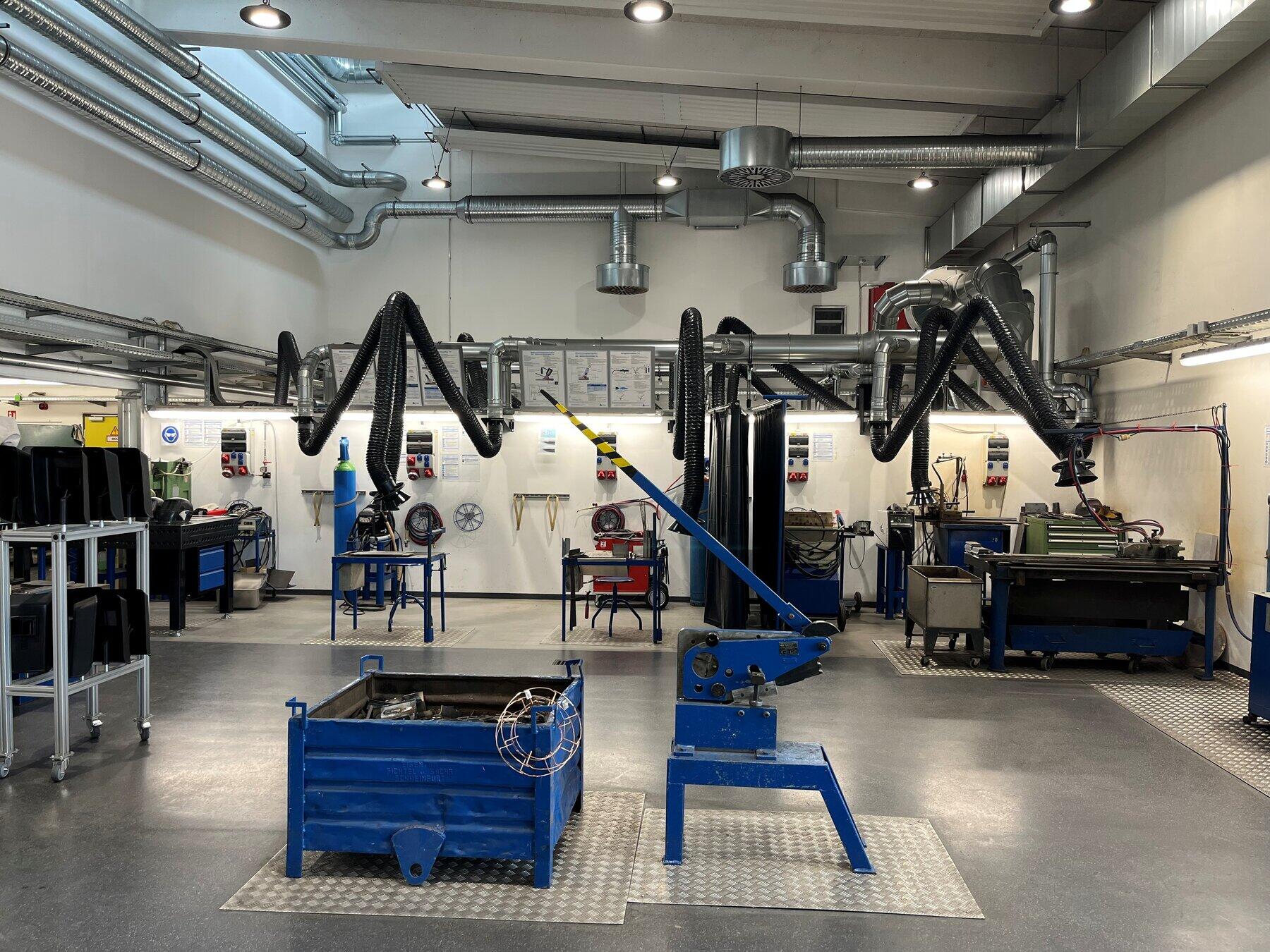
Welding options – Manufacturing
Fusion welding processes: welding with an oxy-fuel flame; arc welding; jet welding;
Press welding processes
Thermal cutting
Automation
Weldability – Materials
Welding of unalloyed and low-alloy steels; high-alloy steels; cast materials; aluminium; copper; material-induced weld seam irregularities
Introduction and Overview of Joining Technology
Welding: Overview; Arc welding processes (arc welding in general, metal-inert gas welding (MIG), tungsten inert gas welding (TIG), laser beam welding, pressure welding; weldability (steel, aluminium); Automated welding
Mittweida University of Applied Sciences (FH); Chair of Automated Joining Processes and Simulation
2010
PhD
Dresden University of Technology, Faculty of Mechanical Engineering, PhD thesis on ‘The influence of surface condition on the thermal joining of aluminium’
2006
Conclusion
Studied Mechanical Engineering at TU Dresden, graduating with a Dipl.-Ing. degree; specialising in Energy Technology; thesis title: ‘Investigation of surface activation during flux-free hybrid brazing of aluminium using NIR and an electric arc’
Lernförderliche Arbeitsplatzgestaltung und durchgängige Bedienkonzepte für Multi-Cobot-Systeme in Mess- und Schweißprozessen, Teilprojekt 1
Term: 2026/01/01 – 2028/12/31
Financed by: BMFTR über Projektträger Karlsruhe
Funding code: 02L25A080
Project managers: Julia Zähr
2907Julia Zähr
Perspektive Arbeit Lausitz, Teilprojekt 1
Term: 2023/09/01 – 2027/04/30
Financed by: Bundesministerium für Bildung und Forschung
Funding code: 02L19C300
Project managers: Julia Zähr
2721Julia Zähr
Innovationscluster HSMW 2023, AP06: Analyse der technischen und wirtschaftlichen Einsatzfähigkeit von Schweiß-Cobots in KMUs
Term: 2023/04/01 – 2026/12/31
Financed by: Sächsisches Staatsministerium für Wissenschaft, Kultur und Tourismus
Funding code: 100685484
Project managers: Julia Zähr
1863Julia Zähr
Innovationsvorhaben zur Profilschärfung 2022, TP1: Automatisierung des Schweißens von Aluminiumprofilen in KMUs
Term: 2022/03/01 – 2025/12/31
Financed by: Sächsisches Staatsministerium für Wissenschaft, Kultur und Tourismus
Funding code: 100613388
Project managers: Julia Zähr
2635Julia Zähr
Verbundprojekt: Perspektive Arbeit Lausitz -Kompetenzzentrum für die Arbeit der Zukunft in Sachsen und Brandenburg (PAL); Teilprojekt: Gestaltung und Bewertung ergonomischer hybrider Arbeitssysteme mittels interpretierbarer KI-Modelle und Mensch-Roboter-Interaktion
Term: 2021/11/01 – 2027/04/30
Financed by: Bundesministerium für Bildung und Forschung
Funding code: 02L19C300
Project managers: Leif Goldhahn
2593Leif Goldhahn
C. Schmidt, C. Pietschmann, L. Goldhahn, J. Zähr, D. Sauer, M. Schmidt, J. Zähr
Transformation from manual arc welding to collaborative robot welding: Comparison of ergonomic and process-related influencing factors and effects
Appeared in: AHFE International Human Factors in Industrial and Systems Engineering (2026), No. volume 219, P. 86 – 96
C. Schmidt, C. Pietschmann, L. Goldhahn, J. Zähr, D. Sauer, M. Schmidt
Transformation from manual arc welding to collaborative robot welding: Comparison of ergonomic and process-related influencing factors and effects
Appeared in: Proceedings of the 8th International Conference on Human Interaction & Emerging Technologies (IHIET 2022): Artificial Intelligence & Future Applications 219 (2026)
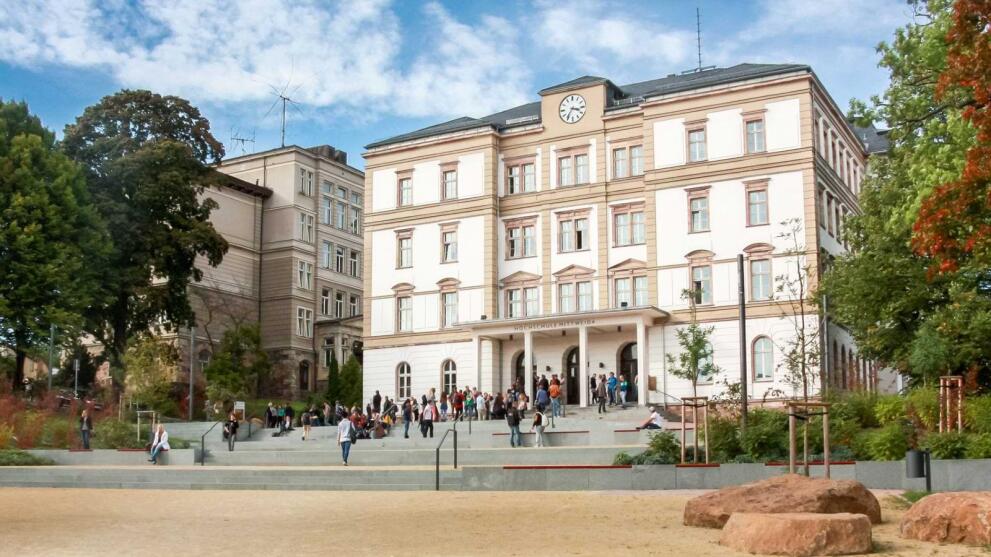
Mittweida University of Applied Sciences is a boundless testing ground aimed at driving business and society forward. How? Through academically trained specialists and straightforward collaboration, which enables regional businesses to benefit directly from our findings – or to gain new insights through joint research projects that can be put into practice straight away. We enable students to test their limits by developing their own skills and exploring new horizons.