This page was translated automatically using artificial intelligence (DeepL). The German version is binding. More information about automatic translation
Brief description
The aim of the project is to develop a Structural Health Monitoring System (SHMS) for plastic sprockets, featuring integrated sensors and intelligent data analysis for the preventive detection of critical signs of wear. Sprockets are the key machine component used to drive roller chains or link chains. Plastic sprockets are used in a wide variety of conveyor systems in the logistics, automation, food and packaging industries due to their low material costs and optimal friction properties. These sprockets are subjected to high tribological stresses and rarely achieve their nominal service life due to:
- Excessive loads resulting from misalignment caused by temperature differences and manufacturing tolerances (flexibility of the supporting structure)
- Contamination of the guide systems or insufficient lubrication
- Oscillating movements, including vibrations (particularly in the case of small sprockets with fewer teeth)
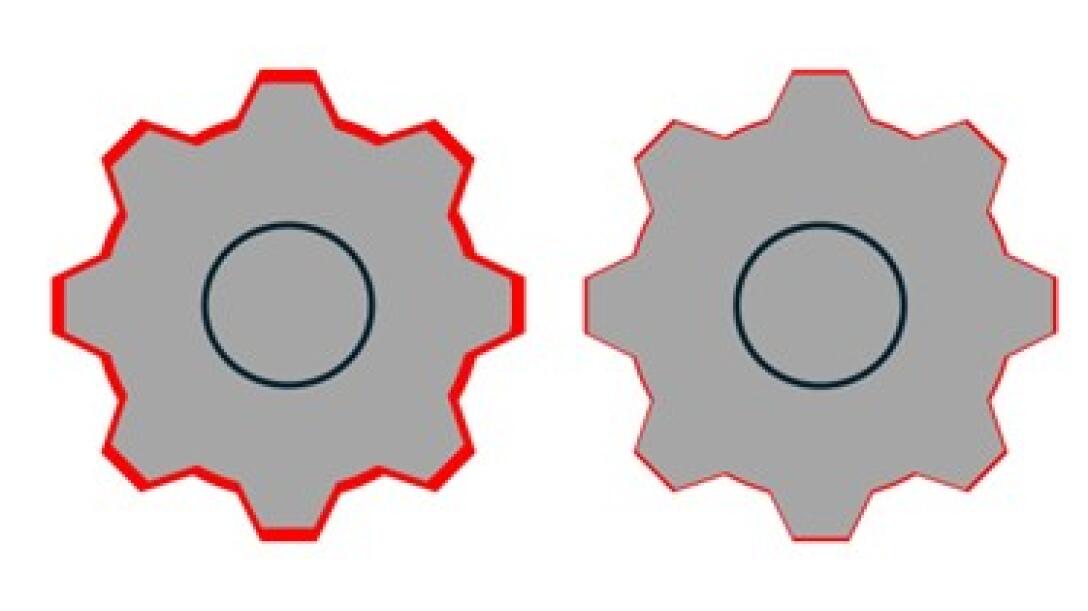
As part of the project, an SHMS for plastic sprockets with integrated sensors is therefore to be developed and manufactured using two-component injection moulding. The sprocket will be modified so that the sensor technology for wear monitoring is integrated into the plastic both as an active component and as a load-bearing structure. The principle is based on the fact that, when new, the electrical voltage applied to the SHMS encounters relatively low resistance. However, as a result of abrasion, the layer gradually becomes thinner, causing the resistance to increase. By designing the sprocket geometry, the layered structure and the conductive plastic to meet specific requirements, it is possible to draw conclusions not only about material wear but also about temperature. In this way, negative effects, such as dry running, can be detected at an early stage without having to shut down the plant. The smart sprocket can also be retrofitted into existing systems.