This page was translated automatically using artificial intelligence (DeepL). The German version is binding. More information about automatic translation
Topics/Research and Teaching Profile
Our research group investigates the interaction of ultrashort-pulsed laser radiation with condensed matter. Our aim is to understand laser-induced processes in condensed matter and, in doing so, to make them accessible for technological applications.
In doing so, we focus on ultrashort-pulsed laser radiation in the femtosecond range, as this radiation exhibits special properties with regard to pulse shaping. To describe these processes, it is necessary to investigate and model them. We use pump-and-probe techniques to detect the heating, melting, modification and evaporation of matter on the femtosecond timescale. We model the processes that take place during and after irradiation and compare these with our experimental results in order to gain insights into the interactions involved.
Link to the LHM – Laser Institute at Mittweida University of Applied Sciences
Holder of the Chair

Our research projects
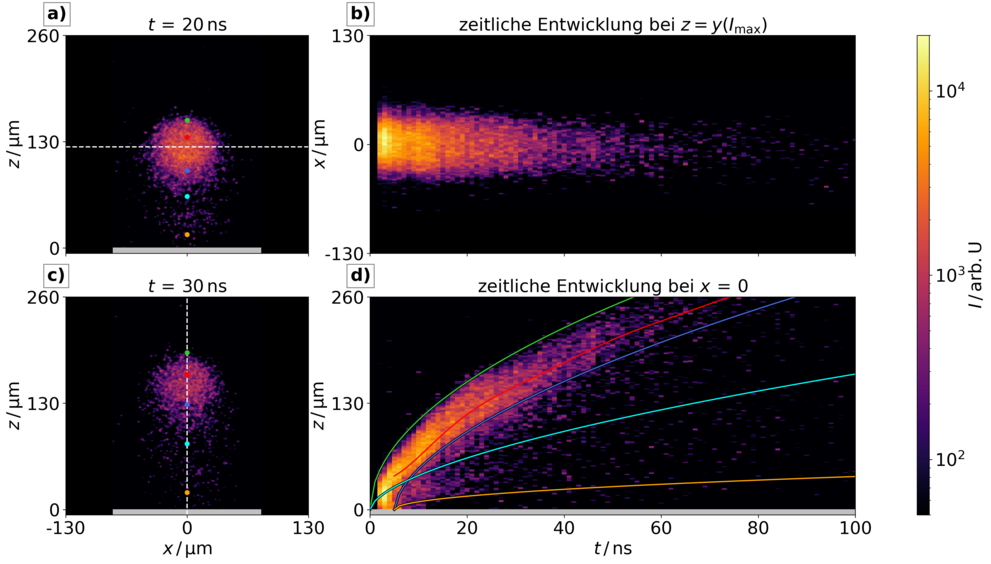
Investigation of laser-induced plasmas in high-intensity double-pulse laser material processing (la PlaLma)
When machining materials using ultrashort-pulsed laser radiation, an ablation cloud consisting of vapour, particles and ionised particles is generated, particularly when multiple pulses are used, due to the high power densities. At high pulse repetition rates, this plasma interacts, on the one hand, with the subsequent pulses (plasma–laser radiation interaction), but also, the subsequent heating of the material surface by the plasma and its expansion can induce additional thermomechanical stresses and shock waves (plasma–material interaction). Within this project, the physical processes during material excitation and the subsequent formation and expansion of a laser-induced plasma are to be characterised using imaging pump-probe reflectometry, plasma spectroscopy and interferometry following single- and double-pulse irradiation. The study will investigate the transient optical properties of the laser-induced plasma, its effect on subsequent pulses as a function of the temporal and lateral pulse-to-pulse spacing, and the thermomechanical effect of the plasma on the remaining material surface. Direct insights for determining suitable parameter windows for more efficient material processing are to be derived from the measured experimental data (technical objective). Through the comprehensive detection of the transient optical properties of the plasma, existing theoretical models (two-temperature hydrodynamics) for describing the laser-matter interaction be further developed, extended and validated, thereby enhancing our understanding of the plasma-laser interaction and the plasma-material interaction (scientific objective).
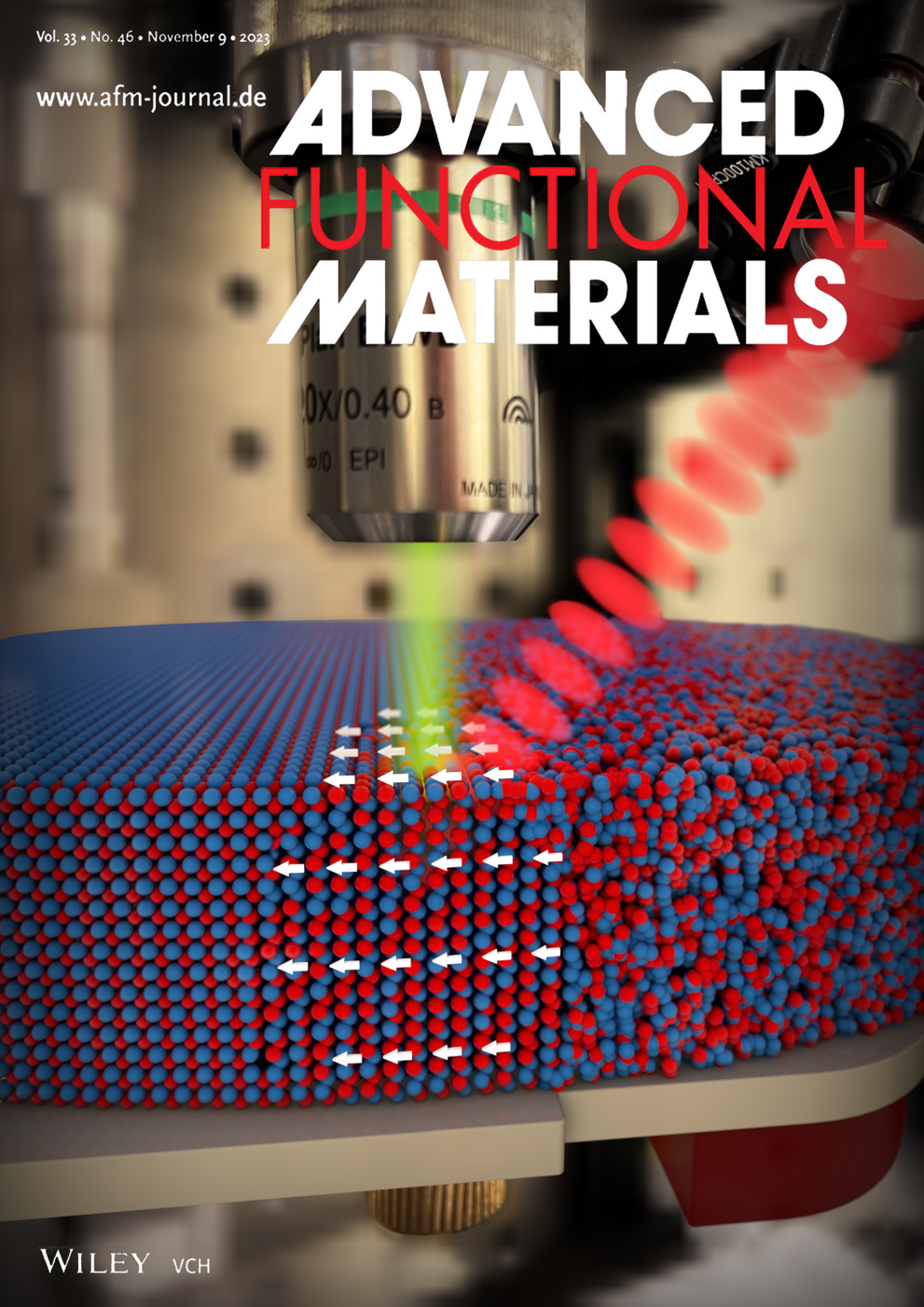
Control of the opto-magnetic properties of alloys through laser and ion irradiation – COLASION
It has recently been observed that both irradiation with a single-pulse fs laser and the penetration of ions can cause almost identical changes in the lattice order of alloys, leading to the transformation of an originally disordered lattice into an ordered one. In certain alloys, such as the prototype Fe60V40, this atomic reorganisation is accompanied by the emergence of ferromagnetism. The COLASION project aims to comprehensively characterise the physical limits and individual advantages of both laser- and ion-induced atomic reordering, and to control the functional properties of the originally disordered Fe60V40 for technical applications. The atomic reorganisation and the associated magnetic effects are characterised using magneto-optical imaging as well as structural and holographic imaging at the nanoscale. Time-resolved in-situ measurement and modelling will provide further insights into the transient dynamic processes leading to the final reordered atomic structure, such as heating, melting, subsequent cooling and solidification. Our aim is to select the appropriate reordering process to achieve the desired functional properties by understanding the spatial and temporal limits of laser- and ion-induced magnetisation. The time-resolved measurements and modelling will shed light on the fundamental processes leading to atomic reorganisation and magnetisation.
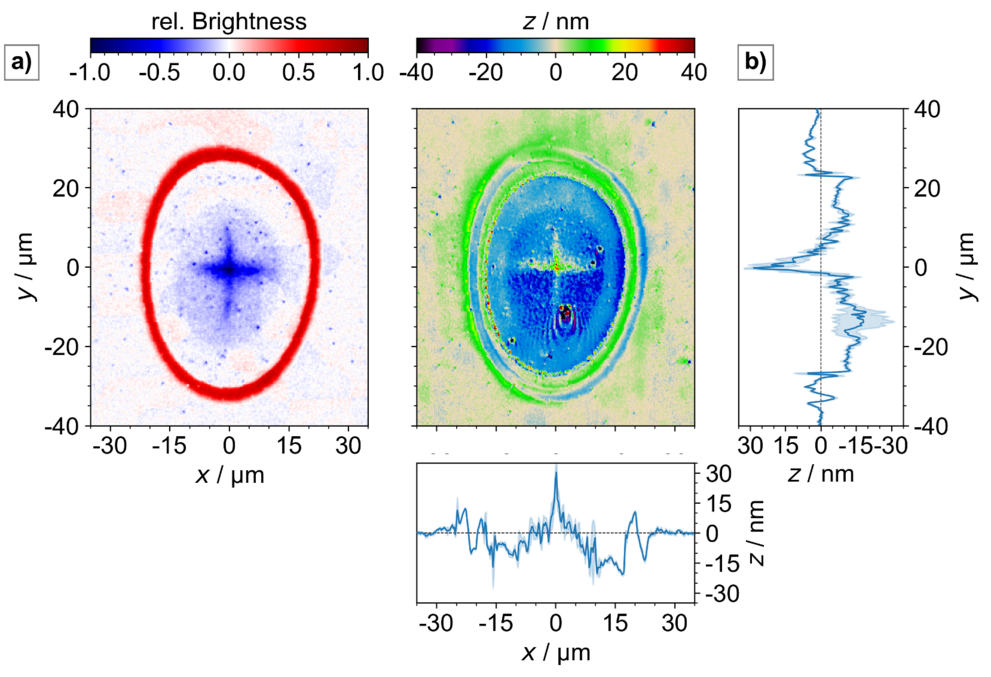
Surface modification of silicon at the nanometre scale
Within the project, the interaction of silicon with ultrashort-pulsed laser radiation is being investigated using time-resolved measurement techniques and theoretical simulations. To this end, we are developing a hybrid atomistic-continuous multiscale model that combines several numerical techniques within a single mesoscopic computational framework. The model takes five physical phenomena into account: firstly, the MD component to describe the laser-induced transient states at the atomic level. Secondly, the effect of the free charge carriers (electron-hole pairs) generated by the laser, which are taken into account in the continuum. Thirdly, non-thermal phase transitions via a newly developed interatomic potential. Fourthly, the effect of SPP excitation on laser energy deposition. And finally, the CGMD method for modelling large volumes of matter under conditions of low excitation and laser-induced phase transitions under local equilibrium conditions. Furthermore, the optical properties of the structures induced by multiple pulses (LIPSS) can be investigated separately in ab initio calculations. The theoretical simulations are validated by spectroscopic, imaging pump-probe ellipsometry, which enables a comprehensive determination of the transient complex refractive index during irradiation. The project investigates Si as a representative of a large group of semiconductors. A number of the results obtained in this project can therefore be extended to In, As, Ge and other materials that are significant in microelectronics and nanotechnologies. A fundamental understanding of laser-induced processes makes it possible to selectively modulate the optical properties of Si and to develop a new generation of electronic devices at the nanoscale.
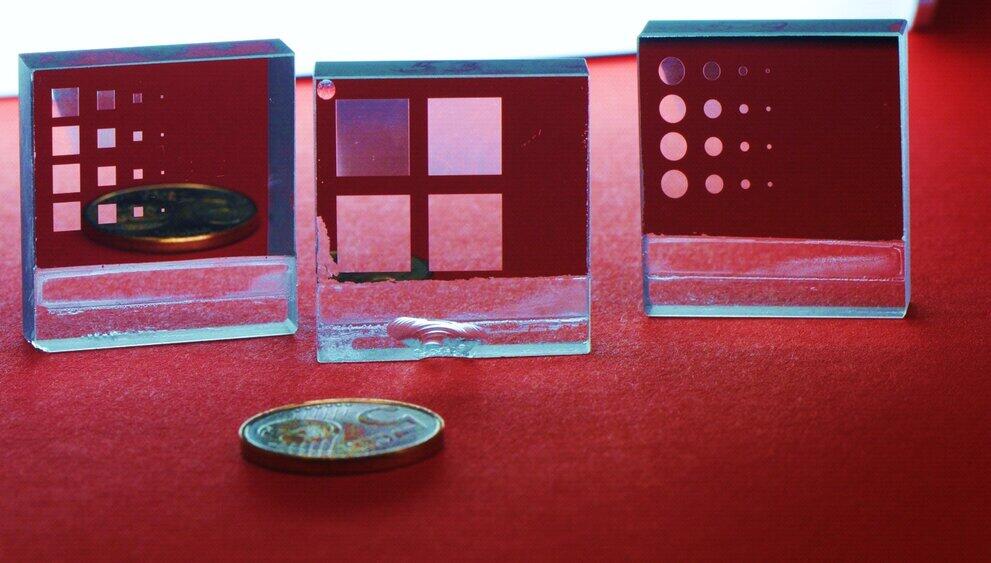
Selective, low-damage laser ablation of coating systems on optical components SelektLas
In the event of spot or area-wide defects in the coating of high-quality optical components, these must be removed and the coating repaired or replaced. However, wet-chemical ablation methods used to date are often based on the use of toxic chemicals and frequently require complete removal of the coating, whilst mechanical methods are usually only applicable to flat surfaces. The aim of the project is to develop a process for low-damage, locally optimised ablation using ultrashort-pulse lasers. To this end, simulation-based approaches, experimental investigations and in situ measurement techniques will be used to optimise the parameters.