This page was translated automatically using artificial intelligence (DeepL). The German version is binding. More information about automatic translation
Project description
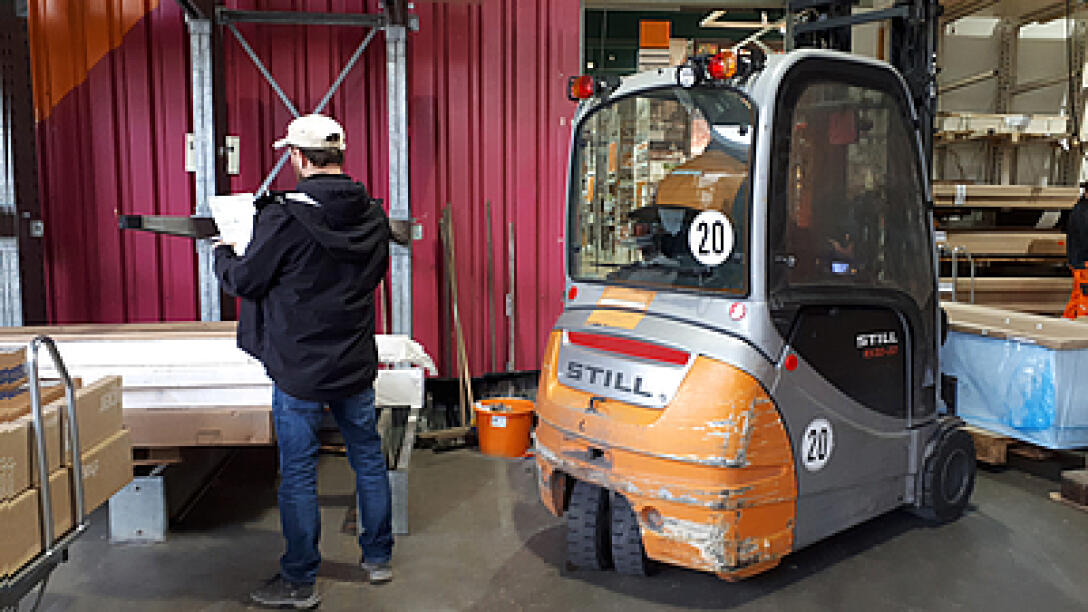
The central focus of the project is the conversion of 3D image data into tactile information. The project itself concentrates on its application in the logistics and warehousing sectors as a baseline scenario. In this sector, avoidable inattention can lead to accidents, some of which are very serious, particularly involving transport vehicles such as forklift trucks, etc. These accidents result not only in lost working hours and financial burdens, but above all often in a protracted ordeal for those affected.
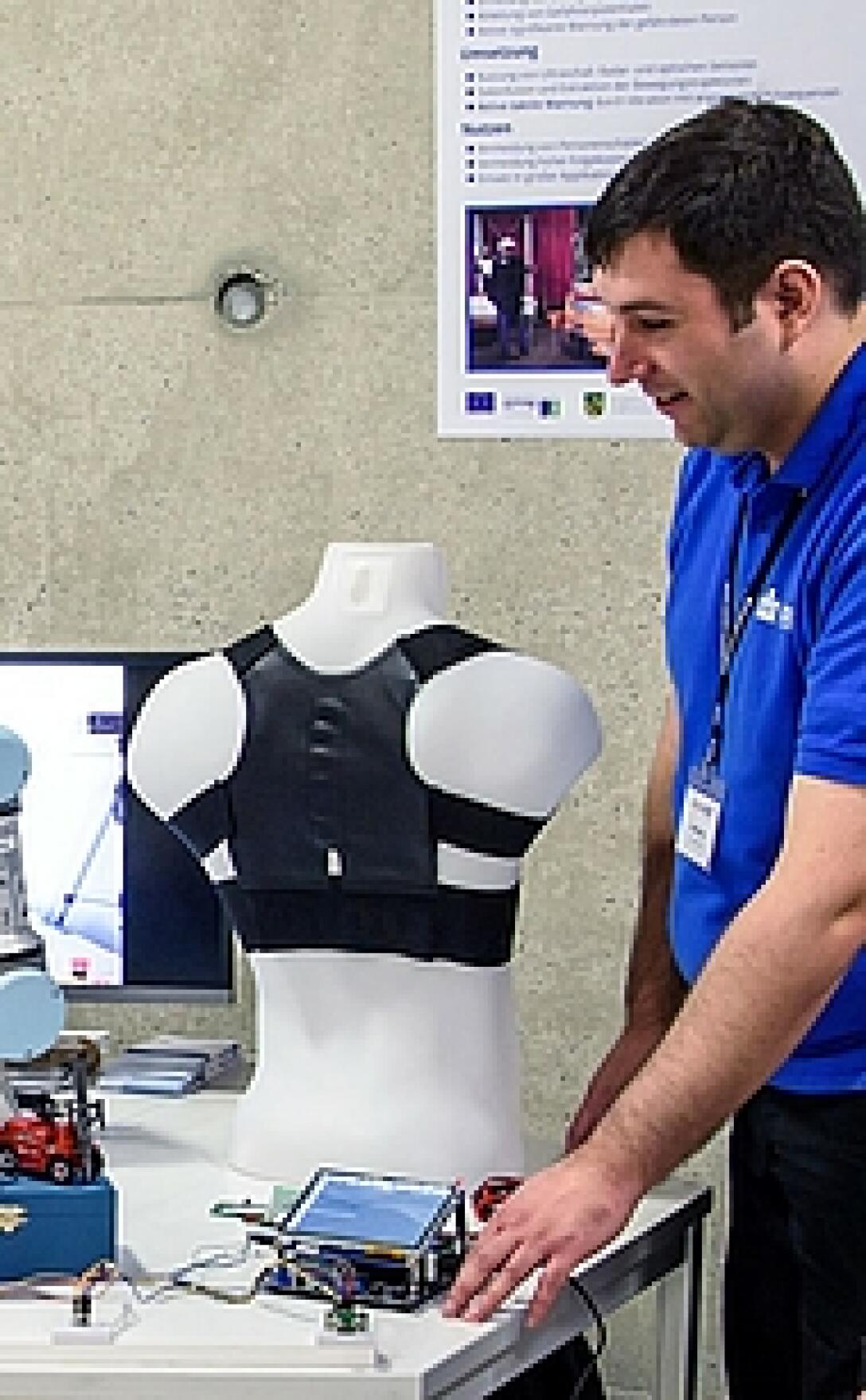
Existing warning systems – such as rotating beacons or audible alarms – therefore fail. However, the cause lies not with the technical system, but with human perception. The ‘information’ provided by traditional warning systems is often ignored due to sensory overload. People who are concentrating on their work in particular fail to hear or notice the signals – a phenomenon commonly known as the ‘cocktail party effect’ and ‘tunnel vision’. One potential solution here is the use of tactile warning systems, as people react much more strongly – and therefore more reliably – to ‘physical contact’ caused by an intrusion into their personal space.
Greater safety in intralogistics
Greater Safety in Intralogistics Processes
Research objectives
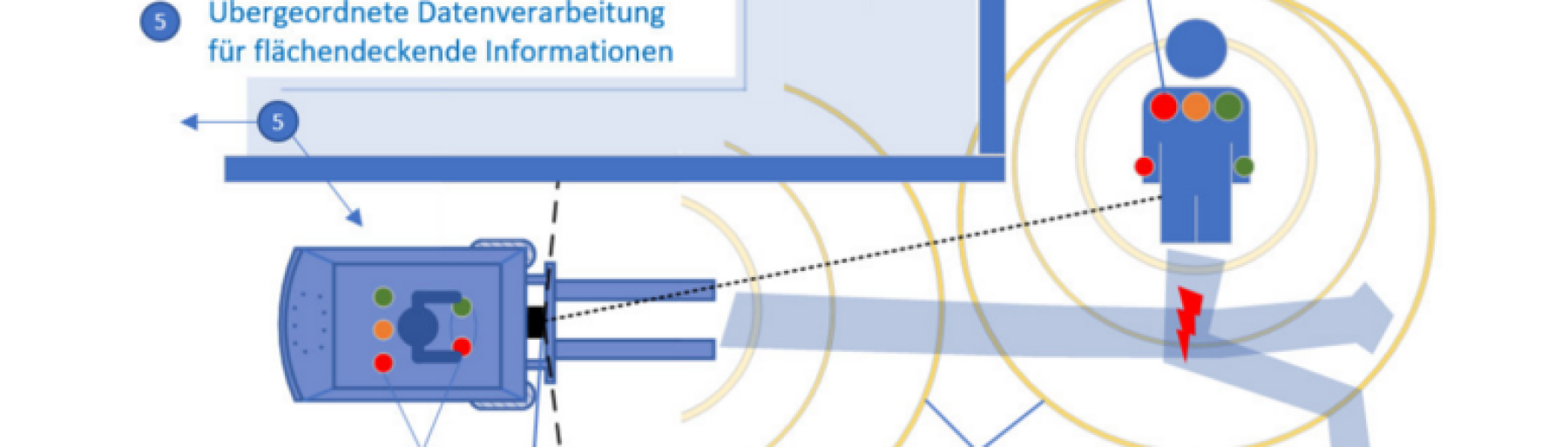
- Reliable grasping and separation of objects in the environment
- Analysis of possible trajectories of the objects
- Classification as dangerous/non-dangerous
- Intensive warning of people via haptic feedback
- Signalling of hazard levels or directional information as a further development stage
Further development
The project is characterised by its broad potential for application across various areas of need. A range of industry and research partners are being involved in the project at an early stage. The project specifically addresses applications in occupational health and safety aimed at preventing serious accidents. However, the solutions to be developed will be shared within the consortium, offering all partners the opportunity to further develop them in entirely different subject areas.